



Table of Contents
Introduction
E-commerce marketing gives brands the tools to attract shoppers, build trust, and convert interest into sales across multiple digital channels. A clear strategy helps businesses reach the right audience while creating a consistent experience from discovery to checkout and beyond.
Success in e-commerce depends on understanding how each channel supports the customer journey. Search engines capture demand, social platforms create awareness, email and SMS encourage repeat purchases, while paid advertising helps brands reach high-intent buyers at the right moment with relevant offers.
This channel-by-channel playbook explains how brands can use SEO, paid media, content, social commerce, influencers, email, SMS, and marketplaces more effectively. It also highlights the importance of testing, performance tracking, and customer retention when building sustainable online growth over the long term.
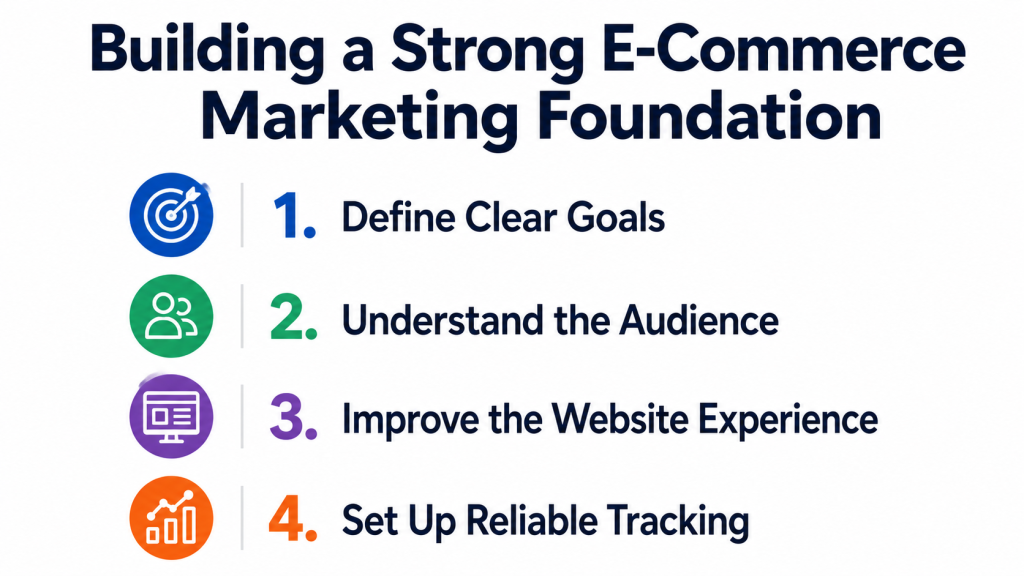
Building a Strong E-Commerce Marketing Foundation
Brands should have a solid foundation that enables consistent growth before investing in individual marketing channels.
- Define Clear Goals: Set specific targets for sales, customer acquisition, website traffic, repeat purchases, and average order value. Clear goals make it easier to choose the right channels and measure results accurately.
- Understand the Audience: Identify customer needs, preferences, buying habits, common concerns, and preferred platforms. Detailed customer profiles help brands create more relevant messages, offers, and shopping experiences.
- Improve the Website Experience: Make the online store fast, mobile-friendly, easy to navigate, and simple to purchase from. Clear product information, secure checkout, and strong calls to action can reduce customer drop-offs.
- Set Up Reliable Tracking: Use analytics tools to monitor traffic sources, conversions, customer behavior, and campaign performance. Accurate tracking shows which channels generate revenue and where marketing budgets should be adjusted.
Clear goals, reliable data, focused audiences, and a smooth shopping experience help each campaign perform better.
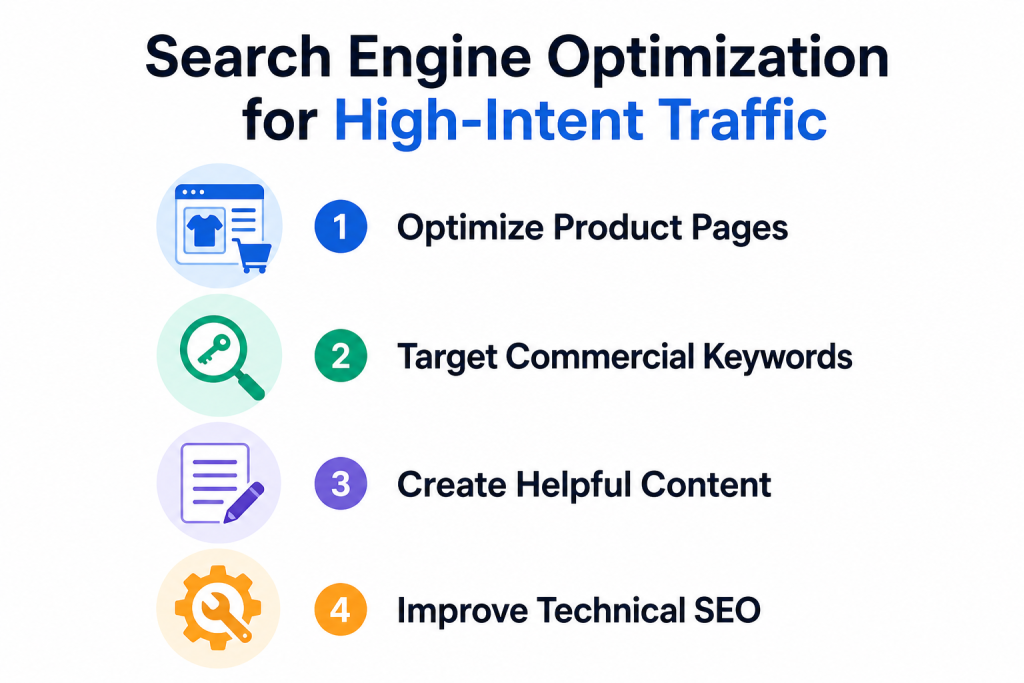
Search Engine Optimization for High-Intent Traffic
SEO brings e-commerce brands shoppers who are actively seeking products, solutions, and buying information.
- Optimize Product Pages: Use clear product titles, detailed descriptions, relevant keywords, quality images, and customer-focused information. Well-structured product pages help search engines understand the content while giving shoppers the details they need to make a decision.
- Target Commercial Keywords: Focus on search terms that show buying intent, such as product comparisons, category searches, and location-based queries. These keywords are more likely to attract visitors who are closer to making a purchase.
- Create Helpful Content: Publish buying guides, comparison articles, FAQs, and educational blog posts that answer common customer questions. Useful content builds authority and helps brands reach shoppers at different stages of the buying journey.
- Improve Technical SEO: Maintain fast page speeds, mobile responsiveness, clean site navigation, working links, and proper indexing. A technically strong website makes it easier for search engines to crawl pages and for customers to browse without frustration.
A well-optimized website will help you to get consistent traffic, improve your product visibility, and, in the long run, reduce your dependence on paid advertising.
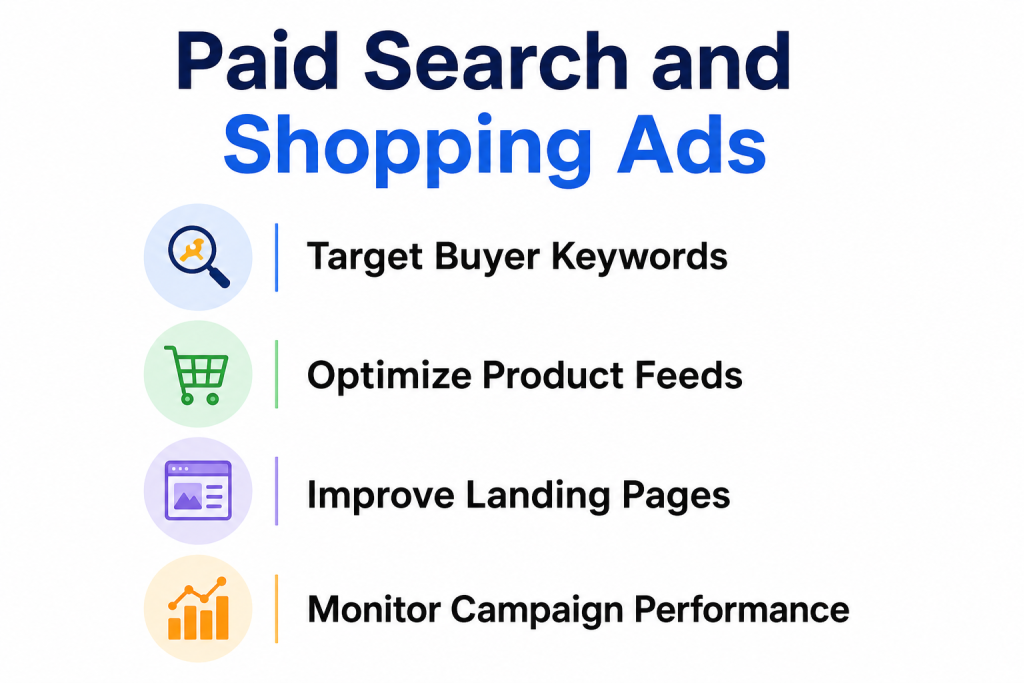
Paid Search and Shopping Ads
Paid search and shopping ads help e-commerce brands reach customers who are actively looking for specific products.
- Target Buyer Keywords: Focus on search terms that indicate strong purchase intent, including product names, category terms, and comparison searches. This helps brands reach shoppers who are more likely to convert.
- Optimize Product Feeds: Keep product titles, descriptions, prices, images, and availability accurate across shopping platforms. A complete and well-organized product feed improves ad relevance and product visibility.
- Improve Landing Pages: Send users to pages that closely match the ad message and featured product. Clear pricing, strong images, customer reviews, and simple checkout options can improve conversion rates.
- Monitor Campaign Performance: Track clicks, conversions, return on ad spend, and customer acquisition costs regularly. Performance data helps brands adjust bids, pause weak ads, and invest more in profitable products.
These campaigns can generate immediate visibility, attract high-intent traffic, and support faster sales growth when managed with clear targeting and budget control.
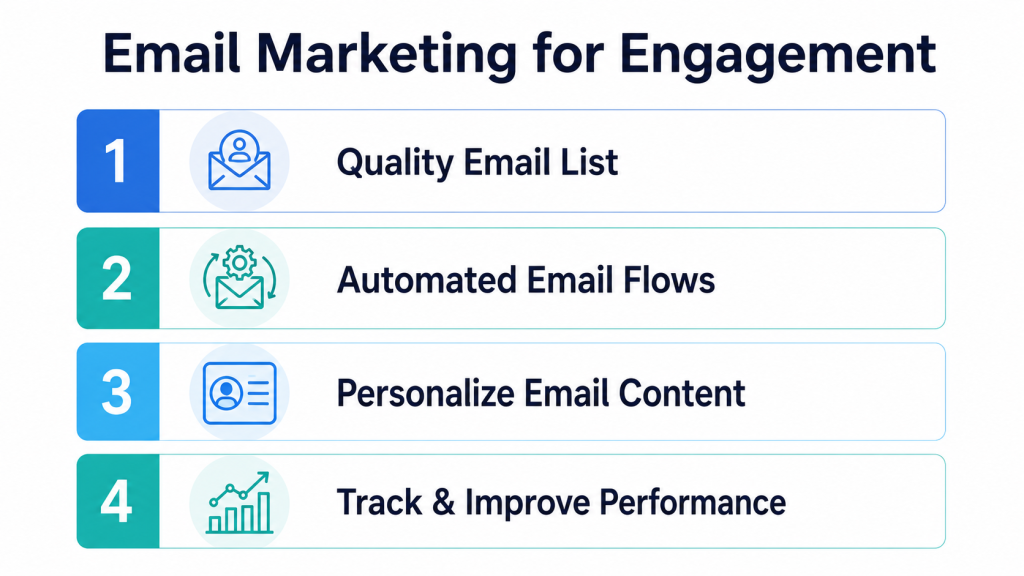
Email Marketing for Engagement
Email marketing helps e-commerce brands maintain direct communication with customers throughout the buying journey.
- Quality Email List: Use website forms, checkout options, loyalty programs, and valuable incentives to collect subscriber information. Focus on attracting interested customers rather than building a large but disengaged audience.
- Automated Email Flows: Set up welcome emails, abandoned cart reminders, post-purchase follow-ups, and re-engagement campaigns. Automation allows brands to send timely messages based on customer actions.
- Personalize Email Content: Segment subscribers by purchase history, browsing behavior, interests, and engagement level. Relevant product recommendations and tailored offers generally perform better than identical messages sent to every subscriber.
- Track & Improve Performance: Monitor open rates, click-through rates, conversions, unsubscribes, and revenue generated. Regular testing of subject lines, content, timing, and calls to action can improve campaign results.
Personalized messages can recover lost sales, promote relevant products, strengthen customer relationships, and encourage shoppers to return for future purchases.
SMS Marketing for Timely Promotions
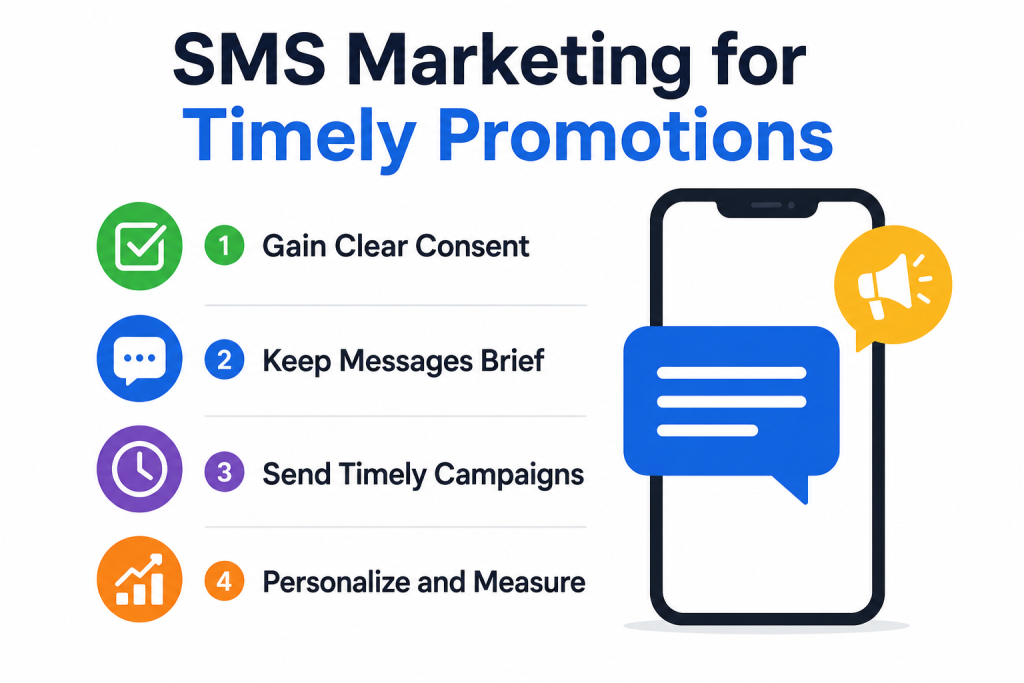
SMS marketing allows e-commerce brands to reach customers quickly with short, relevant messages.
- Gain Clear Consent: Ask customers to opt in before sending promotional texts. Transparent sign-up language and simple unsubscribe options help brands build trust and maintain a compliant subscriber list.
- Keep Messages Brief: Use direct language, a clear offer, and one strong call to action. Customers should immediately understand the message and know what step to take next.
- Send Timely Campaigns: Use SMS for flash sales, restock alerts, abandoned cart reminders, and limited-time offers. Proper timing increases urgency while making messages more useful to recipients.
- Personalize and Measure: Segment subscribers based on purchase history, interests, and engagement. Track clicks, conversions, opt-outs, and revenue to identify which messages and offers produce the strongest response.
It works best for time-sensitive promotions, order updates, product launches, and reminders that encourage immediate action without overwhelming subscribers.
Social Media Marketing and Social Commerce
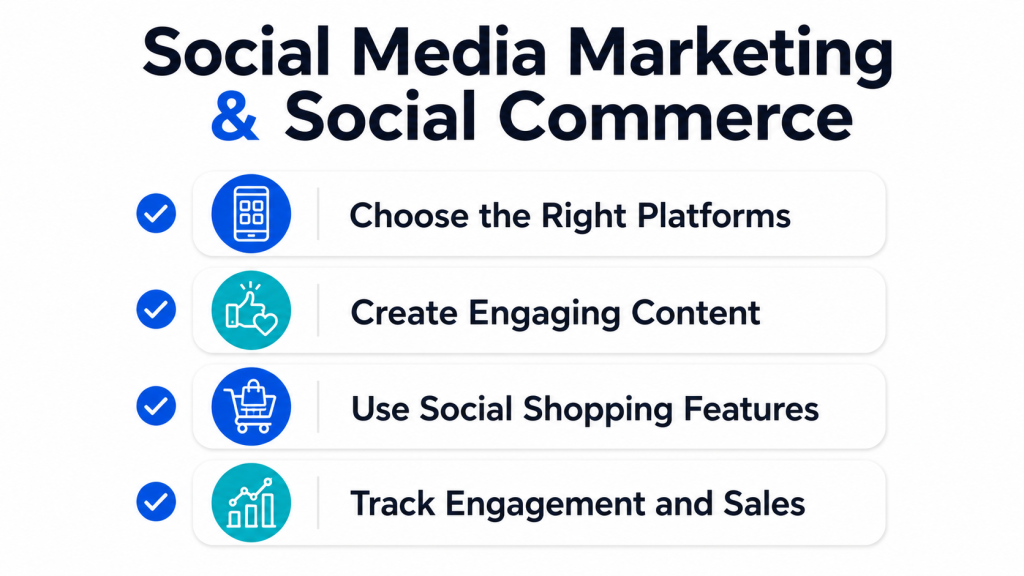
Social media helps e-commerce brands create awareness, engage with potential customers, and showcase products in a more visual and relatable manner.
- Choose the Right Platforms: Focus on platforms where the target audience is most active. Product type, customer demographics, content preferences, and buying behavior should guide platform selection.
- Create Engaging Content: Use product demonstrations, customer stories, short videos, tutorials, and behind-the-scenes content. A varied content mix keeps audiences interested while showing how products fit into everyday life.
- Use Social Shopping Features: Add product tags, shoppable posts, storefronts, and direct purchase links wherever available. These features reduce the number of steps between product discovery and checkout.
- Track Engagement and Sales: Monitor reach, saves, comments, clicks, conversions, and revenue from each platform. These insights help brands identify which content formats and campaigns generate meaningful business results.
Shoppers can also discover, evaluate, and buy products directly inside their favorite platforms thanks to the social commerce features.
Influencer, Creator, and Affiliate Marketing
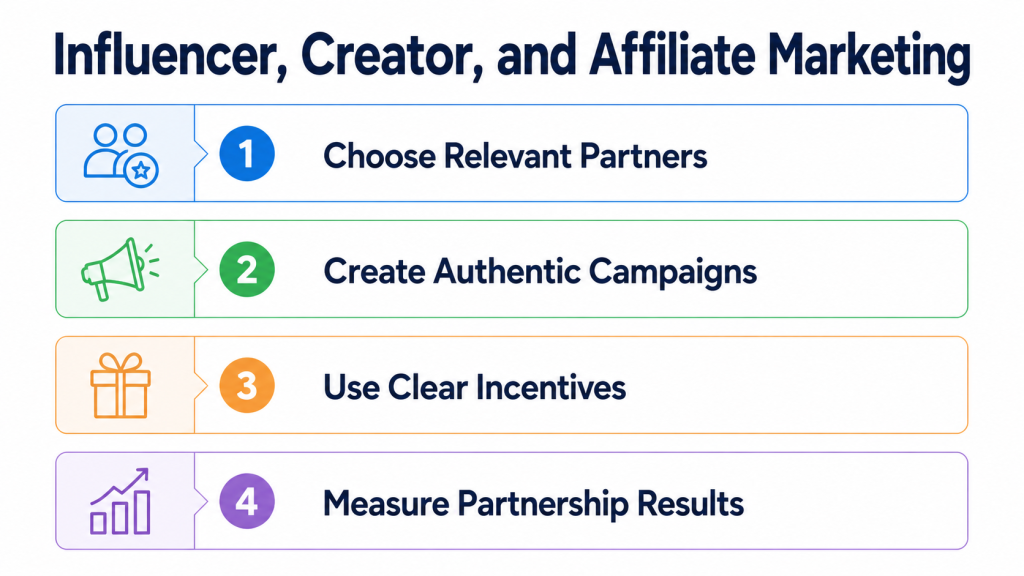
Influencer, creator, and affiliate partnerships help e-commerce brands reach established audiences through trusted recommendations.
- Choose Relevant Partners: Work with creators and affiliates whose audience, content style, and values align with the brand. Relevance and engagement are often more valuable than a large follower count.
- Create Authentic Campaigns: Give partners enough creative freedom to present products naturally. Honest reviews, demonstrations, tutorials, and real-life use cases can make promotions feel more credible.
- Use Clear Incentives: Offer commission rates, discount codes, free products, or performance-based rewards. A transparent incentive structure encourages partners to actively promote products and maintain long-term collaboration.
- Measure Partnership Results: Track referral traffic, code usage, conversions, customer acquisition costs, and revenue. Performance data helps brands identify successful partners and improve future campaigns.
These channels can increase product awareness, generate authentic content, and drive measurable sales when partners closely match the brand’s customers and values.
Marketplace Marketing & Third-Party Sales Channels
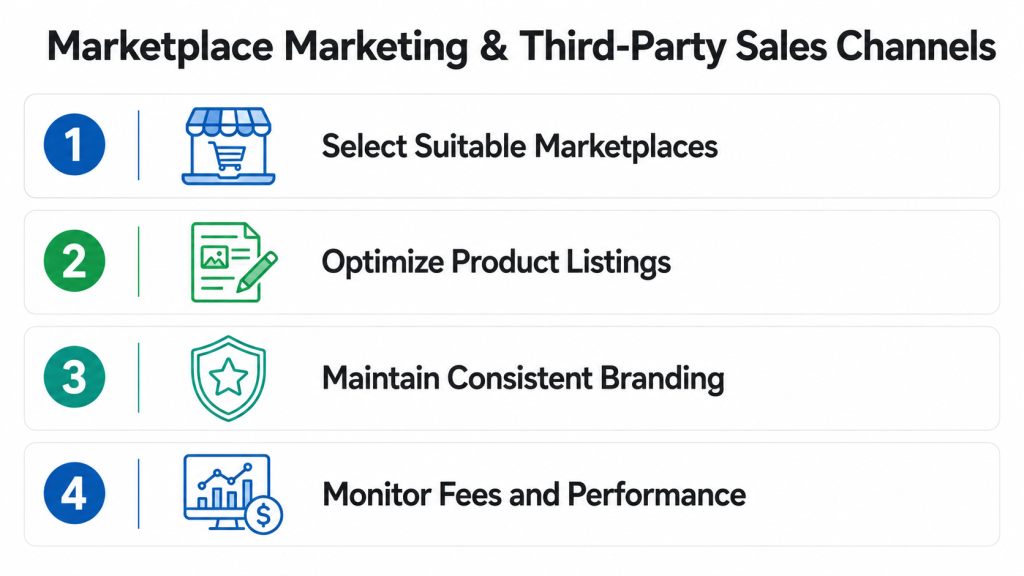
Online marketplaces give e-commerce brands access to large customer bases and established purchasing systems.
- Select Suitable Marketplaces: Choose platforms that match the product category, target audience, pricing, and business goals. Brands should focus on marketplaces where potential customers are already searching for similar products.
- Optimize Product Listings: Use accurate titles, detailed descriptions, relevant keywords, quality images, and complete product information. Well-optimized listings improve search visibility and help shoppers make informed purchasing decisions.
- Maintain Consistent Branding: Keep product messaging, visuals, pricing, and customer service consistent across every sales channel. A recognizable brand experience helps build trust and reduces confusion among customers.
- Monitor Fees and Performance: Track marketplace commissions, advertising costs, sales volume, customer reviews, and profit margins. Regular analysis helps brands identify profitable platforms and improve underperforming listings.
Selling through these platforms can increase visibility, support customer acquisition, and create additional revenue opportunities beyond the brand’s own website.
Measuring Channel Performance
Tracking marketing performance helps e-commerce brands understand which channels generate traffic, conversions, and revenue.
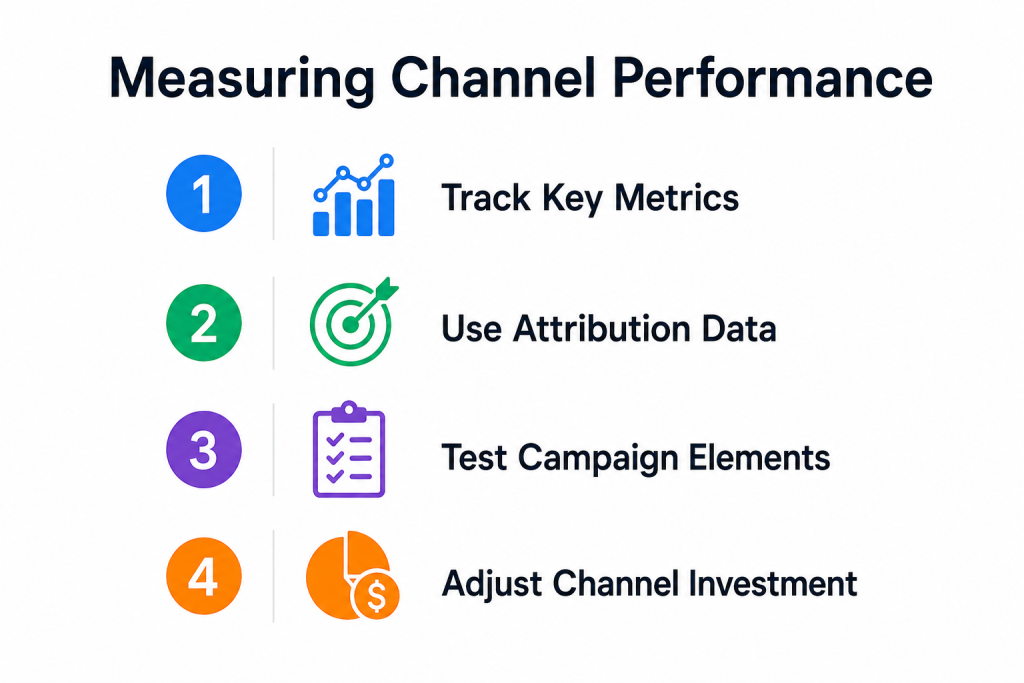
- Track Key Metrics: Monitor conversion rate, customer acquisition cost, return on ad spend, average order value, and customer lifetime value. These metrics show how effectively each channel supports business growth.
- Use Attribution Data: Review how different channels influence the customer journey before a purchase. Attribution insights help brands understand whether search, social media, email, or paid ads contributed to the final conversion.
- Test Campaign Elements: Experiment with ad copy, landing pages, offers, visuals, audience segments, and calls to action. Controlled testing helps identify which changes improve engagement and sales performance.
- Adjust Channel Investment: Increase spending on channels that consistently generate profitable results and reduce investment in weaker campaigns. Regular budget reviews help brands improve overall marketing efficiency and long-term return.
Regular analysis also makes it easier to reduce wasted spending, improve campaign decisions, and create a more profitable marketing strategy.
Future of E-Commerce Marketing
E-commerce marketing is moving toward AI-assisted shopping, deeper personalization, connected sales channels, and privacy-conscious data use.
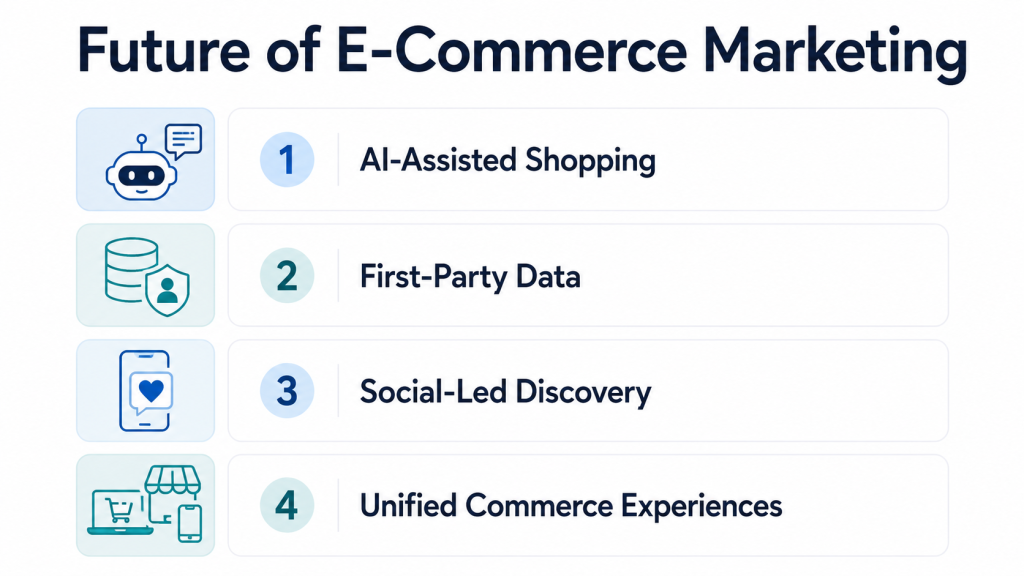
- AI-Assisted Shopping: AI is becoming part of product discovery, comparison, recommendations, and checkout. Google’s agentic commerce tools show how shopping assistants may help consumers research products, monitor prices, build carts, and complete purchases with less manual effort.
- First-Party Data: Customer data collected through purchases, loyalty programs, email subscriptions, and direct interactions will remain important for personalization and measurement.
- Social-Led Discovery: Social platforms, creators, short-form videos, livestreams, and shoppable content will continue influencing how customers discover products.
- Unified Commerce Experiences: Customers increasingly expect consistent product details, inventory information, loyalty benefits, and service across websites, apps, social platforms, marketplaces, and physical stores.
Brands that prepare their product information, customer data, and marketing systems for these changes will be better positioned to reach future shoppers.
Deepak Wadhwani has over 20 years experience in software/wireless technologies. He has worked with Fortune 500 companies including Intuit, ESRI, Qualcomm, Sprint, Verizon, Vodafone, Nortel, Microsoft and Oracle in over 60 countries. Deepak has worked on Internet marketing projects in San Diego, Los Angeles, Orange Country, Denver, Nashville, Kansas City, New York, San Francisco and Huntsville. Deepak has been a founder of technology Startups for one of the first Cityguides, yellow pages online and web based enterprise solutions. He is an internet marketing and technology expert & co-founder for a San Diego Internet marketing company.