


A New Era for Google AI Search

A New Era for Google AI Search

Table of Contents

Introduction

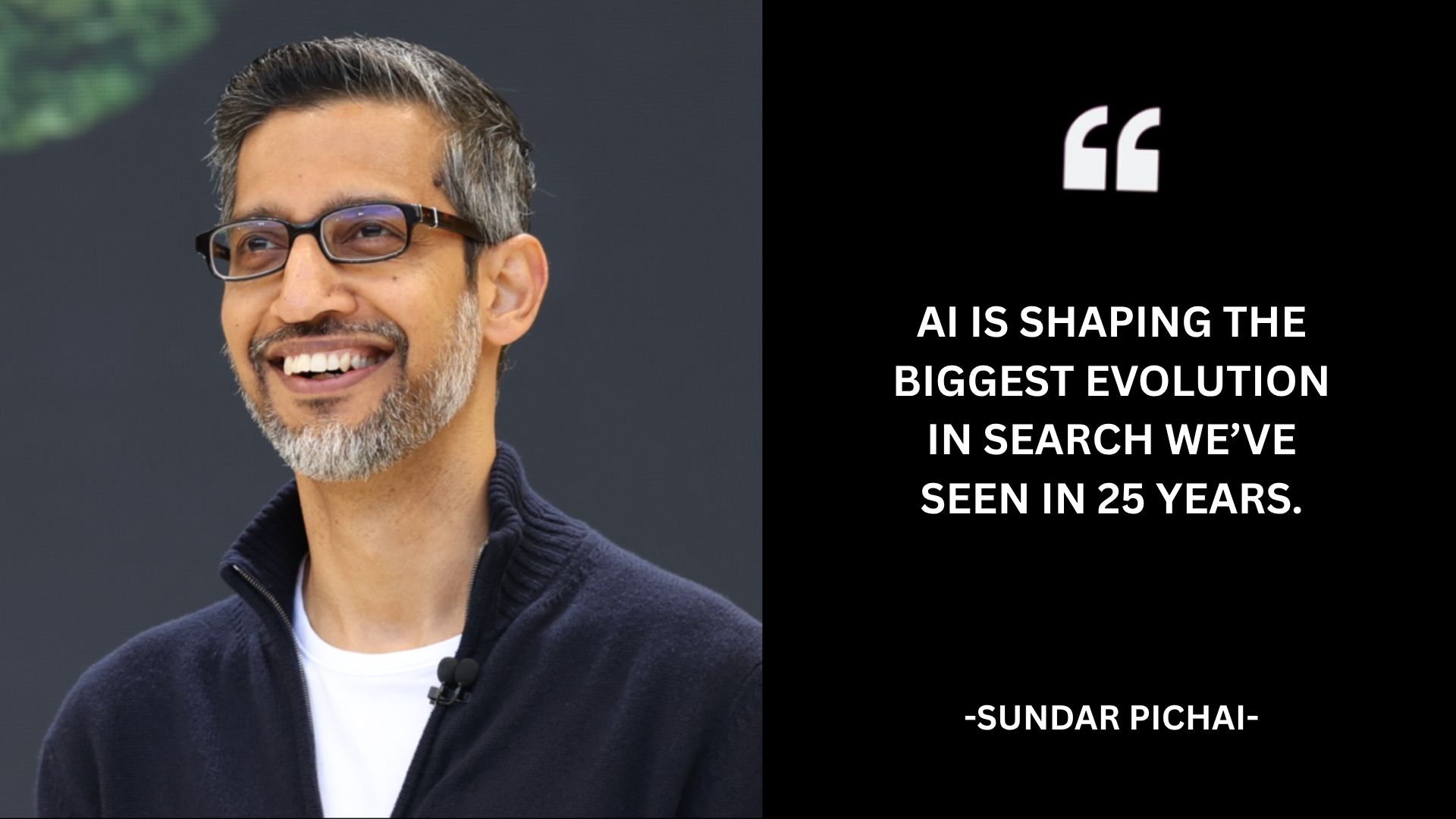
Google is making the biggest change in its search history in 25 years. The new Google intelligent search box will handle not only text but also images, videos, PDFs, and even open browser tabs.

The update merges AI mode and AI Overviews into one seamless experience, removing the need to choose between Traditional search results and AI-powered answers. Instead of simply typing in keywords, users can now talk to Google’s AI, making the search more interactive and intuitive.

The redesign, along with new Gemini models and personal AI agents such as Spark, is a sign of a shift in focus for Google. The search box is no longer simply a tool for getting results; it is becoming a central place to interact with multimodal AI.

History of the Google Search Engine

History of the Google Search Engine

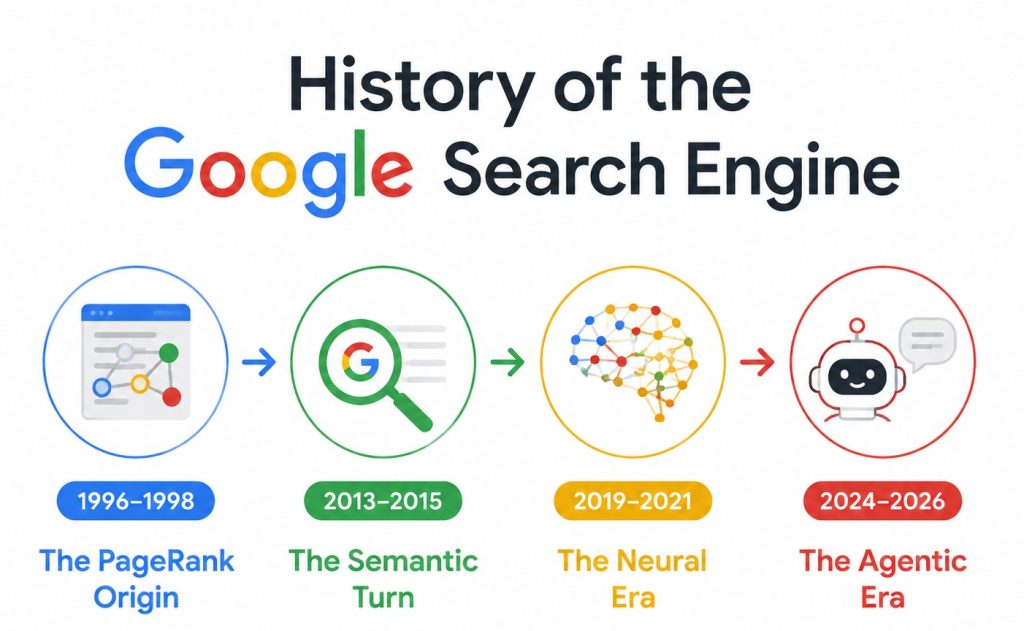
Google Search has been nearly 30 years in the making—evolving from a keyword-matching index to an AI-first interface—and each era has been marked by a different technical leap. The shift unveiled at I/O ’26 is not a sharp turn—it’s the latest chapter in a 28-year story that started in a Stanford dorm room.

  • The PageRank Origin (1996–1998): Larry Page and Sergey Brin began the project as “BackRub” at Stanford in 1996, then incorporated Google Inc. on September 4, 1998, with the PageRank algorithm at its core.
  • The Semantic Turn (2013–2015): Hummingbird, launched in 2013, rebuilt Google’s core algorithm to interpret the meaning behind conversational queries rather than match individual keywords.
  • The Neural Era (2019–2021): BERT, introduced in 2019, applied bidirectional transformer training to read query context the way a human would and affected an estimated 1 in 10 searches at launch.
  • The Agentic Era (2024–2026): At I/O 2026, Google redesigned the search box for the first time in 25+ years and introduced Information Agents that monitor the web 24/7 — the point at which Search stops returning links and starts taking action.

It is the arc that makes the move from “ten blue links” to information agents legible, and knowing that is important.

What Are Google's New AI Agents?

What Are Google's New AI Agents

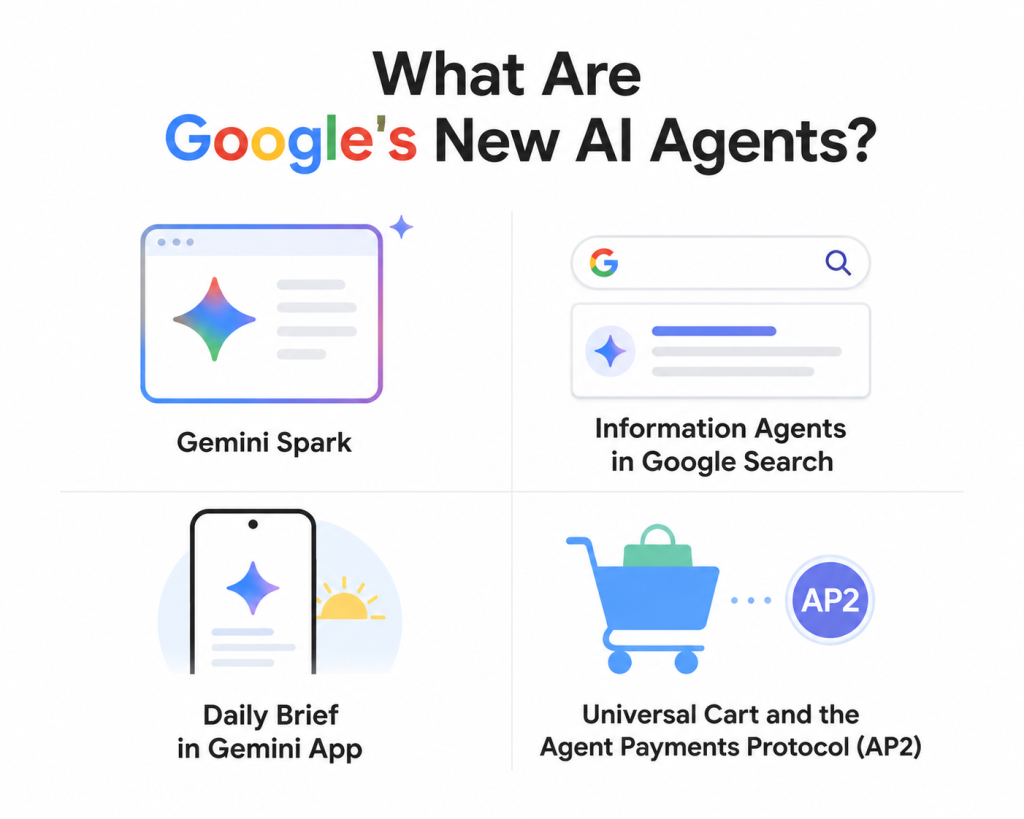
Google AI Agents are specialized programs designed to perform tasks across different surfaces like search, assistant, briefings, and commerce. Each agent focuses on a specific area, but they all run on the same underlying Antigravity infrastructure.

At I/O 2026, Google didn’t just introduce a single agent — it launched a full stack of them. Together, these agents show that Google is moving toward AI working in the background, rather than just through a chat window.

Gemini Spark

  • The Personal Agent 24/7. Spark is built on Gemini 3.5 and Google’s Antigravity harness, running on dedicated Google Cloud virtual machines, so it keeps working after the laptop closes and the phone locks.
  • It natively connects to Gmail, Docs, Slides, and Calendar. It extends via the Model Context Protocol (MCP) to 30+ third-party services, including Canva, OpenTable, Instacart, Asana, Lyft, and Shopify, with high-stakes actions like spending money gated behind explicit user approval.

Information Agents in Google Search

  • Information agents work inside AI Mode and monitor the web 24/7, tracking blogs, news, social posts, and real-time finance and shopping data. They spot updates that match user-defined criteria.
  • Building on Google Alerts (launched in 2003), they don’t just send notifications — they summarize updates, compare different perspectives, and explain why the information is important.
  • They will be available in Summer 2026 for US AI Pro and Ultra subscribers.

Daily Brief in Gemini App

  • Daily Brief gathers updates from Gmail, Calendar, and other connected apps into one morning summary. It highlights tasks based on your goals instead of showing a simple list.
  • The agent also suggests practical next steps for the day. It will launch with Spark for US Google AI Ultra subscribers.

Universal Cart and the Agent Payments Protocol (AP2)

  • Universal Cart is a hub that works across Search, Gemini, YouTube, and Gmail. It runs in the background to track price drops, show past deals, and alert you when items are restocked.
  • It uses the Agent Payments Protocol (AP2), which lets agents make purchases automatically within your set limits for brands, products, and spending. The rollout starts in the US, then expands to Canada, Australia, and later the UK.

Why Google Made the Move Now

Google’s I/O 2026 announcements weren’t a sudden change, but a necessary one. Competitor AI products were gaining regular users, traditional link-based search was showing its limits, and Google’s agent infrastructure was ready to support new capabilities.

From Retrieval to Action

From Retrieval to Action
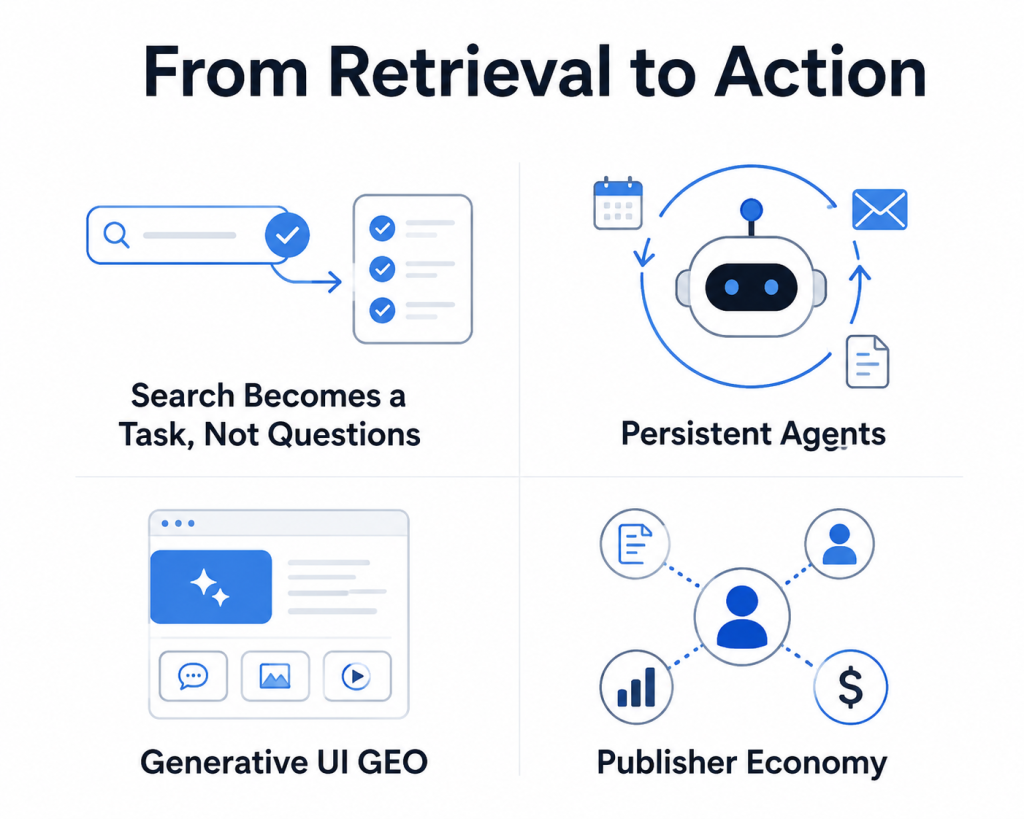
  • Search Becomes a Task, Not Questions: Google’s framing has shifted from helping users find information to having agents act on it — drafting emails, monitoring markets, completing purchases.
  • Persistent Agents: Single-prompt chatbots can’t track a flight price for a week or watch a credit-card statement for hidden fees. Spark and Information Agents address this gap by running on dedicated cloud VMs that operate without user supervision.
  • Generative UI-GEO: Search results now build custom widgets and interactive visualizations on the fly, powered by Gemini Flash 3.5 in partnership with DeepMind. The output stops being a list of links and starts being a tool tailored to the specific question.
  • Publisher Economy: AI Overviews have already cut referrals to publishers, and agent-driven search will accelerate the decline. Google’s strategic bet is that owning the answer layer matters more than preserving the click layer.

The Competitive Pressure

The Competitive Pressure
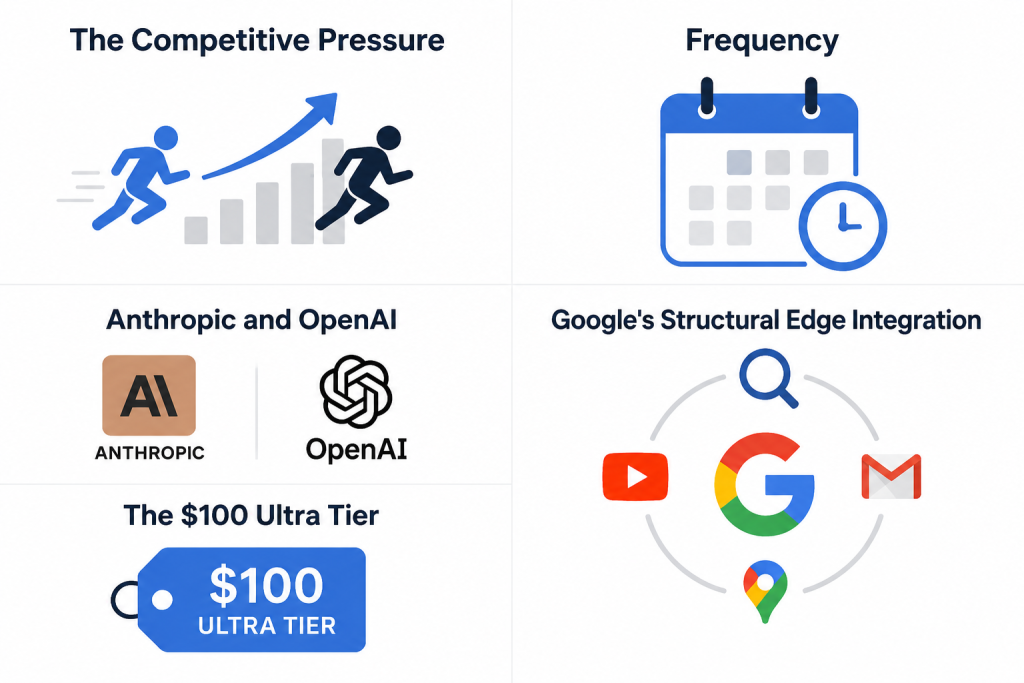
  • Frequency: The Metric Google Is Losing AI Overviews reach 2.5 billion monthly users and AI Mode reaches 1 billion, but ChatGPT now sees 900 million weekly active users — meaning ChatGPT users return more often, even with a smaller total base.
  • Anthropic and OpenAI: Claude Cowork and ChatGPT Agent established the personal-agent category before Spark launched, forcing Google to ship a response rather than define the category itself.
  • Google’s Structural Edge Integration: Spark connects natively to Gmail, Docs, Calendar, Chrome, and Android — the layers competitors must stitch together through third-party APIs. The pitch is depth of integration, not feature-by-feature parity.
  • The $100 Ultra Tier: Google repriced Ultra to sit directly alongside ChatGPT Pro and Claude Max, signaling that the premium-consumer-AI bracket is now the contested market — and that Spark, Information Agents, and Daily Brief are the bait to win it.

The Agentic Race

The Agentic Race
The Agentic Race
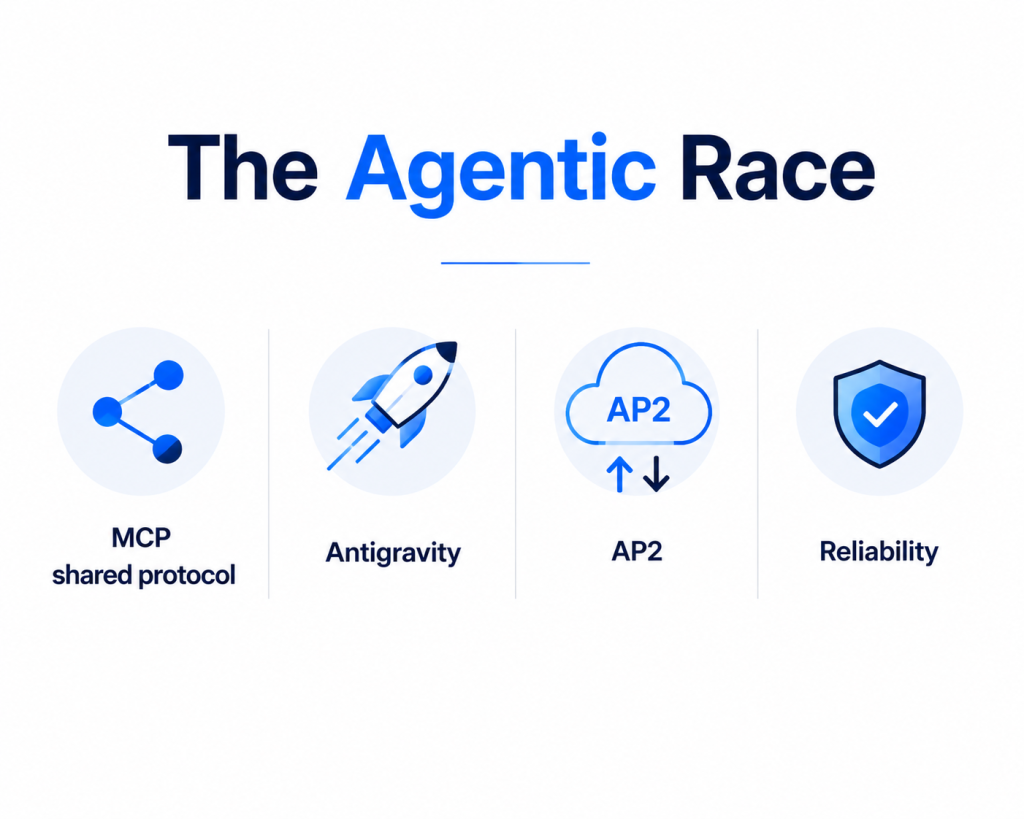
  • MCP Protocol: Spark and other AI agents use the Model Context Protocol (from Anthropic) to connect with services like Instacart, Lyft, and Shopify. The protocol is becoming standard faster than the agents themselves.
  • Antigravity: Spark, Co-Scientist, and user-created mini-apps in Search all run on Google’s Antigravity platform. By controlling the platform, not just the apps, Google aims to stay ahead.
  • AP2: The Agent Payments Protocol lets agents make purchases automatically within your spending limits. It works alongside Google’s Universal Commerce Protocol (UCP) for merchant connections.
  • Reliability: Agent errors can cost users money, time, and trust — more than typical chatbot mistakes. The key in 2026 is not just launching first, but having agents people can trust to act on their own.

Agentic Future: What Gemini 3.5 Flash Signals

Agentic Future What Gemini 3.5 Flash Signals

Gemini 3.5 Flash is the model layer behind everything Google announced — generative UI for Search, Spark, Information Agents, and the mini-apps that users create within AI Mode.

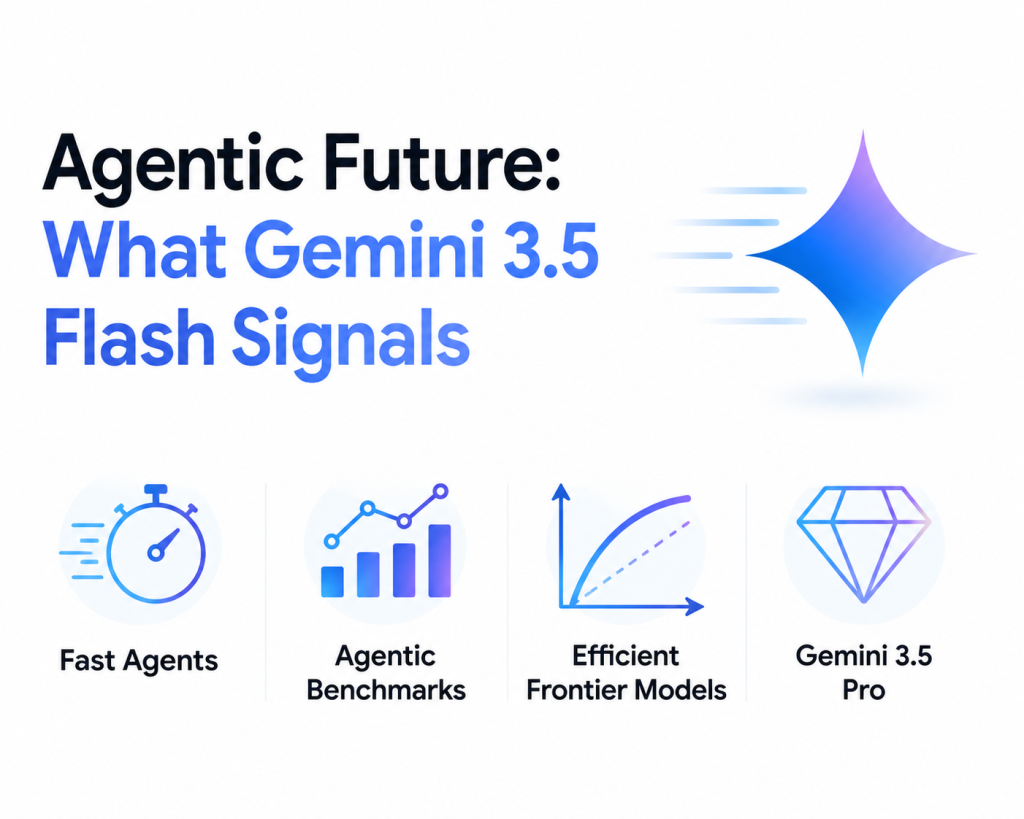
  • Fast Agents: At 4× the output tokens per second of other frontier models, Flash is fast enough for agents to act in real time rather than queue tasks in the background.
  • Agentic Benchmarks: Google framed Flash as its strongest agentic and coding model yet, outperforming Gemini 3.1 Pro on both benchmark categories. The signal is that benchmark leadership is shifting from raw reasoning scores to task completion
  • Efficient Frontier Models: Pichai’s “highly capable but also very efficient, fast, and at a lower price” doctrine is why generative UI launches free this summer to all users while Spark and Information Agents start gated behind Ultra.
  • Gemini 3.5 Pro: Google’s tease of Gemini 3.5 Pro arriving the following month signals that the agent stack — Spark, Co-Scientist, Antigravity — gets a capability upgrade roughly every six weeks now.
Its specs tell you more about Google’s agentic roadmap than any product demo ever did.
Scroll to Top