


Table of Contents
Introduction
Schneider Electric has transformed itself from a traditional electrical equipment manufacturer into a global leader in electrification, automation, and digitalization. Today, the company operates at the intersection of energy systems, industrial automation, and software-driven intelligence.
A major part of this evolution has been its expansion into North America, where Schneider Electric strengthened its presence in advanced manufacturing, data centers, and energy infrastructure.
This region became a key driver for scaling digital solutions like EcoStruxure and accelerating the adoption of smart industrial systems across industries. Another defining milestone was the acquisition of Square D, a well-established name in electrical distribution and industrial control.
This move significantly expanded Schneider Electric’s footprint in the North American market and strengthened its portfolio in circuit protection, switchgear, and industrial automation.
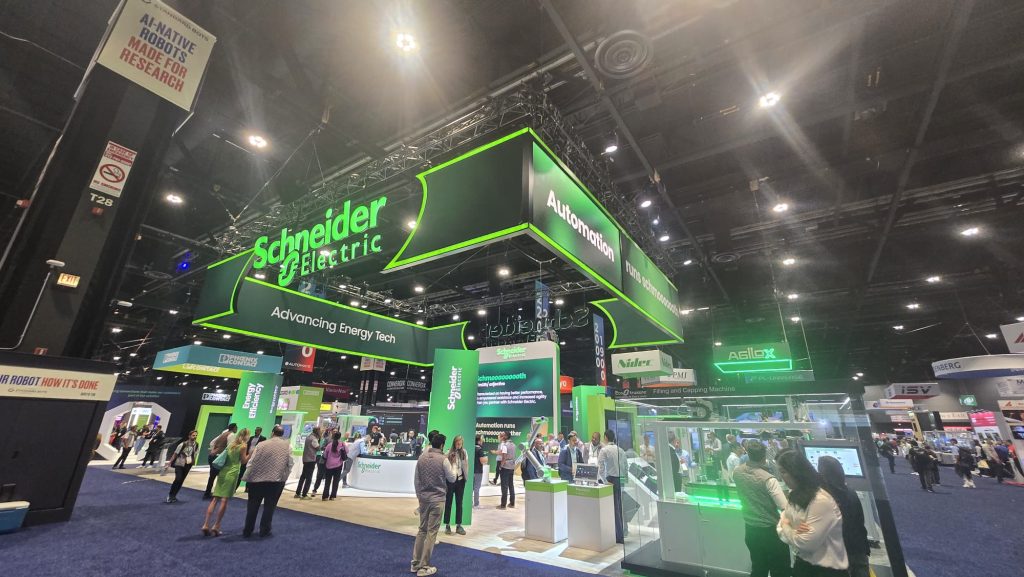
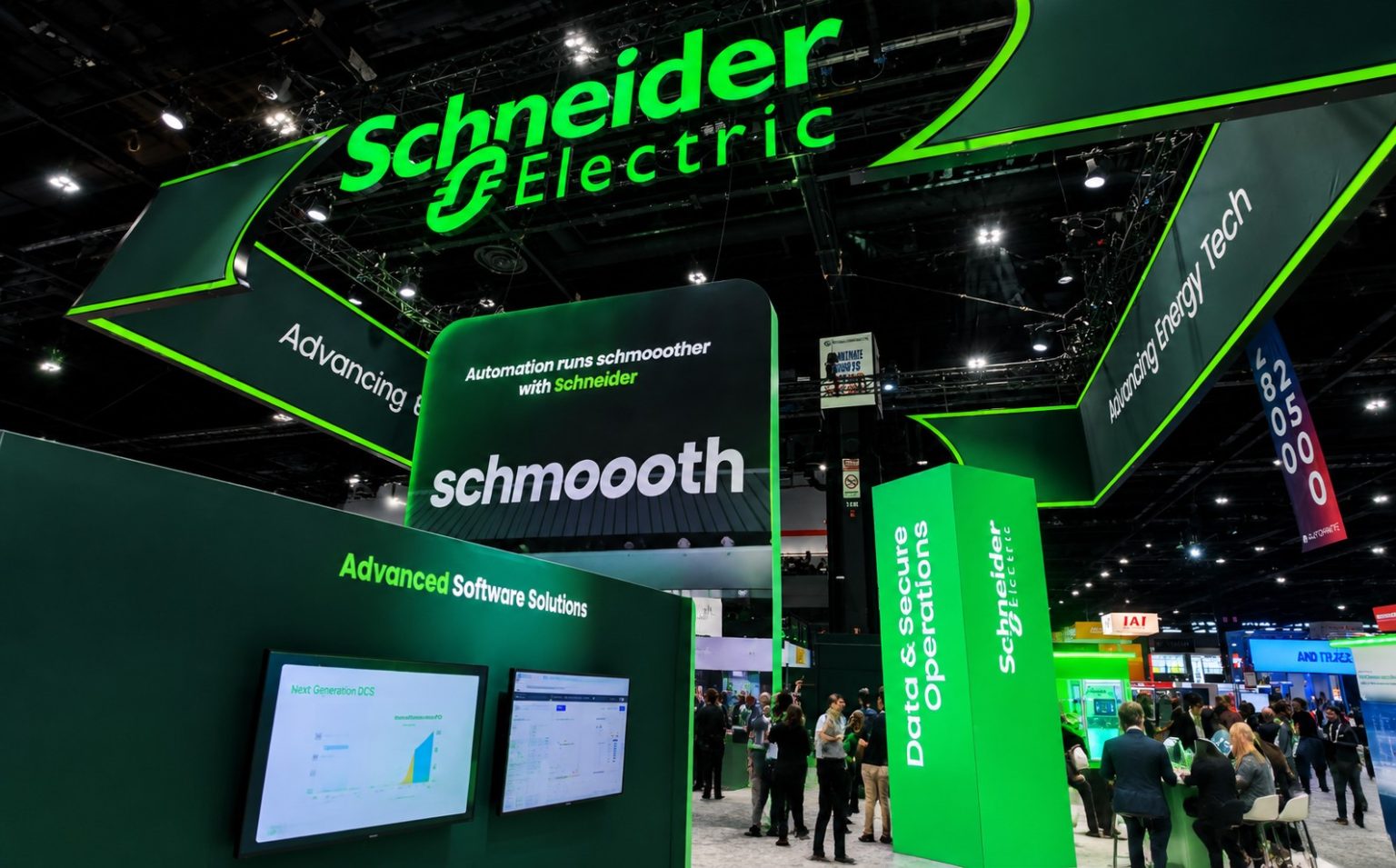
At a recent global industry conference, Schneider Electric showcased this transformation in a highly visible way through its immersive exhibition booth, designed around connected automation and digital energy management.
The display highlighted advanced software solutions, real-time industrial monitoring, and integrated energy systems under the EcoStruxure ecosystem, reflecting how the company is positioning itself at the center of smart infrastructure.
The core idea behind this transformation is simple but powerful: industries should not just consume energy, they should continuously manage, optimize, and improve it through connected, intelligent, and sustainable systems.
The Strategic Shift: Why Digital Transformation Became Essential
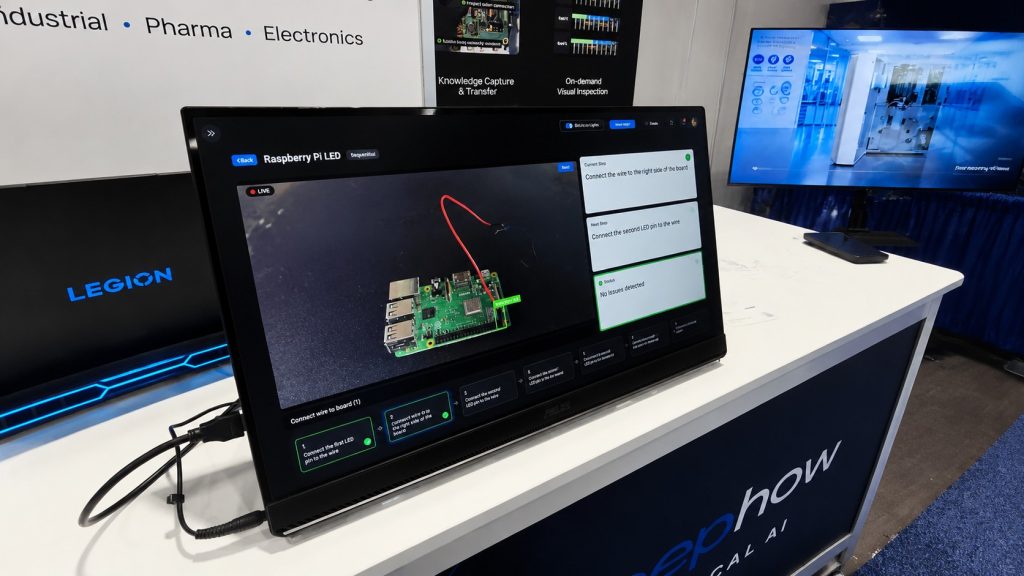
The global industrial landscape has changed rapidly over the last two decades. Three major forces pushed companies like Schneider Electric to rethink their strategy.
- First is the rising demand for energy efficiency and sustainability. Governments, businesses, and consumers are all pushing toward lower emissions and better resource use. Energy is no longer just a utility cost; it is a performance metric.
- Second is industrial pressure created by decarbonization goals, electrification of transport and infrastructure, and rising energy price volatility. Traditional systems that operated in isolation could no longer deliver the visibility needed to manage these pressures.
- Third is the shift away from siloed industrial systems. Earlier, buildings, factories, and grids operated independently.
- Now, industries require integrated digital ecosystems where data flows seamlessly across systems.
This has led to a major mindset change: energy is no longer just consumed; it is continuously managed, analyzed, and optimized in real time.
Schneider Electric Advanced Software Solutions
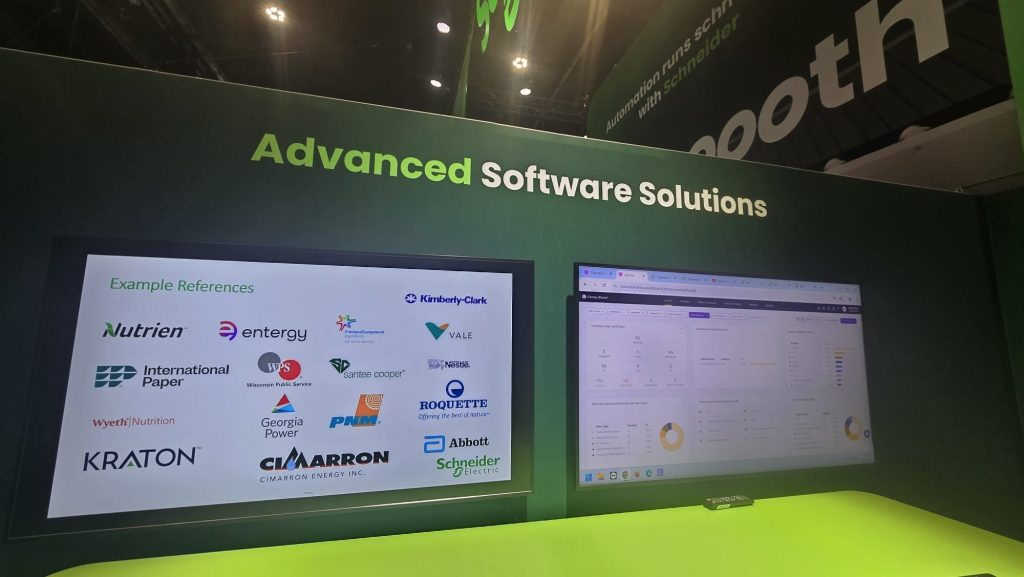
Schneider Electric’s advanced software ecosystem, primarily built around the EcoStruxure and AVEVA platforms, delivers end-to-end digital transformation for energy management, industrial automation, and smart facilities. These scalable solutions decouple software from hardware to boost efficiency and sustainability.
Most of these tools operate through Schneider Electric’s EcoStruxure platform, which connects equipment, software, analytics, and cloud-based services. This connected approach allows organizations to monitor performance, automate processes, reduce energy consumption, and make better decisions using real-time data.
SCADA (Supervisory Control and Data Acquisition)
SCADA (Supervisory Control and Data Acquisition) is a system used to collect real-time information from industrial equipment and remotely monitor and control machines, production processes, utilities, and distributed assets.
The primary purpose of SCADA is to provide operators with centralized visibility into active operations.
- AVEVA System Platform: This scalable platform supports supervisory control, SCADA, MES, and IIoT applications. It provides enterprise-wide visualization and real-time operational insights while connecting people, processes, and industrial assets across multiple facilities.
- EcoStruxure Grid Operation: This entry-level Advanced Distribution Management System is designed for small and medium-sized utilities.
- It combines SCADA functionality with advanced outage management to help operators monitor grid conditions, manage interruptions, and support reliable power distribution.
Digital Twins
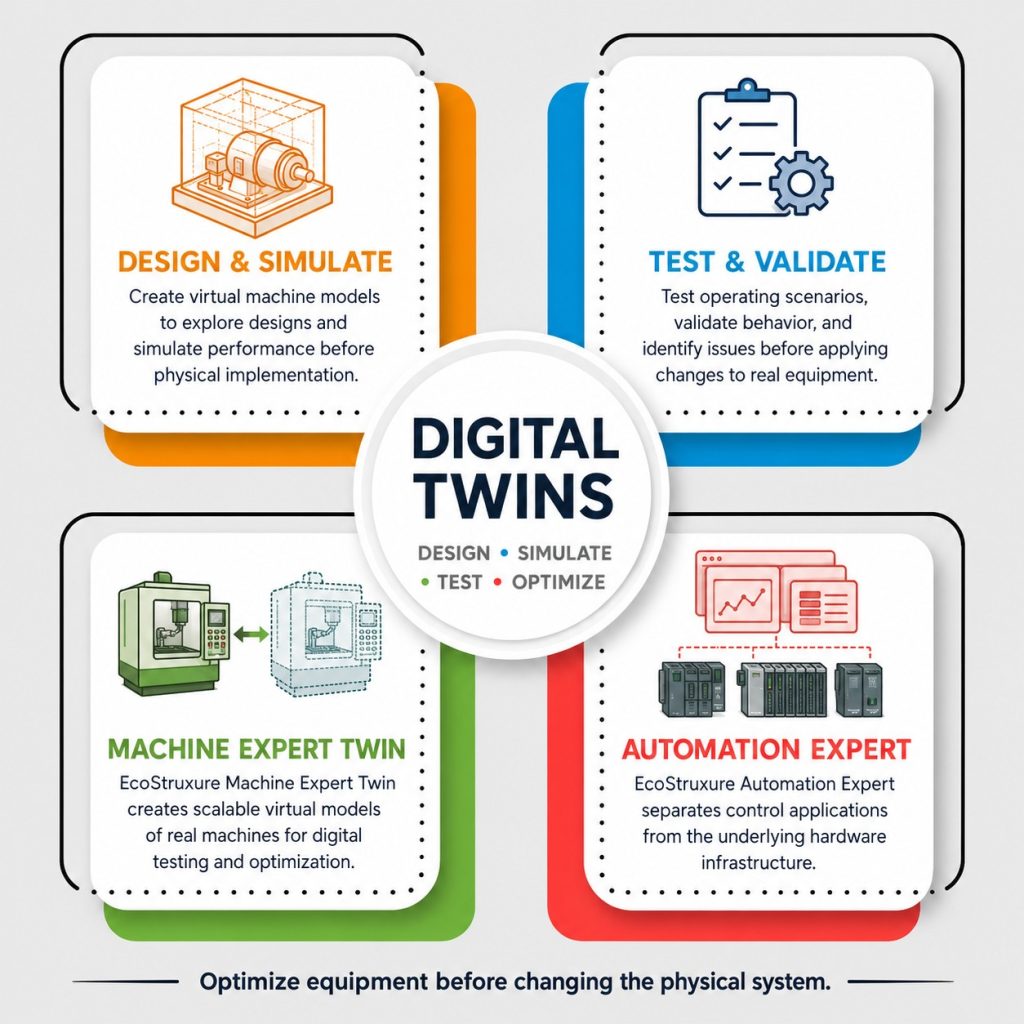
A digital twin is a virtual representation of a physical machine, asset, system, or process. It models how the real asset is designed, configured, and expected to operate under different conditions.
The main purpose of digital twin technology is to help engineers design, simulate, test, validate, and optimize equipment before applying changes to the physical system.
- EcoStruxure Machine Expert Twin: This scalable digital twin software creates virtual models of real machines. Engineers can perform virtual design, testing, and commissioning before building the physical equipment. Schneider Electric states that the software can reduce time to market by up to 50% and commissioning time by up to 60%.
- EcoStruxure Automation Expert: This software-centric industrial automation system separates control applications from the underlying hardware infrastructure. It supports reusable automation components, flexible system architectures, and closer IT and OT integration. It can complement digital twin workflows by allowing control applications to be tested and deployed across compatible automation environments.
SCADA focuses on monitoring and controlling systems that are currently operating, while digital twins focus on virtually designing, testing, and improving equipment. Together, they give industrial teams greater control over both present operations and future system changes.
Industrial Automation & Control
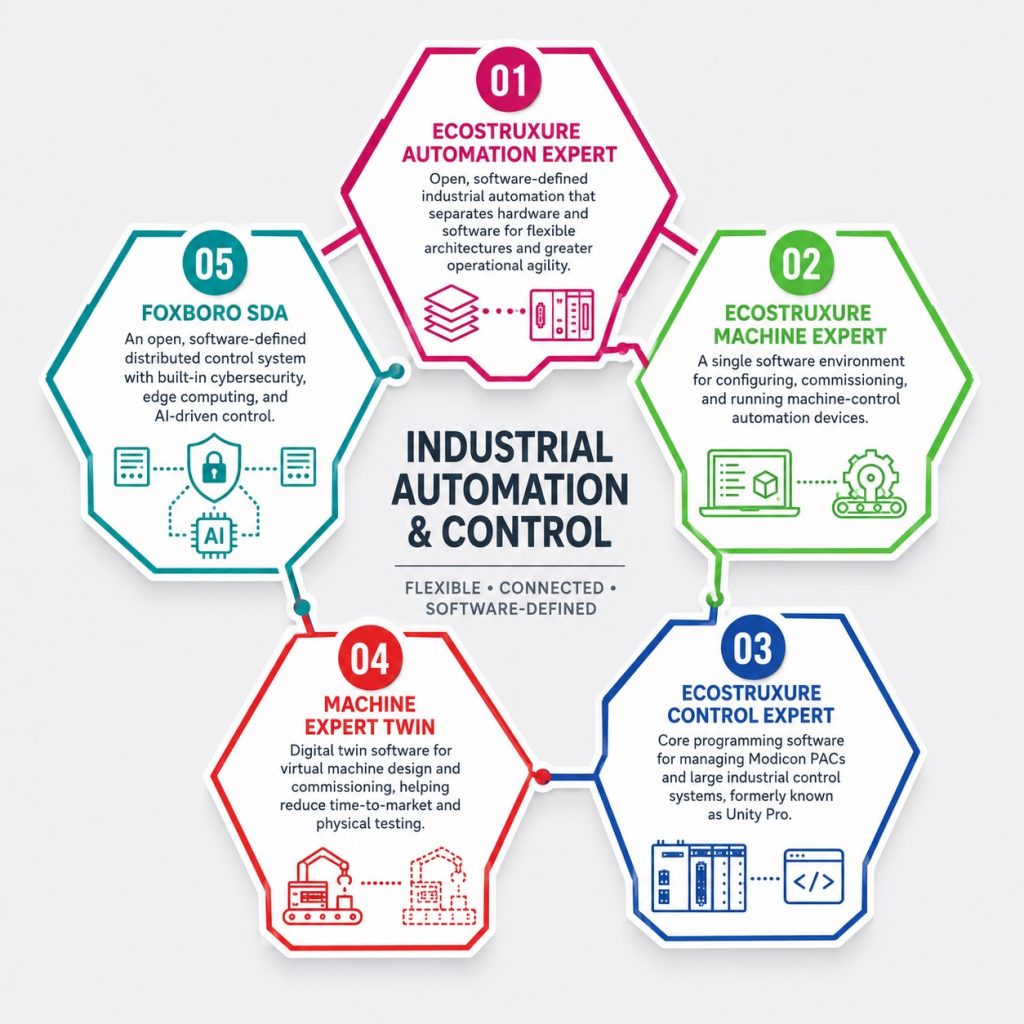
- EcoStruxure Automation Expert: The world’s first open, software-defined industrial automation system. It allows operators to build flexible architectures where hardware and software are separated, boosting agility across operations.
- EcoStruxure Machine Expert: A single, streamlined software environment for configuring, commissioning, and running machine control automation devices.
- EcoStruxure Control Expert: The core programming software used to manage Modicon PACs and large industrial control systems (formerly Unity Pro).
- EcoStruxure Machine Expert Twin: A digital twin software suite that enables the virtual design and commissioning of machines, reducing time-to-market and physical testing time.
- Foxboro SDA: The first open, software-defined distributed control system (DCS), providing built-in cybersecurity, advanced edge computing, and AI-driven control capabilities.
Power & Energy Management
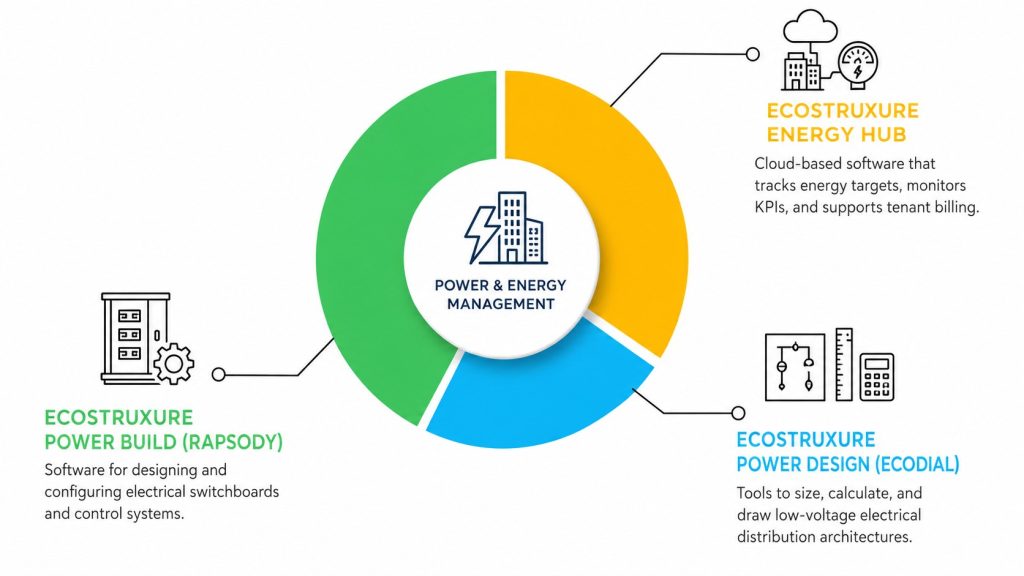
- EcoStruxure Energy Hub: A cloud-based energy management software for commercial and industrial buildings that tracks usage targets, monitors KPIs, and enables tenant billing.EcoStruxure
- Power Design (Ecodial): Intuitive software for electrical engineers to size, calculate, and draw low-voltage electrical distribution architectures.
- EcoStruxure Power Build (Rapsody): A software suite to easily design and configure electrical switchboards and control systems.
Building & Facility Management
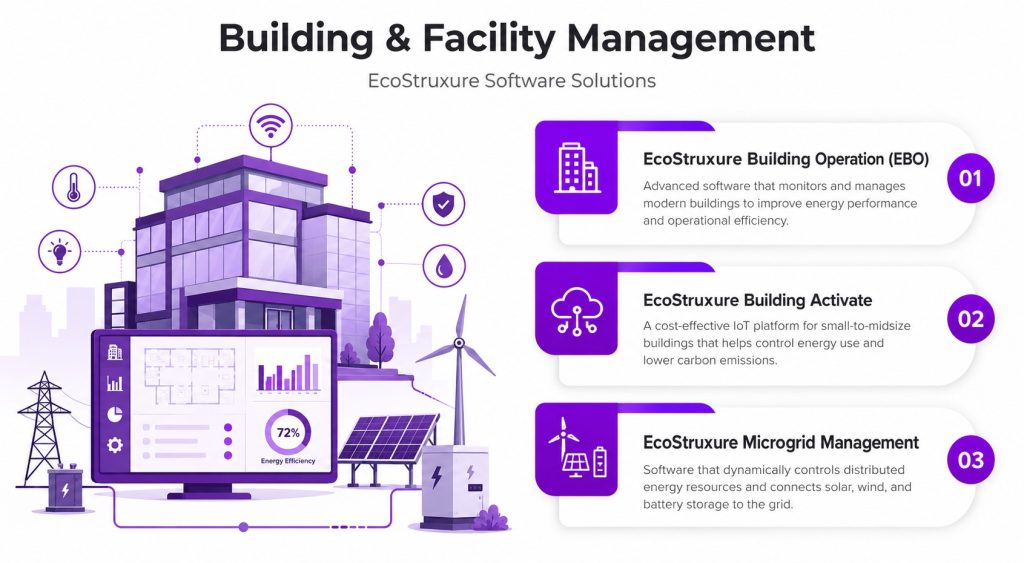
- EcoStruxure Building Operation (EBO): Advanced software to monitor, manage, and increase the energy and operational efficiency of modern buildings and smart facilities.
- EcoStruxure Building Activate: A cost-effective IoT platform tailored for small-to-midsize buildings to control energy use and lower carbon emissions.
- EcoStruxure Microgrid Management: Software that dynamically controls and seamlessly connects distributed energy resources (solar, wind, storage) to the grid
Engineering & Field Tools
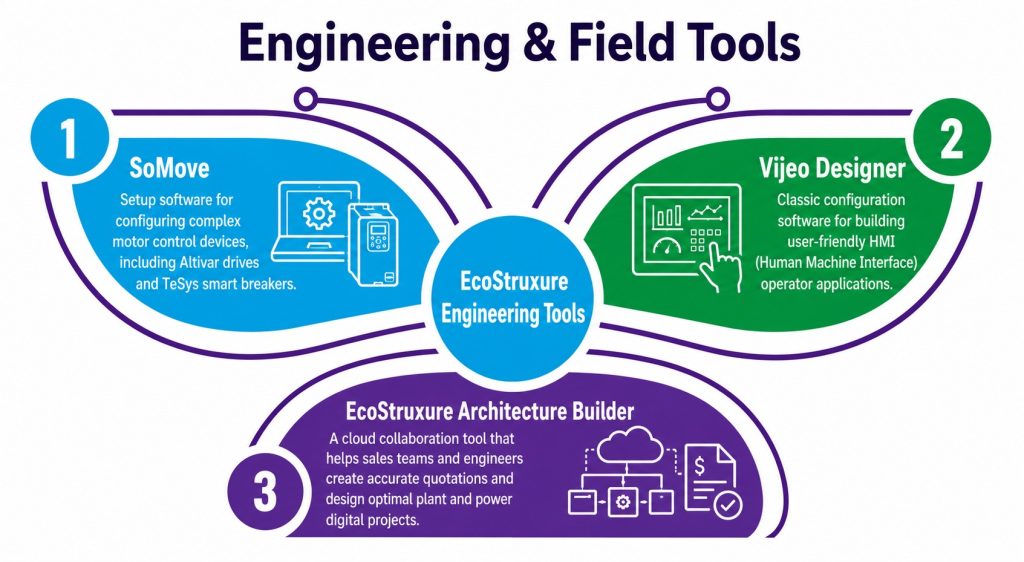
- SoMove: Setup software used to configure complex motor control devices such as Altivar drives and TeSys smart breakers.
- Vijeo Designer: Classic configuration software designed to build user-friendly HMI (Human Machine Interface) operator dialogue applications.
- EcoStruxure Architecture Builder: A cloud-based collaboration tool designed for sales teams and engineers to generate accurate quotations and build optimal plant and power digital projects.
Through these advanced software solutions, Schneider Electric enables organizations to connect physical assets with digital intelligence. This integration supports predictive maintenance, faster decision-making, lower energy consumption, improved system reliability, and more sustainable operations.
IoT-Driven Energy Transformation
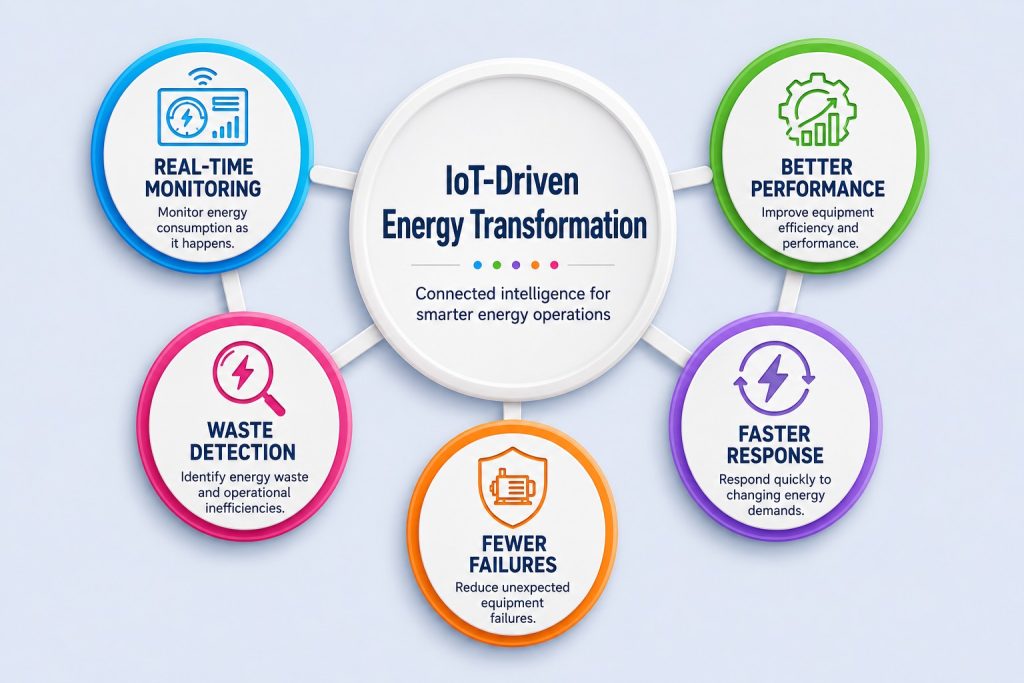
Schneider Electric also uses IoT technology to improve energy management. Smart devices continuously track energy use across buildings, grids, and industrial facilities.
This allows organizations to:
- Monitor energy consumption in real time
- Detect waste and operational inefficiencies
- Improve equipment performance
- Respond quickly to changing energy demands
- Reduce unexpected equipment failures
This connected approach is moving energy management from reactive problem-solving to predictive and data-driven planning.
AI, Data, and Software-Defined Industry
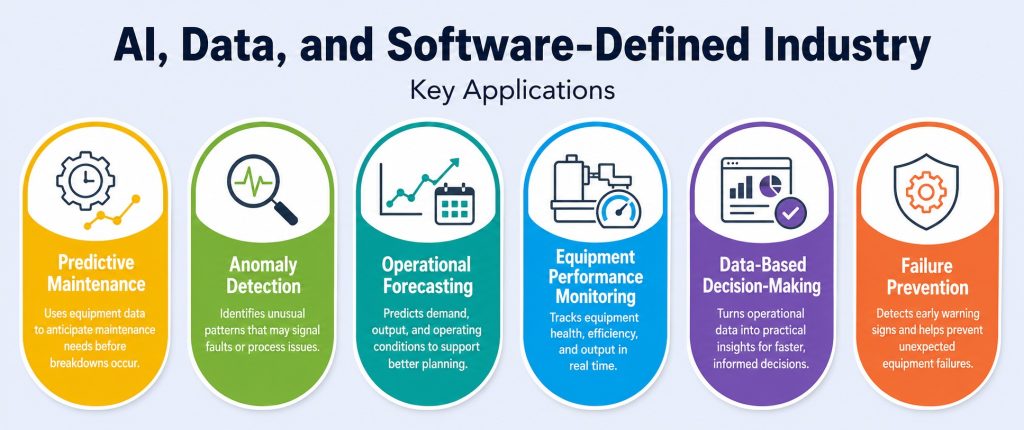
Artificial intelligence and advanced analytics further strengthen Schneider Electric’s software ecosystem. AI-powered tools can identify unusual equipment behavior, predict maintenance needs, forecast operational performance, and improve asset reliability.
Key applications include:
- Predictive maintenance
- Anomaly detection
- Operational forecasting
- Equipment performance monitoring
- Data-based decision-making
- Failure prevention
Schneider Electric is also supporting the shift toward software-defined automation. Unlike traditional systems built around fixed programming, software-defined systems can be updated and adjusted digitally. This gives manufacturers greater flexibility when production requirements or operating conditions change.
Software-defined automation helps businesses achieve:
- Faster system updates
- Easier process adjustments
- Greater manufacturing flexibility
- Reduced dependence on manual reprogramming
- Improved response to changing production needs
Robotics and Industrial Automation Evolution
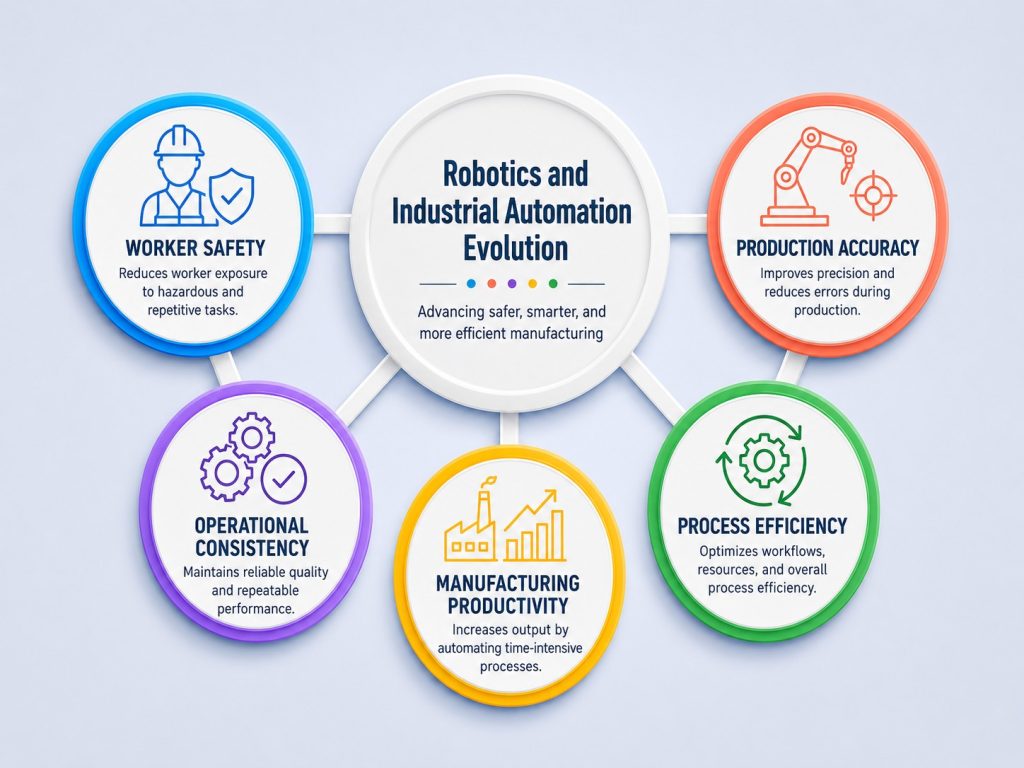
Robotics is another important part of this transformation. Modern industrial robots are increasingly connected with IoT platforms, sensors, AI systems, and industrial software. Instead of working as isolated machines, robots can communicate with other equipment and adapt to changing production conditions.
Software-controlled robotics also makes it easier to modify robotic tasks through digital systems. This improves production flexibility and supports stronger collaboration between workers and machines.
Robots can assist employees with repetitive, physically demanding, and precision-based tasks, helping improve:
- Worker safety
- Production accuracy
- Operational consistency
- Manufacturing productivity
- Overall process efficiency
By combining EcoStruxure, IoT connectivity, artificial intelligence, software-defined automation, and connected robotics, Schneider Electric is creating smarter and more adaptable industrial environments.
Expansion of Schneider Electric into North America
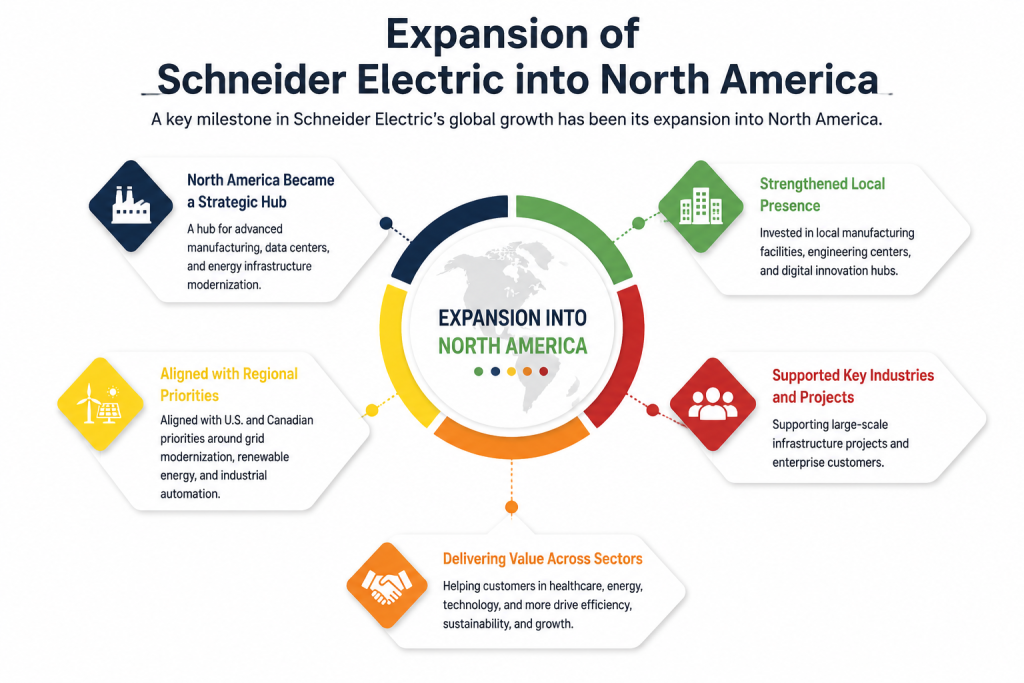
A key milestone in Schneider Electric’s global growth has been its expansion into North America. This region has played a major role in shaping the company’s digital and industrial strategy.
- North America became a hub for advanced manufacturing, data centers, and energy infrastructure modernization.
- Schneider Electric strengthened its presence by investing in local manufacturing facilities, engineering centers, and digital innovation hubs.
- The company also aligned closely with U.S. and Canadian priorities around grid modernization, renewable energy integration, and industrial automation.
- This allowed it to support large-scale infrastructure projects and enterprise customers across sectors like healthcare, energy, and technology.
- More importantly, North America became a testing ground for EcoStruxure deployments at scale.
From smart buildings in major cities to highly automated factories and data centers, the region helped validate Schneider Electric’s digital-first approach.
Square D Acquisition
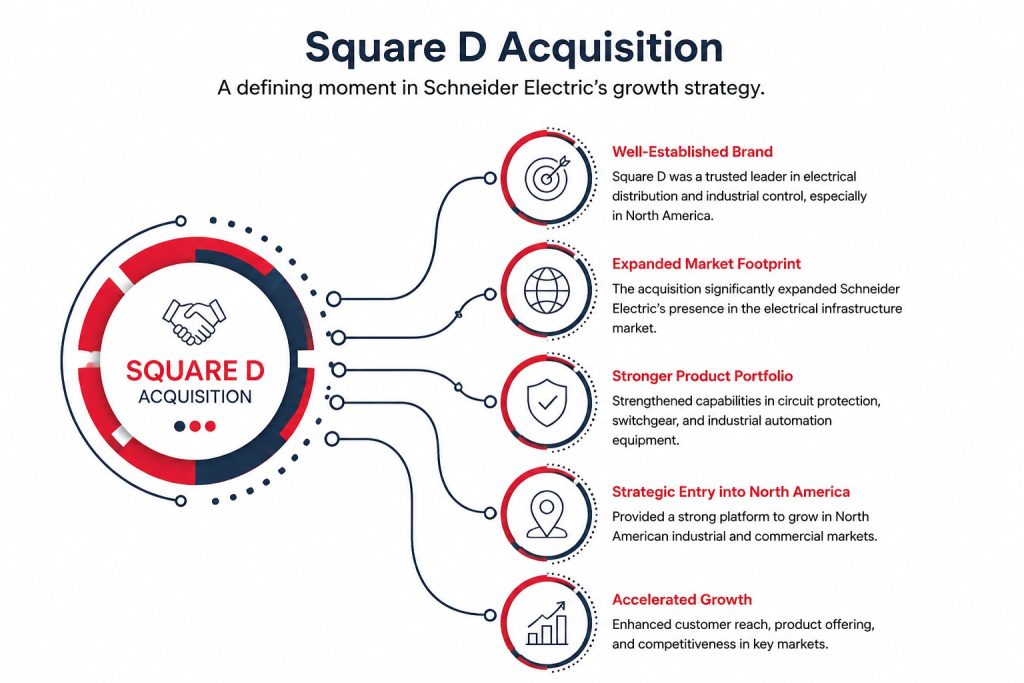
A defining moment in Schneider Electric’s growth strategy was the acquisition of Square D.
- Square D was already a well-established name in electrical distribution and industrial control systems, particularly in North America.
- By acquiring Square D, Schneider Electric significantly expanded its footprint in the electrical infrastructure market.
- This acquisition strengthened its portfolio in circuit protection, switchgear, and industrial automation equipment.
- It also gave the company a strong entry point into the North American industrial and commercial markets.
- Over time, Square D products were integrated into Schneider Electric’s broader ecosystem, becoming part of its connected energy and automation solutions.
This helped bridge the gap between legacy electrical systems and modern IoT-enabled infrastructure.
Manufacturing 4.0: Smart Factories of the Future
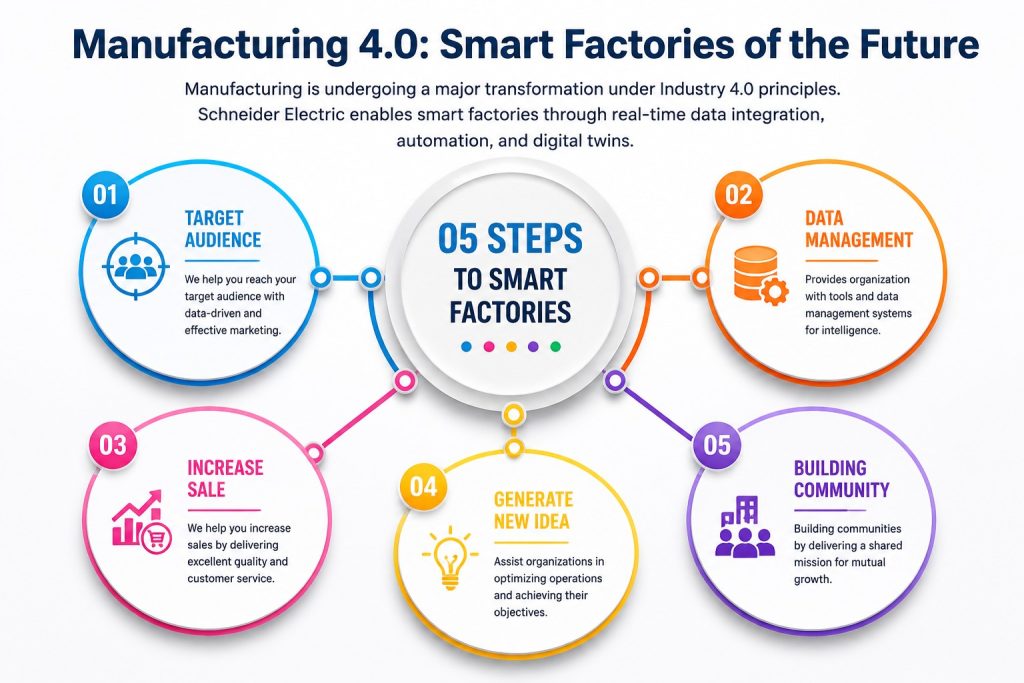
Manufacturing is undergoing a major transformation under Industry 4.0 principles.
- Schneider Electric enables smart factories through real-time data integration, automation, and digital twins.
- A digital twin is a virtual model of a physical factory that allows simulation, testing, and optimization before real-world implementation.
- Factories today are fully connected from supply chain systems to shop floor operations.
- Machines, sensors, and software communicate continuously to improve efficiency and reduce waste.
This leads to adaptive manufacturing systems that can respond dynamically to demand changes, equipment conditions, and supply chain disruptions.
Sustainability and Open Innovation as Digital Growth Drivers
Schneider Electric treats sustainability as a core part of digital transformation rather than a separate business initiative. Its digital platforms help organizations monitor energy use, carbon emissions, and operational performance in real time.
Key benefits include:
- Real-time tracking of energy consumption and emissions
- Faster identification of energy waste and inefficiencies
- Better alignment with net-zero and ESG goals
- Improved sustainability reporting and accountability
- Lower operating costs through smarter energy management
Energy efficiency has become an important operational KPI, alongside productivity, cost, and performance. By connecting sustainability data with daily operations, businesses can make more informed decisions and turn environmental targets into measurable actions.
Schneider Electric also relies on ecosystem partnerships and open innovation to expand its digital capabilities. The company works with partners across:
- Cloud computing
- Artificial intelligence
- Semiconductor technology
- Cybersecurity
- Industrial automation
Software development
This partnership-based approach improves interoperability between systems and reduces dependence on closed, proprietary platforms. By co-developing solutions with technology leaders, Schneider Electric can:
- Accelerate innovation
- Improve system compatibility
- Integrate new tools with existing infrastructure
- Scale solutions across industries and global markets
Together, sustainability and open innovation strengthen Schneider Electric’s digital transformation strategy by improving efficiency, supporting environmental goals, and creating more connected industrial systems.
The Business Impact of Digital Transformation
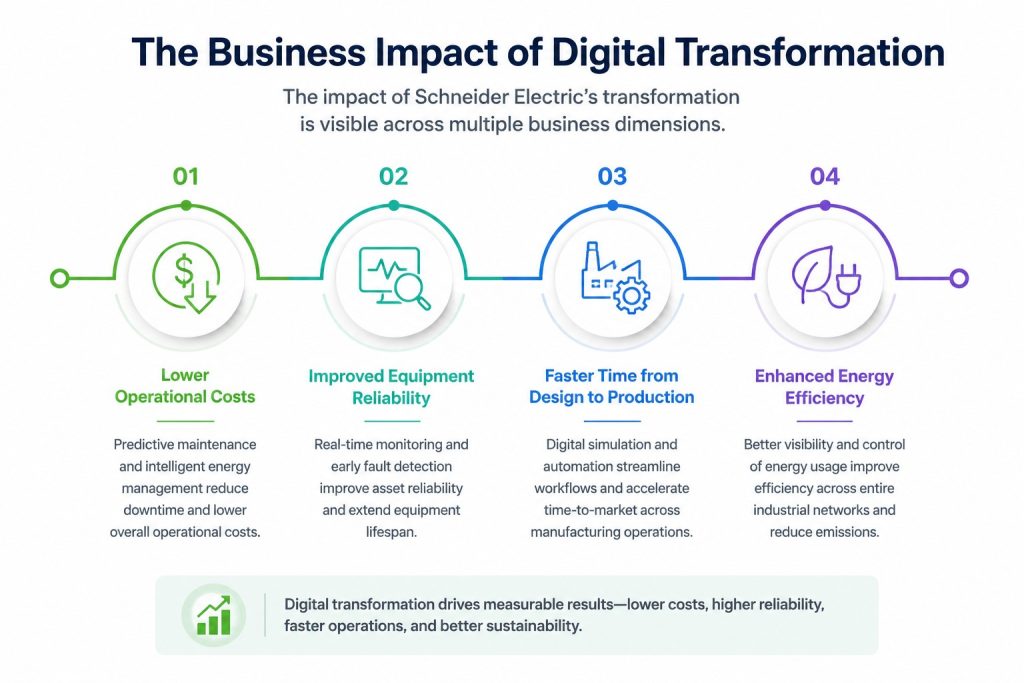
The impact of Schneider Electric’s transformation is visible across multiple business dimensions.
- Operational costs have decreased due to predictive maintenance and better energy management.
- Equipment reliability has improved through real-time monitoring and early fault detection.
- Manufacturing operations now move faster from design to production due to digital simulation and automation.
- Energy efficiency has improved across entire industrial networks.
Most importantly, organizations now operate as fully connected, intelligent enterprises rather than disconnected systems.
Future Outlook of Schneider Electric’s
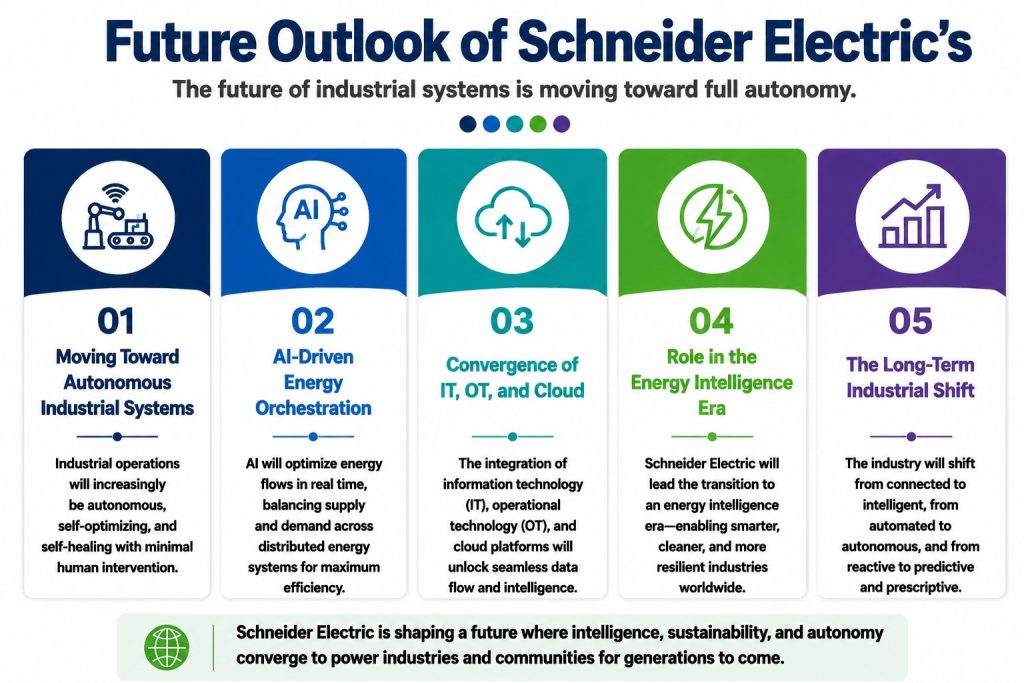
The future of industrial systems is moving toward full autonomy.
Moving Toward Autonomous Industrial Systems
- The next phase of industrial evolution is heading toward full autonomy, where systems are no longer just automated but capable of self-optimization.
- Energy networks, factories, and infrastructure will increasingly operate with minimal human intervention, continuously adjusting in real time based on demand, efficiency, and environmental conditions.
AI-Driven Energy Orchestration
- A major driver of this shift is AI-powered energy orchestration.
- Instead of manually balancing energy consumption and supply, intelligent systems will dynamically distribute energy where it is needed most, reduce waste, and optimize performance across entire industrial ecosystems.
- This will redefine how organizations think about energy efficiency, turning it into a continuously learning and self-correcting process.
Convergence of IT, OT, and Cloud
- Another major transformation is the convergence of IT (information technology), OT (operational technology), and cloud infrastructure.
- This integration will break down traditional silos between industrial operations and digital systems, creating unified environments where data flows seamlessly from machines to enterprise-level decision systems.
- The result is faster insights, better coordination, and more responsive industrial control.
Role in the Energy Intelligence Era
- Schneider Electric is positioning itself at the center of this shift by building energy intelligence platforms that combine software, hardware, and advanced analytics into a single connected ecosystem.
- These platforms are designed to support industries as they transition from fragmented systems to fully integrated digital operations.
The Long-Term Industrial Shift
- The direction is becoming increasingly clear. The future industrial landscape will go beyond automation.
- It will be defined by systems that are intelligent, adaptive, and autonomous, capable of learning from data and continuously improving performance without constant human input.

Deepak Wadhwani has over 20 years experience in software/wireless technologies. He has worked with Fortune 500 companies including Intuit, ESRI, Qualcomm, Sprint, Verizon, Vodafone, Nortel, Microsoft and Oracle in over 60 countries. Deepak has worked on Internet marketing projects in San Diego, Los Angeles, Orange Country, Denver, Nashville, Kansas City, New York, San Francisco and Huntsville. Deepak has been a founder of technology Startups for one of the first Cityguides, yellow pages online and web based enterprise solutions. He is an internet marketing and technology expert & co-founder for a San Diego Internet marketing company.