


Table of Contents
Introduction
The ecommerce industry continues to evolve rapidly. Brands that once managed their online stores with basic ecommerce tools now require advanced technology to handle increasing traffic, expanding product catalogs, international customers, multiple sales channels, and complex business operations.
Shopify has become one of the most trusted ecommerce platforms because it allows businesses to build and manage online stores efficiently. From startups launching their first products to established brands generating millions in sales, Shopify provides the foundation needed for online growth.
However, as businesses scale, many brands reach a point where standard Shopify plans may no longer provide the flexibility, automation, and control they need. This is where Shopify Plus becomes a consideration.
This guide explains the differences between Shopify Plus and Shopify, the signs that indicate it may be time to upgrade, and how brands can determine which solution best fits their ecommerce strategy.
Overview of Shopify
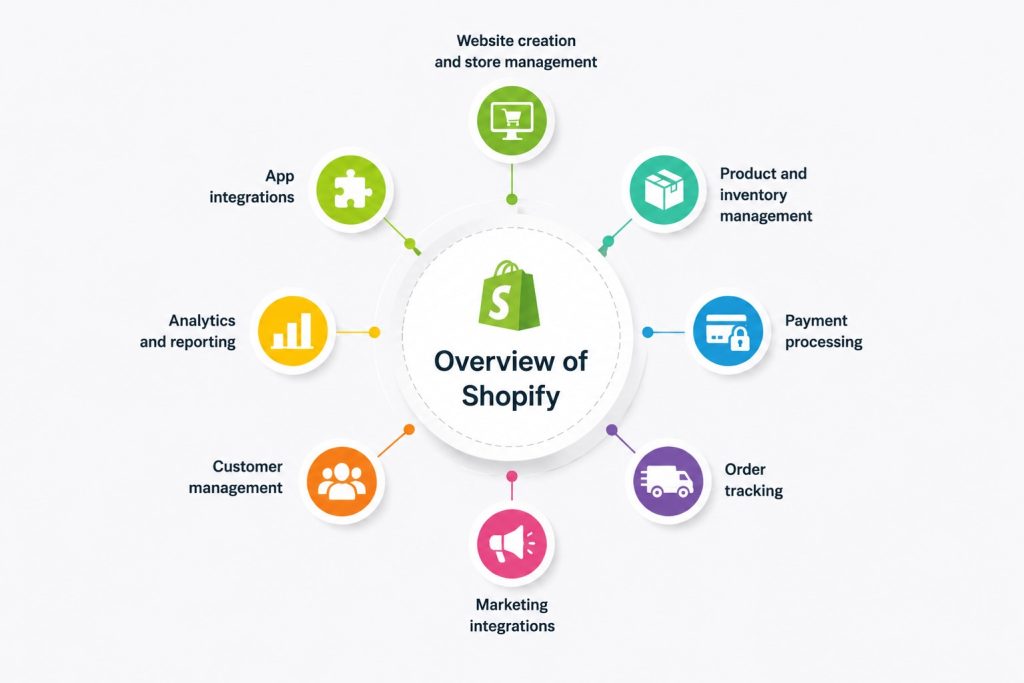
Shopify is a complete ecommerce platform that enables businesses to create, manage, and grow online stores without requiring extensive technical knowledge.
It provides businesses with essential ecommerce features, including:
- Website creation and store management
- Product and inventory management
- Payment processing
- Order tracking
Marketing integrations - Customer management
- Analytics and reporting
- App integrations
Overview of Shopify Plus
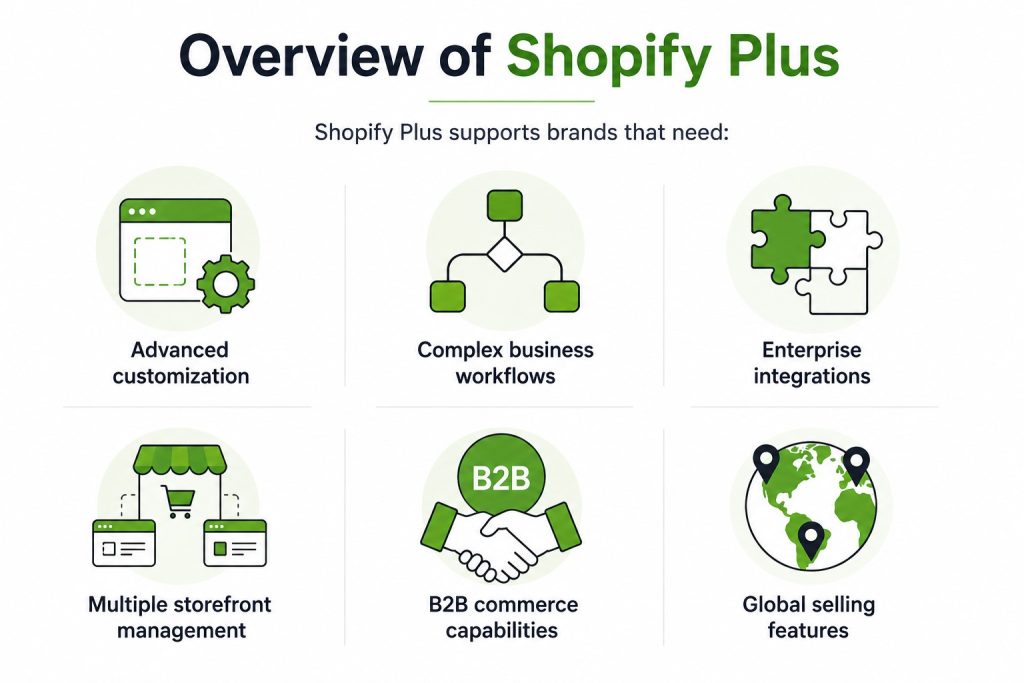
Shopify Plus is Shopify’s enterprise-level ecommerce platform designed specifically for high-volume merchants and growing global brands. Unlike standard Shopify plans, Shopify Plus offers greater flexibility, customization options, automation tools, and enterprise-grade features.
It is built for businesses that require greater control over their ecommerce infrastructure while maintaining Shopify’s reliability.
Shopify Plus supports brands that need:
- Advanced customization
- Complex business workflows
- Enterprise integrations
- Multiple storefront management
- B2B commerce capabilities
- Global selling features
Shopify Plus for Long-Term Ecommerce Growth
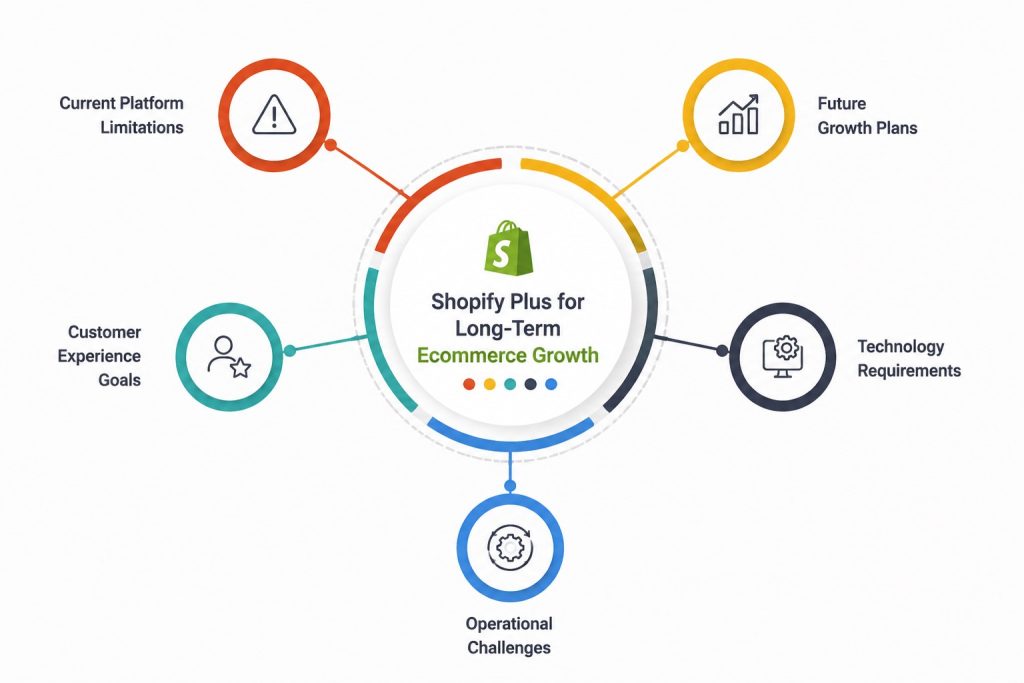
The right ecommerce platform should not only solve a brand’s current challenges but also provide the foundation needed for future expansion. As businesses grow, their ecommerce requirements become more complex.
Before upgrading, brands should evaluate the following factors:
- Current Platform Limitations: Brands should identify whether their existing Shopify setup is creating challenges that affect growth.
- Future Growth Plans: Businesses should consider where they want their ecommerce operations to be in the next few years.
- Customer Experience Goals: Modern customers expect personalized, seamless, and convenient shopping experiences. As competition increases, brands need more control over how customers interact with their online stores.
- Technology Requirements: Growing businesses often need their ecommerce platform to integrate with other systems, including ERP and CRM solutions.
- Operational Challenges: Brands should evaluate whether their current systems can efficiently handle inventory management, customer management, order processing, and internal workflows.
Shopify vs Shopify Plus: Key Differences
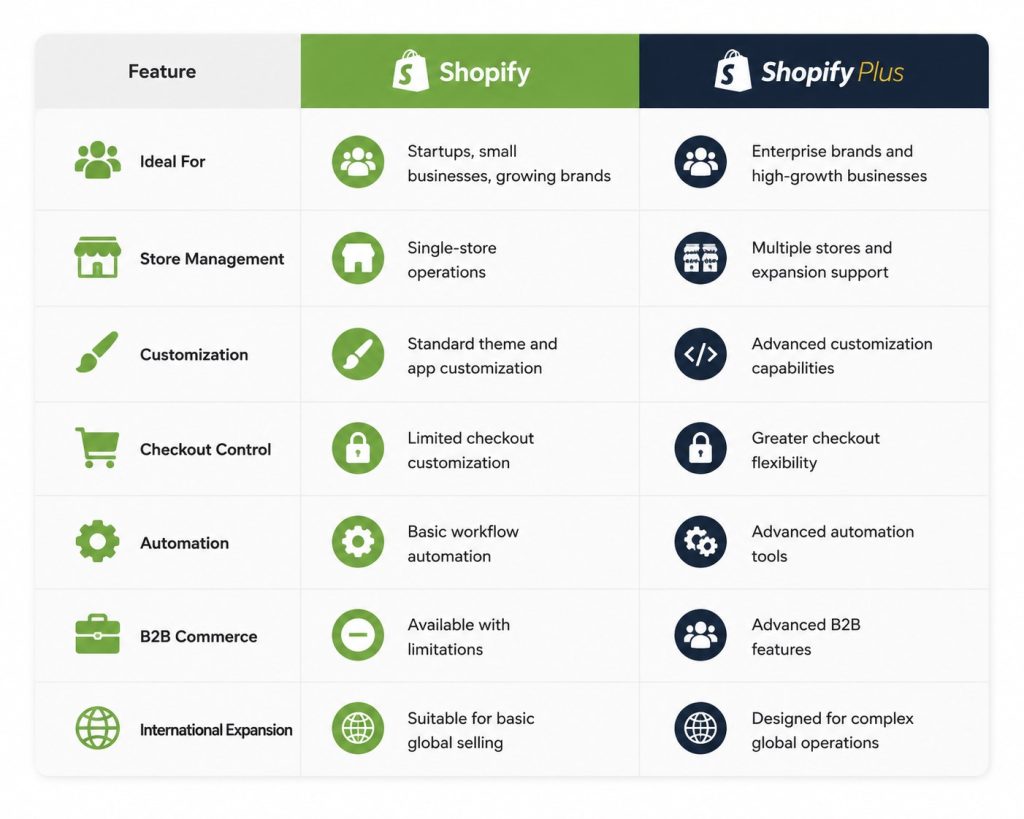
Choosing between Shopify and Shopify Plus depends on the size of your business, growth plans, and operational requirements. While both platforms provide a reliable ecommerce foundation, Shopify Plus includes advanced features designed for high-volume merchants, enterprise brands, and businesses managing complex operations
Ideal Business Size
Shopify
- Best for startups, small businesses, and growing brands
- Suitable for merchants with standard ecommerce needs
Shopify Plus
- Built for enterprise brands and high-growth businesses
- Ideal for businesses handling large sales volumes and multiple operations
Store Management
Shopify supports a single online store, making it a practical choice for businesses with straightforward operations. Shopify Plus allows businesses to manage multiple stores from one platform, making expansion into different markets much easier.
Shopify
- Single-store management
- Easy day-to-day administration
Shopify Plus
- Multi-store management
- Supports regional and international expansion
Customization
Both platforms allow store customization, but Shopify Plus offers greater flexibility for businesses requiring unique customer experiences and advanced functionality.
Shopify
- Standard theme customization
- App-based enhancements
Shopify Plus
- Advanced customization capabilities
- Greater control over store functionality and design
Checkout Control
Checkout customization is one of the biggest differences between the two platforms.
Shopify
- Limited checkout customization
- Standard checkout experience
Shopify Plus
- Greater checkout flexibility
- Enhanced options for optimizing the customer purchase journey
Automation
Automation helps reduce repetitive tasks and improve operational efficiency.
Shopify
- Basic workflow automation
- Suitable for everyday ecommerce tasks
Shopify Plus
- Advanced automation tools
- Supports large-scale operational workflows
B2B Commerce
Businesses selling directly to wholesalers or distributors often require specialized B2B capabilities.
Shopify
- Basic B2B functionality with limitations
Shopify Plus
- Advanced B2B commerce features
- Designed for enterprise wholesale operations
Benefits of Migrating From Shopify to Shopify Plus
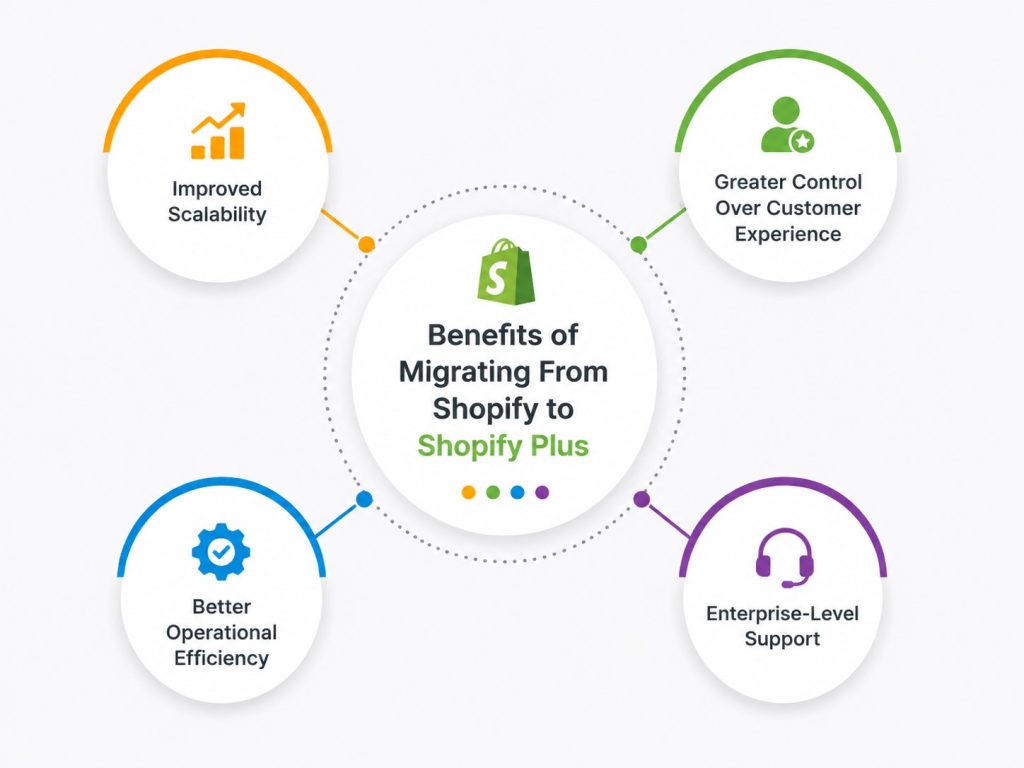
Upgrading to Shopify Plus can provide several advantages for brands that have outgrown standard ecommerce solutions.
- Improved Scalability: Shopify Plus helps businesses handle increased website traffic and growing order volumes. It is especially beneficial for brands managing high-demand periods such as product launches and promotional events.
- Greater Control Over Customer Experience: Shopify Plus allows brands to create more customized shopping experiences that align with their business goals.
- Better Operational Efficiency: Advanced automation features and integrations help reduce manual tasks and improve daily operations. Businesses can automate repetitive processes, streamline workflows, and connect different.
- Enterprise-Level Support: Shopify Plus provides dedicated support options designed for large ecommerce operations. This helps growing brands access faster assistance and strategic guidance when managing complex store requirements.
Choosing the Right Shopify Plan for Your Business Needs
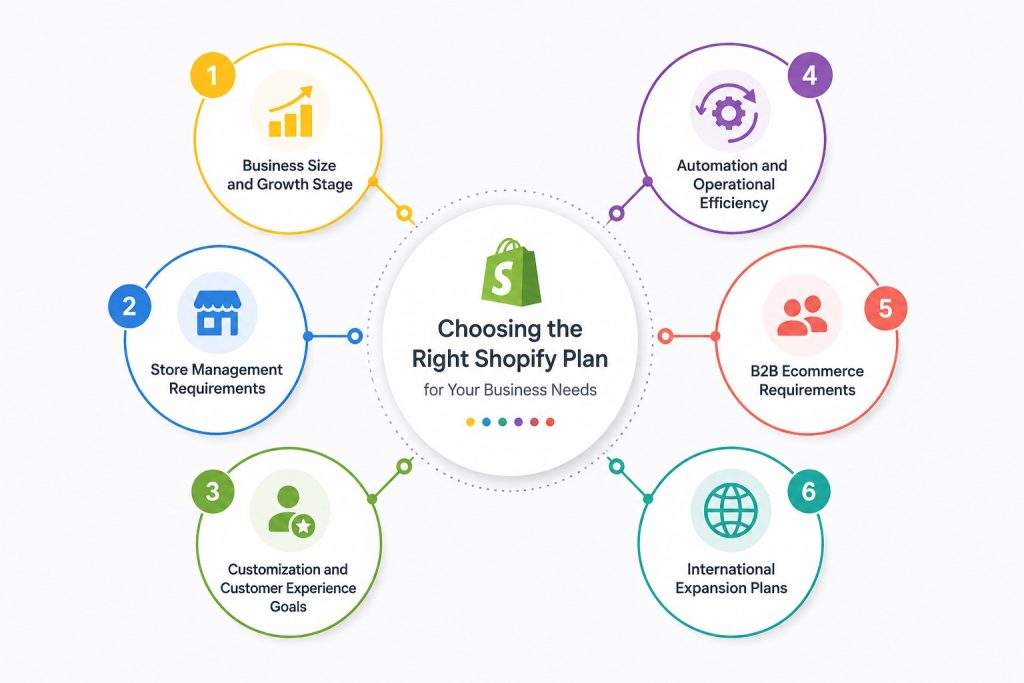
Selecting the right ecommerce platform is an important decision for any growing business. While Shopify and Shopify Plus provide powerful tools for building and managing online stores, the best option depends on your business size, operational complexity, customization requirements, and long-term growth plans.
Key Factors to Consider Before Choosing a Shopify Plan
1. Business Size and Growth Stage
The size and maturity of your business play an important role in choosing the right platform. Shopify works well for businesses that are building their ecommerce foundation and need essential tools to manage daily operations.
Shopify Plus becomes more relevant when businesses require additional support for:
- High-volume transactions
- Multiple sales channels
- Large product catalogs
- Multiple business locations
- Expanding customer segments
2. Store Management Requirements
Managing one online store is different from managing multiple storefronts across regions or customer groups. Shopify is ideal for businesses that operate a single ecommerce store with standard requirements.
Businesses may need more advanced capabilities when they manage:
- Multiple regional stores
- Different currencies and languages
- Separate customer experiences
- Multiple brands under one organization
Understanding your store management requirements can help determine which Shopify solution best fits your operations.
3. Customization and Customer Experience Goals
Customer expectations continue to increase, making personalization and seamless shopping experiences more important. Shopify provides customization options through themes and apps, allowing businesses to create branded storefronts.
Businesses with more advanced requirements may need additional flexibility for:
- Custom checkout experiences
- Personalized shopping journeys
- Advanced promotions
- Unique customer workflows
- Custom business logic
4. Automation and Operational Efficiency
As ecommerce operations grow, manual processes can slow down productivity. Businesses should consider their automation requirements, including:
- Order processing
- Inventory updates
- Customer segmentation
- Marketing workflows
- Internal approvals
- Reporting processes
5. B2B Ecommerce Requirements
Businesses selling to other companies often have different requirements compared to direct-to-consumer brands. B2B companies may need:
- Wholesale pricing options
- Company accounts
- Bulk ordering
- Customer-specific catalogs
- Multiple buyer permissions
- Flexible payment options
6. International Expansion Plans
Selling globally requires more than simply translating a website. Businesses must manage different markets, customer preferences, and operational requirements.
Consider whether your business needs:
- Multiple currencies
- Regional pricing
- Localized storefronts
- International inventory management
- Global customer experiences

Deepak Wadhwani has over 20 years experience in software/wireless technologies. He has worked with Fortune 500 companies including Intuit, ESRI, Qualcomm, Sprint, Verizon, Vodafone, Nortel, Microsoft and Oracle in over 60 countries. Deepak has worked on Internet marketing projects in San Diego, Los Angeles, Orange Country, Denver, Nashville, Kansas City, New York, San Francisco and Huntsville. Deepak has been a founder of technology Startups for one of the first Cityguides, yellow pages online and web based enterprise solutions. He is an internet marketing and technology expert & co-founder for a San Diego Internet marketing company.