



Table of Contents
Introduction
Search engine marketing services help businesses reach people searching online for their products or services. Through website improvements and paid search ads, businesses can increase their visibility and connect with potential customers.
SEO focuses on improving your website’s visibility in unpaid search results. PPC means paying when someone clicks your ad. Google explains that both can attract visitors, but buying ads does not improve your organic rankings.
So, where does SEM fit into the picture, and which approach should your business choose? This guide explains SEO, SEM, and PPC in simple terms, covering their differences, costs, and roles in your marketing plan.
What Are Search Engine Marketing Services?
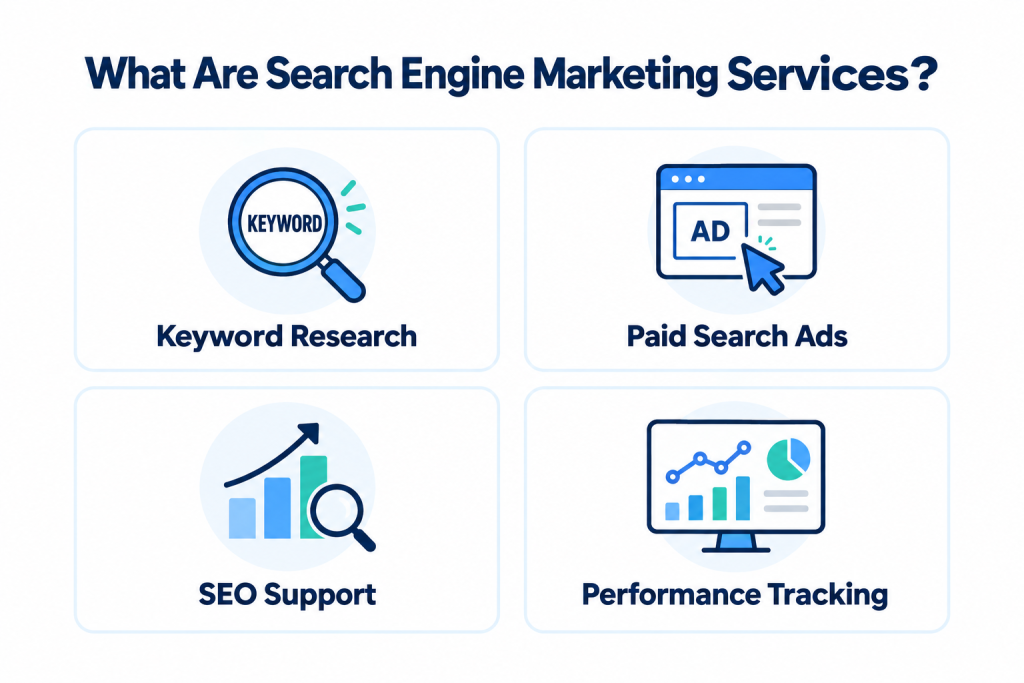
Search engine marketing services help businesses appear in search results and reach potential customers. SEM commonly refers to paid search, although some providers use the term to include SEO.
- Keyword Research: Find the words people use when searching for your products or services. These terms help guide ad targeting and the content on your website.
- Paid Search Ads: Create and manage ads that appear in search results. Services include writing ad copy, setting budgets, choosing keywords, and adjusting campaigns based on performance.
- SEO Support: When included in the service package, SEO improves website content and structure to help search engines understand your pages and people find useful information.
- Performance Tracking: Monitor clicks, website visits, and customer actions, such as purchases or enquiries. Use these results to identify improvements and guide future marketing decisions.
These services draw on practices explained in Google’s SEO Starter Guide and Google’s SEO and PPC overview.
What Is SEO and How Does It Work?
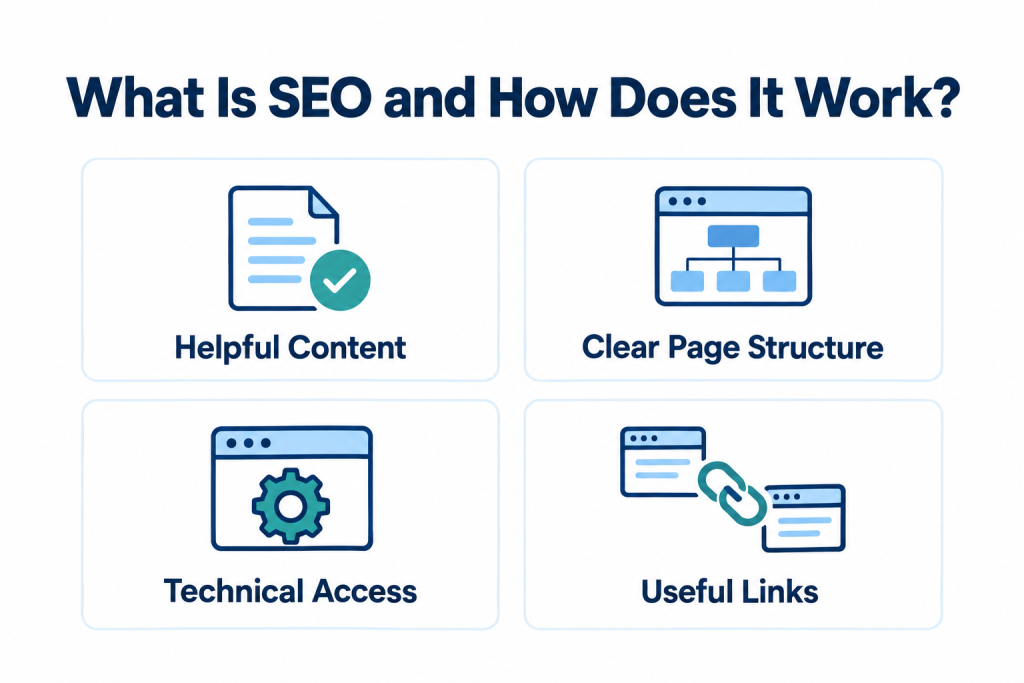
SEO stands for search engine optimization. It helps search engines understand your website and show your pages in relevant unpaid results. The work involves useful content, clear page organization, and making your website accessible.
- Helpful Content: Write clear answers to questions your customers ask. Use relevant search terms naturally and keep information accurate so visitors can find what they need.
- Clear Page Structure: Give each page a descriptive title and organize information with useful headings. This helps readers navigate your content and understand what the page covers.
- Technical Access: Make sure search engines can find and read your important pages. Fix access problems that could prevent your content from appearing in search results.
- Useful Links: Connect related pages with descriptive links. These help visitors explore your website and allow search engines to discover content and understand how pages relate.
These practices follow Google’s SEO Starter Guide, which explains that improvements take time and do not guarantee top rankings.
What Is SEM and How Does It Work?
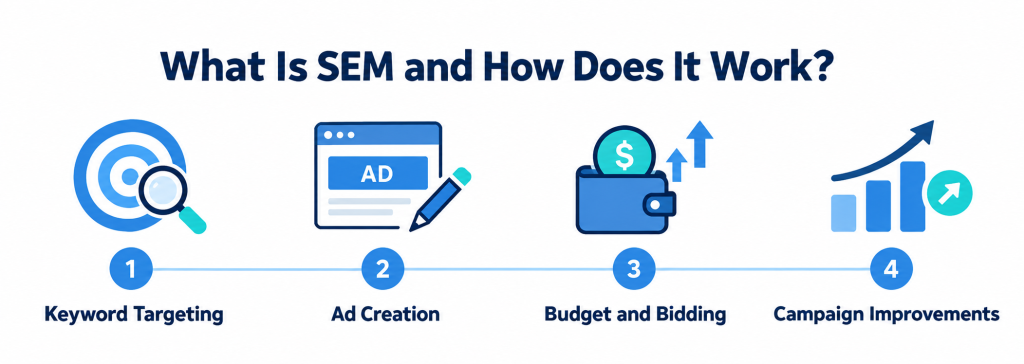
SEM stands for search engine marketing. In this guide, it refers to paid search advertising. Businesses create ads to reach people searching for relevant products or services, then manage their targeting, budget, and results.
- Keyword Targeting: Choose search terms related to what your business offers. These keywords help determine which searches could trigger your ads and connect you with potential customers.
- Ad Creation: Write clear ads that explain your offer and give people a reason to click. Send visitors to a relevant page that matches the ad.
- Budget and Bidding: Set your advertising budget and choose a bidding approach based on your goals. Your bid helps determine whether and where your ad can appear.
- Campaign Improvements: Review which searches and ads bring useful results. Adjust keywords, messaging, and spending to reduce wasted clicks and focus on actions that matter.
Google explains how paid search helps businesses reach potential customers in its SEO and PPC guide.
What Is PPC and How Does It Work?
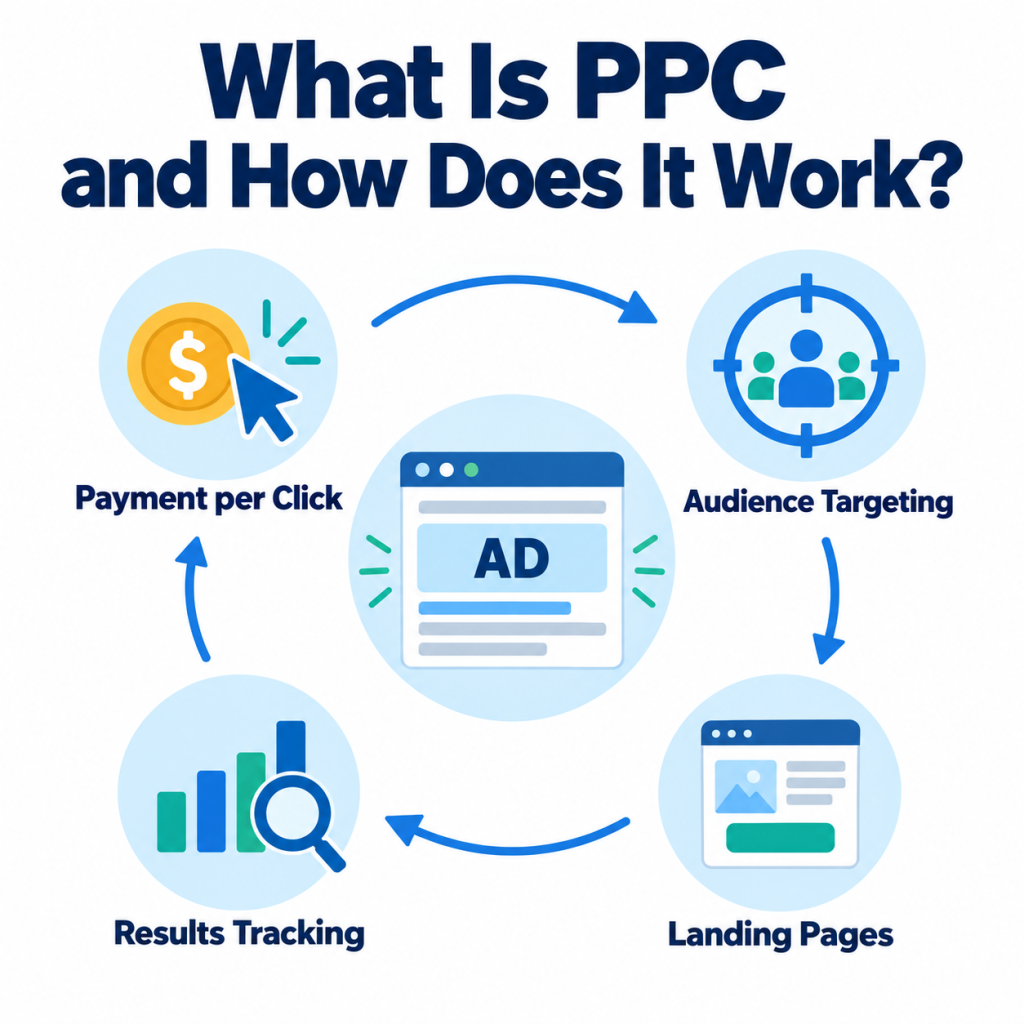
PPC stands for pay-per-click. It is an advertising model where you pay when someone clicks your ad. PPC is commonly used in paid search, but it can also apply to ads on other websites.
- Payment per Click: You pay for each click rather than every time your ad appears. A click brings someone to your website but does not guarantee a sale.
- Audience Targeting: Set targeting options, such as location and relevant keywords, to reach potential customers. Available options depend on the advertising platform and campaign type you choose.
- Landing Pages: Direct people to a page that matches your advertisement. Explain your offer clearly and make it easy to enquire, book, or buy.
- Results Tracking: Track what visitors do after clicking your ads, such as submitting forms or purchasing products. This helps you assess whether your advertising spending delivers value.
SEO vs. SEM vs. PPC: Key Differences
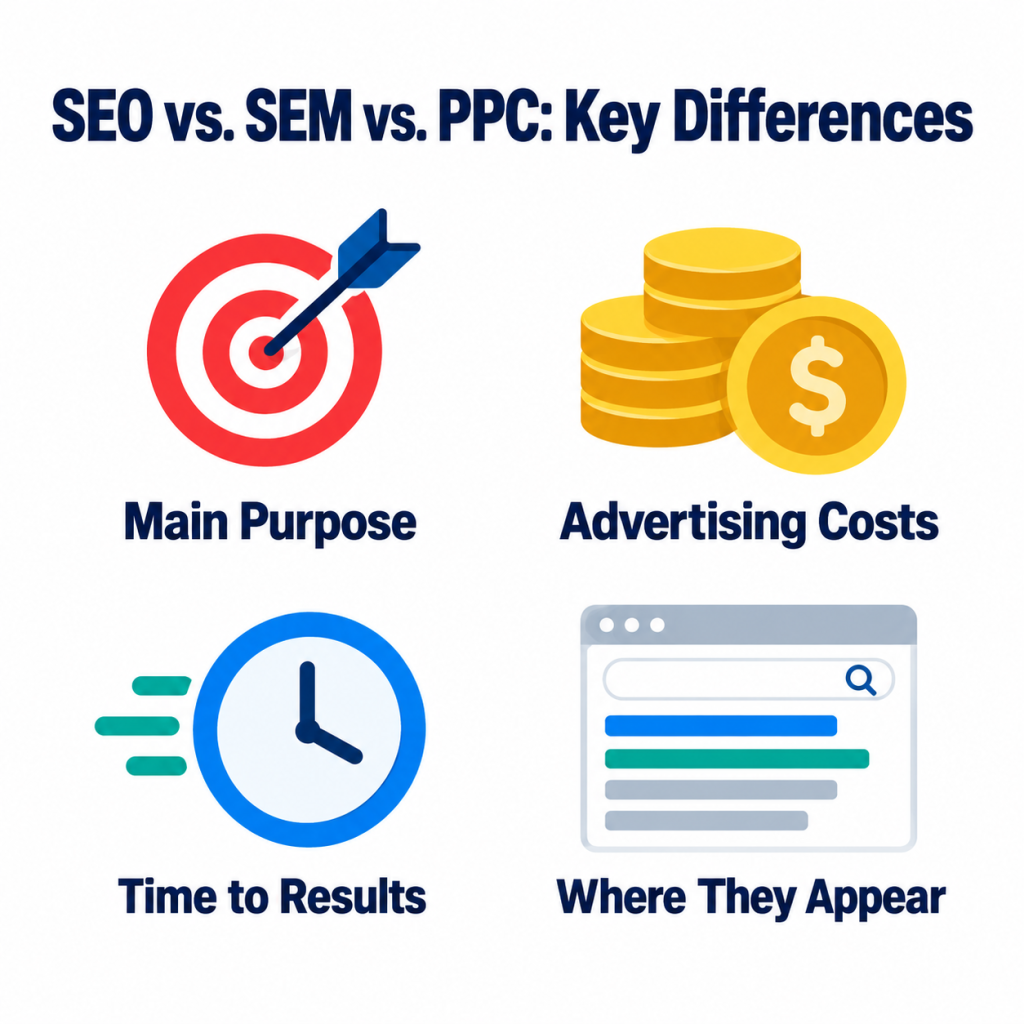
SEO, SEM, and PPC are connected, but they describe different things. SEO focuses on unpaid search visibility. Here, SEM means paid search marketing, while PPC describes how advertisers pay for clicks.
- Main Purpose: SEO improves your presence in organic search results. SEM uses paid search campaigns to reach customers. PPC is a payment model used within many campaigns.
- Advertising Costs: SEO involves time and resources, but organic clicks carry no advertising charge. Paid search using PPC requires a budget to pay for ad clicks.
- Time to Results: SEO improvements can take weeks or months to show an impact. Paid search can attract visitors sooner, although generating worthwhile results still requires campaign improvements.
- Where They Appear: SEO helps pages appear in organic search listings. SEM places ads in search results, while PPC advertising can also appear on other websites.
Google’s SEO and PPC guide explains these differences in costs, visibility, and timing.
SEO and PPC: Costs and Time to Results
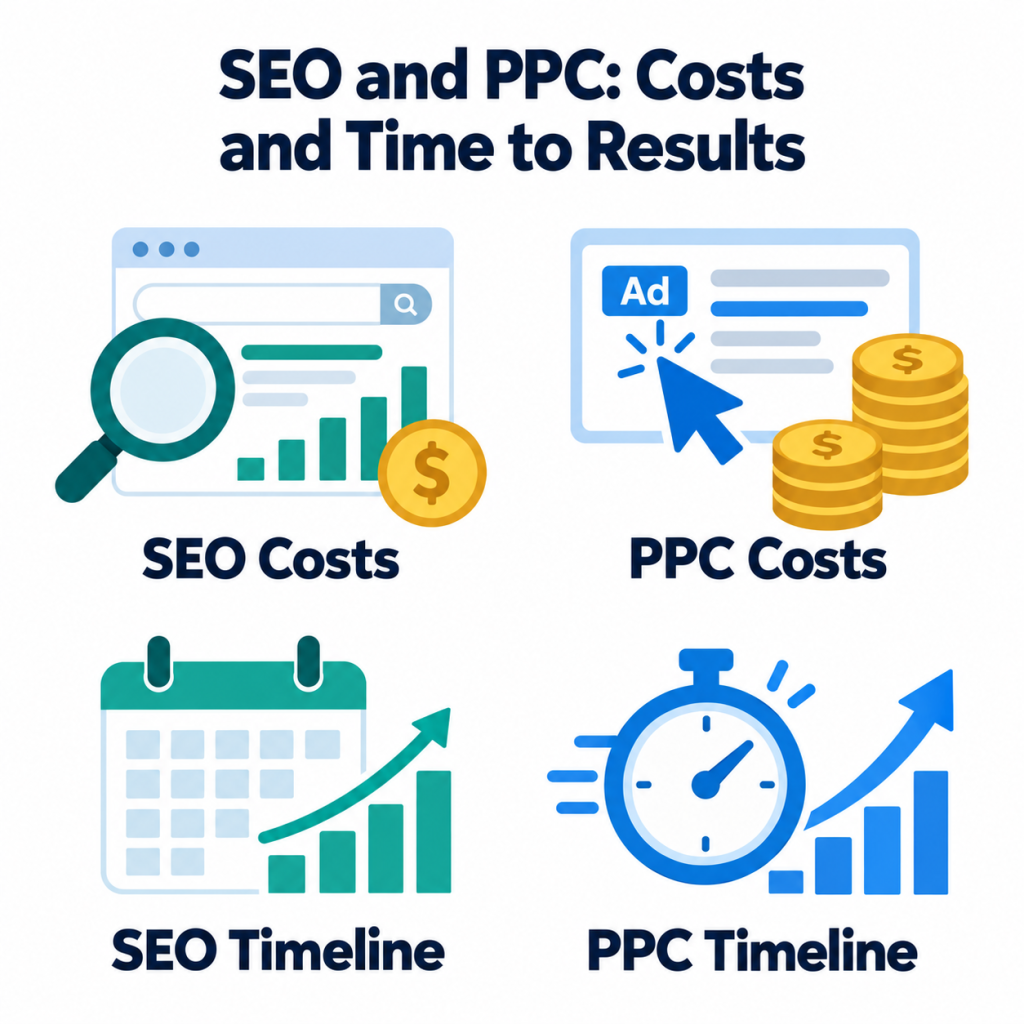
SEO and PPC require different budgets and timelines. SEO involves ongoing website work, while PPC includes spending on ads. Understanding these differences helps you set realistic expectations for traffic, enquiries, and sales.
- SEO Costs: Organic clicks incur no advertising cost, but SEO requires time and resources for content creation, website improvements, and ongoing updates, whether handled internally or by specialists.
- PPC Costs: PPC involves paying per ad click, with additional costs for campaign management and landing pages. Your total budget should account for these separate expenses.
- SEO Timeline: Website changes may affect search results within days, but others take several months. Results vary, and improvements do not guarantee higher rankings or more customers.
- PPC Timeline: Paid ads can bring visitors once campaigns are approved and running. However, finding the right targeting, messaging, and budget usually takes testing and ongoing adjustments.
Google discusses these trade-offs in its SEO and PPC guide and explains implementation timelines in its SEO Starter Guide.
Choosing the Right Strategy for Your Business
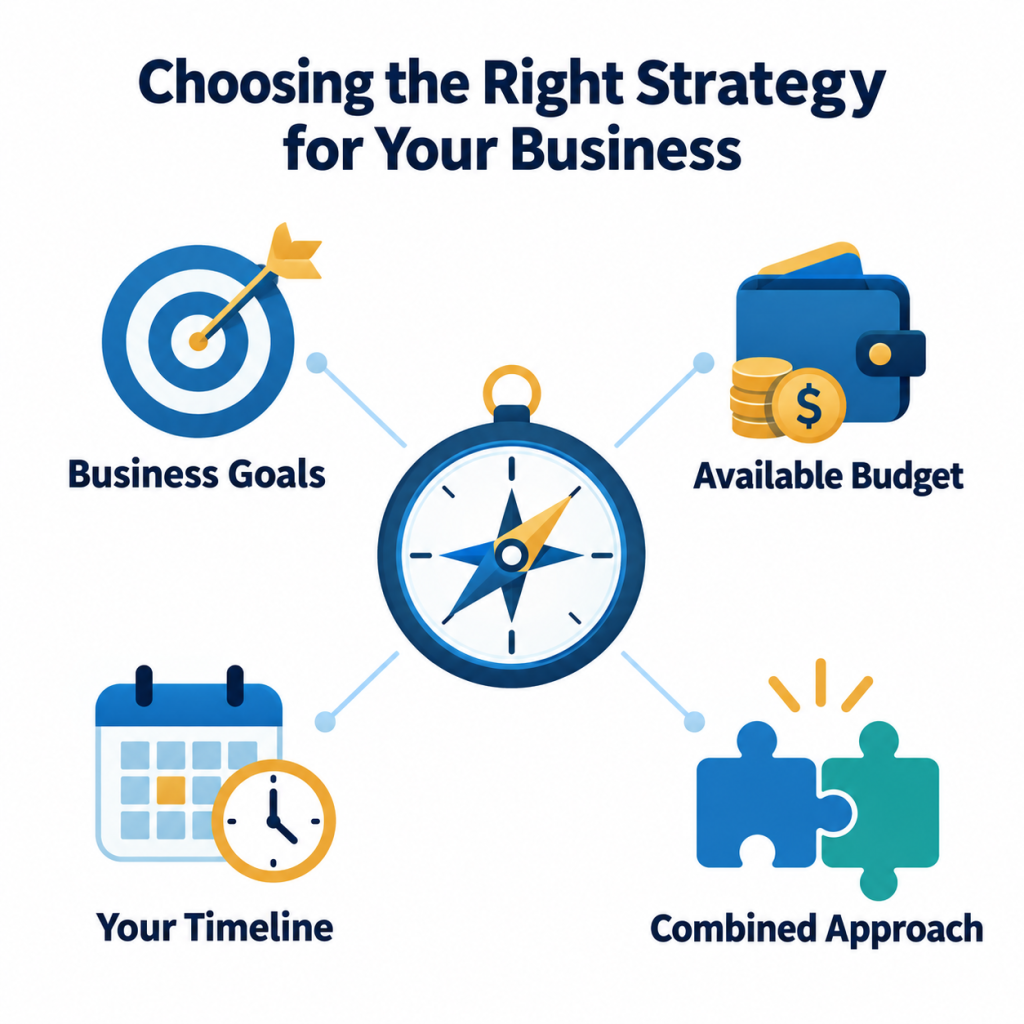
The right approach depends on your goals, budget, and timeline. SEO supports lasting search visibility, while PPC can help attract visitors sooner. Consider these four factors when deciding where to focus your efforts.
- Business Goals: Choose SEO to build organic visibility over time. Consider PPC when promoting a specific offer, launching a product, or reaching people who are searching now.
- Available Budget: Plan for ongoing work with either approach. SEO needs content and website resources, while PPC requires advertising spend alongside campaign management and landing page improvements.
- Your Timeline: If you need traffic sooner, PPC may suit your plans. If you can invest time in developing useful content, SEO can support longer-term visibility.
- Combined Approach: Use paid search to support immediate campaigns while improving your organic presence through SEO. Review results from both to decide where future investment makes sense.
How to Measure Search Marketing Success
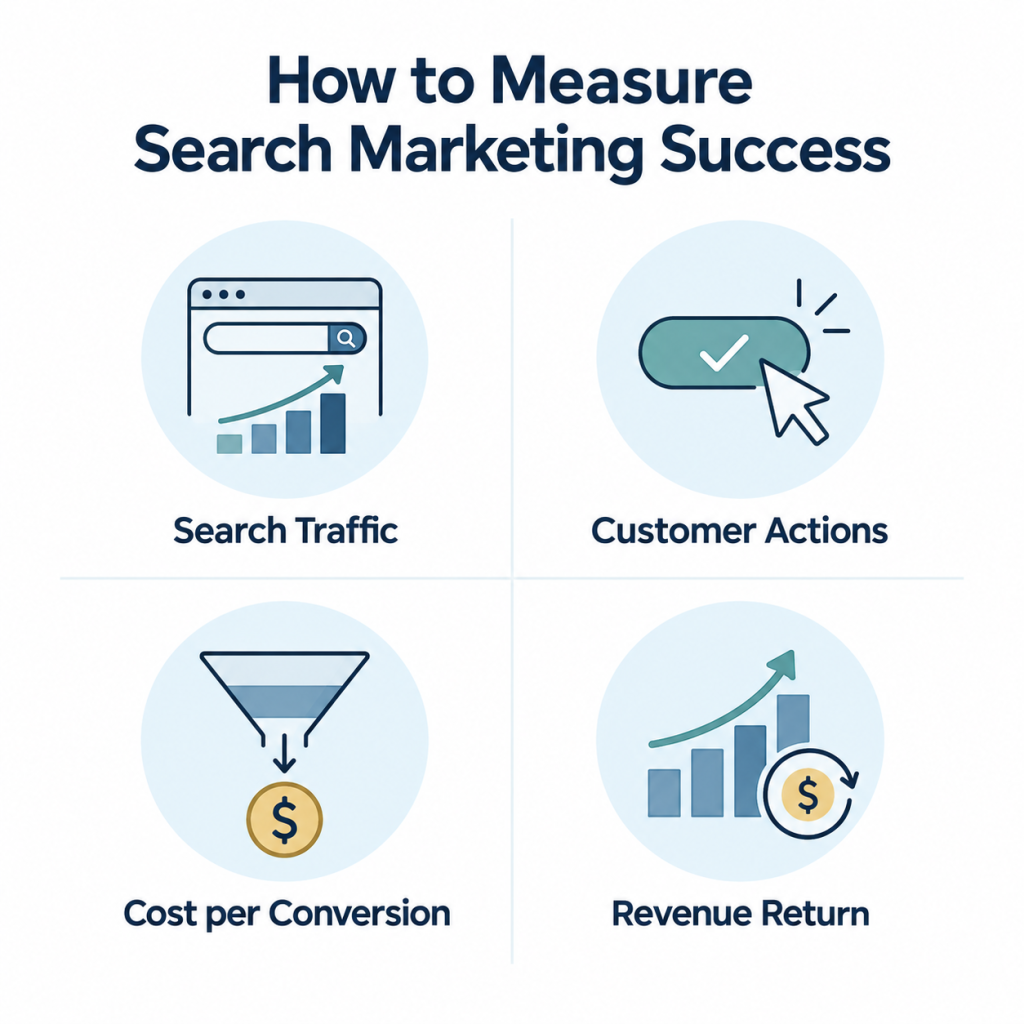
Measuring search marketing starts with clear goals, such as more enquiries, bookings, or sales. Review organic and paid search separately to understand how each contributes to your business and where improvements are needed.
- Search Traffic: Track how many visitors arrive through unpaid search results and paid ads. Compare similar periods to see whether your efforts are attracting more people.
- Customer Actions: Measure purchases, calls, bookings, and enquiries from search visitors. These actions, called conversions, help show whether your website turns interest into useful business results.
- Cost per Conversion: Divide your advertising spend by the number of conversions to calculate cost per conversion. Check lead quality too, since every enquiry has different business value.
- Revenue Return: Compare revenue attributed to ads with advertising spend to calculate return on ad spend. For overall profitability, also account for product, service, and management costs.
Future of Search Engine Marketing
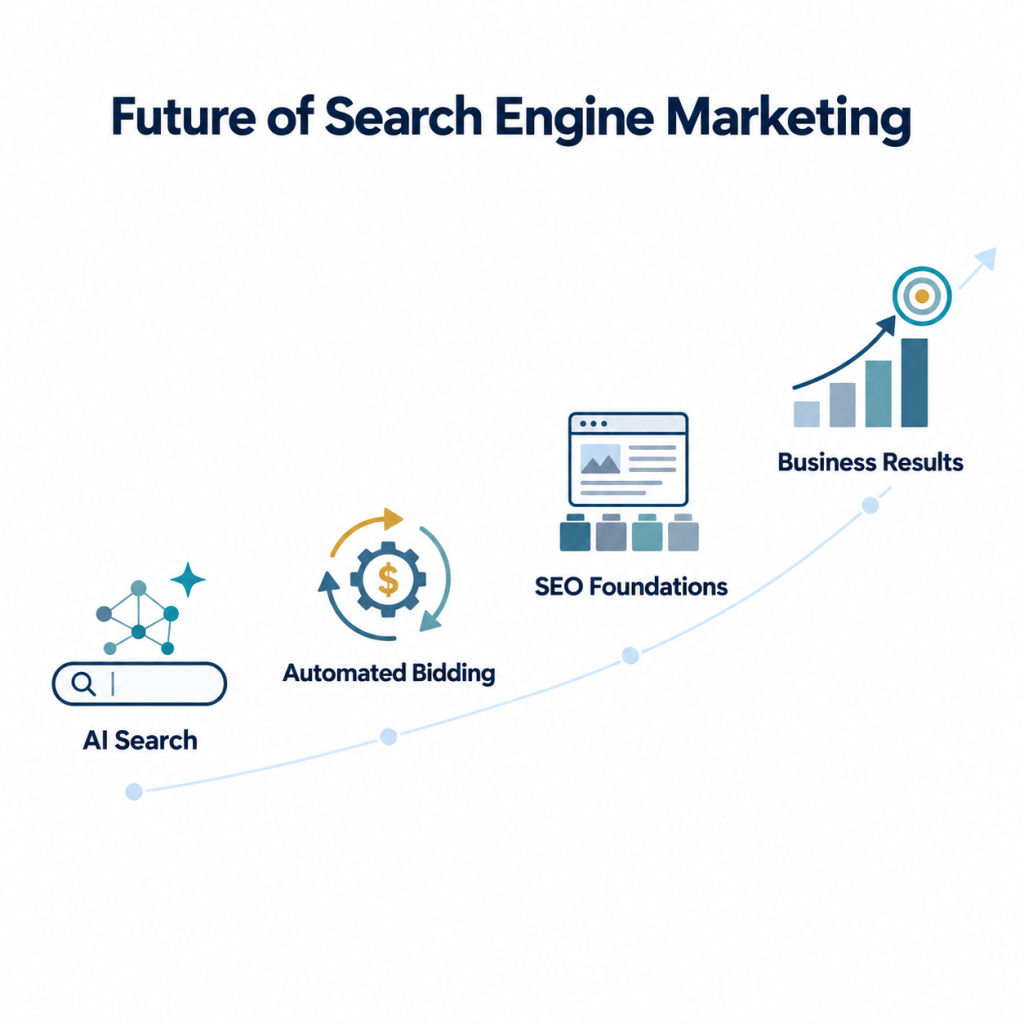
AI search features and automated advertising are already changing how businesses reach customers.
- AI Search: Google’s AI Overviews and AI Mode help people explore detailed questions. Businesses can prepare by publishing clear, reliable content that addresses real customer needs.
- Automated Bidding: Google’s Smart Bidding uses AI to adjust bids for conversions or conversion value. Businesses still need to choose suitable goals and review campaign performance.
- SEO Foundations: Google says existing SEO practices remain relevant for its AI search features. Accessible pages, helpful information, and clear internal links continue to support visibility.
- Business Results: As search experiences evolve, measure what visitors do after they arrive. Enquiries, bookings, and sales help show whether your search marketing supports meaningful business goals.
These developments suggest a future where useful content, clear goals, and accurate measurement remain central to search marketing.