Table of Contents
Introduction
What if your government could anticipate your needs and deliver services before you even asked? That vision is becoming a reality in Abu Dhabi, UAE, which aims to become the world’s first fully AI-native government by 2027.
An AI-native government integrates artificial intelligence into its core operations. By combining AI, secure cloud infrastructure, connected data platforms, and intelligent automation, it can provide faster, smarter, and more personalized public services while improving efficiency and decision-making.
Backed by the Abu Dhabi Government Digital Strategy 2025-2027 and an investment of AED 13 billion ($3.54 billion), this initiative could reshape how governments interact with citizens and businesses.
In this blog, we’ll explore what an AI-native government is, why Abu Dhabi is leading this transformation, the technologies driving it, its benefits, and what it could mean for the future of governments worldwide.
What Is an AI-Native Government?
The concept of an AI-native government goes beyond digitizing paperwork or launching online portals.
Traditional digital governments use technology to improve existing processes. An AI-native government redesigns those processes around artificial intelligence from the ground up.
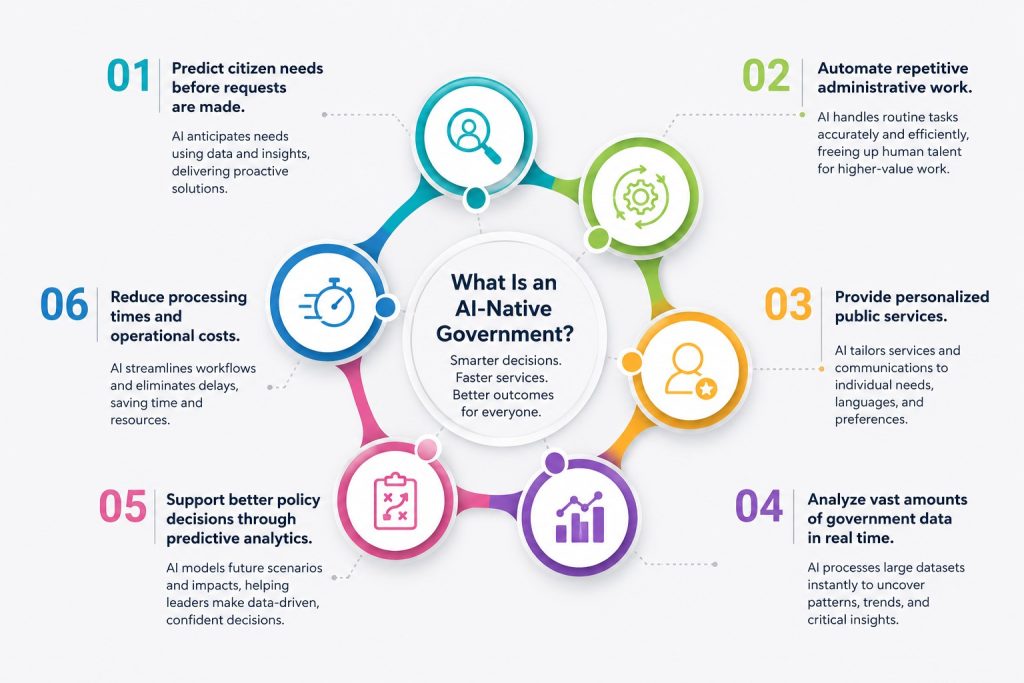
An AI-native government can:
- Predict citizen needs before requests are made.
- Automate repetitive administrative work.
- Provide personalized public services.
- Analyze vast amounts of government data in real time.
- Support better policy decisions through predictive analytics.
- Reduce processing times and operational costs.
Instead of requiring citizens to navigate multiple agencies, AI systems can coordinate information across departments and complete services through a unified digital experience.
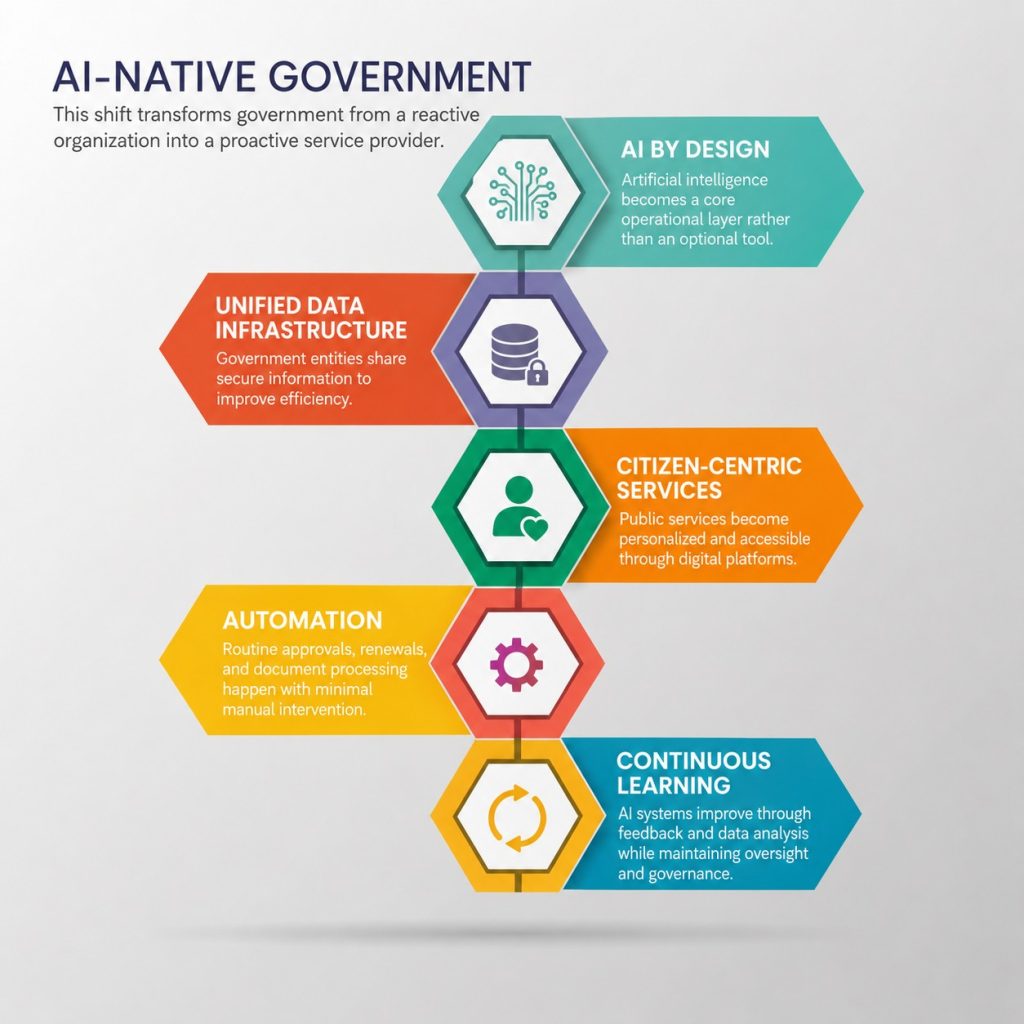
This shift transforms government from a reactive organization into a proactive service provider. Key characteristics of an AI-native government include:
- AI by Design: Artificial intelligence becomes a core operational layer rather than an optional tool.
- Unified Data Infrastructure: Government entities share secure information to improve efficiency.
- Citizen-Centric Services: Public services become personalized and accessible through digital platforms.
- Automation: Routine approvals, renewals, and document processing happen with minimal manual intervention.
- Continuous Learning: AI systems improve through feedback and data analysis while maintaining oversight and governance.
Why Abu Dhabi Is Leading the AI Revolution
Several governments have invested heavily in digital transformation, but Abu Dhabi has combined long-term vision, funding, infrastructure, and strategic partnerships to create a comprehensive AI ecosystem.
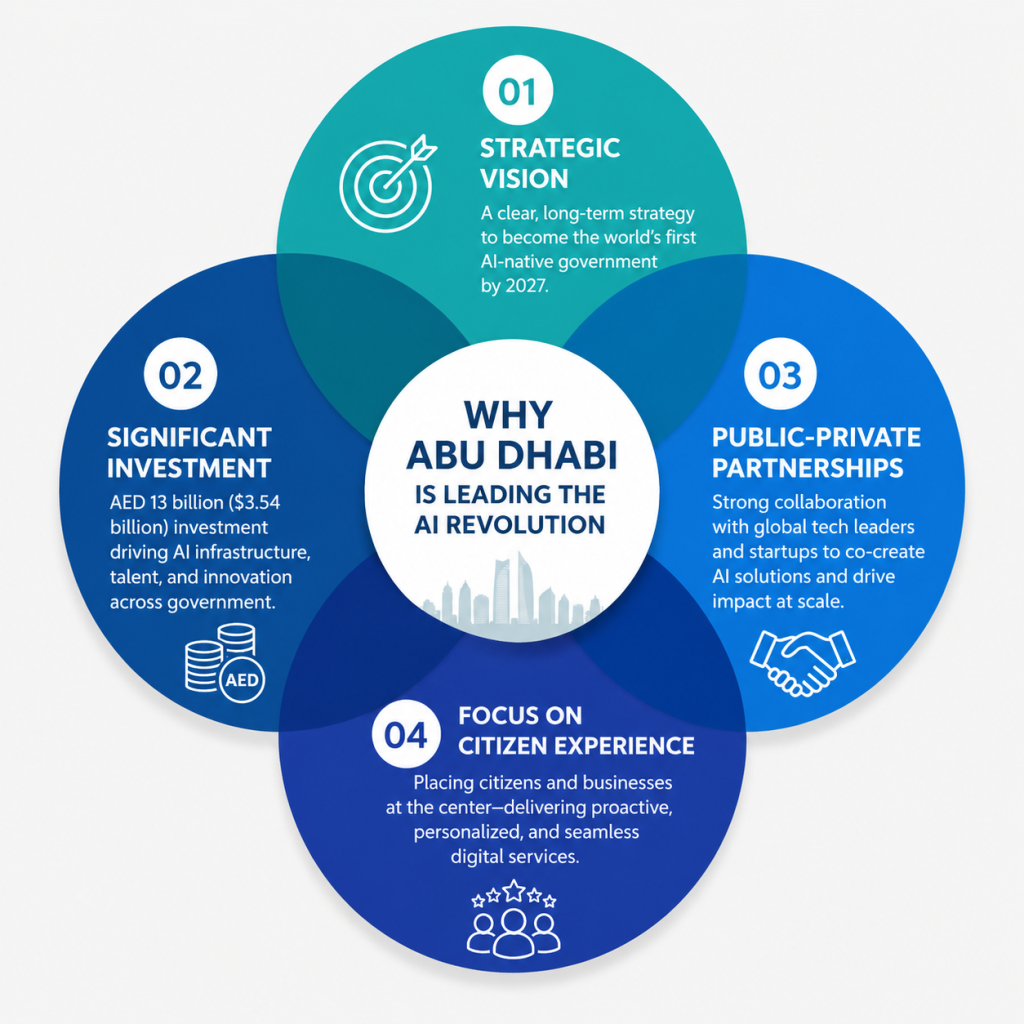
Its Digital Strategy 2025-2027 aims to build the world’s first fully AI-native government with an investment of AED 13 billion. The strategy includes full AI integration across government services, sovereign cloud adoption, enhanced cybersecurity, and data-driven governance.
Strategic Vision
Abu Dhabi recognizes that AI can become a national competitive advantage by improving:
- Government efficiency
- Economic diversification
- Citizen satisfaction
- Public sector innovation
Significant Investment
Large-scale investment allows government agencies to modernize infrastructure rather than simply upgrading legacy systems.
The initiative is expected to:
- Expand AI-powered services.
- Increase digital interactions.
- Create thousands of technology jobs.
- Support economic growth through innovation.
Public-Private Partnerships
Abu Dhabi collaborates with global technology companies and regional AI leaders to accelerate implementation.
These partnerships help provide:
- Cloud infrastructure
- AI research
- Cybersecurity
- Data management
- Advanced analytics
Focus on Citizen Experience
The objective is not simply to deploy AI but to create faster, simpler, and more intuitive interactions between citizens and government.

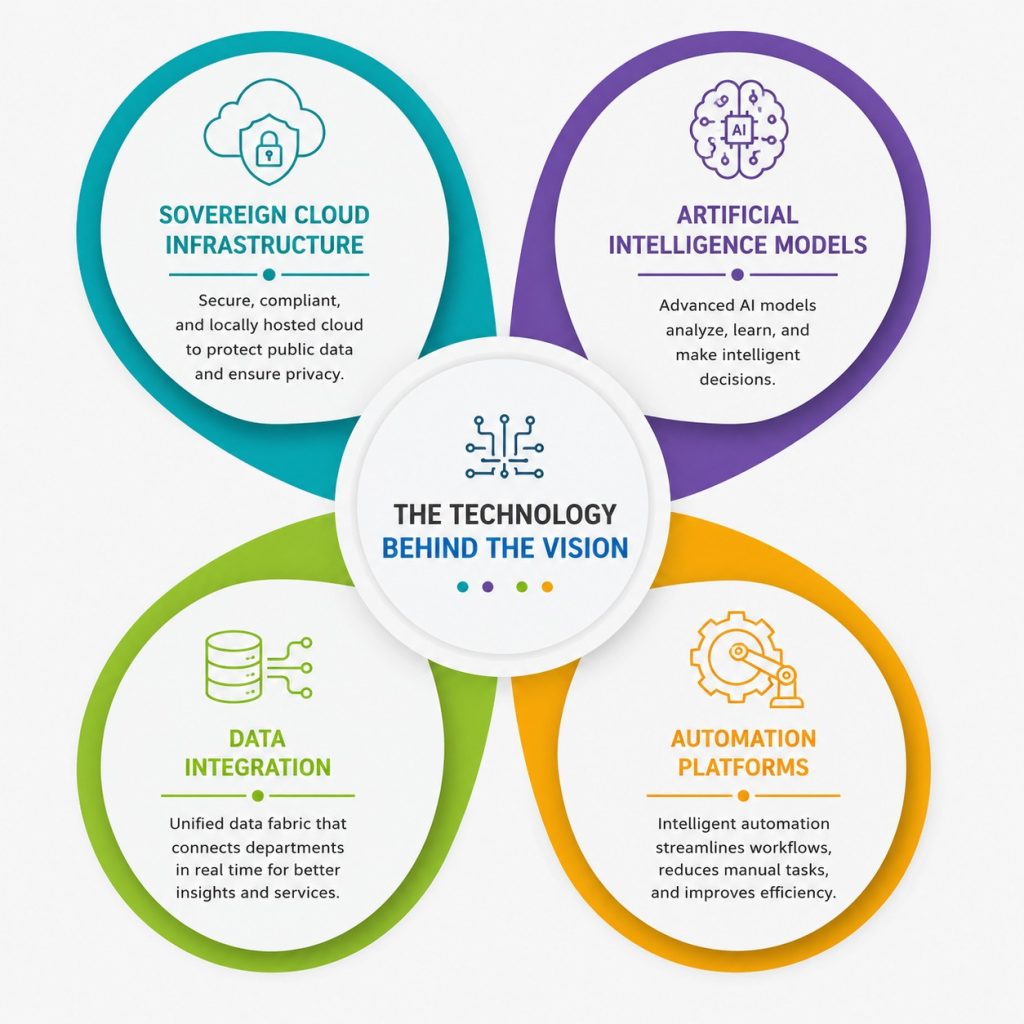
The Technology Behind the Vision
Building an AI-native government requires a sophisticated technology ecosystem.
Sovereign Cloud Infrastructure
- Government data requires high levels of privacy and security.
- A sovereign cloud ensures that sensitive public information remains protected while enabling AI systems to process and analyze large datasets efficiently.
- Abu Dhabi plans to adopt 100% sovereign cloud across government operations.
Artificial Intelligence Models
AI systems support:
- Document processing
- Identity verification
- Language translation
- Predictive analytics
- Chatbots
- Fraud detection
- Resource planning
- Machine learning continuously improves these capabilities.
Data Integration
- Government agencies often operate independently.
- AI-native governance connects data across departments, allowing information to flow securely and reducing duplicate processes.
Automation Platforms
Workflow automation can handle:
Government Function | AI Capability |
License Renewals | Automatic processing |
Permit Applications | Digital verification |
Healthcare Appointments | Intelligent scheduling |
Utility Payments | Automated transactions |
Citizen Support | AI assistants |
Business Registration | End-to-end workflows |
AI-Powered Public Services
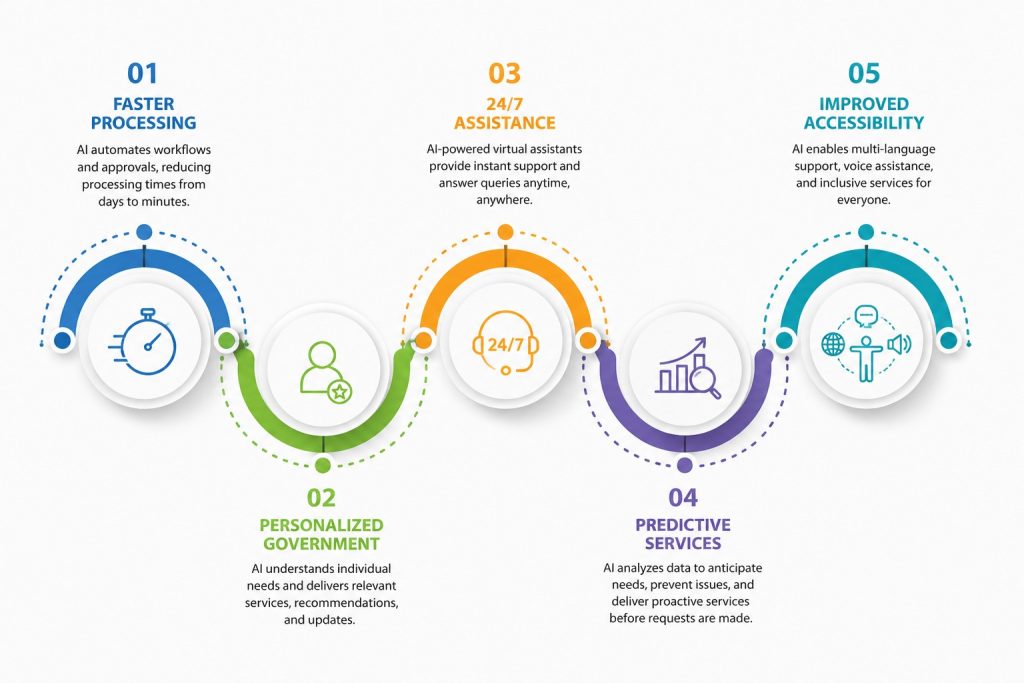
Perhaps the most visible impact of AI-native government is the improvement in citizen services. Instead of requiring multiple forms and office visits, AI can significantly simplify interactions.
Faster Processing
Applications that once took days can potentially be completed within minutes.
Examples include:
- Business licenses
- Residency services
- Vehicle registration
- Permit approvals
Personalized Government
AI systems can understand individual circumstances and recommend relevant services automatically. For example:
A family welcoming a newborn could receive information about:
- Birth registration
- Healthcare enrollment
- Education programs
- Financial benefits
- Without separately applying for each service.
24/7 Assistance
AI-powered virtual assistants can answer questions and process requests around the clock.
Citizens no longer have to wait for business hours.
Predictive Services
AI helps governments anticipate demand. Examples include:
- Traffic management
- Healthcare resource allocation
- Emergency response planning
- Infrastructure maintenance
Improved Accessibility
AI technologies support:
- Voice interfaces
- Multiple languages
- Accessibility tools
- Personalized communication
- Making government services easier for diverse populations.
The Role of TAMM and Unified Platforms
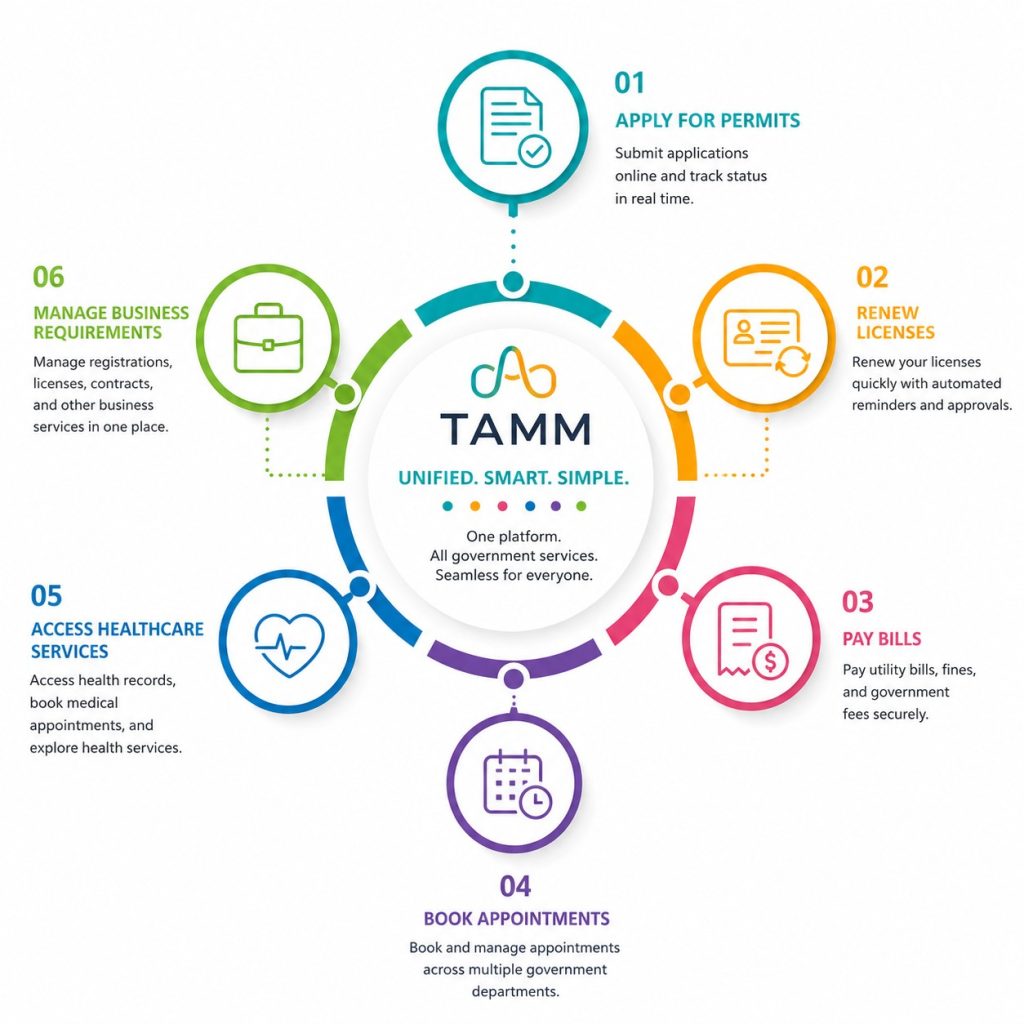
A major component of Abu Dhabi’s AI-native strategy is TAMM, the unified government services platform.
Rather than visiting multiple agencies, citizens, residents, and businesses can access hundreds of services through a single digital ecosystem. TAMM integrates services from dozens of government entities into one experience.
What Makes TAMM Different?
Traditional government portals simply provide information. TAMM focuses on completing transactions. Users can:
- Apply for permits.
- Renew licenses.
- Pay bills.
- Book appointments.
- Access healthcare services.
- Manage business requirements.
AI Integration
TAMM continues evolving through AI capabilities.
Recent developments include AI-powered service enhancements and initiatives like AutoGov, described as an AI-powered public servant capable of autonomously handling selected government transactions based on user preferences.
Potential benefits include:
- Personalized recommendations
- Faster approvals
- Automated workflows
- Reduced paperwork
- Proactive notifications
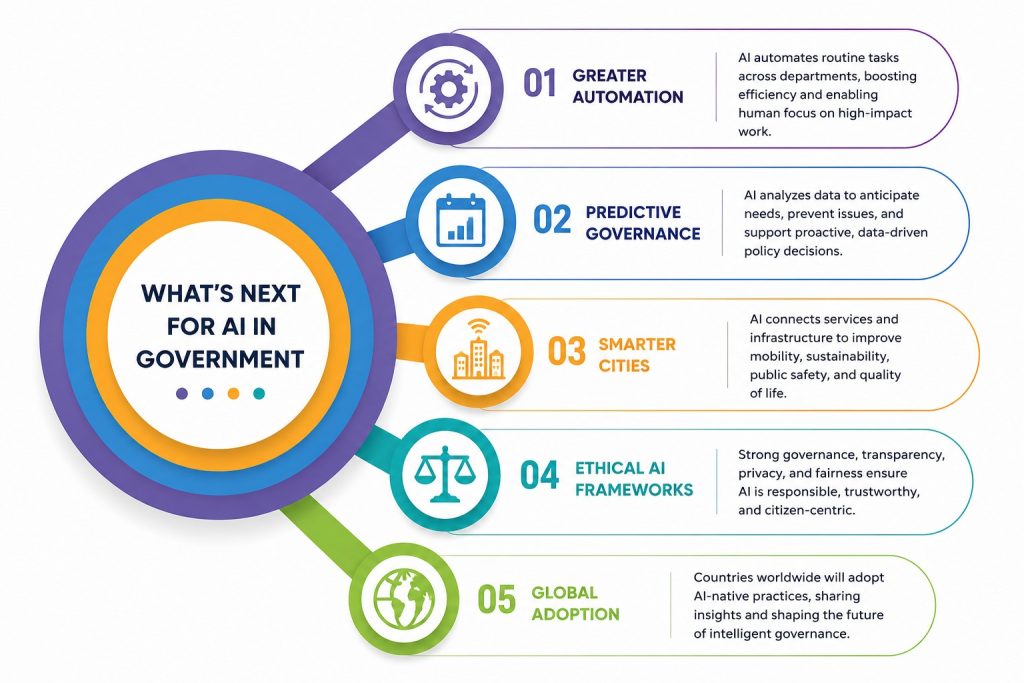
What's Next for AI in Government
Abu Dhabi’s initiative is likely just the beginning. Around the world, governments are watching closely to understand how AI can improve public administration while maintaining security, transparency, and accountability.
Several trends are likely to shape the future.
Greater Automation
Routine administrative work will increasingly be handled by AI systems. Human employees can focus on complex and strategic tasks.
Predictive Governance
Governments will use data to anticipate problems before they occur. Potential applications include:
- Public health
- Urban planning
- Environmental protection
- Transportation management
Smarter Cities
AI-native governments naturally support smart city initiatives by connecting transportation, utilities, healthcare, and public safety systems.
Ethical AI Frameworks
As AI becomes more influential, governments must establish clear standards for:
- Privacy
- Fairness
- Transparency
- Accountability
- Security
- Human oversight will remain critical.
Global Adoption
Countries worldwide are likely to adopt aspects of the AI-native model while adapting it to local regulations and cultural expectations. The lessons learned from Abu Dhabi could influence public sector modernization for decades.

Deepak Wadhwani has over 20 years of experience in software/wireless technologies. He has worked with Fortune 500 companies, including Intuit, ESRI, Qualcomm, Sprint, Verizon, Vodafone, Nortel, Microsoft, and Oracle, in over 60 countries. Deepak has worked on Internet marketing projects in San Diego, Los Angeles, Orange County, Denver, Nashville, Kansas City, New York, San Francisco, and Huntsville. Deepak has been a founder of technology Startups for one of the first Cityguides, yellow pages online, and web-based enterprise solutions. He is an internet marketing and technology expert & co-founder of a San Diego Internet marketing company.