FIFA World Cup 2026

FIFA World Cup 2026 Marketing Trends: How Brands Are Connecting With Fans

Table of Contents

Introduction

The 2026 FIFA World Cup represents more than a global sporting spectacle. It’s one of the most significant marketing moments in recent history.

With the event expanding to 48 teams and spanning three host countries, the United States, Canada, and Mexico, the opportunity for brand engagement is unprecedented.

Unlike past World Cups that largely centered around traditional broadcast advertising and official sponsorships, 2026 will be defined by immersive fan experiences, digital‑first strategies, real‑time engagement, and purpose‑driven messaging.

What sets this event apart is the intersection of mass consumption and highly targeted fan engagement, enabled by data, streaming platforms, social media, and experiential campaigns.

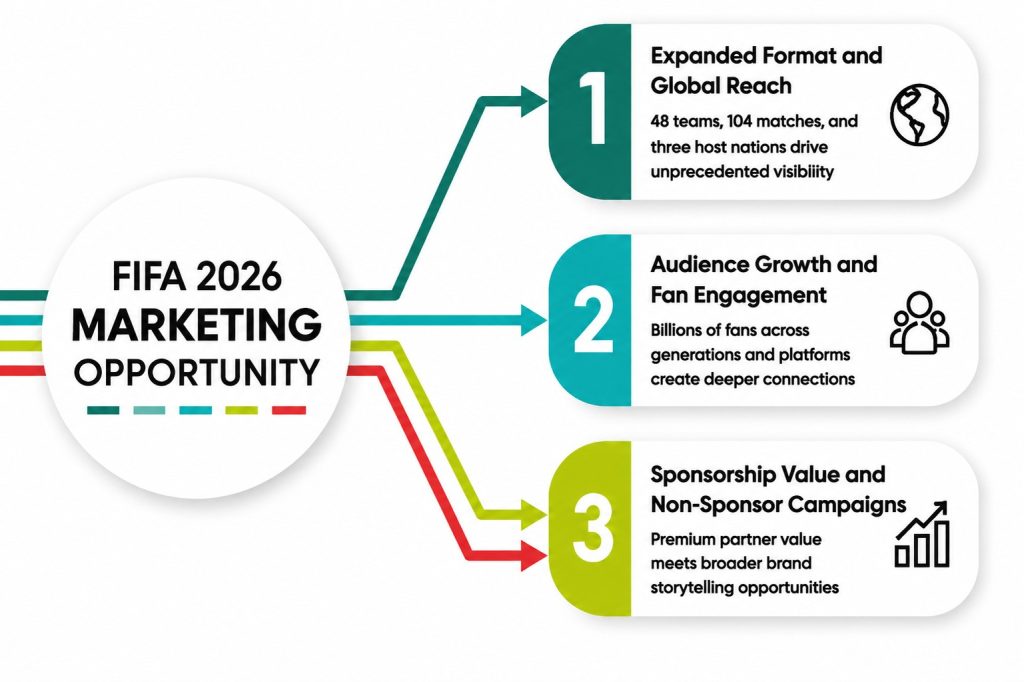
FIFA 2026 Marketing Opportunity

FIFA 2026 Marketing Opportunity

Expanded Format and Global Reach

FIFA 2026 marks the first time the tournament will feature 48 teams, significantly increasing the number of matches, viewers, and cultural touchpoints.

  • This expansion translates directly into more opportunities for brand exposure.
  • The sheer scale of the event means campaigns can be structured around regional moments rather than a single final match narrative.
  • In North America alone, millions of fans will be following games across multiple time zones, languages, and cultural contexts.

This broad footprint allows brands to tailor messaging for diverse audiences while maintaining a unified global presence.

Audience Growth and Fan Engagement

According to recent data on fan behavior, more than four‑in‑ten adults worldwide plan to follow the 2026 World Cup, which signals increasing interest compared to previous editions.

  • Fans aren’t just passive viewers; they are content creators, social sharers, and live engagers.
  • This shift from passive consumption to active participation means brands must design interactive experiences that go beyond traditional ads and into fans’ lives and identities.
  • Whether tapping into fandom through prediction games, live social engagement, or community activations, brands that understand how audiences consume content today will benefit most.

Sponsorship Value and Non‑Sponsor Campaigns

Official FIFA sponsorship remains a high‑value asset, driving visibility and credibility for brands that commit to it.

  • But an important trend for 2026 is that non‑sponsored brands are still finding ways to engage effectively.
  • Through strategic storytelling, co‑creation with fans, and social‑first campaigns, these brands are capturing attention without the hefty price tag of official partnership.
  • This democratization of engagement, where creativity can rival sponsorship, is one of the defining opportunities of FIFA 2026 marketing.

Top Brands Advertising at the World Cup

The top brands dominating advertising at the FIFA World Cup 2026 include Adidas, Lay’s, Coca-Cola, Budweiser, Unilever, and Lenovo.

With global ad spend projected to increase by $10.5 billion for the tournament, these companies are launching massive cinematic campaigns, utilizing star-studded ensemble casts, and capitalizing on the tournament’s 16 North American host cities.

Notably, Lionel Messi is the most prominent face of this ad cycle, appearing in nearly a quarter of all major tournament commercials. The leading ad campaigns and official sponsor tiers breakdown into the following structure:

Adidas

Adidas
Adidas

Leading the ad race with its massive “Backyard Legends” and “La Preparación Americana” campaigns. Directed with cinematic flair, the spots feature an ensemble cast including Lionel Messi, Jude Bellingham, Lamine Yamal, Zinedine Zidane, David Beckham, actor Timothée Chalamet, and musician Bad Bunny.

Lay’s (Frito-Lay)

Lay's (Frito-Lay)
Lay's (Frito-Lay)

Capitalizing heavily on at-home watch parties with its “No Lay’s, No Game” commercial push. The campaign uses celebrity pranks and features Messi, Beckham, and actor Steve Carell.

Budweiser & Michelob Ultra (AB InBev)

Budweiser & Michelob Ultra (AB InBev)

Budweiser’s emotional “Let it Pour” campaign features star manager Jürgen Klopp exploring pressure and obsession, while Michelob Ultra is leveraging Messi for its premium light beer activations.
Unilever

Launching the largest sports marketing activation in its history across 120 global markets. It spans 35 personal care brands (such as Dove, Axe/Lynx, and Rexona), kicking off with high-profile humorous ads like the Lynx “Airplane” trophy spot.

Lego

Lego
Lego

Running a clever, widely shared campaign featuring animated brick versions of modern soccer icons like Kylian Mbappé, Cristiano Ronaldo, and Vinícius Jr., building a Lego World Cup trophy.

Lenovo

Lenovo
Lenovo

As a new top-tier technology partner, Lenovo is running “The World’s Gone Football” campaign, which uses AI-driven visuals to show how soccer fever takes over everyday life.
Coca-Cola & Powerade: Focusing heavily on fan emotion and match-day sentimentality through its “Uncanned Emotions” platform.

Digital and Streaming Trends

Digital and Streaming Trends

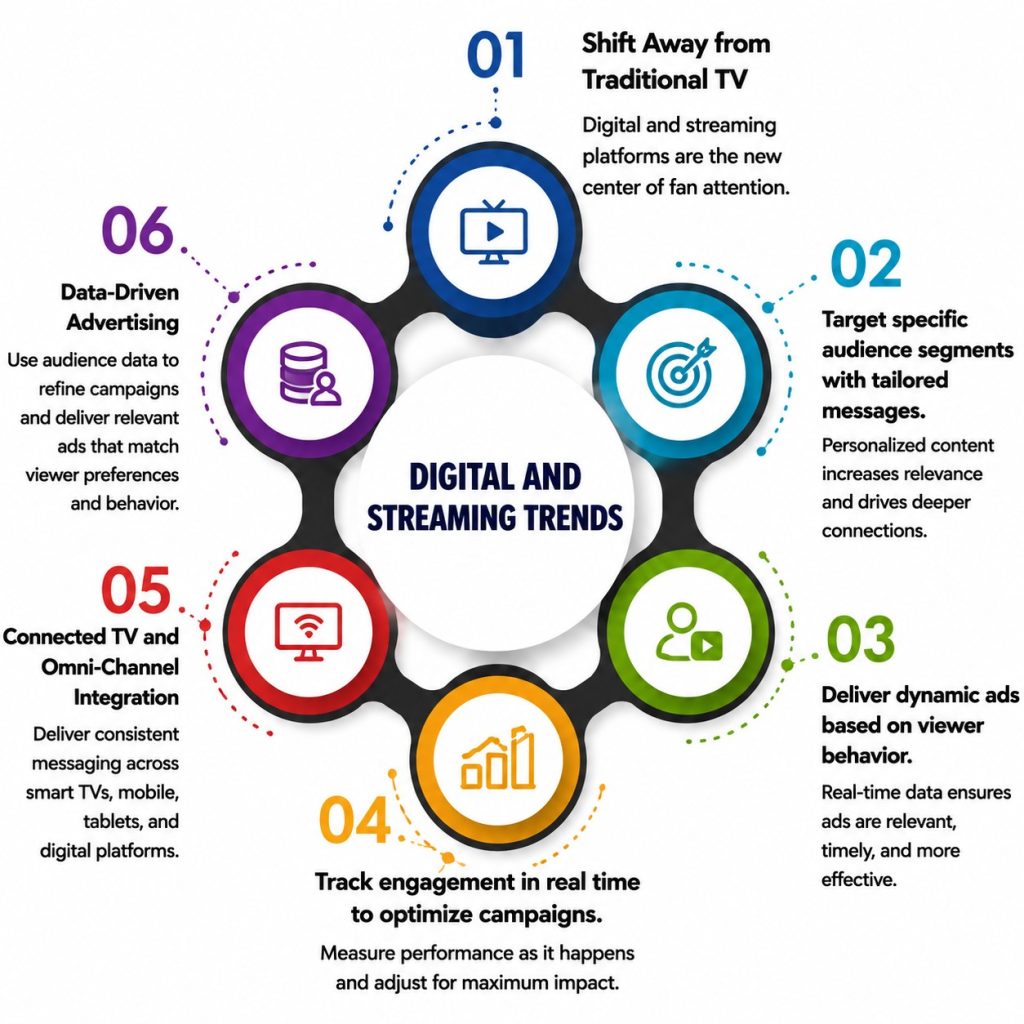
Shift Away from Traditional TV

Television once dominated World Cup viewership and advertising, but the media landscape has shifted dramatically. Fans are consuming matches and related content through digital platforms, streaming services, and mobile apps. Advertisers must adapt accordingly.

Digital streaming allows brands to:

  • Target specific audience segments with tailored messages.
  • Deliver dynamic ads based on viewer behavior.
  • Track engagement in real time to optimize campaigns.

Streaming platforms also offer interactive ad formats, such as shoppable videos, polls, and integrated social sharing options that keep fans engaged throughout the match.

Connected TV and Omni‑Channel Integration

Connected TV (CTV) enables advertisers to combine the reach of broadcast with the targeting capabilities of digital. Marketers can deliver consistent messaging across devices from smart TVs to mobile phones, ensuring campaigns have omni‑channel cohesion.

This is especially important during events with high concurrent viewership, as it allows brands to maintain visibility while reducing wasted impressions.

Data‑Driven Advertising

Using audience data from streaming and digital platforms, marketers can refine campaign delivery to match viewer preferences, language, and behavior.

For example:

  • Fans who rewatch highlight clips might receive ads for merchandise or membership programs.
  • Viewers in specific regions could be targeted with localized offers or language‑specific creative.

This kind of personalization drives engagement and enhances ROI by making every impression more relevant to the individual.

Social Media & Influencer Campaigns

Social Media & Influencer Campaigns

The Power of Social Platforms

Social media has become central to World Cup discourse. Fans use platforms like Instagram, TikTok, Twitter, and YouTube not just to watch highlights but to react, remix, and express fandom in real time.

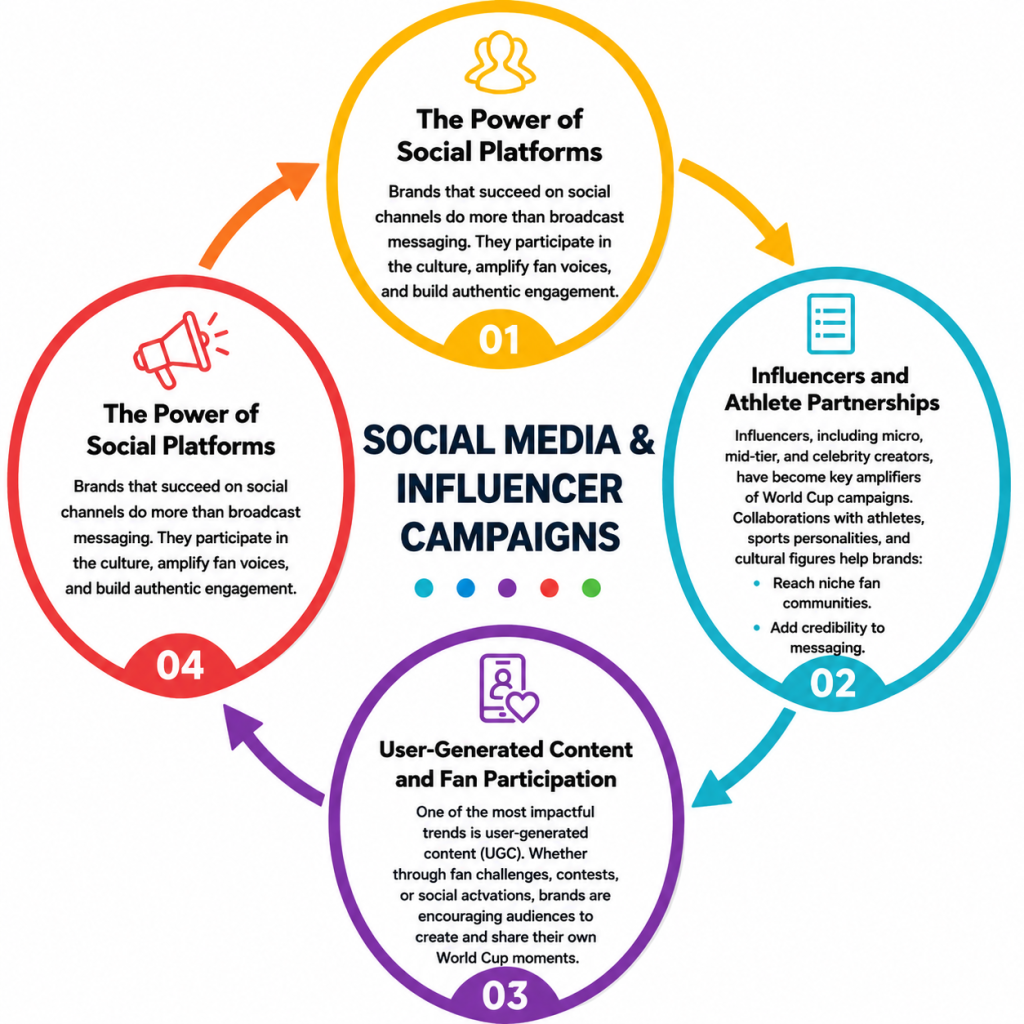
Brands that succeed on social channels do more than broadcast messaging. They participate in the culture, amplify fan voices, and build authentic engagement.

Influencers and Athlete Partnerships

Influencers, including micro, mid‑tier, and celebrity creators, have become key amplifiers of World Cup campaigns. Collaborations with athletes, sports personalities, and cultural figures help brands:

  • Reach niche fan communities.
  • Add credibility to messaging.
  • Drive organic engagement.

When influencers share their own experiences, reactions, or fandom, it encourages fans to participate and co‑create content, turning campaigns into social movements rather than one‑way messages.

User‑Generated Content and Fan Participation

One of the most impactful trends is user‑generated content (UGC). Whether through fan challenges, contests, or social activations, brands are encouraging audiences to create and share their own World Cup moments. UGC campaigns:

  • Boost organic reach.
  • Increase authenticity.
  • Strengthen emotional bonds between brand and fan.

UGC becomes even more powerful when brands curate and amplify the best content, turning fans into part of the marketing narrative.

Fan Experiences & Local Activations

Fan Experiences & Local Activations

Experiential Marketing in Host Cities

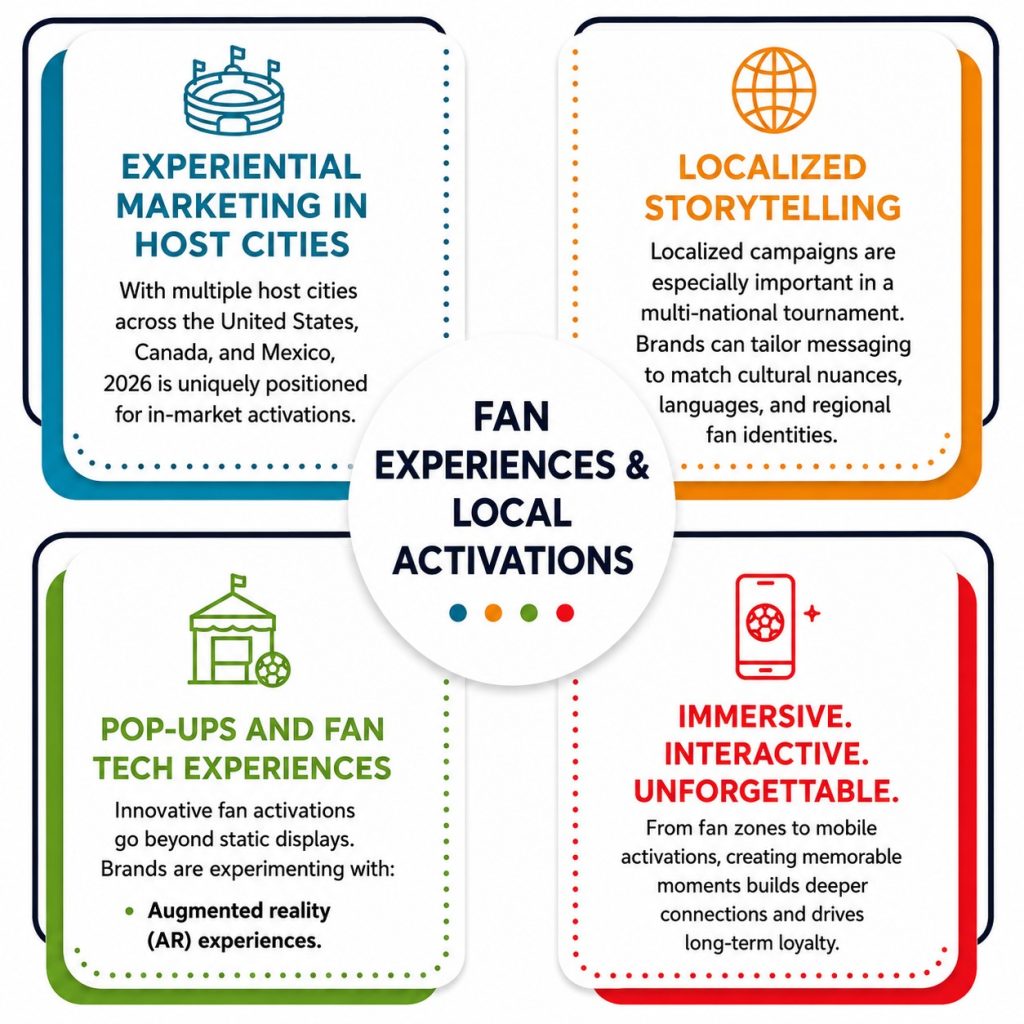
With multiple host cities across the United States, Canada, and Mexico, 2026 is uniquely positioned for in‑market activations. Brand‑sponsored fan zones, pop‑up experiences, and live events can transform physical spaces into memorable brand touchpoints.

These activations offer:

  • Face‑to‑face engagement with passionate fans.
  • Photo‑worthy moments that generate social buzz.
  • Opportunities to tie digital campaigns to real‑world experiences.

Experiences that resonate emotionally tend to be shared across social platforms, increasing exposure far beyond the physical footprint.

Localized Storytelling

Localized campaigns are especially important in a multi-national tournament. Brands can tailor messaging to match cultural nuances, languages, and regional fan identities. For example:

  • Spanish‑language content designed for
  • Mexican and U.S. Hispanic audiences.
  • Bilingual campaigns in Canada (English and French).
  • Region‑specific pop‑up events celebrating local fan communities.

Localized storytelling strengthens relevance and fosters deeper audience connection, which boosts both engagement and long‑term loyalty.

Pop‑Ups and Fan Tech Experiences

Innovative fan activations go beyond static displays. Brands are experimenting with:

  • Augmented reality (AR) experiences.
  • Interactive fan walls and digital kiosks.
  • Competitions tied to live match data.

These tech‑enabled activations create memorable experiences that feel modern and dynamic, helping brands stand out in a crowded attention landscape.

Key Takeaways for Marketers

Key Takeaways for Marketers

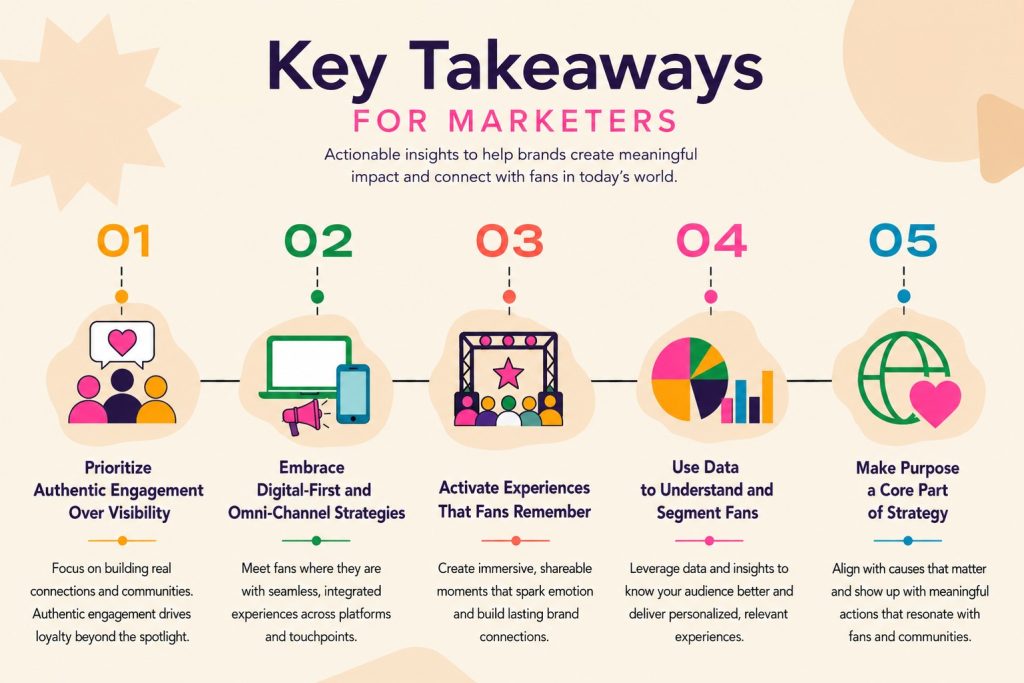
1. Prioritize Authentic Engagement Over Visibility

In 2026, visibility alone won’t drive impact. Brands that craft authentic narratives, ones that align with fan emotions and cultural moments, will build deeper connections. Whether through influencer partnerships, fan‑generated content, or interactive social campaigns, authenticity is the currency of modern marketing.

2. Embrace Digital‑First and Omni‑Channel Strategies

Traditional broadcast still matters, but digital and streaming channels are central. Marketers should:
Plan cross‑platform campaigns that integrate CTV, mobile, and social.

  • Use data to personalize messaging.
  • Measure engagement across touchpoints to refine in real time.
  • This ensures campaigns are both far‑reaching and relevant.

3. Activate Experiences That Fans Remember

Experiential marketing from pop‑ups to VR fan zones moves brands from advertiser to experience creator. These activations generate memorable interactions that can be amplified online, creating a multiplier effect for brand message and equity.

4. Use Data to Understand and Segment Fans

FIFA 2026 audiences are diverse. Data allows marketers to segment by:

  • Geography.
  • Language.
  • Engagement behavior.
  • Personalization increases relevance, which drives deeper engagement and better performance metrics.

5. Make Purpose a Core Part of Strategy

The modern fan expects brands to stand for something. Sustainability initiatives, community programs, and social responsibility campaigns help brands:

  • Align with fan values.
  • Drive positive brand perception.
  • Create meaningful impact beyond the tournament.
  • This elevates campaigns from promotional to purposeful.
Scroll to Top