


Table of Contents
Introduction
When you appeared in search results a few years ago, you had to rank on page one and hope that someone clicked on your link. These days, search results powered by AI are altering that behavior.
Search engines now produce summaries, recommendations, and direct answers rather than merely listing websites. Search engines do more than just match keywords when they are in AI mode.
Before selecting which businesses to include in generated responses, they analyze intent, location context, reviews, and business credibility.
This implies that being visible in map listings is no longer the only aspect of local SEO. Becoming the most reliable and pertinent local source that AI systems decide to highlight is the goal. Your local strategy must change as people’s search habits do.
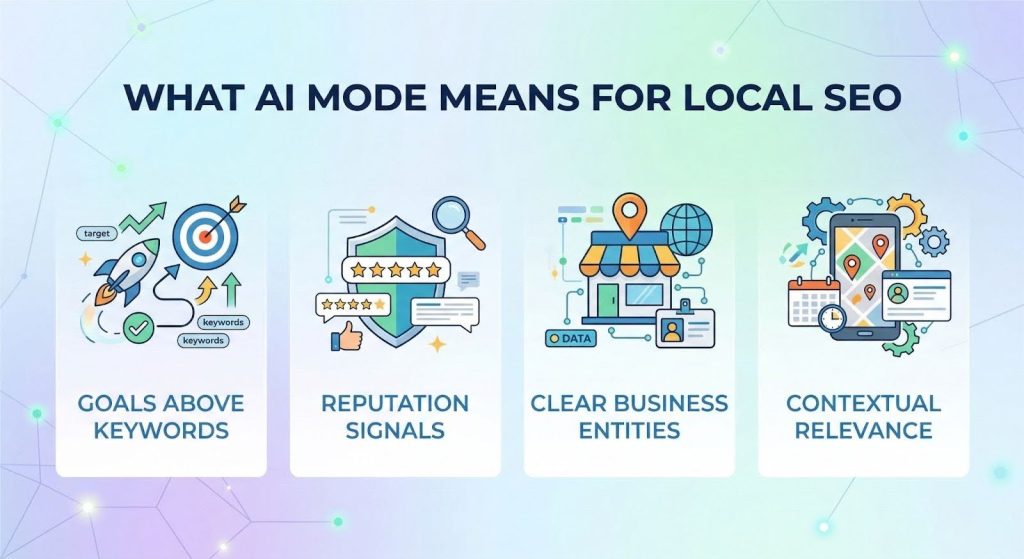
What AI Mode Means for Local SEO
AI-driven search is no longer as straightforward as a keyword-matching system. Before recommending companies, it assesses context, credibility, and local relevance.
- Goals Above Keywords: AI considers users’ true intentions rather than just what they type. It looks for obvious solutions to actual local issues rather than rewarding exact keyword matches.
- Reputation Signals: AI-generated results are more heavily influenced by reviews, ratings, and customer interaction. Companies that consistently receive positive feedback and actively respond are more likely to be highlighted.
- Clear Business Entities: AI uses structured signals to link your company to locations, services, and categories. Local SEO visibility is strengthened by consistent listings, accurate NAP details, and schema markup.
- Contextual Relevance: In AI mode, generic location pages perform worse. These days, search engines evaluate whether your content actually benefits a particular audience or city.
This change fundamentally alters your approach to local SEO.
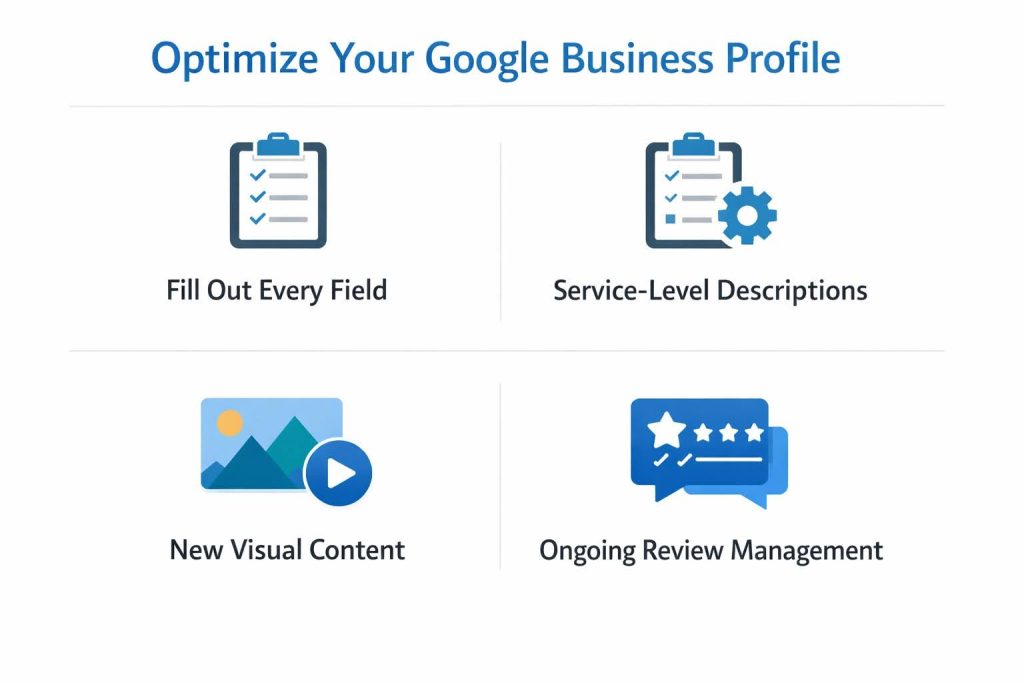
#1 Optimize Your Google Business Profile
When AI systems create local recommendations, they frequently start by glancing at your Google Business Profile.
- Fill Out Every Field: Make sure that all the information about your business is filled out, such as the services you offer, the categories you fall into, the description of your business, your hours, and your attributes.
- Service-Level Descriptions: Instead of being vague, give detailed descriptions of each main service. This helps AI connect your business to certain types of local search intent.
- New Visual Content: Add new pictures of your location, team, products, or finished projects. AI uses engagement signals and how recent they are as signs of trust.
- Ongoing Review Management: Encourage real reviews and respond to them often. When suggesting businesses, AI systems look at sentiment, response patterns, and rating trends.
Your local SEO visibility immediately decreases if it is out-of-date or incomplete. It is now essential to optimize this profile; it is no longer optional.
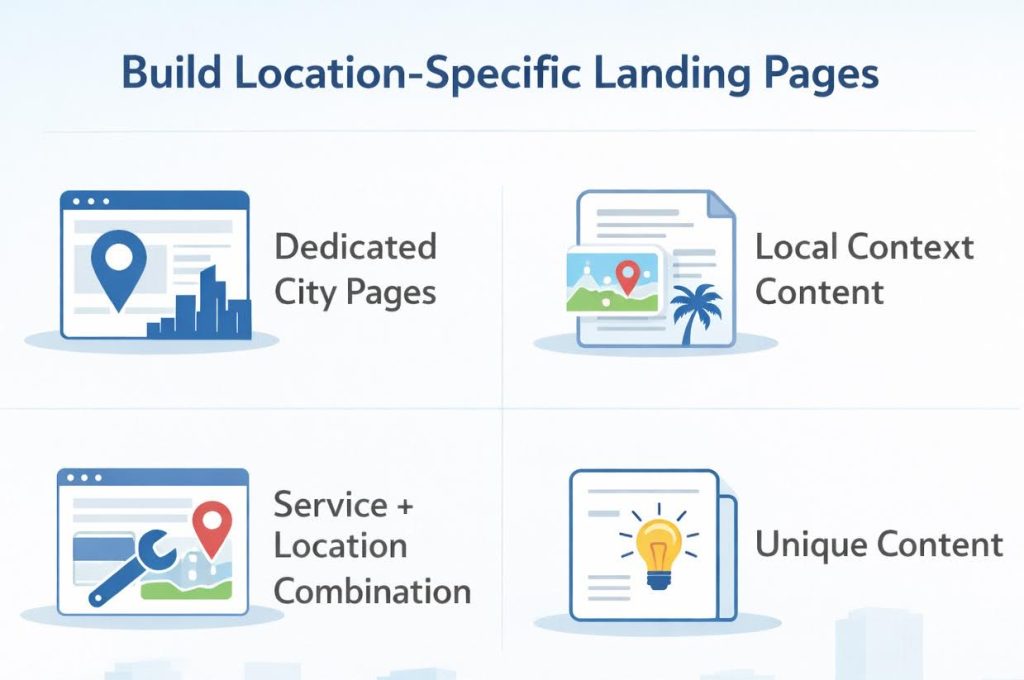
#2 Build Location-Specific Landing Pages
Location pages make it easier for search engines to comprehend your company’s operations and clientele.
- Dedicated City Pages: Rather than listing everything on a single page, create separate pages for each city or service area. This helps search engines connect your services with specific locations.
- Local Context Content: Incorporate allusions to surrounding communities, neighborhoods, or landmarks. This aids search engines in comprehending user intent and geographic relevance.
- Service + Location Combination: Organize headings and content according to combinations of services and locations, like “facial treatments in Carrollton” or “container rentals in Phoenix.”
- Unique Content: Don’t duplicate content from one city page to another, changing only the location. AI-powered search engines quickly identify redundant content.
These pages become strong signals that improve local SEO visibility throughout cities, communities, and service areas when they are properly structured.
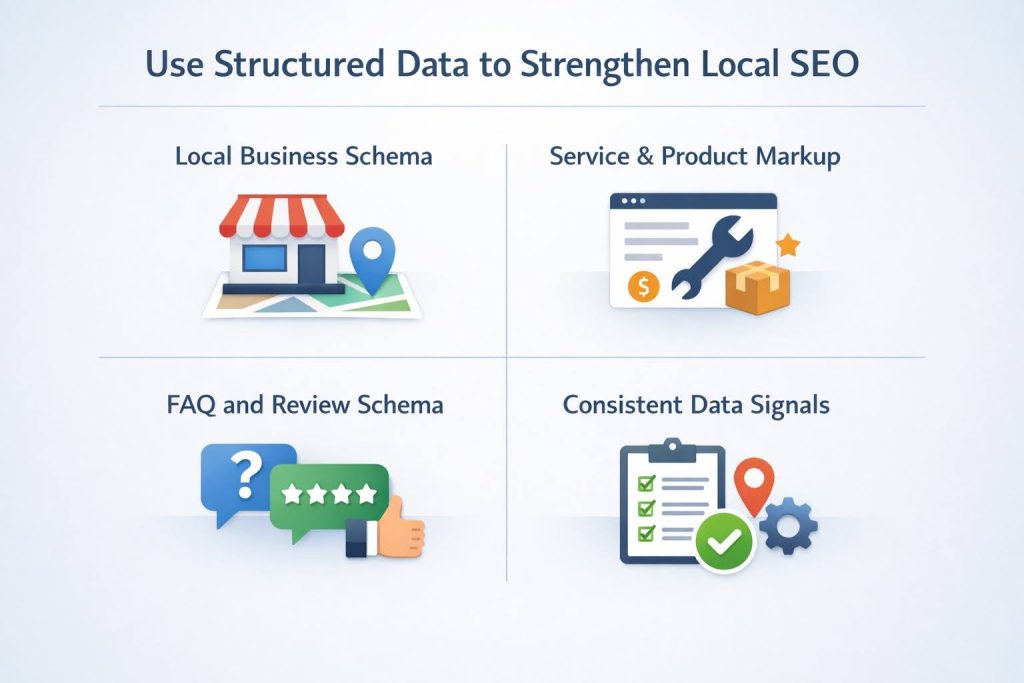
#3 Use Structured Data to Strengthen Local SEO
To comprehend your company’s operations, location, and desired appearance in search results, search engines rely on structured data.
- Local Business Schema: Use the Local Business Schema to specify your company’s name, address, phone number, services, and business hours. Search engines can more confidently link your company to a particular location.
- Service & Product Markup: You can help search engines better understand what you offer by adding schema for services or products. This is particularly helpful for companies that have multiple locations.
- FAQ and Review Schema: Clear responses and reputation signals are extracted by search engines with the aid of structured FAQ and review data. These are frequently pulled straight into generated responses by AI-powered search engines.
- Consistent Data Signals: The content of your website and business listings across directories must be consistent with your schema information. Inconsistent information can erode trust and confuse search engines.
AI systems can read your website more quickly and accurately if you include schema markup. Because of this, structured data is a crucial technical element of an effective local SEO strategy.
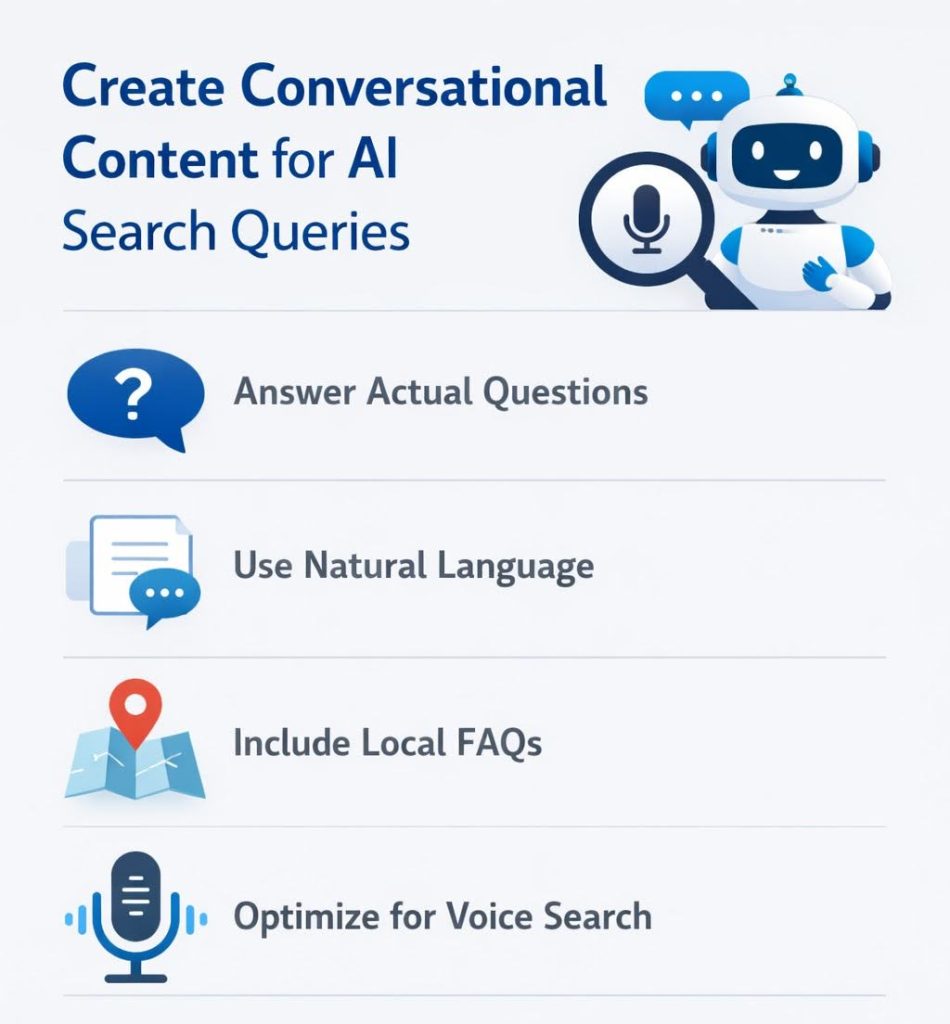
#4 Create Conversational Content for AI Search Queries
Short keywords have given way to complete queries and organic dialogues in search behavior. These days, people use voice search and AI assistants to conduct searches in the same manner as they speak.
- Answer Actual Questions: Concentrate on producing content that responds to frequently asked local queries. For instance, questions like “Where can I rent a shipping container near me?” show how people actually conduct searches these days.
- Use Natural Language: Steer clear of stuffing pages with stiff language and repetitious keywords. Instead, write informative and natural-sounding content.
- Include Local FAQs: By addressing local issues, FAQ sections can greatly increase visibility. Inquiries concerning delivery regions, service schedules, or regional laws aid search engines in comprehending your level of expertise.
- Optimize for Voice Search: Longer, question-based queries, such as “Who sells storage containers near me right now?” are frequently included in voice searches.
This conversational style must be reflected in your local SEO strategy if you want to remain competitive.
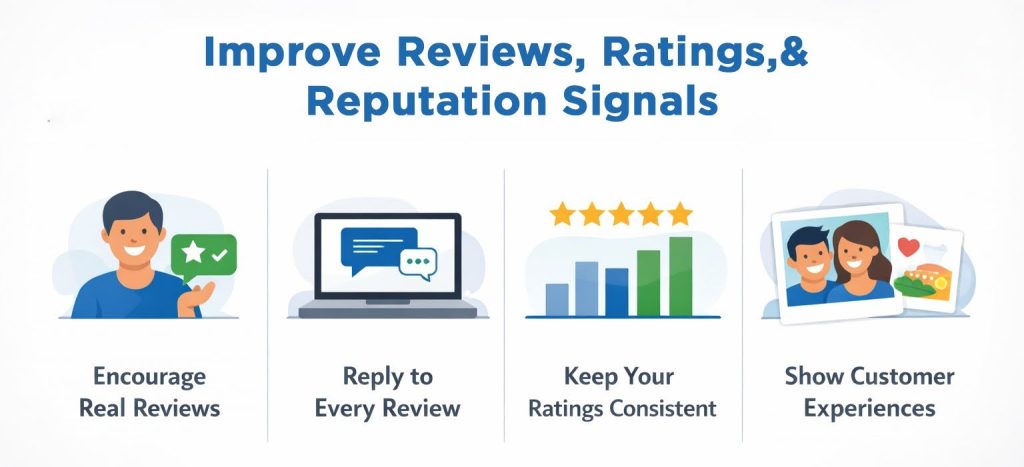
#5 Improve Reviews, Ratings,& Reputation Signals
In today’s search results, customer reviews are one of the best ways to tell if you can trust them. Before recommending a business, AI systems look at the quality, frequency, and sentiment of reviews.
- Encourage Real Reviews: After a customer has used your service or bought something, ask them to leave an honest review. Search engines see a steady stream of real feedback as a sign of credibility.
- Reply to Every Review: When you reply to reviews, it shows that your business is open and cares about its customers. As part of trust evaluation, AI systems often look at how people respond.
- Keep Your Ratings Consistent: Businesses that have stable ratings and positive feedback trends are more likely to be recommended. Trust signals can be weaker when there are big changes or complaints that aren’t resolved.
- Show customer experiences: Posting reviews and success stories on your website makes you look more trustworthy. These experiences give both users and search engines a better idea of what to expect.
This is why managing your reputation is so important for improving your Local SEO performance.
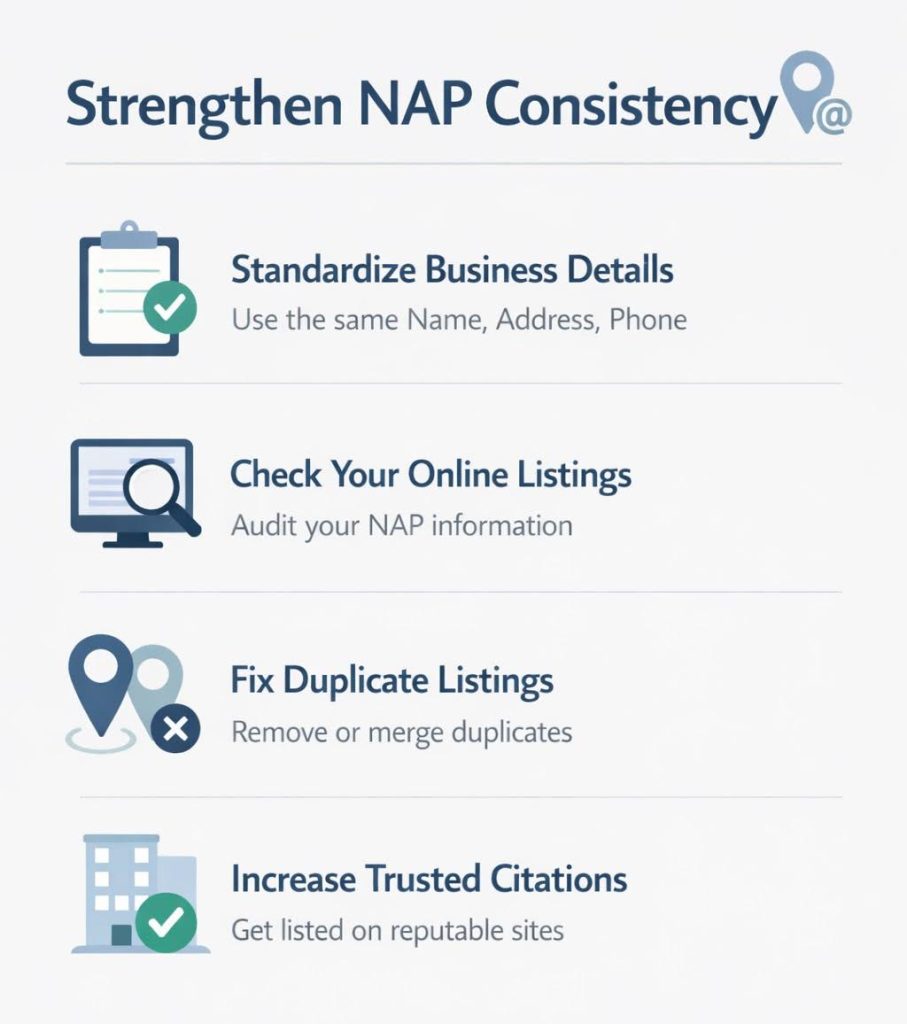
#6 Strengthen NAP Consistency
Search engines use consistent business information to check that a business is real and that its location is correct.
- Standardize Business Details: Make sure that your business name, address, and phone number are the same on your website and in all of your listings. Even small changes in formatting can make things not match up.
- Check Your Online Listings: Look at business directories like Yelp, Bing Places, Apple Maps, and listings that are specific to your industry on a regular basis. If you have old or wrong information, it can make you less authoritative.
- Fix Duplicate Listings: If there are two profiles for the same business, reviews and ranking signals can get mixed up. Combining or getting rid of duplicates keeps your reputation and engagement metrics in one place.
- Increase Trusted Citations: Adding your business to well-known local and industry directories makes it more credible. Each correct listing helps search engines by acting as a reference.
If your Name, Address, and Phone number (NAP) are different on different platforms, it can be confusing and make people less likely to trust you. A strong Local SEO foundation includes making sure that all of your directories are consistent.
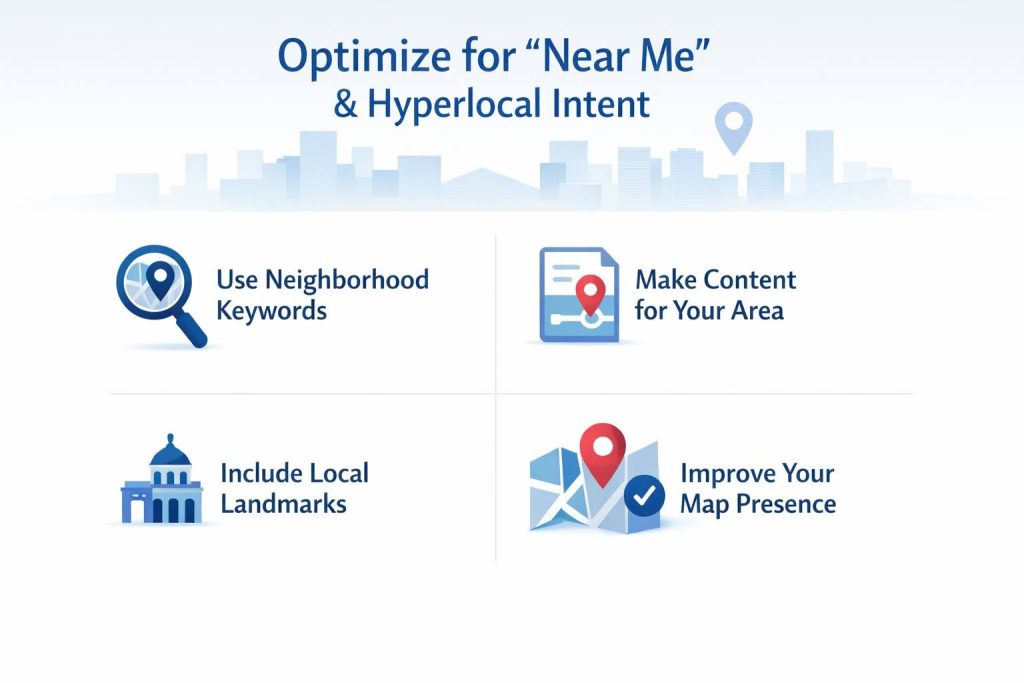
#7 Optimize for “Near Me” & Hyperlocal Intent
A lot of local searches use words like “near me,” “close by,” or the names of specific neighborhoods. AI-powered search engines use these signals to give you very relevant local results.
- Use neighborhood keywords: Include neighborhoods, districts, and nearby communities in your writing. This helps search engines figure out where you do business.
- Make content for your area: Instead of just writing about big cities, write about communities as well. Pages about neighborhoods, service areas, or nearby landmarks make the site more relevant to the area.
- Include Local Landmarks: Mentioning well-known landmarks, streets, or places of interest in the area gives the reader more information. These details help search engines connect your business to a certain area.
- Improve Your Map Presence: Make sure that map services correctly pin and categorize your business’s location. When suggesting nearby businesses, AI search systems often use map data.
In these cases, optimizing for hyperlocal intent can help improve your Local SEO visibility.
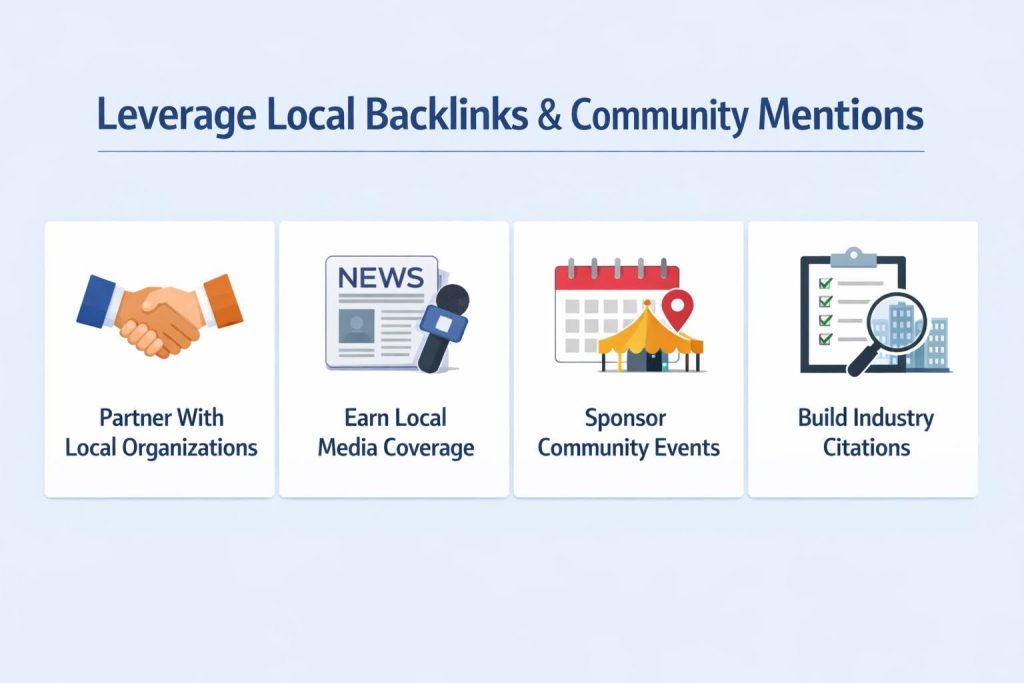
#8 Leverage Local Backlinks & Community Mentions
Backlinks are still one of the most powerful signals of authority for search engines. When local websites, organizations, and publications talk about your business, it really boosts your credibility in that area.
- Partner With Local Organizations: Work with local businesses, chambers of commerce, or community groups to form partnerships or sponsorships. These connections can help you get mentioned on their websites.
- Earn Local Media Coverage: Try to get your business featured by local news outlets, blogs, or community websites. Being mentioned in these places can give you useful backlinks and help more people learn about your brand.
- Sponsor Community Events: Participating in local events, charities, or business initiatives can lead to online mentions and directory listings. These activities strengthen your presence within the community.
- Build Industry Citations: Listing your business on industry-specific websites or professional directories increases credibility. These niche platforms help search engines associate your brand with a particular service category.
These signals play a crucial role in enhancing your Local SEO authority and help AI systems better assess your relevance.
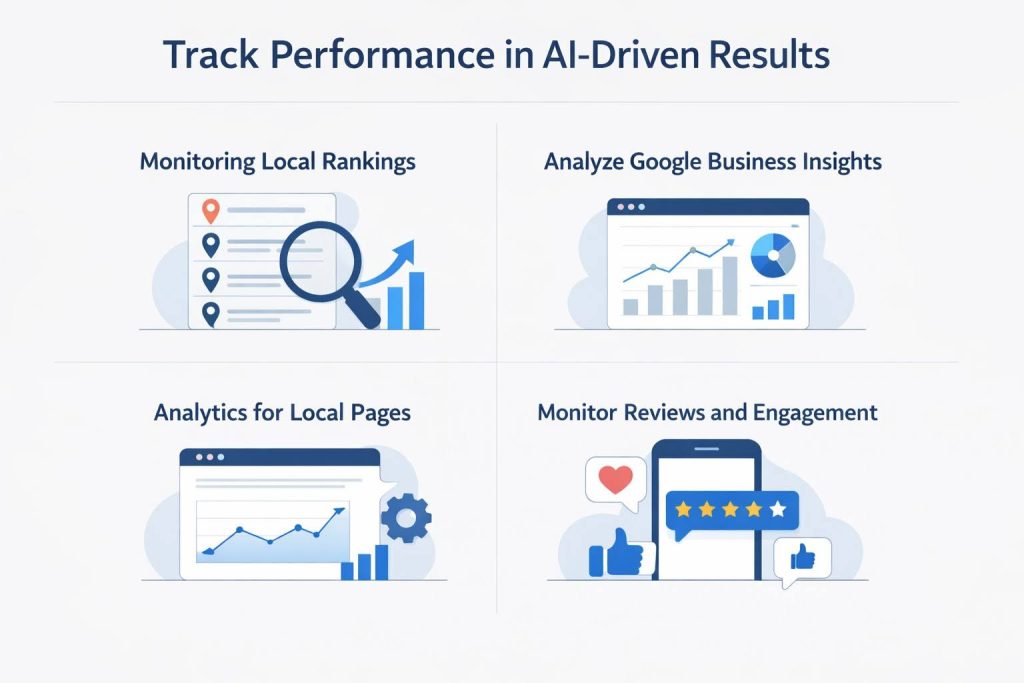
#9 Track Performance in AI-Driven Results
Improving your strategy is just part of the task. To know what truly enhances visibility, you must assess how your Local SEO efforts are performing on search platforms.
- Monitoring Local Rankings: Observe how your business ranks for searches based on location, like service + city queries. This indicates if your optimization efforts are boosting visibility.
- Analyze Google Business Insights: Google Business Profile offers information on searches, calls, direction requests, and profile views. These insights illustrate how users engage with your listing.
- Analytics for Local Pages: Tools like GA4 enable you to monitor traffic, engagement, and conversions from pages specific to locations. This assists in determining which city pages draw the most visitors.
- Monitor Reviews and Engagement: Keeping track of review growth, response rates, and sentiment is essential for assessing your reputation signals. Positive engagement trends frequently align with improved local visibility.
Monitoring performance allows you to pinpoint which pages, listings, and keywords are facilitating genuine local discovery.
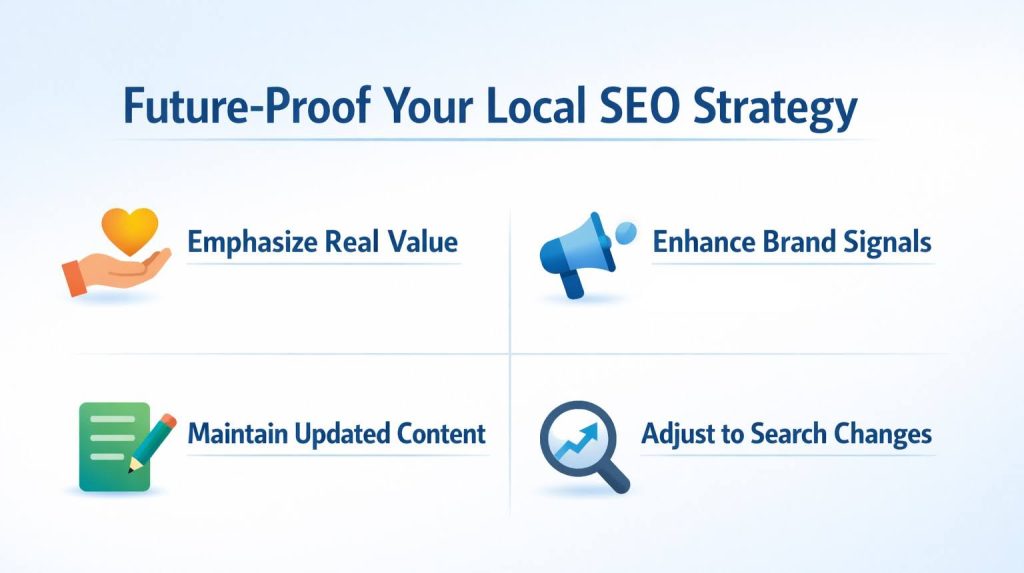
#10 Future-Proof Your Local SEO Strategy
Local search will keep changing as AI is increasingly used in how search engines provide results.
- Emphasize Real Value: AI systems focus on content that is useful and reliable, genuinely assisting users. Companies that provide helpful guides, local resources, and thorough service descriptions are more noticeable.
- Enhance Brand Signals: When your business is mentioned on various websites, in reviews, and on social media, it helps AI systems identify your brand as trustworthy. A consistent brand presence makes it easier for search engines to recommend you.
- Maintain Updated Content: AI-based search engines prefer new and precise information. Frequently refreshing service pages, local guides, and business information ensures your content stays relevant.
- Adjust to Search Changes: Search habits will keep evolving towards voice, conversational queries, and AI-generated responses. Companies that remain adaptable and continuously improve their strategies will stay competitive.
Creating a flexible Local SEO strategy will help your brand stay visible as search technology progresses. Companies that adjust quickly will have a lasting edge in visibility.
Conclusion
The way people find local businesses is changing rapidly. AI-driven search engines now prioritize context, reputation, and actual usefulness rather than just matching keywords.
Due to this change, businesses that focus on a solid Local SEO strategy are more likely to show up in recommendations, maps, and AI-generated responses.
A successful Local SEO strategy today goes beyond just basic listings. It involves optimizing your Google Business Profile, creating content focused on your location, managing reviews, and ensuring consistent business information across different platforms. When these components work together, search engines better understand your business and are more likely to recommend it to local customers.
As AI search technology continues to advance, businesses that remain proactive will reap the greatest rewards. By enhancing content quality, boosting reputation signals, and keeping local information accurate, you can establish a lasting Local SEO presence. Ultimately, the goal is straightforward: make it easy for both people and AI systems to identify your business as the top local choice.
Deepak Wadhwani has over 20 years experience in software/wireless technologies. He has worked with Fortune 500 companies including Intuit, ESRI, Qualcomm, Sprint, Verizon, Vodafone, Nortel, Microsoft and Oracle in over 60 countries. Deepak has worked on Internet marketing projects in San Diego, Los Angeles, Orange Country, Denver, Nashville, Kansas City, New York, San Francisco and Huntsville. Deepak has been a founder of technology Startups for one of the first Cityguides, yellow pages online and web based enterprise solutions. He is an internet marketing and technology expert & co-founder for a San Diego Internet marketing company.