



History of Whole Foods America Market

History of Whole Foods: America’s Largest Natural Food Grocery Store

Table of Contents

Introduction

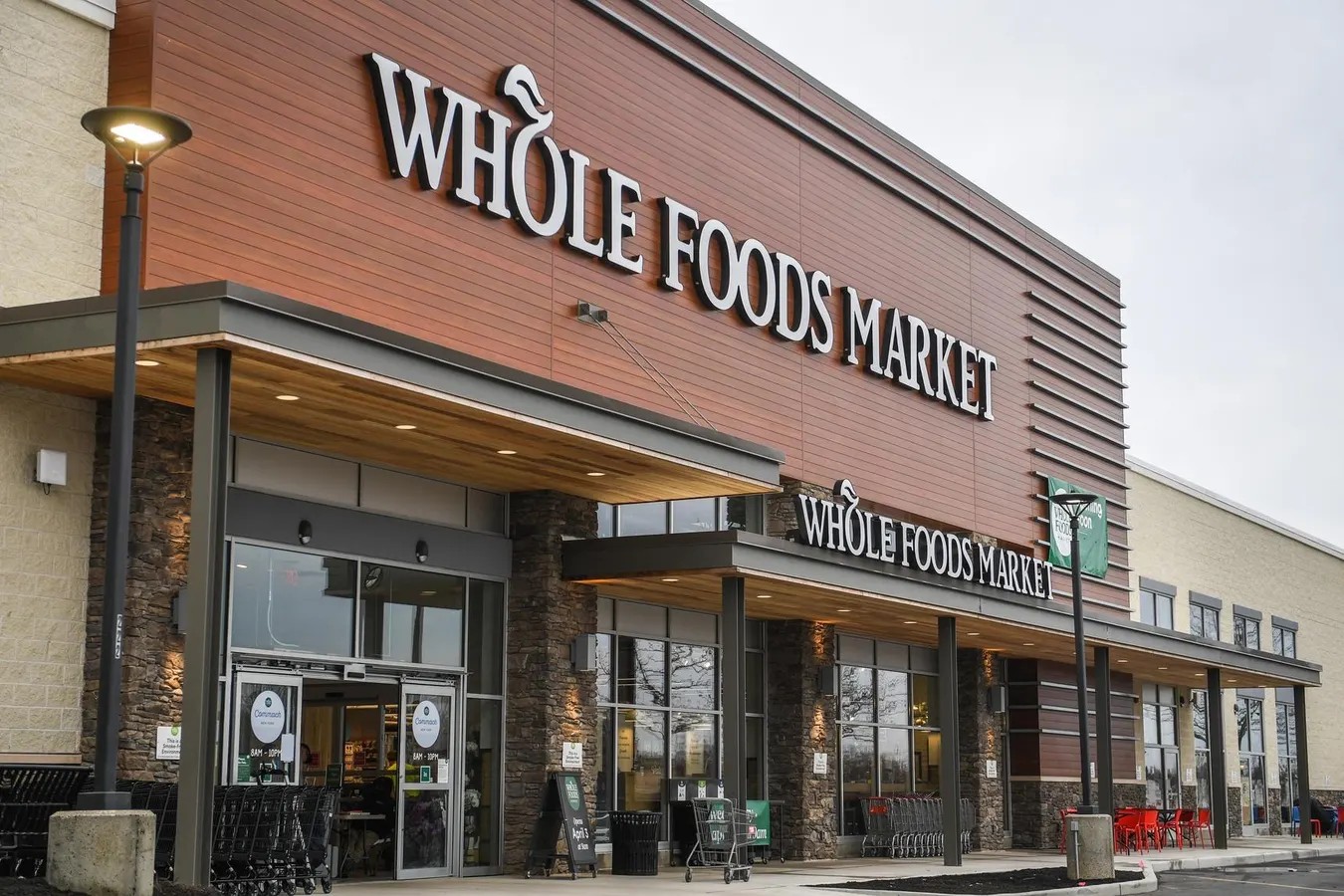
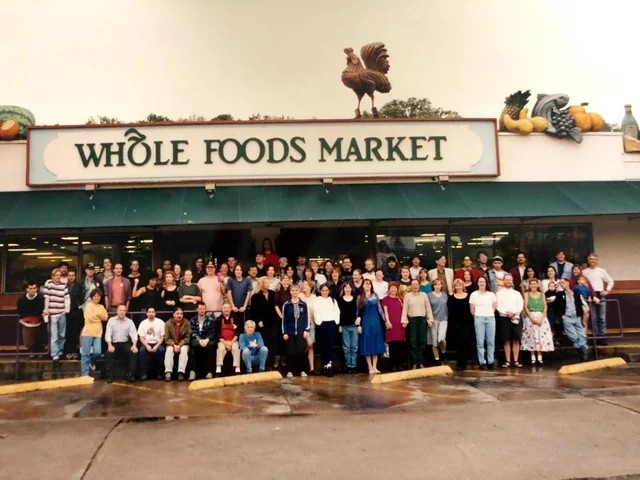
Whole Foods Market is one of the most influential names in modern grocery retail. What started as a small natural food store in Austin, Texas, eventually became a defining force in the organic and premium grocery movement in the United States.

Today, it stands as a case study in brand building, category creation, and strategic expansion in a highly competitive retail industry.

This is not just a story about groceries. It’s about how consumer behavior shifted toward health, wellness, and transparency, and how one company positioned itself ahead of that curve.

Key highlights:

  • Founded in 1980 in Austin, Texas
  • Focused on natural and organic foods before mainstream adoption
  • Played a major role in shaping modern grocery retail standards
  • Became a benchmark for premium food retail experience
  • Later acquired by Amazon in 2017

The Founding Vision: Betting on a Market Before It Existed

The Founding Vision: Betting on a Market Before It Existed

Whole Foods started with a bold belief: consumers would eventually care deeply about what they eat. At the time, this was not obvious. Processed food dominated supermarkets, and “organic” was a niche concept.

The founders positioned the store around a simple but powerful idea: food should be natural, minimally processed, and transparently sourced.

  • Founded by John Mackey and partners in 1980
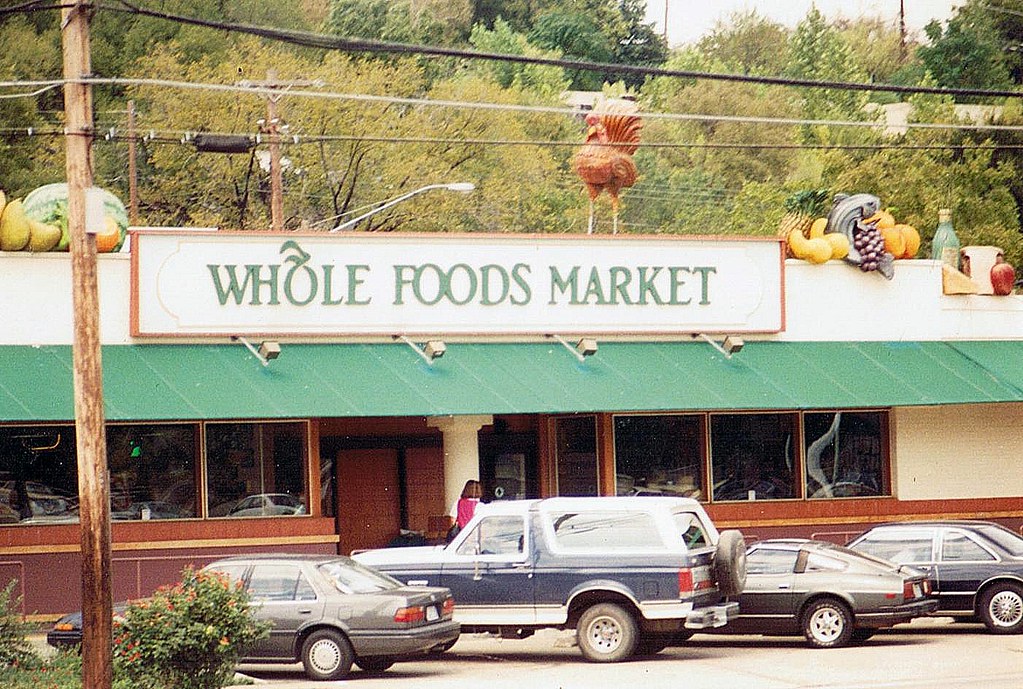
  • Opened first store in Austin, Texas
  • The focus on natural foods was unconventional at the time
  • Health-conscious retail was still a niche market
  • Vision was ahead of the consumer demand curve
  • Built around trust, transparency, and quality ingredients

The founders believed something different: that people would eventually care more about ingredient quality, sourcing, and health impacts. That belief became the foundation of the brand. They weren’t responding to demand; they were anticipating it.

First-Mover Advantage in Natural Retail

First-Mover Advantage in Natural Retail

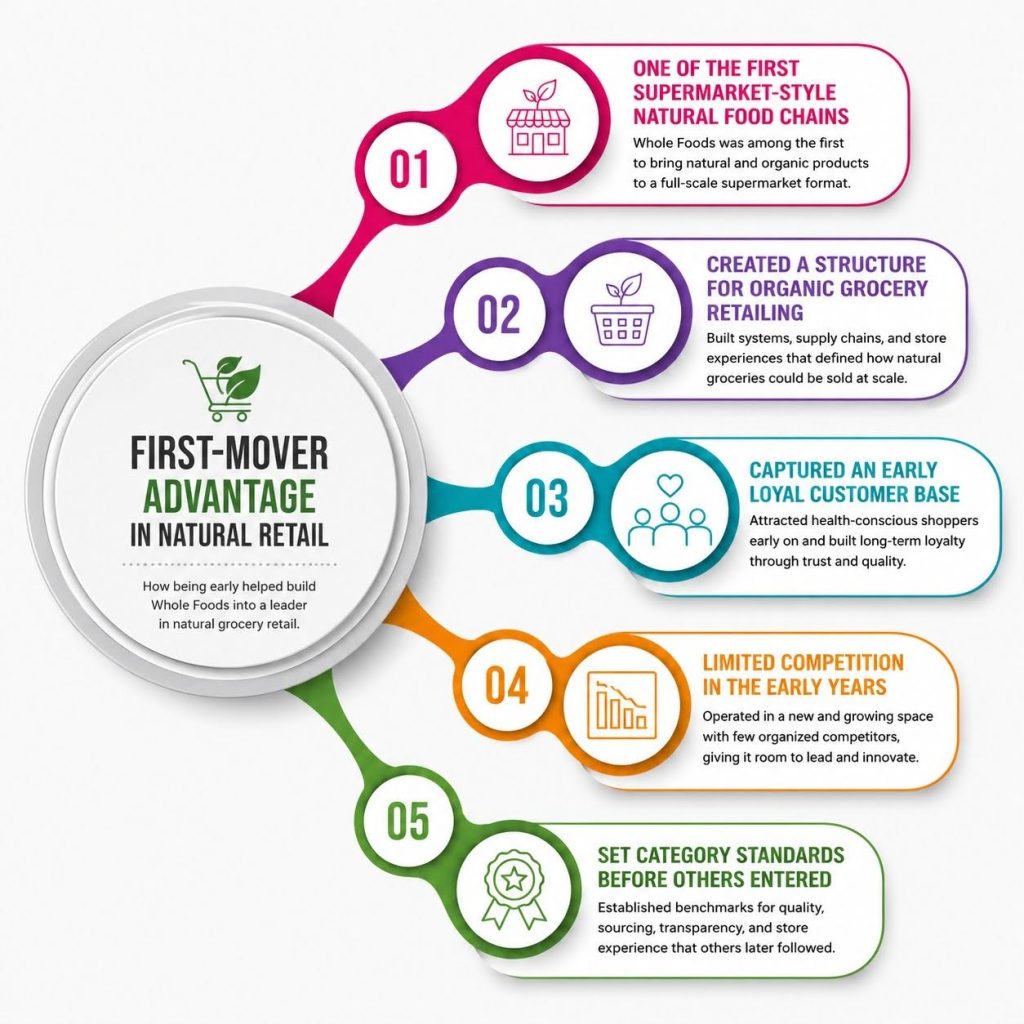
In its early years, Whole Foods benefited from being one of the first organized supermarket chains focused entirely on natural and organic products. While health food stores existed, they were usually small, fragmented, and local.

  • One of the first supermarket-style natural food chains
  • Created a structure for organic grocery retailing
  • Captured an early loyal customer base
  • Limited competition in the early years
  • Set category standards before others entered

Whole Foods changed that by creating a supermarket experience centered on natural foods. This gave it a strong first-mover advantage in a category that was still forming. It wasn’t just selling products; it was defining what “natural grocery retail” could look like at scale.

Scaling Through Strategic Expansion and Acquisitions

Scaling Through Strategic Expansion and Acquisitions

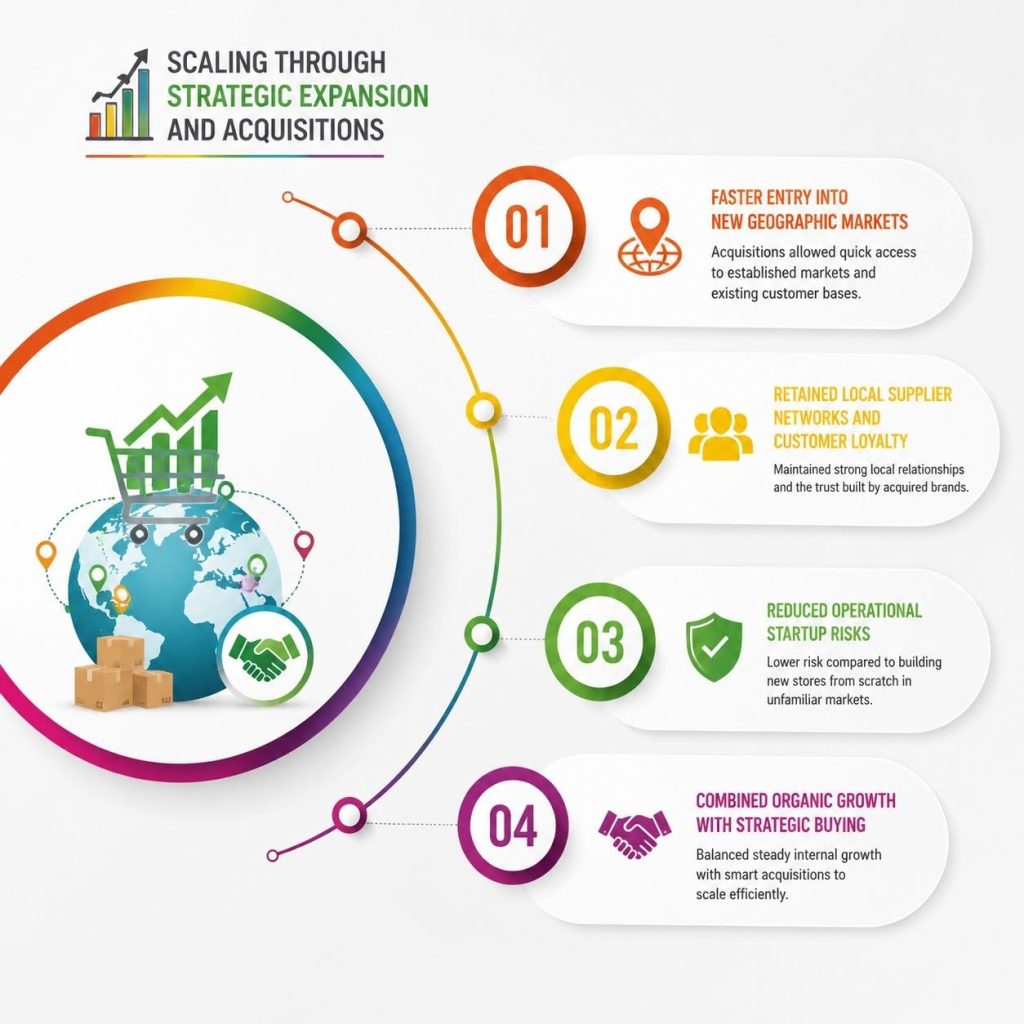
Growth came through a mix of store expansion and acquisitions of smaller natural food chains across the United States. Instead of building every location from scratch, Whole Foods often entered new markets by acquiring established regional players.

  • Faster entry into new geographic markets
  • Retained local supplier networks and customer loyalty
  • Reduced operational startup risks
  • Combined organic growth with strategic buying

This approach helped the company scale faster while maintaining local customer trust. It also allowed Whole Foods to absorb existing supplier networks and regional expertise, which made expansion more efficient.

Building a Premium Grocery Brand Identity

Building a Premium Grocery Brand Identity

Whole Foods deliberately positioned itself as a premium grocery brand. Higher prices were justified by messaging focused on quality, sourcing standards, and product integrity.

Store layouts, product presentation, and in-store experience were all designed to reinforce a sense of trust and exclusivity. Over time, Whole Foods became known as a destination for shoppers who prioritized quality over cost.

  • Higher pricing justified by quality sourcing
  • Strong emphasis on store experience
  • Clean layouts and curated product selection
  • Focus on trust and ingredient transparency
  • Created an aspirational shopping environment

This premium identity also helped the brand avoid direct competition with traditional discount grocery chains in its early growth phase.

Demand Creation: Educating the Organic Consumer

Demand Creation: Educating the Organic Consumer

One of Whole Foods’ biggest contributions was education. It didn’t wait for customers to understand organic food; it actively taught them.

  • Educated consumers about organic certification
  • Promoted awareness of non-GMO and clean-label foods
  • Used in-store storytelling and labeling
  • Built trust through transparency initiatives
  • Helped shift organic food from niche to mainstream
  • Influenced broader food industry standards
  • Increased consumer willingness to pay premium prices

Making “organic” a mainstream concept

Whole Foods played a major role in shifting organic food from a niche wellness trend into a widely recognized category. It normalized terms like “organic,” “natural,” and “clean label” for everyday shoppers.

  • Helped simplify complex food labeling for consumers
  • Positioned organic as a standard choice, not a luxury niche
  • Increased visibility of certified organic products in stores
  • Encouraged competitors to adopt similar labeling practices

In-store education as a marketing strategy

Instead of relying only on advertising, Whole Foods used its stores as learning environments. Every shelf, sign, and product description was designed to inform shoppers.

  • Shelf tags explained sourcing and ingredient quality
  • Staff training focused on product knowledge and guidance
  • Clear labeling helped reduce consumer confusion
  • Story-driven product placement built stronger trust

Building trust through transparency

Transparency became a core part of Whole Foods’ identity. The company understood that modern consumers don’t just want healthy food, they want to know where it comes from and how it’s made.

  • Emphasis on ingredient sourcing and supplier standards
  • Strict internal quality guidelines beyond basic regulations
  • Clear communication about product origins
  • Consistent messaging around food integrity

Long-term impact on consumer behavior

Over time, Whole Foods didn’t just sell organic products; it reshaped how people think about food purchasing decisions. This influence extended far beyond its own customer base.

  • Increased demand for clean-label and organic groceries across retail
  • Forced major supermarkets to expand organic offerings
  • Shifted consumer focus toward ingredient transparency
  • Contributed to the long-term growth of the wellness food industry

Financial Growth and IPO: From Regional Chain to Public Company

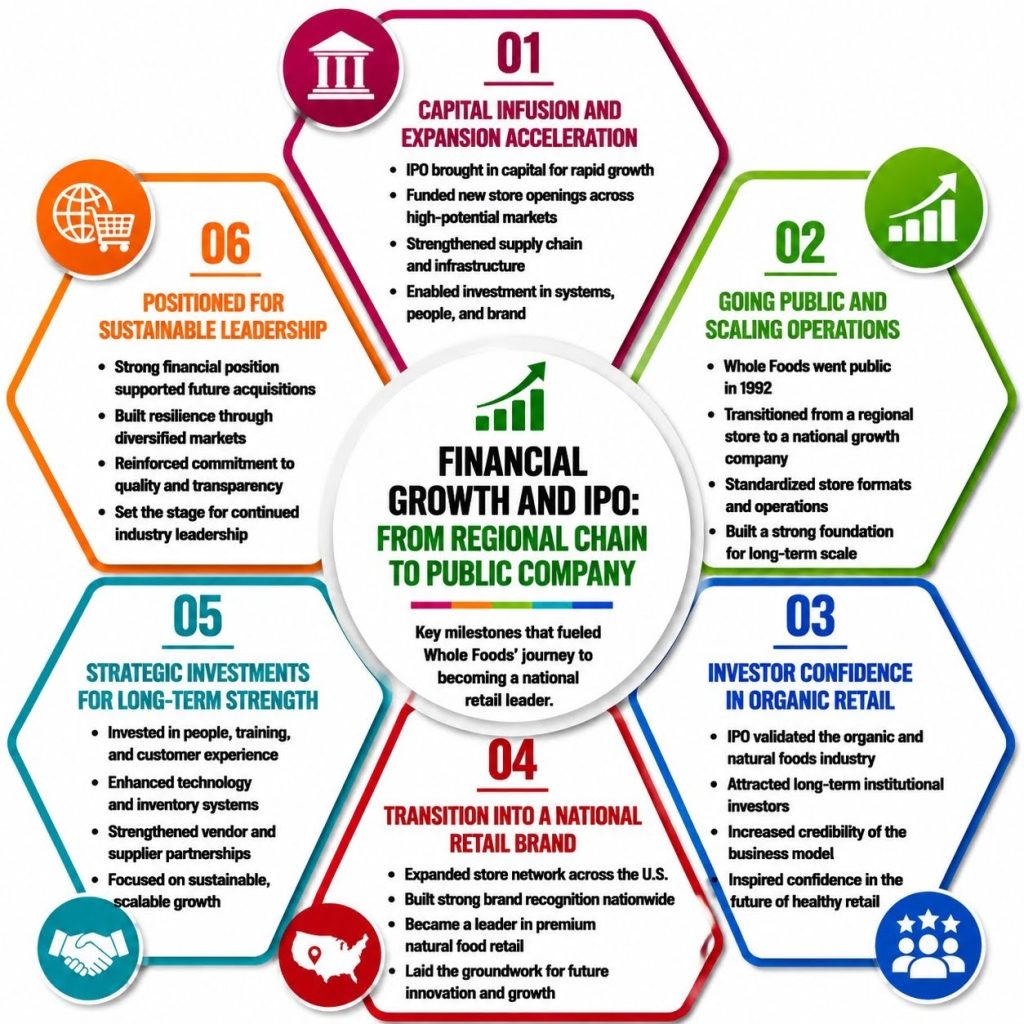
Financial Growth and IPO: From Regional Chain to Public Company

Going public and scaling operations

Whole Foods went public in 1992, which unlocked capital for expansion. The IPO marked its transition from a regional retailer to a national growth company.

  • IPO launched in 1992
  • Enabled rapid national expansion
  • Increased investor confidence in the organic retail category
  • Expanded store network across the U.S.
  • Strengthened financial stability for acquisitions
  • Transitioned into a large-cap retail company

Capital infusion and expansion acceleration

The IPO provided financial flexibility to scale faster than competitors in the natural foods space.

  • Funds used for opening new stores nationwide
  • Improved supply chain infrastructure
  • Allowed entry into high-value urban markets
  • Supported brand standardization across locations

Investor confidence in organic retail

Whole Foods became one of the first companies to prove that organic food could be a scalable, profitable business.

  • Strengthened belief in the natural foods sector
  • Attracted long-term institutional investors
  • Validated premium grocery retail model
  • Increased valuation of health-focused retail companies

Transition into a national retail brand

Post-IPO, Whole Foods shifted from a regional chain to a dominant national presence.

  • Expanded into major U.S. metropolitan areas
  • Built strong brand recognition across states
  • Standardized store experience and product mix
  • Established leadership in the premium grocery category

Amazon Acquisition: A Turning Point in Retail Integration

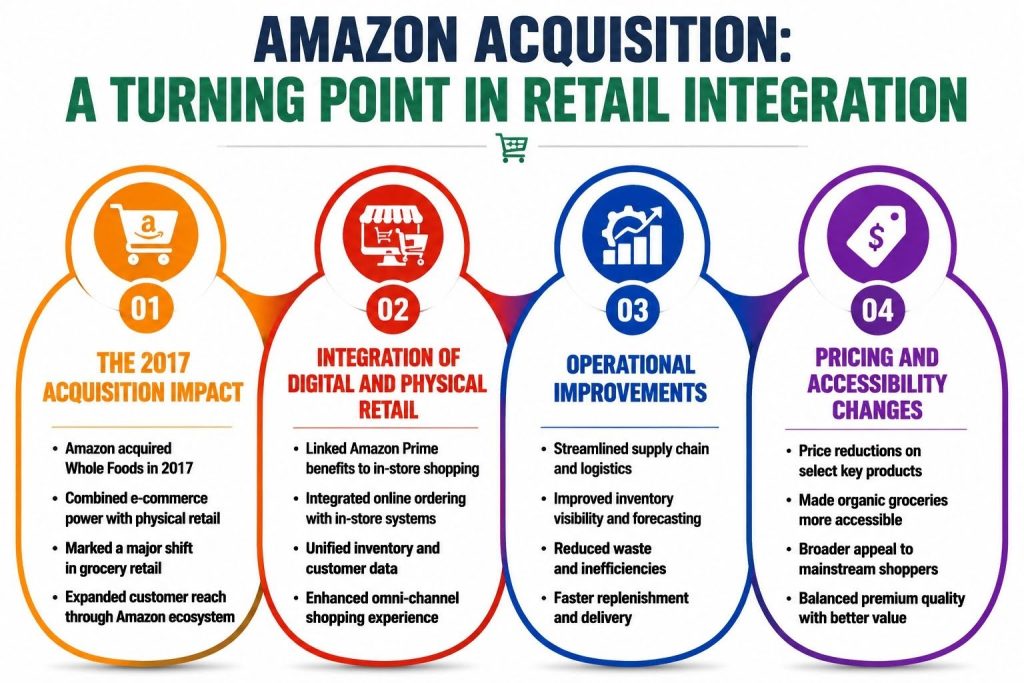
Amazon Acquisition: A Turning Point in Retail Integration

In 2017, Whole Foods was acquired by Amazon in a landmark deal that reshaped the grocery industry. The acquisition marked a shift from an independent premium retailer to a fully integrated part of one of the world’s largest digital ecosystems.

The 2017 acquisition impact

  • Acquired by Amazon in 2017
  • Combined e-commerce infrastructure with physical retail stores
  • Integrated pricing and supply chain systems
  • Expanded reach through Amazon’s customer base
  • Strengthened logistics and operational efficiency
  • Shifted Whole Foods into an omnichannel retail model

Integration of digital and physical retail

The acquisition allowed Whole Foods to function as both a traditional grocery chain and a digital retail extension of Amazon.

  • Amazon Prime-linked in-store benefits and discounts
  • Improved inventory tracking and demand forecasting
  • Better alignment between online ordering and in-store availability
  • Enhanced customer experience across channels

Operational improvements

Amazon’s systems introduced a more data-driven approach to retail operations.

  • Streamlined logistics and supply chain management
  • Reduced inefficiencies in inventory handling
  • Improved product availability and turnover
  • Faster replenishment cycles across stores

Pricing and accessibility changes

Post-acquisition, Whole Foods adjusted its pricing strategy in select categories to become more competitive.

  • Select price reductions on high-visibility items
  • Broader appeal to mainstream consumers
  • Shift toward improved price perception
  • Balanced premium positioning with accessibility

Competitive Landscape: Pressure from Mainstream Retailers

Competitive Landscape: Pressure from Mainstream Retailers

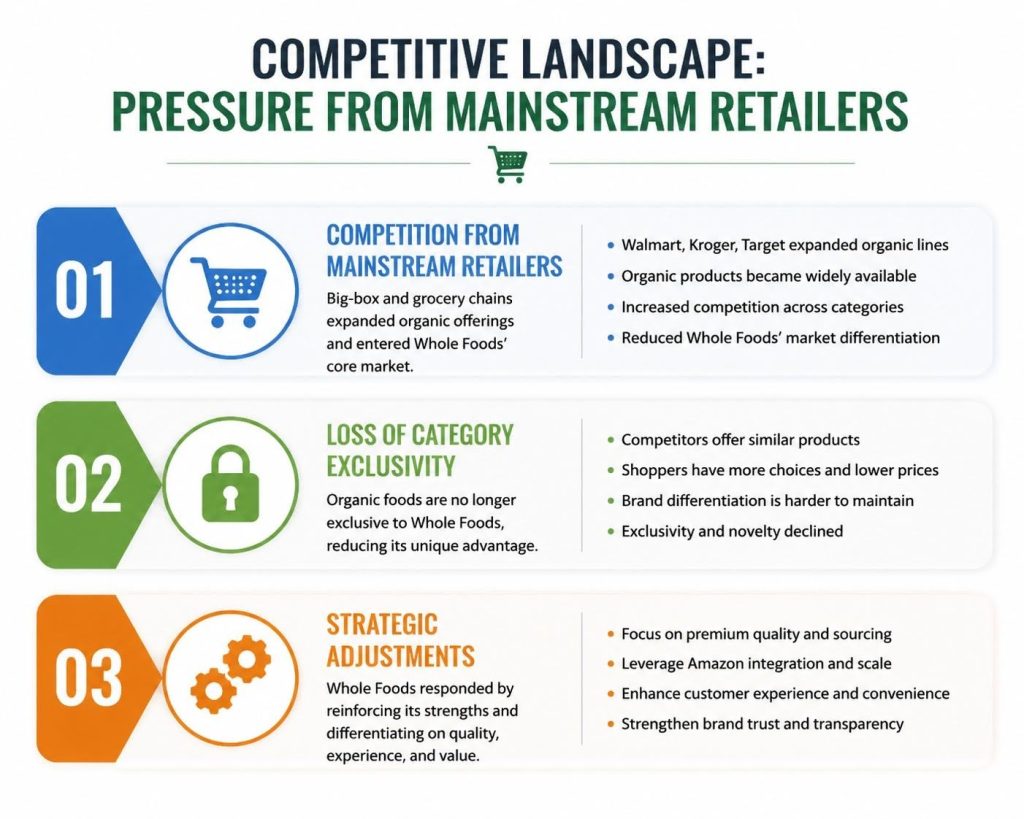
As organic food demand grew, large traditional retailers entered the category. This created new competition for Whole Foods, particularly on price and product availability.

  • Walmart, Kroger, and Target expanded organic product lines
  • Organic food became widely available in mass-market stores
  • Increased competition in nearly every product category
  • Reduced the exclusivity of Whole Foods’ product assortment

Price competition and margin pressure

The entry of lower-cost organic options changed consumer expectations around pricing.

  • Discount organic brands reduced price gaps
  • Increased price sensitivity among shoppers
  • Pressure on Whole Foods’ premium positioning
  • Margin challenges in key product categories

Loss of category exclusivity

Whole Foods was no longer the only major player in organic grocery retail.

  • Competitors replicated core product offerings
  • Reduced differentiation based on product availability
  • Increased importance of brand experience over product uniqueness
  • Need to compete on quality and trust rather than exclusivity

Strategic adjustments

To respond, Whole Foods reinforced its premium identity and leaned on its brand strength.

  • Continued focus on quality sourcing standards
  • Integration with the Amazon ecosystem for a competitive advantage
  • Emphasis on customer experience and store environment
  • Reinforcement of brand trust and transparency

Current Positioning: A Mature Brand in an Evolving Market

Current Positioning: A Mature Brand in an Evolving Market

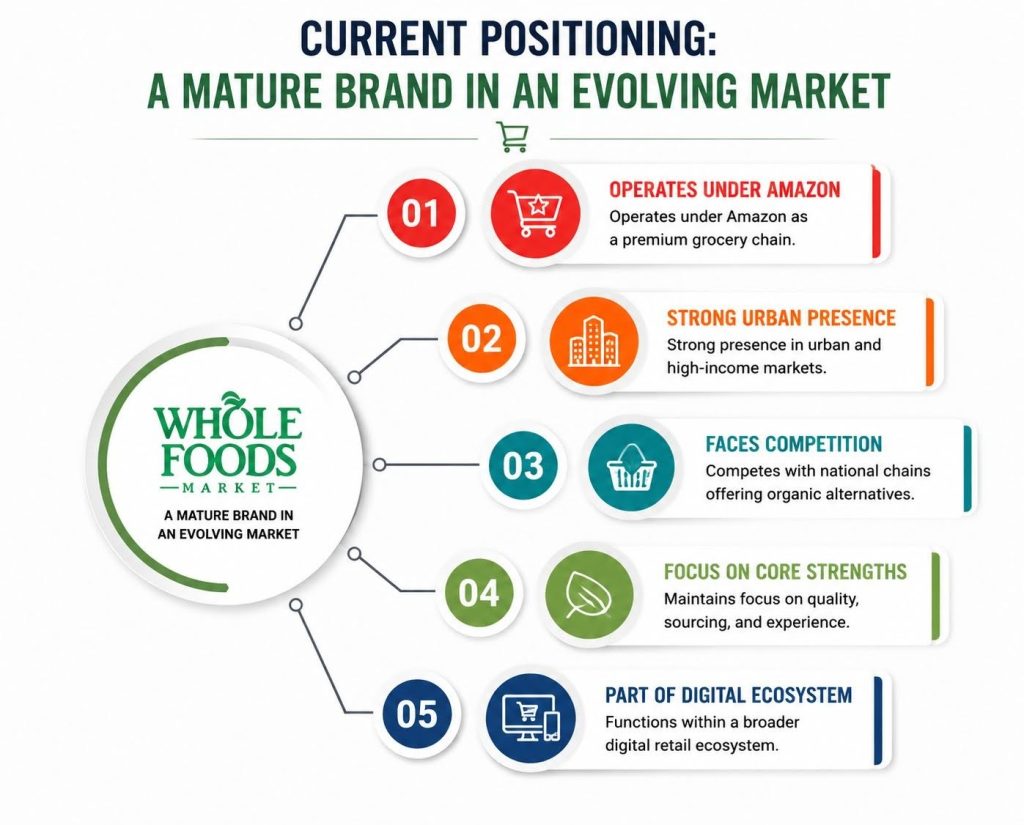
Today, Whole Foods operates as a mature premium grocery brand within a highly competitive and rapidly evolving retail environment. While it remains influential, it no longer dominates the organic category as it once did.

Where Whole Foods stands today

  • Operates under Amazon as a premium grocery chain
  • Strong presence in urban and high-income markets
  • Competes with national chains offering organic alternatives
  • Maintains focus on quality, sourcing, and experience
  • Functions within a broader digital retail ecosystem

Role within the Amazon ecosystem

Whole Foods now plays a strategic role in Amazon’s grocery and logistics network.

  • Integrated with Amazon Prime benefits
  • Supports omnichannel grocery strategy
  • Acts as a physical retail extension of Amazon’s infrastructure
  • Contributes to broader grocery delivery capabilities

Continued premium positioning

Despite increased competition, Whole Foods still holds a strong premium identity.

  • Strong brand association with health-conscious shopping
  • Curated product selection focused on quality
  • Loyal customer base in key markets
  • Continued emphasis on trust and sourcing standards

Ongoing market challenges

The grocery landscape has become more crowded and competitive over time.

  • Increased competition from traditional retailers
  • Growing price sensitivity among consumers
  • Need for continuous differentiation
  • Balancing premium identity with broader accessibility

Key Business Takeaways from the Whole Foods Story

Key Business Takeaways from the Whole Foods Story

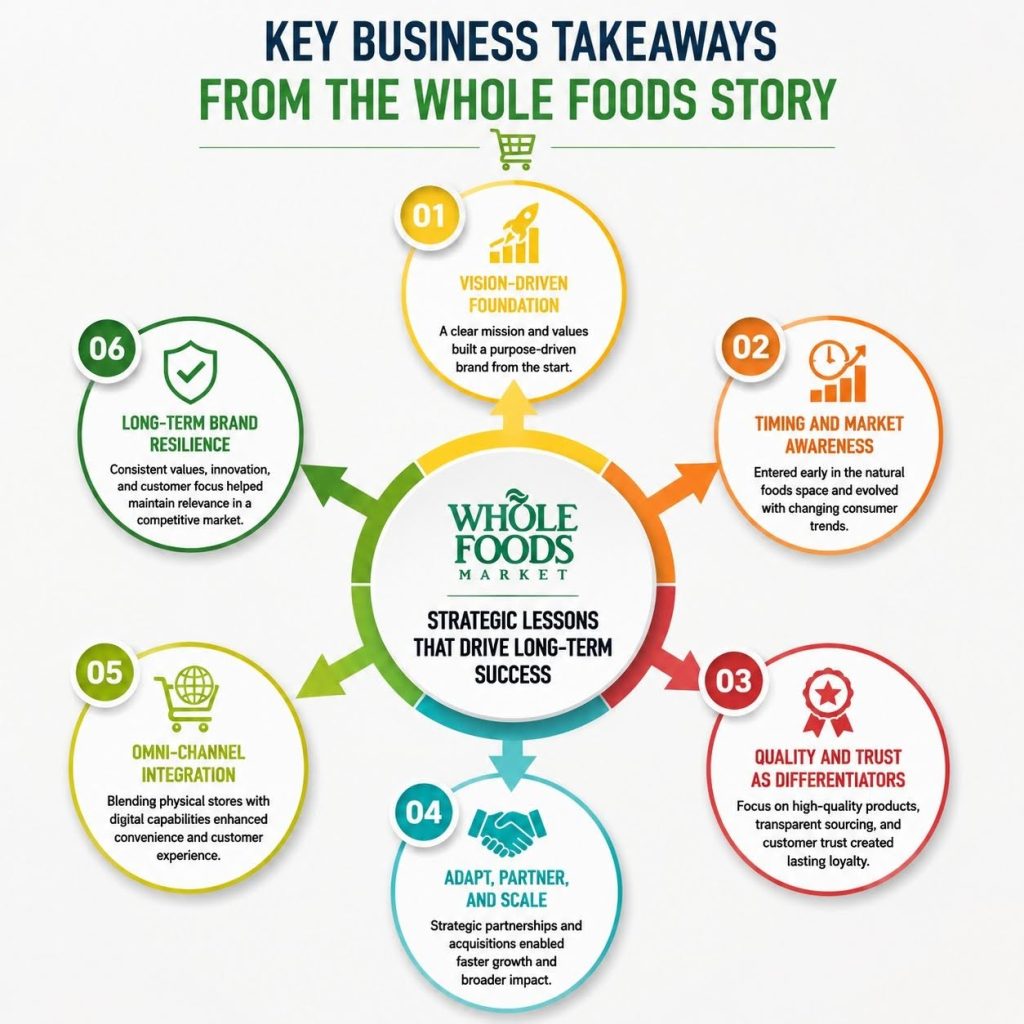
Strategic lessons from Whole Foods’ growth

The Whole Foods journey offers important lessons for modern businesses.

  • Early entry into emerging markets creates a long-term advantage
  • Category creation can outperform category competition
  • Strong brand identity supports premium pricing models
  • Consumer education can actively shape demand
  • Strategic acquisitions accelerate scaling efficiently

Core business lessons in simple form

  • Vision matters more than timing the market perfectly
  • Brand trust is a long-term asset
  • Education is a growth strategy, not just marketing
  • Expansion is stronger when paired with acquisitions

Importance of timing and market awareness

Whole Foods succeeded because it entered early and scaled at the right time.

  • Identified consumer shift before mainstream adoption
  • Built infrastructure ahead of competition
  • Captured early loyalty in an emerging category
  • Maintained relevance through market cycles

Long-term brand resilience

Even after decades, Whole Foods remains relevant due to its strong positioning.

  • Adapted to changing ownership structure
  • Maintained core brand identity
  • Evolved with consumer health trends
  • Sustained premium retail reputation
Scroll to Top