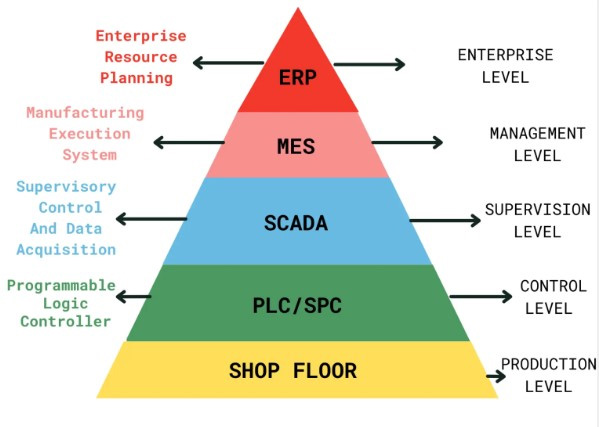
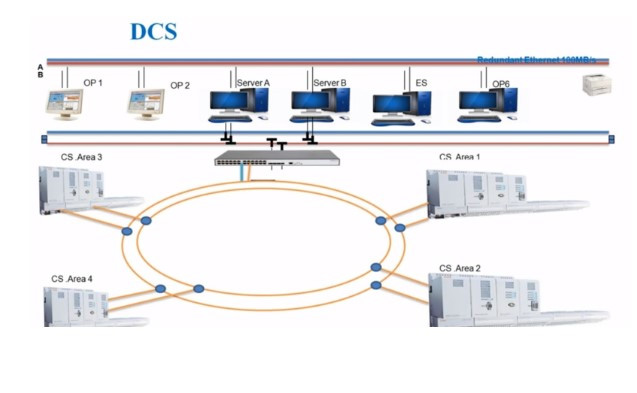
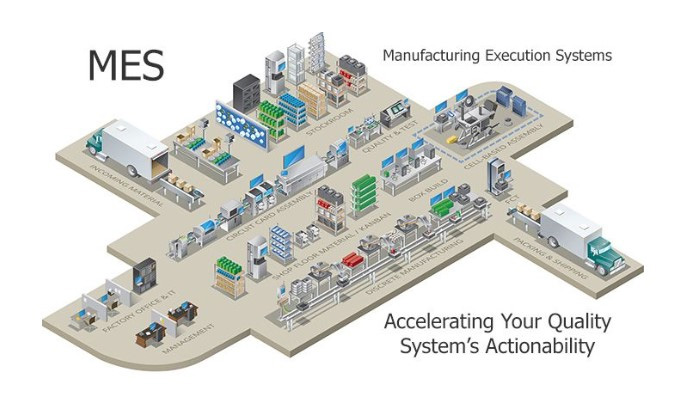
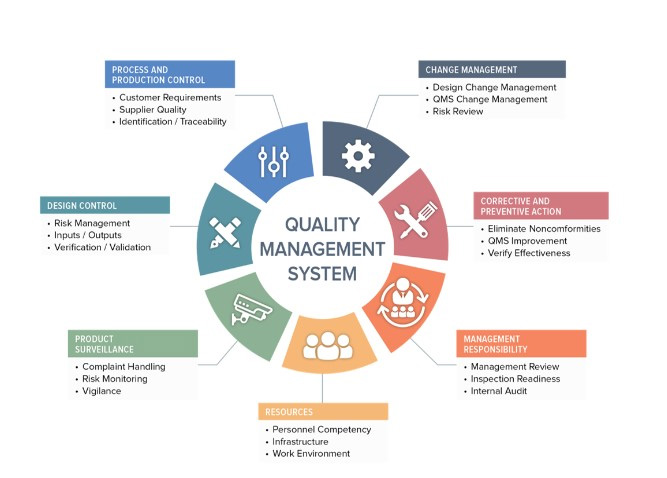
The pyramid of manufacturing automation levels. The top level is the enterprise resource planning (ERP) level, the middle level is the manufacturing execution system (MES) level, and the bottom level is the shop floor level.
The ERP level is responsible for managing the overall business operations, including production planning, inventory management, and financial planning. ERP systems typically integrate with MES systems to provide real-time data on production operations.
The MES level is responsible for managing and coordinating production activities on the shop floor. MES systems typically collect data from sensors and other devices on the shop floor to monitor production progress, identify potential problems, and make adjustments to production schedules as needed.
The shop floor level is where the actual manufacturing processes take place. Shop floor automation typically involves the use of robots, CNC machines, and other automated equipment to perform tasks such as welding, painting, and assembly.
The pyramid structure of the image illustrates the hierarchical nature of manufacturing automation. The ERP level at the top of the pyramid provides high-level planning and coordination. In contrast, the MES level in the middle provides more detailed monitoring and control of production activities. The shop floor level at the bottom of the pyramid is where the actual manufacturing processes take place.