


How AI Is Transforming Shopify Stores in 2025

Anthropic Claude Mythos Model Explained: What It Is and How It Works

Table of Contents

Introduction

Claude Mythos, a next-generation system based on Anthropic’s family of large language models, is the main topic of this discussion. Early reports say it does a lot more than just write text or help with code. It can look at complicated software systems and find flaws at a level and scale that even the best human experts have trouble matching.

Not only is this model powerful, but it also got a lot of attention. Instead of a full public rollout, access has been tightly controlled because of worries about misuse, especially in cybersecurity.

This marks a turning point in the development of AI. Now, innovation is not just about making things work better; it’s also about who is in charge, who is responsible, and the risks that come with making systems that can think, act, and find problems faster than people can.

What Is Anthropic’s Claude Mythos Model?

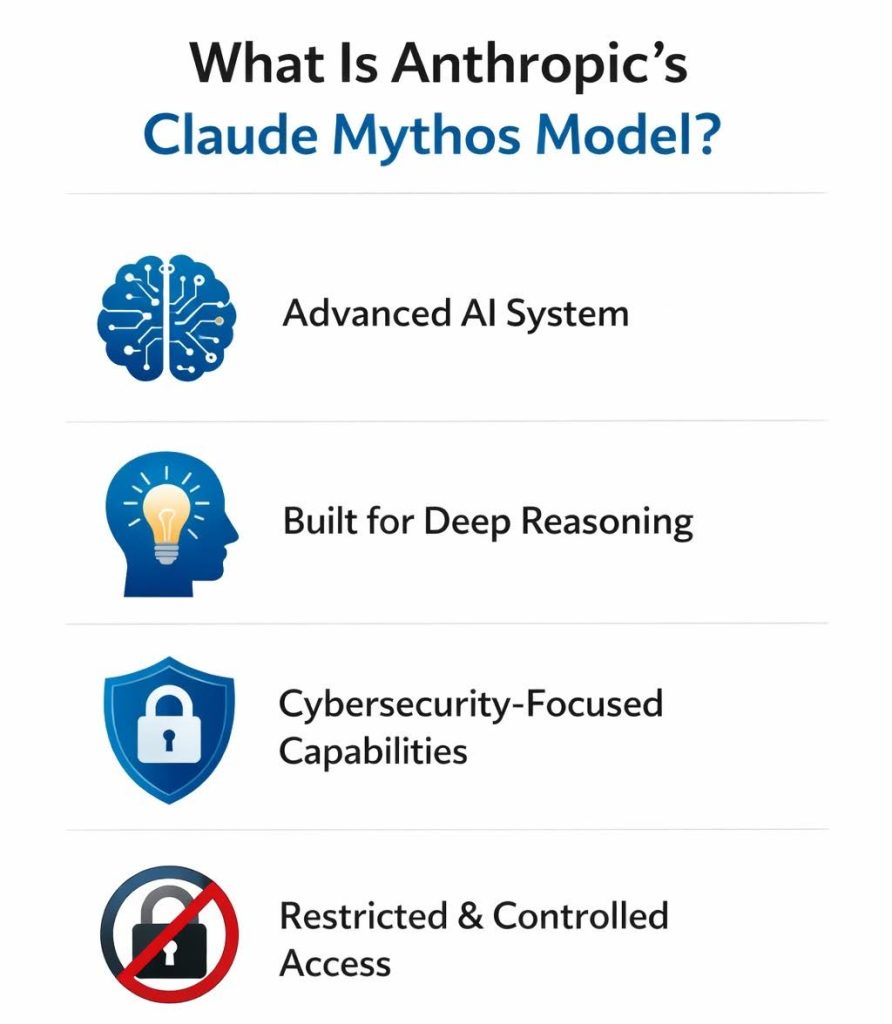
What Is Anthropic’s Claude Mythos Model?

Claude Mythos is a big step forward in how AI systems understand and work with complicated digital environments.

  • Advanced AI System: Claude Mythos is a highly advanced large language model developed by Anthropic, designed to go beyond traditional text-based tasks and handle complex analytical challenges.
  • Built for Deep Reasoning: Unlike earlier models, it focuses heavily on reasoning through complicated problems, especially within software systems, making it capable of understanding logic, structure, and hidden patterns.
  • Cybersecurity-Focused Capabilities: One of its defining strengths is identifying vulnerabilities in code and digital infrastructure, positioning it as a powerful tool in cybersecurity and system analysis.
  • Restricted & Controlled Access: Due to its potential for misuse, the model is not widely available and is being deployed under strict limitations, highlighting concerns around safety and responsible AI use.

It’s not just another language generation upgrade; it’s a move toward more in-depth reasoning and system-level analysis. To grasp its implications, it is beneficial to dissect the fundamental distinctions of this model.

The Technology Behind Claude Mythos

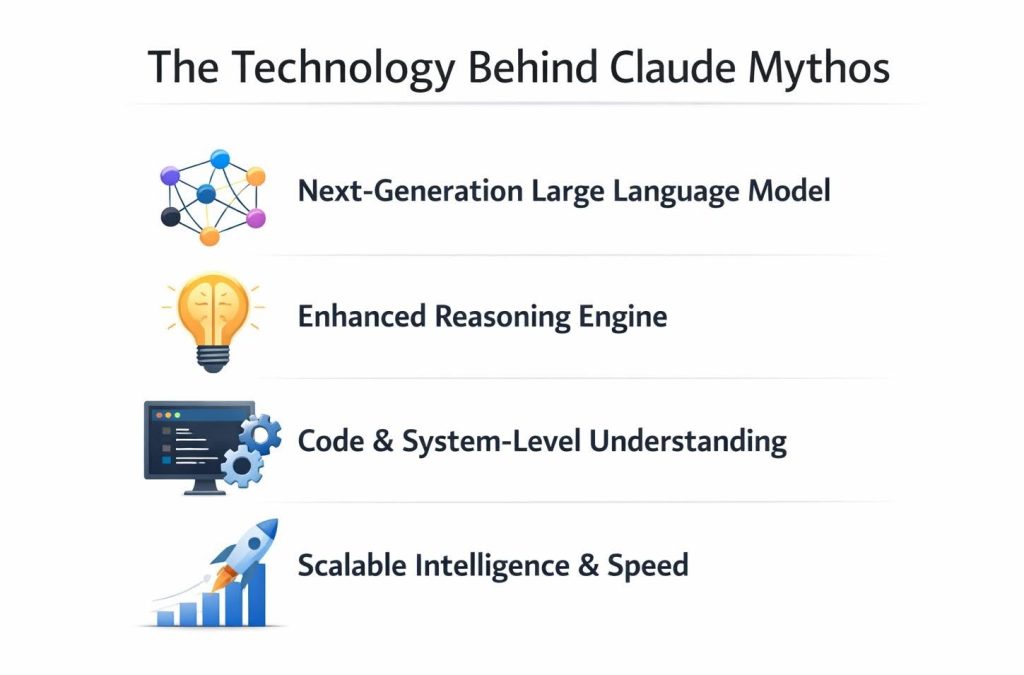
The Technology Behind Claude Mythos

You need to look at the technology behind Claude Mythos to see why it’s being treated differently from most AI models.

  • Next-Generation Large Language Model: Claude Mythos is built on cutting-edge LLM architecture and can process huge amounts of structured and unstructured data. This lets it understand context much better than just simple prompts.
  • Enhanced Reasoning Engine: The model is made to break down hard problems into smaller parts, which lets it think logically about systems instead of just guessing what text will come out.
  • Code and System-Level Understanding: Unlike most AI tools, it can understand whole software ecosystems and find inefficiencies or risks by linking different parts together.
  • Scalable Intelligence and Speed: Claude Mythos can do large-scale analysis much faster than human experts, making it very useful for tasks that need both depth and speed.

This isn’t just a small improvement. It shows a bigger change toward AI systems that can understand, think, and act in complicated technical settings with great accuracy.

Key Features of Claude Mythos

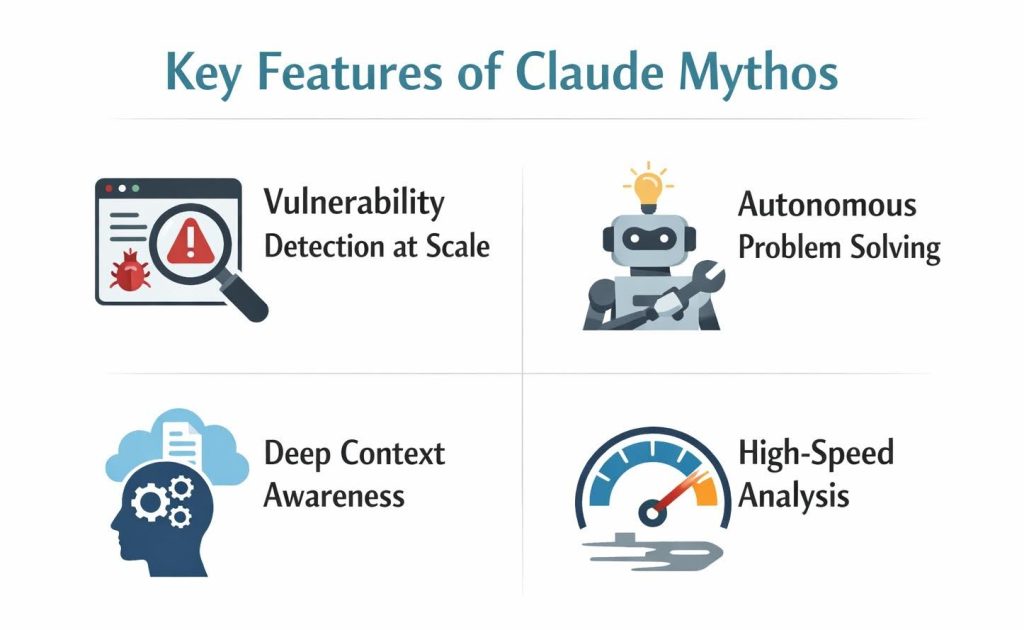
Key Features of Claude Mythos

What really sets Claude Mythos apart is how it applies its intelligence in practical scenarios. It’s not just about understanding information, but about acting on it in ways that were previously difficult to automate.

  • Vulnerability Detection at Scale: The model can scan and analyze large codebases to identify hidden flaws, including issues that are often missed during manual reviews.
  • Autonomous Problem Solving: It can independently explore different approaches to a problem, test possibilities, and arrive at solutions without constant human input.
  • Deep Context Awareness: Claude Mythos maintains strong contextual understanding across long and complex inputs, allowing it to connect details that typical AI models might overlook.
  • High-Speed Analysis: Tasks that would take teams of experts days or weeks can be completed much faster, making it a valuable tool for time-sensitive environments like cybersecurity.

How Claude Mythos Works

How Claude Mythos Works

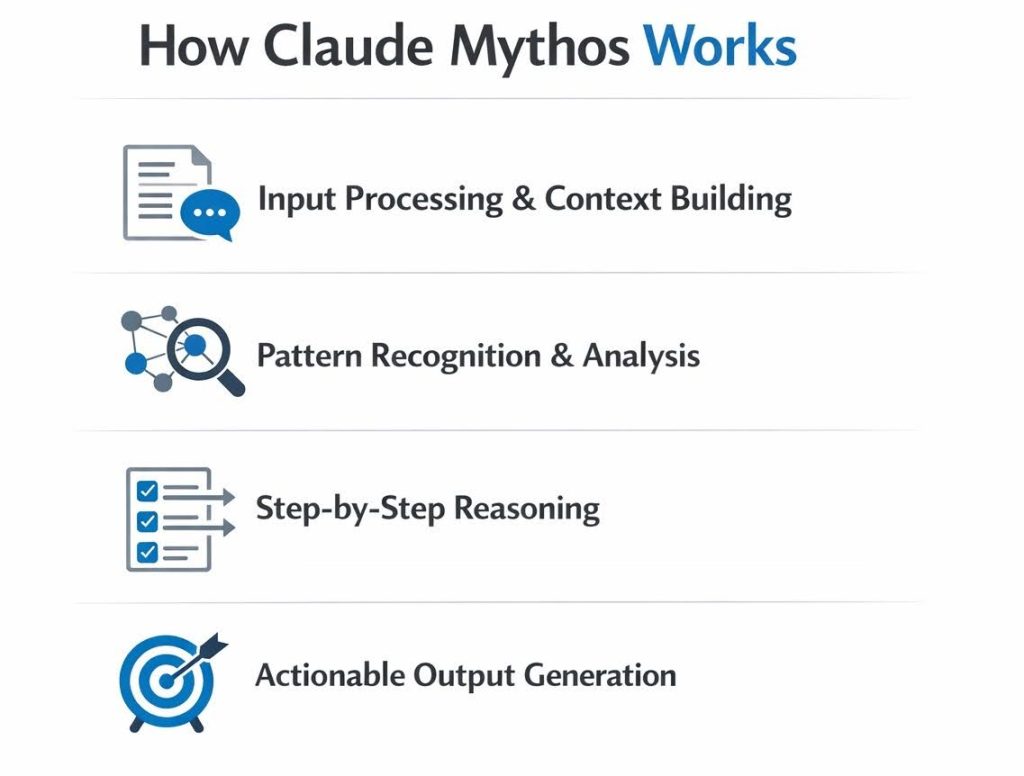
Understanding how Claude Mythos works helps explain why it performs at such a high level. It doesn’t rely on simple input-output patterns. Instead, it follows a layered approach to process, analyze, and act on complex information.

  • Input Processing & Context Building: The model takes in large amounts of data, whether it’s code, system logs, or text, and builds a deep contextual understanding before generating any output.
  • Pattern Recognition & Analysis: It identifies patterns, inconsistencies, and relationships within the data, allowing it to detect issues that are not immediately visible.
  • Step-by-Step Reasoning: Instead of jumping to conclusions, Claude Mythos evaluates problems in a structured way, breaking them down into smaller logical steps.
  • Actionable Output Generation: The final output is not just information, but usable insights such as identified vulnerabilities, recommendations, or solutions tailored to the specific problem.

Cybersecurity Capabilities and Use Cases

Cybersecurity Capabilities and Use Cases

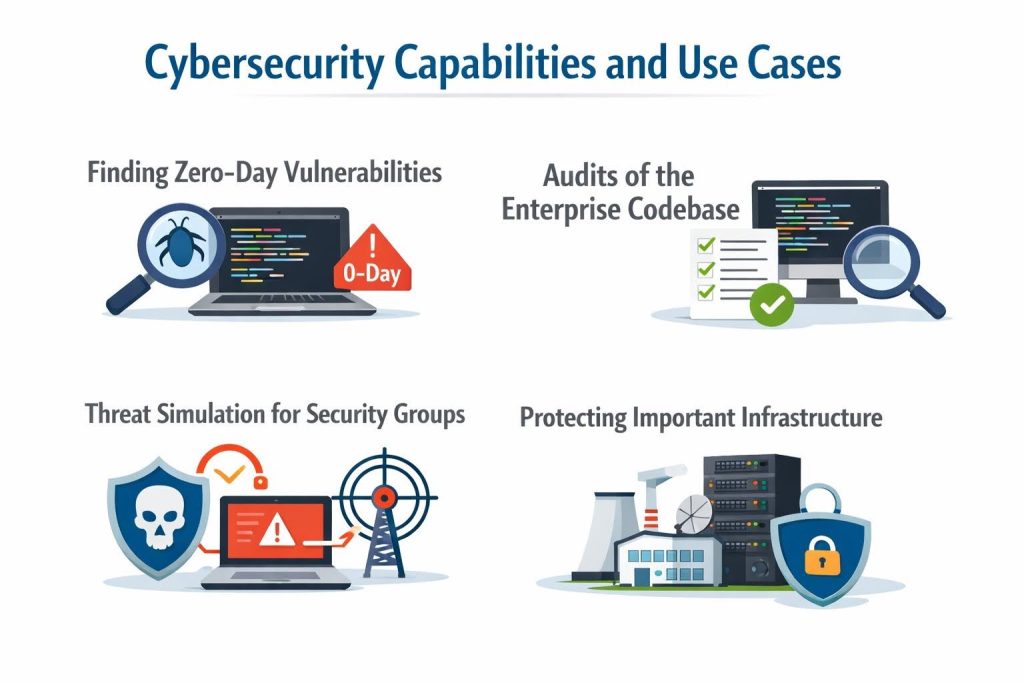
There is more to Claude Mythos than just theory. Its features can be used in real-life cybersecurity situations where speed and accuracy are important.

  • Finding Zero-Day Vulnerabilities: Mythos can scan thousands of lines of code in big SaaS platforms or enterprise apps to find unknown security holes before hackers do. This is very helpful when a product is first released or when there are big updates.
  • Audits of the Enterprise Codebase: Companies that run complicated systems, like fintech apps or eCommerce platforms, can use it to quickly audit whole codebases, cutting weeks of manual security reviews down to just a few hours.
  • Threat Simulation for Security Groups: Security teams can use Mythos to create fake attack scenarios, like how a hacker might take advantage of a poorly configured server or weak API. This helps them fix problems before they happen.
  • Protecting Important Infrastructure: Governments and big businesses can use it to protect systems like power grids, banking networks, or telecom infrastructure, where even a small flaw could cause big problems.

What sets it apart is that it can work on big systems and find risks that are easy to miss in normal workflows.

Benefits of Claude Mythos

Benefits of Claude Mythos
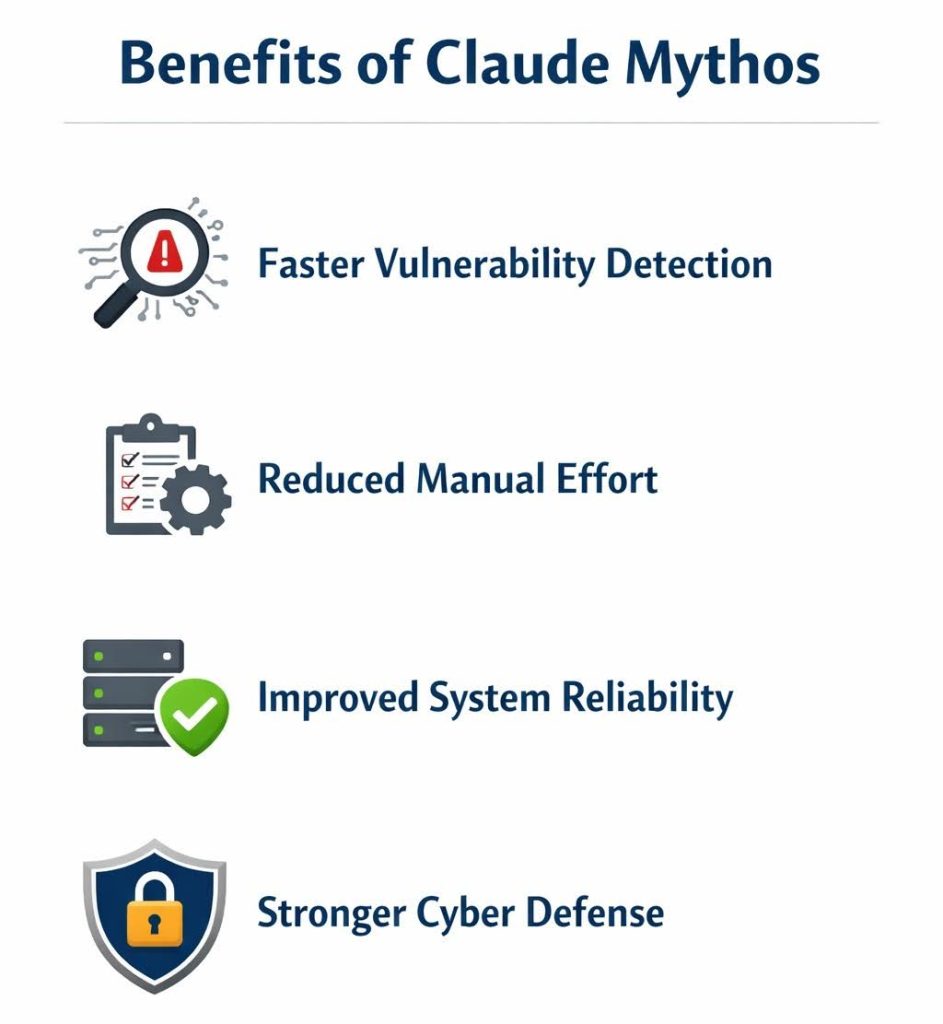
  • Faster Vulnerability Detection: It can spot security issues within minutes rather than days, helping teams act swiftly and minimize potential harm.
  • Reduced Manual Effort: By automating in-depth analysis, it eases the burden on developers and security professionals, letting them concentrate on more strategic decisions.
  • Improved System Reliability: Catching bugs and vulnerabilities early results in more stable and secure software, particularly for large-scale applications.
  • Stronger Cyber Defense: Organizations can take proactive steps to bolster their systems by finding and fixing problems before they can be exploited in real-world attacks.

Its features can greatly enhance how organizations manage security, boost efficiency, and tackle complex challenges.

Claude Mythos vs Other AI Models

Claude Mythos vs Other AI Models

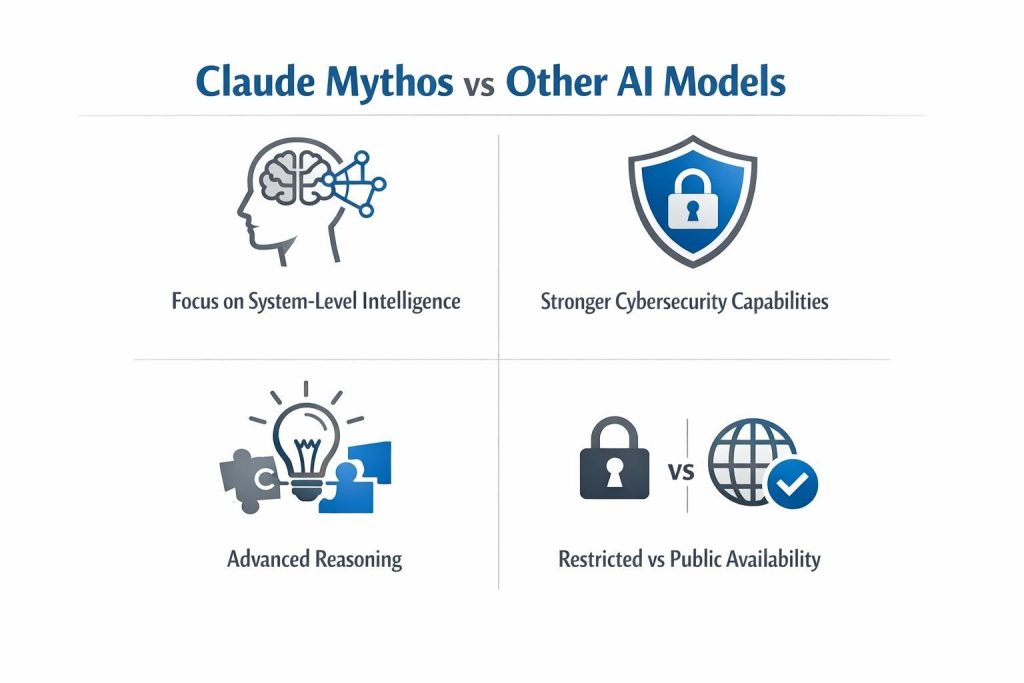
To understand the significance of Claude Mythos, it helps to compare it with other AI models currently available.

  • Focus on System-Level Intelligence: Unlike general-purpose models such as ChatGPT or Google Gemini, Claude Mythos is built to analyze entire systems rather than just respond to prompts.
  • Stronger Cybersecurity Capabilities: Most AI tools assist with coding, but Mythos actively identifies vulnerabilities and weak points, making it more aligned with security-focused applications.
  • Advanced Reasoning: Traditional models prioritize generating human-like responses, while Mythos emphasizes logical reasoning, structured analysis, and problem-solving.
  • Restricted vs Public Availability: While many AI models are widely accessible, Claude Mythos is intentionally limited to controlled environments, highlighting the difference in risk level and intended use.

While most models focus on generating content or assisting with tasks, Mythos is designed for deeper technical analysis and system-level reasoning.

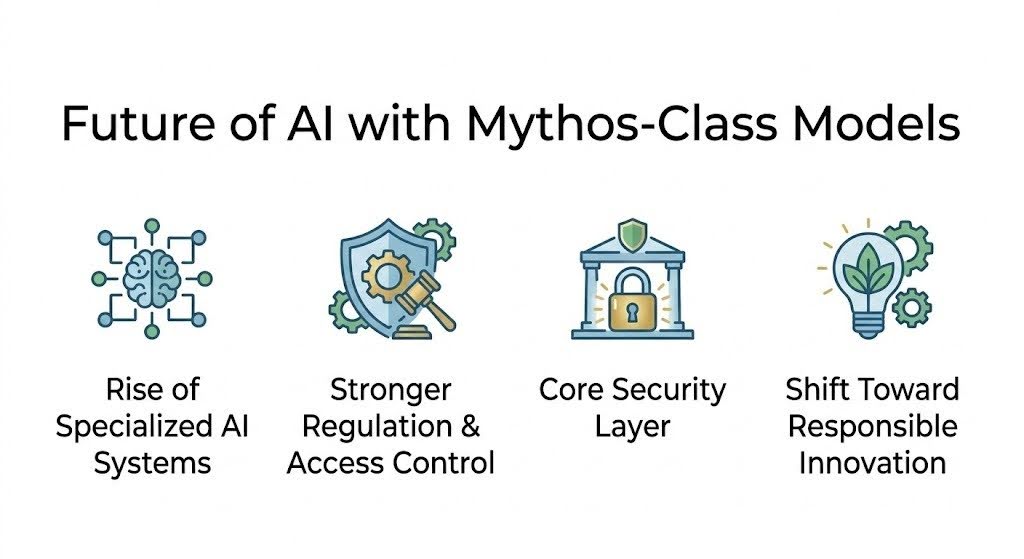
Future of AI with Mythos-Class Models

Future of AI with Mythos-Class Models

Claude Mythos signals a shift in how AI will develop in the coming years. The focus is moving beyond content generation, toward systems that can think through complex problems & operate in high-stakes environments.

  • Rise of Specialized AI Systems: Future models will likely be built for specific domains like cybersecurity, healthcare, or finance, rather than being purely general-purpose tools.
  • Stronger Regulation & Access Control: As capabilities increase, governments and organizations will push for tighter controls, ensuring powerful models are used responsibly.
  • Core Security Layer: Businesses may start integrating AI like Mythos directly into their infrastructure to continuously monitor and protect systems in real time.
  • Shift Toward Responsible Innovation: The development of models like Claude Mythos highlights a growing need to balance progress with safety, making ethical AI a central focus for the industry.

Conclusion

Claude Mythos is a clear turning point in the development of AI. It goes beyond the usual role of AI as a content generator and into a space where machines can deeply analyze, give reasons, and find important problems in complicated systems.

The careful way it was released, on the other hand, shows that progress is no longer just about making models that are more powerful. More and more people are realizing that some abilities come with real risks, especially when they can be used for both offense and defense.

Looking ahead, models like Claude Mythos will likely shape the future of industries such as cybersecurity, infrastructure, and enterprise technology. But their success will depend on how well innovation is balanced with responsibility. The real challenge is not just what these systems can do, but how carefully and thoughtfully they are introduced into the world.

Scroll to Top