Table of Contents
Introduction
Not long ago, artificial intelligence felt like something from the future. Something big companies might use someday. But today? It’s already here, and it’s quietly changing how online shopping works every single day.
Think about the last time you searched for a product online.
Maybe the website showed you exactly what you were looking for. Or it suggested something even better. Or maybe a chatbot popped up and helped you instantly. That’s AI working behind the scenes.
More than half of shoppers in the US are already using tools like ChatGPT or Gemini to search, compare, and even decide what to buy. At the same time, businesses are seeing significant benefits, as almost all ecommerce brands use AI to grow faster and make better decisions.
Key Stats in the AI Shopping Revolution
- Chatbot Market: ChatGPT held 68% of the AI chatbot market share, while Google Gemini grew to 18.2%.
- Voice Commerce: Voice-enabled AI shopping is expected to make around $40 billion in sales by the end of 2026.
- AI Chatbots in Shopping: 49% of consumers used AI chatbots for shopping in 2025.
- Customer Satisfaction: 94% of AI shoppers report satisfaction with their purchases.
- Search Traffic Decline: A 25% drop in traditional organic search traffic is predicted for 2026.
- Small Business Adoption: 64% of small businesses plan to adopt AI chatbots by 2026.
AI in ecommerce isn’t something extra anymore. It’s becoming a must-have. It’s like having a smart helper that works 24/7, helping you understand your customers, improve your store, and grow your business faster. And this is just the beginning. So what’s really going on?

Adoption of Generative AI Tools in Ecommerce
As AI technology continues to evolve, ecommerce is entering a new phase of intelligent automation.
Adoption of generative AI tools like ChatGPT, Gemini, and Claude is on the rise, with 40–60% of US consumers already using these AI-driven tools for shopping. This widespread use highlights the growing trust and reliance on AI for personalized shopping experiences.
Unlike traditional systems that rely on fixed rules, modern AI can analyze data, make decisions, and take actions in real time. This allows ecommerce businesses to operate more efficiently with less manual intervention, improving overall business performance.
AI is now capable of:
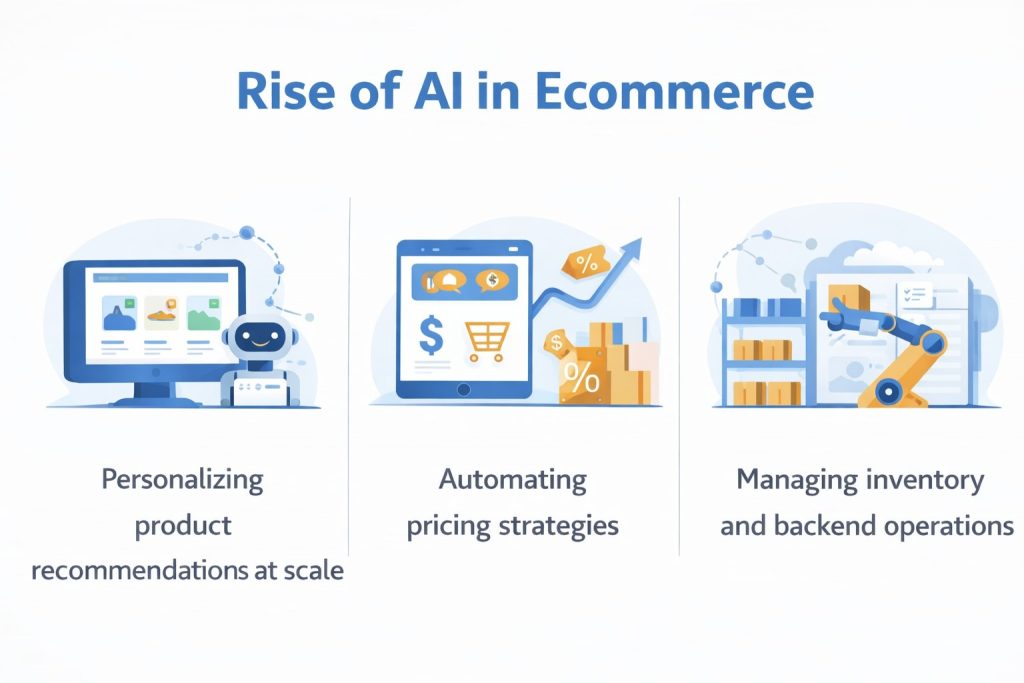
Personalizing product recommendations at scale: AI tools are able to tailor suggestions based on individual preferences, increasing customer satisfaction and boosting sales.
Automating pricing strategies: AI can dynamically adjust prices based on real-time factors such as demand, competition, and market trends, ensuring businesses remain competitive.
Managing inventory and backend operations: With AI, ecommerce companies can better forecast demand, streamline inventory management, and automate backend processes for greater efficiency.
This shift is expected to accelerate rapidly. By 2028, a significant portion of ecommerce platforms will integrate advanced AI capabilities, transforming how businesses scale and interact with customers.
Understanding Customers Before They Even Click
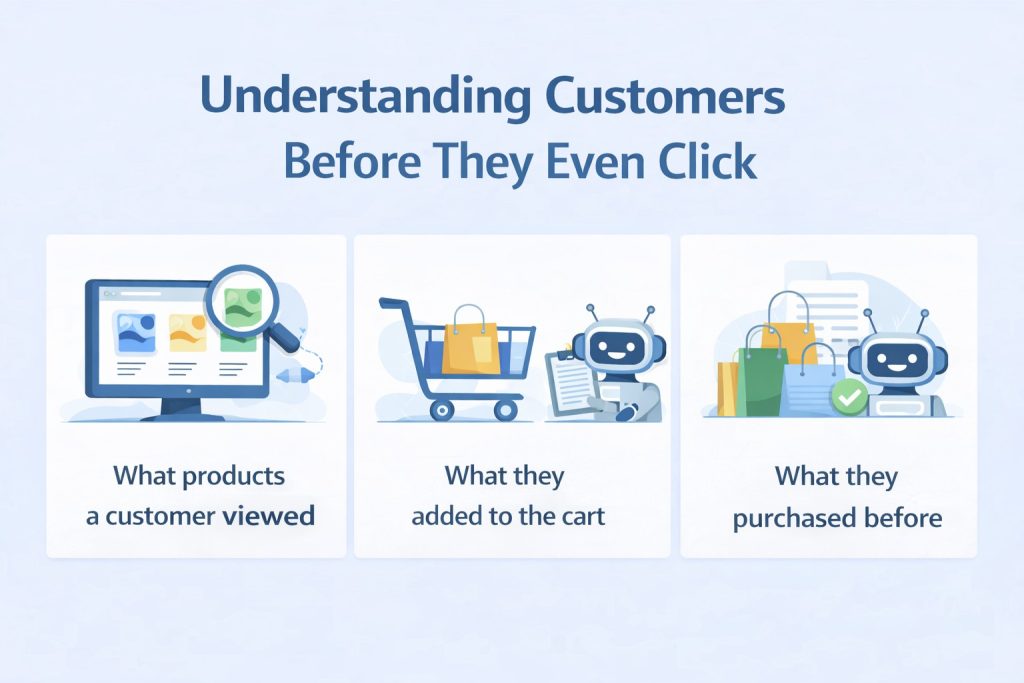
Imagine knowing what your customer wants even before they visit your website. That’s exactly what AI does. This is called predictive analytics. AI analyzes past behavior and identifies patterns. For example:
- What products a customer viewed
- What they added to the cart
- What they purchased before
Using this data, AI can predict:
- What they might buy next
- When they are likely to buy
- What price they prefer
When you understand your customers early, rather than waiting for them to decide, AI helps you guide them.
- You show them the right product at the right time
- You increase the chances of a sale
- You reduce the bounce rate
Benefits of AI in Ecommerce Marketing
AI offers a wide range of benefits for ecommerce businesses, significantly improving both customer experience (CX) and operational efficiency. From personalization to automation, AI enables brands to deliver smarter, faster, and more meaningful shopping experiences.
Personalized Customer Engagement: AI analyzes customer behavior, preferences, and purchase history to deliver tailored product recommendations and marketing messages. This helps brands create highly relevant shopping experiences that increase conversions and customer loyalty.
Improved Customer Service: AI-powered chatbots and virtual assistants provide instant, 24/7 support. They handle customer queries, offer personalized responses, and resolve issues quickly, improving overall customer satisfaction.
Revenue Growth Through Automation: AI automates key processes such as pricing optimization, product recommendations, and marketing campaigns. This reduces manual effort while increasing efficiency and profitability.
AI in Real-World Applications: Leading brands use AI to streamline operations and enhance engagement. From automated order updates to personalized upselling, AI helps businesses drive better results across multiple touchpoints.
Enhanced Shopping Efficiency and Satisfaction: AI simplifies the buying journey by helping customers find better deals, discover new products, and make faster decisions, resulting in higher satisfaction and improved shopping experiences.
Purchases: Shoppers Are Open to Letting AI Handle the Entire Process
Have you ever seen suggestions like:
- “You may also like.”
- “Frequently bought together.”
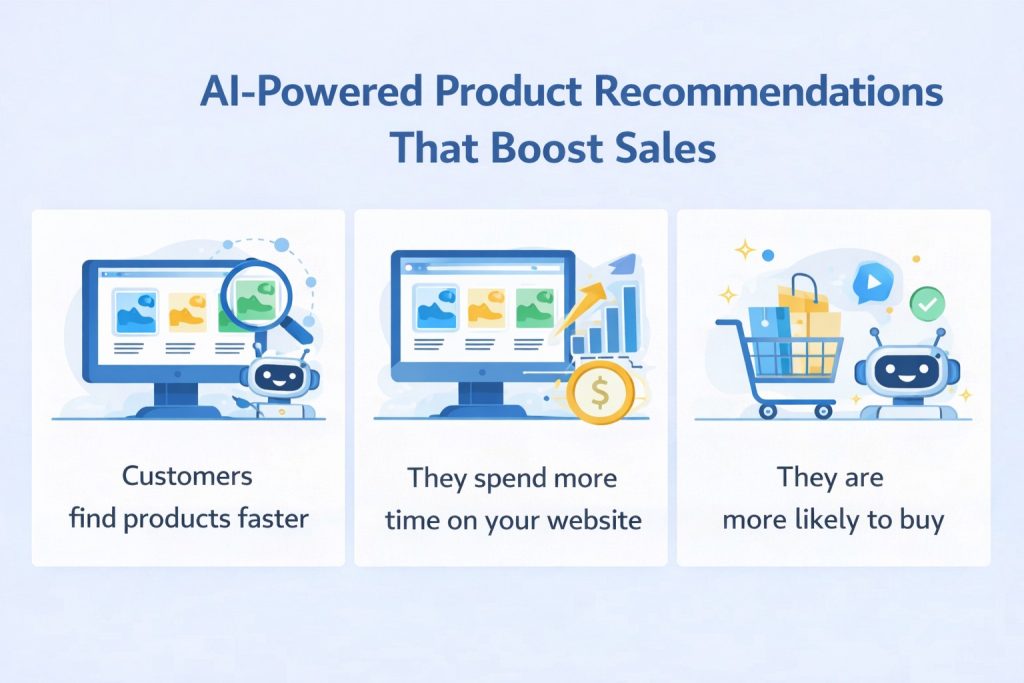
That’s AI in action. AI studies customer behavior and shows products that match their interests. In fact, over half (51%) of US shoppers are open to letting AI handle the entire purchase process. This means AI can help customers:
- find products faster
- spend more time on your website
- be more likely to buy
For example If someone buys a phone, AI may suggest:
- Phone covers
- Screen protectors
- Earphones, and this increases your average order value (AOV).
AI in Content Creation and Optimization
Content is still king, but in 2026, AI in Ecommerce is the kingmaker driving scale, precision, and performance like never before.
For U.S. ecommerce businesses competing in saturated markets, producing high-quality, optimized, and personalized content consistently is one of the biggest challenges. This is where AI-powered tools are revolutionizing the entire content lifecycle from ideation to optimization.
AI-Powered Content Capabilities
Modern AI systems can now create, optimize, and personalize content across multiple channels in seconds:
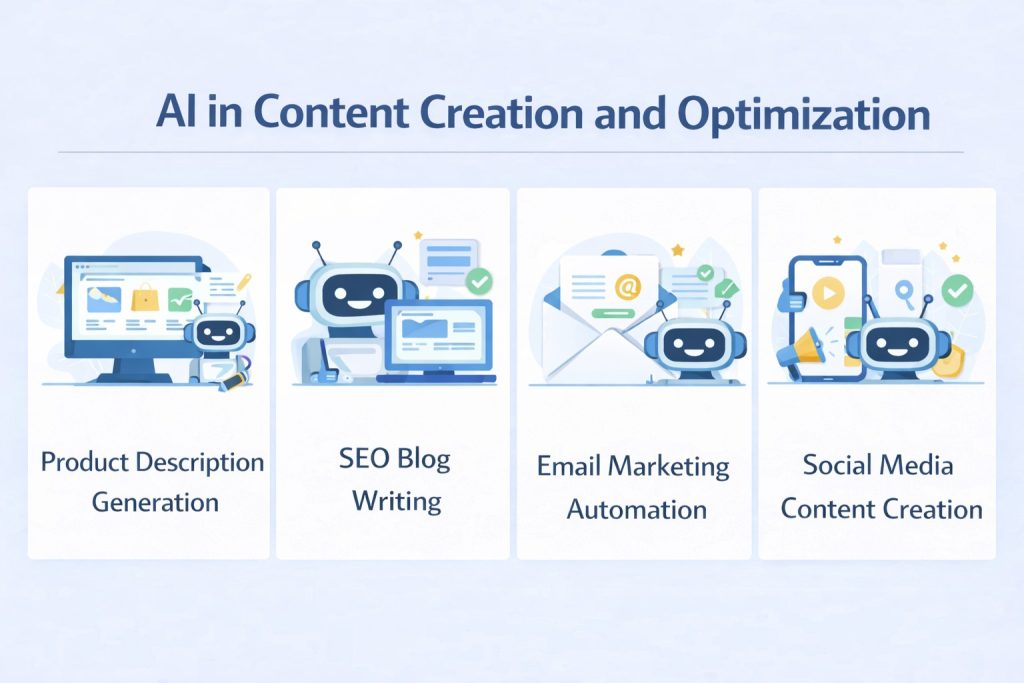
- Product Description Generation
AI generates compelling, SEO-friendly product descriptions tailored to different customer segments, improving both rankings and conversions. - SEO Blog Writing
Businesses can produce long-form, keyword-rich blog content aligned with search intent, helping them rank higher on Google. - Email Marketing Automation
AI crafts personalized email campaigns based on user behavior, increasing open rates and click-through rates. - Social Media Content Creation
AI tools generate captions, creatives, and posting schedules optimized for engagement across platforms.
SEO Optimization with AI
One of the biggest advantages of AI in Ecommerce is its ability to process massive datasets and uncover insights that humans simply can’t analyze at scale.
AI tools analyze:
- Search Intent: Understanding what users actually want when they type a query
- Keyword Trends: Identifying high-performing and emerging keywords in real time
- Competitor Content: Evaluating top-ranking pages and identifying gaps
- User Engagement Signals: Optimizing content based on bounce rate, dwell time, and CTR
Personalization in Ecommerce Marketing
AI is transforming ecommerce marketing by making personalization smarter, faster, and more precise. Instead of showing the same products to every visitor, AI analyzes customer data such as browsing behavior, purchase history, preferences, and engagement patterns to deliver highly relevant experiences.
This level of personalization helps shoppers find what they are looking for quickly, reducing decision fatigue and improving overall satisfaction.
AI-powered personalization in ecommerce marketing includes:
Product recommendations: Suggesting items based on past behavior and similar customer interests
Dynamic content: Showing personalized banners, offers, and landing pages
Targeted email campaigns: Sending tailored messages based on user actions and lifecycle stage
Behavior-based retargeting: Re-engaging users with relevant ads across platforms
By delivering the right message to the right customer at the right time, AI not only enhances the shopping experience but also increases conversion rates, boosts customer loyalty, and drives higher revenue.
Usage of AI Chatbots in Conversational Commerce for Shopping
Customer communication has undergone a massive transformation, thanks to AI in Ecommerce conversational tools like chatbots and virtual assistants.
With 64% of consumers planning to use AI chatbots for shopping by 2026, and nearly 1 in 4 intending to make them their default way to shop, it’s clear that conversational commerce is gaining significant traction.
What is Conversational Commerce?
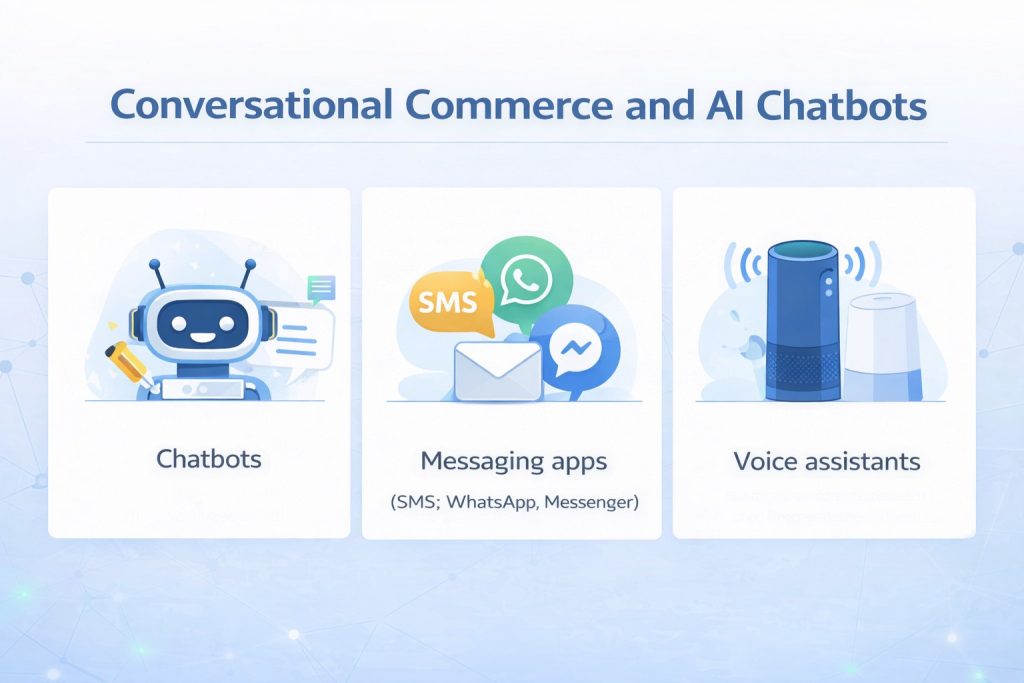
Conversational commerce refers to selling products and engaging customers through real-time communication channels such as:
- Chatbots
- Messaging apps (SMS, WhatsApp, Messenger)
- Voice assistants
In 2026, customers expect instant responses and personalized interactions, and AI delivers exactly that.
Capabilities of AI Chatbots in 2026
AI-powered chatbots are no longer basic FAQ tools; they are intelligent sales assistants capable of:
- Providing 24/7 customer support
- Delivering real-time product recommendations
- Handling order tracking and updates
- Engaging in personalized, human-like conversations
Why U.S. Businesses Are Adopting Conversational AI
The rise of AI in Ecommerce has made chatbots a critical investment for U.S. companies:
- Reduces customer service costs significantly
- Improves response time and availability
- Enhances customer experience and satisfaction
- Scales support without increasing staff
AI-Driven Advertising Strategies
Paid advertising has become smarter, faster, and more efficient with AI in Ecommerce marketing strategies. With rising customer acquisition costs in the U.S., businesses are relying on AI to maximize every dollar spent.
How AI is Transforming Digital Advertising
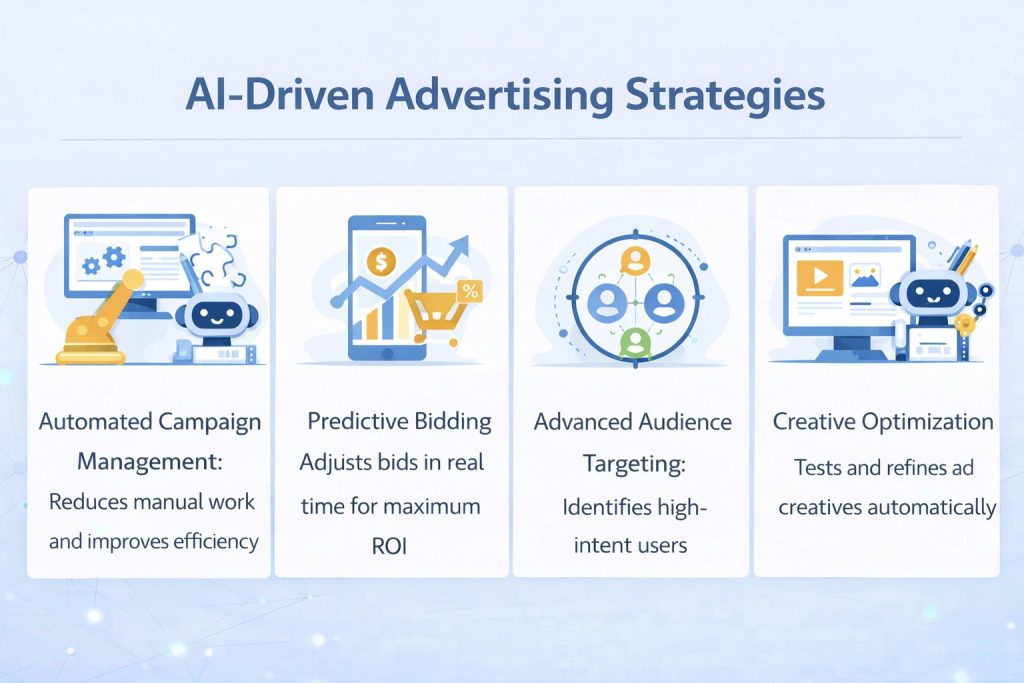
AI automates and optimizes every aspect of advertising:
- Automated Campaign Management: Reduces manual work and improves efficiency
- Predictive Bidding: Adjusts bids in real time for maximum ROI
- Advanced Audience Targeting: Identifies high-intent users
- Creative Optimization: Tests and refines ad creatives automatically
Key Platforms Leveraging AI
AI algorithms power most major advertising platforms:
- Google Ads
- Meta (Facebook & Instagram)
- TikTok Ads
- Amazon Advertising
AI in Inventory and Supply Chains
While marketing gets most of the attention, AI in Ecommerce is equally transformative behind the scenes, especially in inventory and supply chain management.
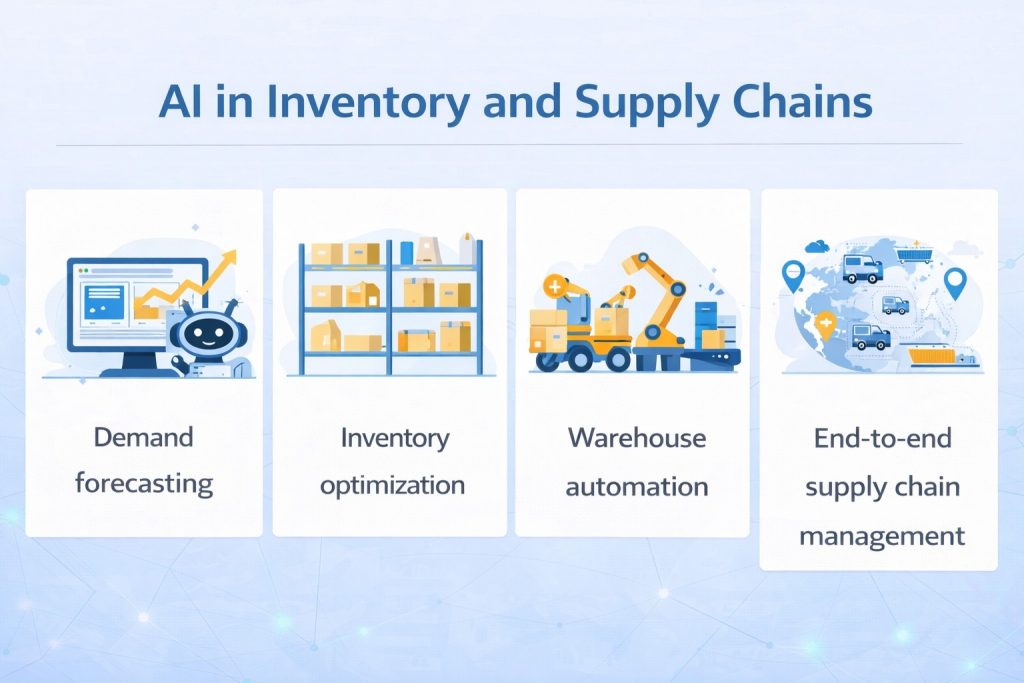
Key Applications of how AI is optimizing operations include:
- Demand forecasting
- Inventory optimization
- Warehouse automation
- End-to-end supply chain management
How AI Improves Efficiency
AI analyzes historical and real-time data to predict:
- Which products will sell the most
- When demand will spike
- How much inventory is required
AI in Ecommerce: Real-World Case Studies
Case Study: Sephora
Sephora enhances customer engagement through AI-powered personalization and chatbots. Its Virtual Artist tool uses augmented reality and computer vision to allow customers to try on makeup virtually.
This immersive approach:
- Improves customer confidence
- Increases engagement
- Boosts conversion rates
AI in Ecommerce is transforming how businesses engage customers by delivering highly personalized shopping experiences. Machine learning algorithms analyze browsing behavior, purchase history, and user preferences to provide tailored product recommendations in real time.
A leading example is Amazon, whose recommendation engine significantly influences purchasing decisions by leveraging vast amounts of behavioral data.
Case Study: Walmart
Walmart uses machine learning to predict demand at a hyper-local level. Its systems consider:
- Seasonal demand patterns
- Local events
- Weather conditions
This enables Walmart to:
- Stock the right products at the right time
- Reduce excess inventory
- Improve supply chain efficiency
Managing inventory efficiently is one of the biggest challenges in ecommerce. AI in Ecommerce addresses this through predictive analytics, enabling businesses to forecast demand with greater accuracy.
By analyzing historical sales data, seasonal trends, and external factors, AI helps retailers optimize stock levels and reduce operational inefficiencies.
Case Study: H&M
H&M has implemented AI-driven chatbots to assist customers with:
- Product discovery
- Stock availability
- Returns and exchanges
These virtual assistants:
- Improve customer experience
- Reduce response time
- Allow human agents to focus on complex issues
AI-powered chatbots have revolutionized customer service in ecommerce. These systems use natural language processing (NLP) to understand and respond to customer queries in real time.
In 2026, chatbots are not just support tools; they are sales enablers.
Case Study: Ticketmaster
Ticketmaster uses AI-driven dynamic pricing to adjust ticket costs based on:
- Demand fluctuations
- Customer interest
- Market conditions
This approach helps:
- Maximize revenue during peak demand
- Maintain sales during low-demand periods
Dynamic pricing is a powerful application of AI in Ecommerce, allowing businesses to adjust prices in real time based on demand, competition, and customer behavior.
AI algorithms continuously analyze market data to identify optimal pricing strategies that maximize both revenue and competitiveness.
Case Study: ASOS
ASOS uses visual search technology that allows customers to upload images and find similar products instantly. Benefits include:
- Faster product discovery
- Reduced friction in the buying journey
- Improved engagement for visually-driven shoppers
AI-powered image recognition is reshaping product discovery by allowing users to search visually instead of relying solely on text.
This technology enhances user experience by making the shopping journey faster and more intuitive.
The Future of AI in E-commerce
In 2026, AI is a “connected ecosystem” of analytics, pricing, and voice commerce. The future of AI in ecommerce is set to be even more transformative.
As technology advances, hyper-personalization will reach new levels, allowing businesses to tailor every interaction from product discovery to post-purchase support based on individual customer behavior.
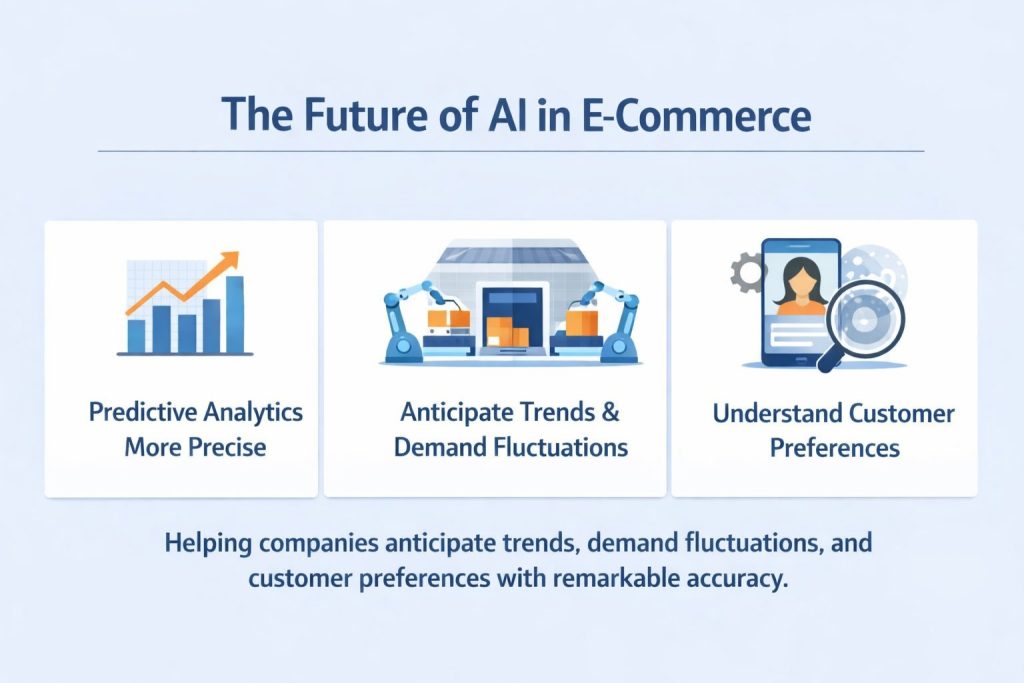
- Predictive analytics will become more precise.
- Helping companies anticipate trends
- Demand fluctuations and
- Customer preferences with remarkable accuracy.
At the same time, the integration of Augmented Reality (AR) and Virtual Reality (VR) with AI will redefine online shopping. Consumers will be able to visualize products in real-world settings or experience virtual try-ons, making digital shopping more immersive and interactive.
Looking ahead, AI-driven agents will increasingly automate routine ecommerce tasks, enabling businesses to streamline operations and focus on innovation and strategic growth.
Deepak Wadhwani has over 20 years experience in software/wireless technologies. He has worked with Fortune 500 companies including Intuit, ESRI, Qualcomm, Sprint, Verizon, Vodafone, Nortel, Microsoft and Oracle in over 60 countries. Deepak has worked on Internet marketing projects in San Diego, Los Angeles, Orange Country, Denver, Nashville, Kansas City, New York, San Francisco and Huntsville. Deepak has been a founder of technology Startups for one of the first Cityguides, yellow pages online and web based enterprise solutions. He is an internet marketing and technology expert & co-founder for a San Diego Internet marketing company.