


Introduction: When Numbers Learned to Tell a Story
There was a time when numbers mostly sat inside charts and spreadsheets. They were everywhere, yet only a few people could truly make sense of them. Pages full of figures might hold important facts, but they often feel overwhelming and hard to follow. That’s where artificial intelligence began to change things by making numbers easier to understand.
Today, data is no longer limited to graphs and tables. With AI, numbers can speak for themselves. They can show what happened yesterday, what is happening now, and even what could happen next.
AI breaks down large, complex datasets into simple, clear stories that people from any background can understand.
This shift is known as data storytelling. It has become one of the most valuable uses of artificial intelligence today. In this blog, we’ll explore how AI turns data into stories, why people connect more with stories than raw statistics, and how humans and AI can work together to turn numbers into meaningful insights.
Understanding Data
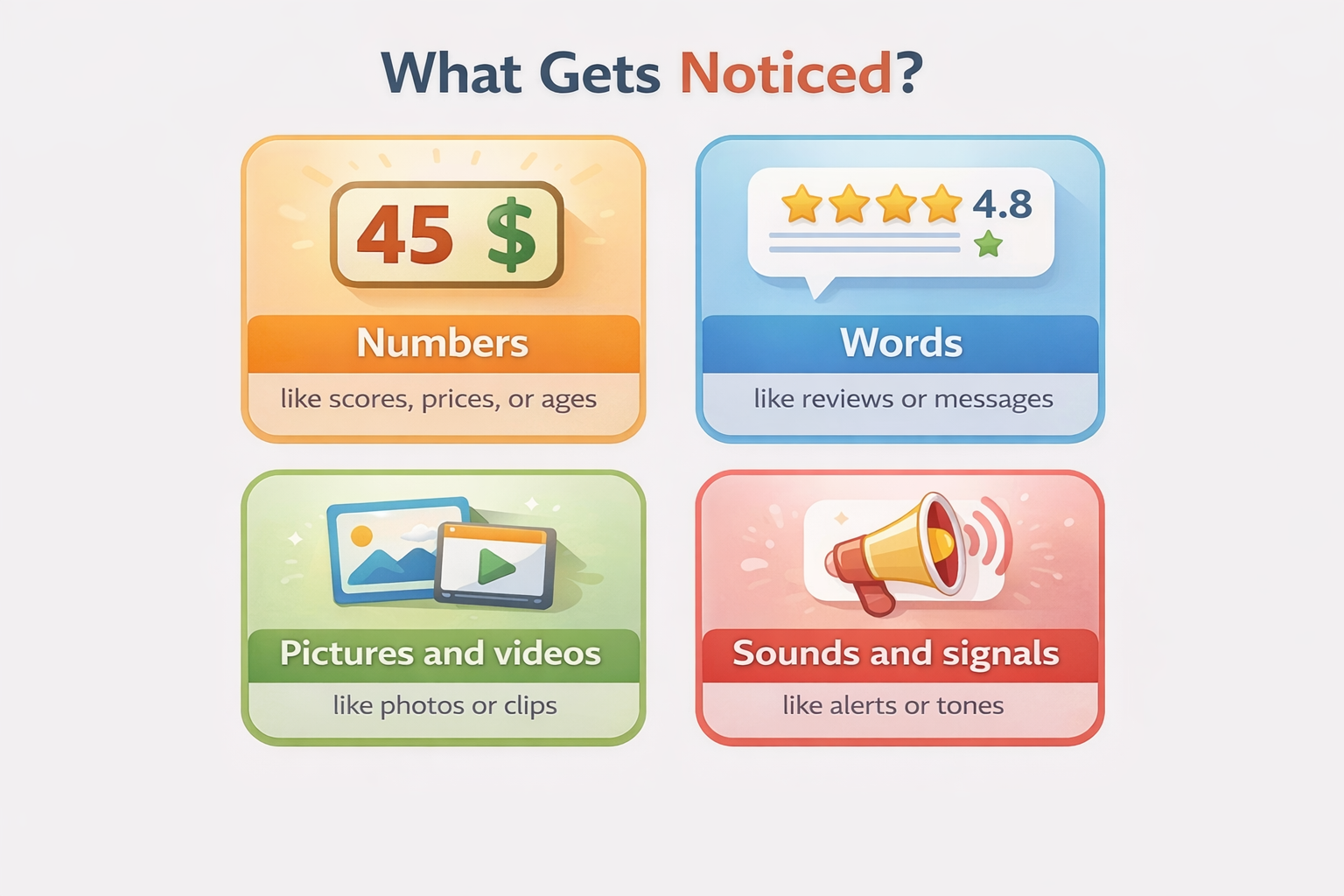
Data is a part of information. It is a process where we collect various facts and information across the world. Data can be in various forms:
- Numbers (like scores, prices, or ages)
- Words (like reviews or messages)
- Pictures and videos
- Sounds and signals
We use data for daily purposes, without even noticing it. When you walk with a fitness band, it counts your steps. When you watch a video online, data is created. When a shop sells an apple, that sale becomes data.
Data is very powerful and important in today’s world. Everything we conclude and decide is on the basis of data. But there is one problem with data, which is that they do not explain themselves.
A list of numbers cannot answer questions like:
- Why did this happen?
- Is this good or bad?
- What should we do next?
This is why data needs help. And that’s where the artificial intelligence application will step in and help with finding answers for data.
Storytelling in the Artificial Intelligence Era

Storytelling is as old as humans. Long before books and screens, people shared knowledge through stories. Stories helped people learn lessons, remember history, and understand the world.
Now we live in a smart world where artificial intelligence makes storytelling easy with the help of using data. In today’s time, AI does not just show numbers. It explains them, creates short and clear stories that describe what the data means.
Let’s take an example for clear understanding, instead of jumping into the complexity, AI can say:
- Example: “More people visited the website this week because a new product was launched.”
AI storytelling saves time and helps everyone understand information faster. This is why artificial intelligence applications are now used in:
- Businesses
- Schools
- Hospitals
- Banks
- Government offices
Why Humans Need Stories, Not Just Statistics
Computers include numbers, where we humans love stories. Computers can read millions of numbers in seconds. But humans do not understand the world through numbers alone. Humans understand through stories. This is why a statistic is just a fact, but a story gives that fact meaning.
People often get confused while analyzing numbers, charts, or tables, which makes them unsure about what the data is trying to say. This is where data storytelling powered by artificial intelligence becomes important.
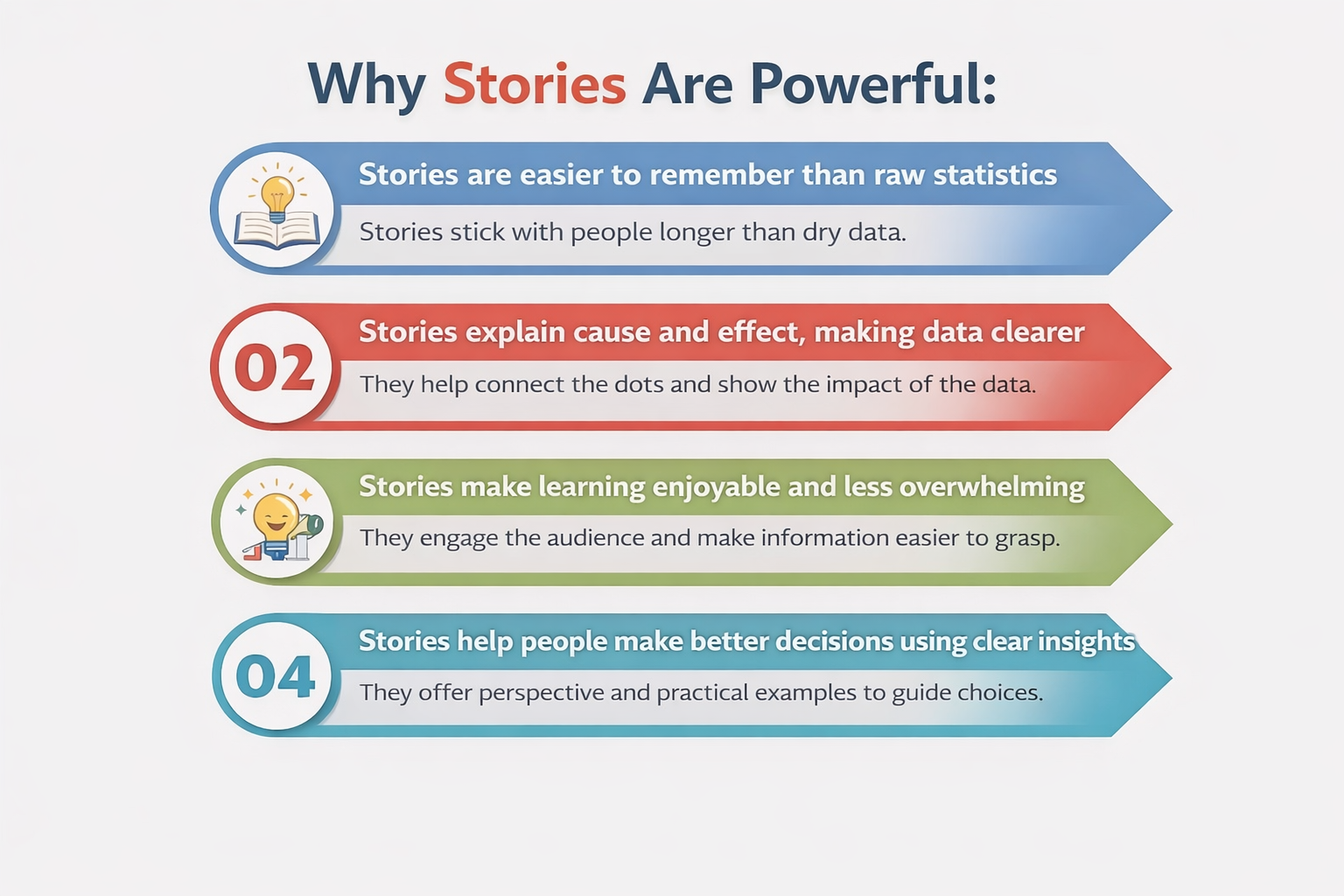
Stories help humans in various ways, which makes them easy to understand by:
- Stories are easier to remember than raw statistics
- Stories explain cause and effect, making data clearer
- Stories make learning enjoyable and less overwhelming
- Stories help people make better decisions using clear insights
Let’s again take an example:
- Where a statistic says: “Customer complaints increased by 20%.” Yes, this is useful and precise data, but it lacks context and understanding.
- Where a storytelling says: “Customer complaints increased by 20% because delivery delays during the holiday season did not meet customer expectations.”
- Now this data is not just accurate and useful, but also explains the reason behind the numbers and points toward a solution.
This is where artificial intelligence plays a critical role. Modern artificial intelligence applications analyze large amounts of data, find patterns, and transform statistics into clear, human-friendly stories.
By turning complex data into easy-to-understand narratives, artificial intelligence helps people trust data, understand information faster, and take smarter actions.
The AI Technologies Powering Data Narratives
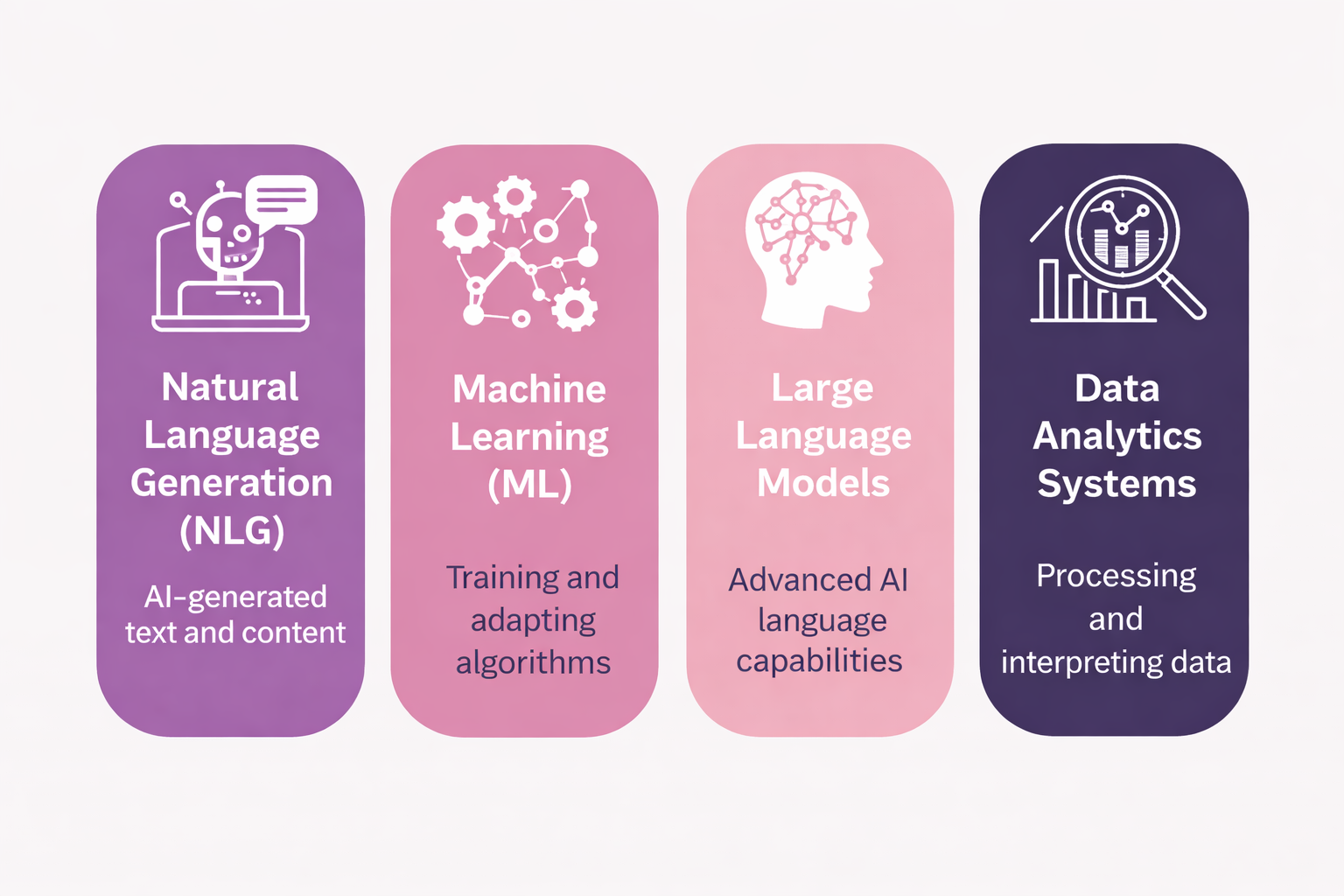
Many artificial intelligence technologies are powering data narrative together:
Natural Language Generation (NLG)
Natural Language Generation helps Artificial intelligence to frame sentences using data. It turns complex data numbers into simple words and sentences that sound familiar and easy to human for understanding.
Machine Learning (ML)
Machine learning helps AI learn from past data. It finds patterns, trends, and changes. It helps AI understand what is normal and what is unusual.
Large Language Models
Large language models help AI to make the long and complex data into simplified and clear. They help connect thoughts and keep the story smooth and easy to read.
Data Analytics Systems
These systems help AI read large amounts of data very quickly. They help AI notice changes that humans might miss. All these artificial intelligence applications work together to create clear and meaningful data stories.
How AI Converts Numbers into Narratives: Step-by-Step
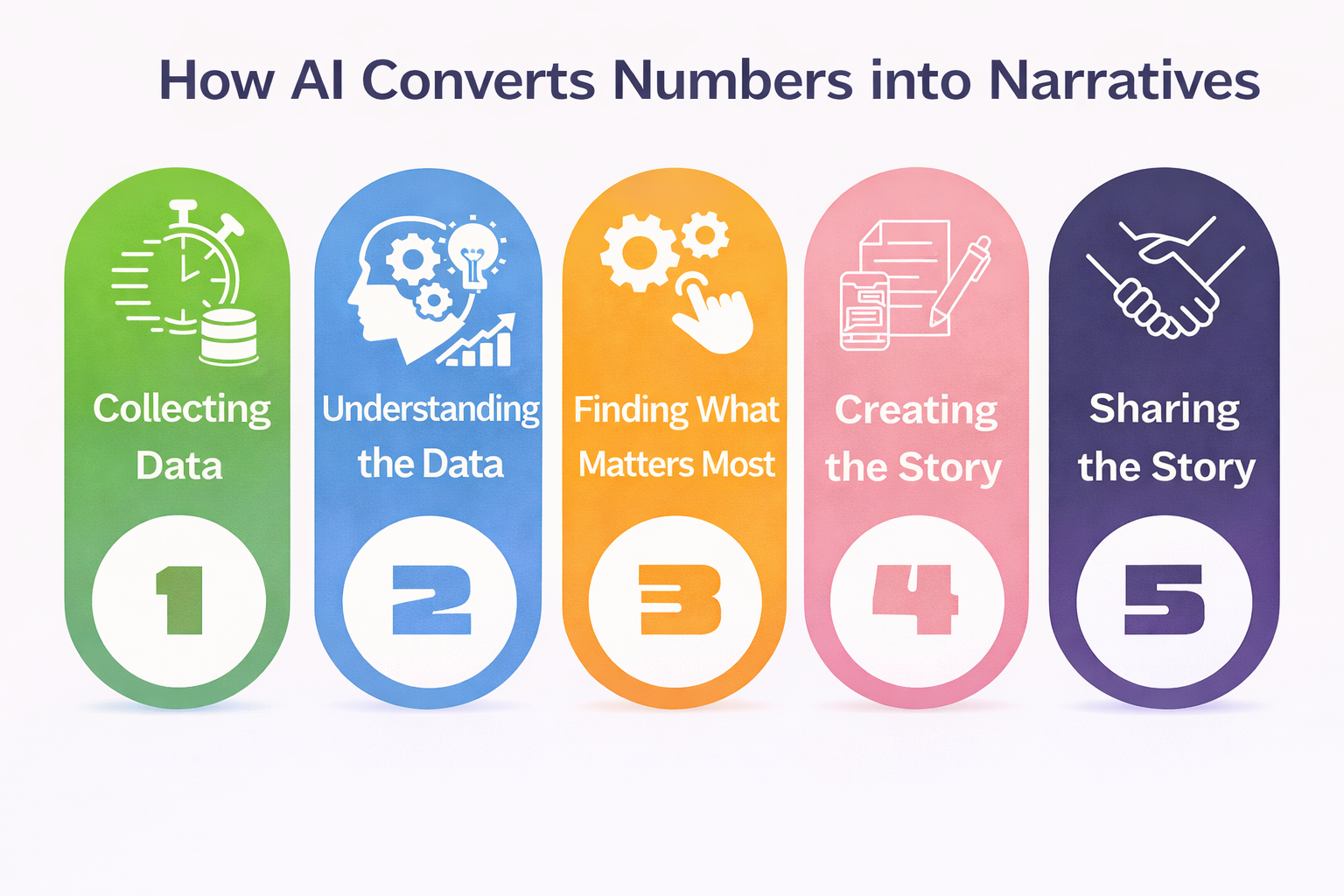
Let us step through how artificial intelligence converts numbers into narratives:
Step 1: Collecting Data
AI collects data from many sources, such as websites, apps, machines, sensors, and online systems.
Step 2: Understanding the Data
AI studies the data and looks for patterns. It checks what is increasing, what is decreasing, and what is staying the same.
Step 3: Finding What Matters Most
Not all data is important. Artificial intelligence selects the most useful information based on the goal.
Step 4: Creating the Story
AI uses simple words to explain the data. It builds a short story with a clear beginning, middle, and end.
Step 5: Sharing the Story
The story is shared through reports, dashboards, emails, or even voice assistants. In 2026, this process happens almost instantly, helping people act quickly.
Benefits of AI-Driven Data Storytelling
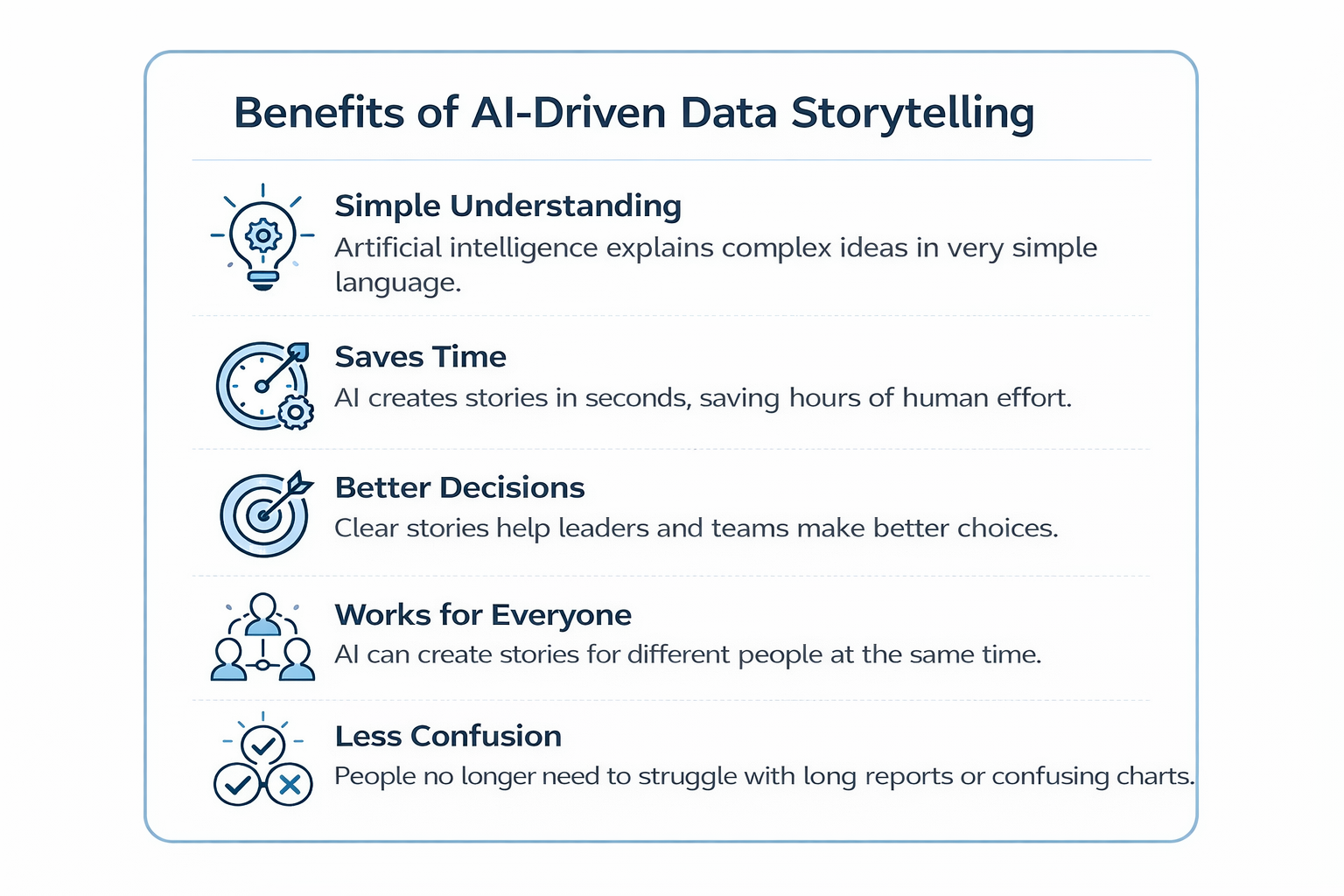
There are effective and powerful benefits of artificial intelligence applications for converting data into storytelling:
- Simple Understanding: Artificial intelligence explains complex ideas in very simple language.
- Saves Time: AI creates stories in seconds, saving hours of human effort.
- Better Decisions: Clear stories help leaders and teams make better choices.
- Works for Everyone: AI can create stories for different people at the same time.
- Less Confusion: People no longer need to struggle with long reports or confusing charts. These benefits show why artificial intelligence applications are growing fast across all industries.
The Role of Humans in an AI-Storytelling World
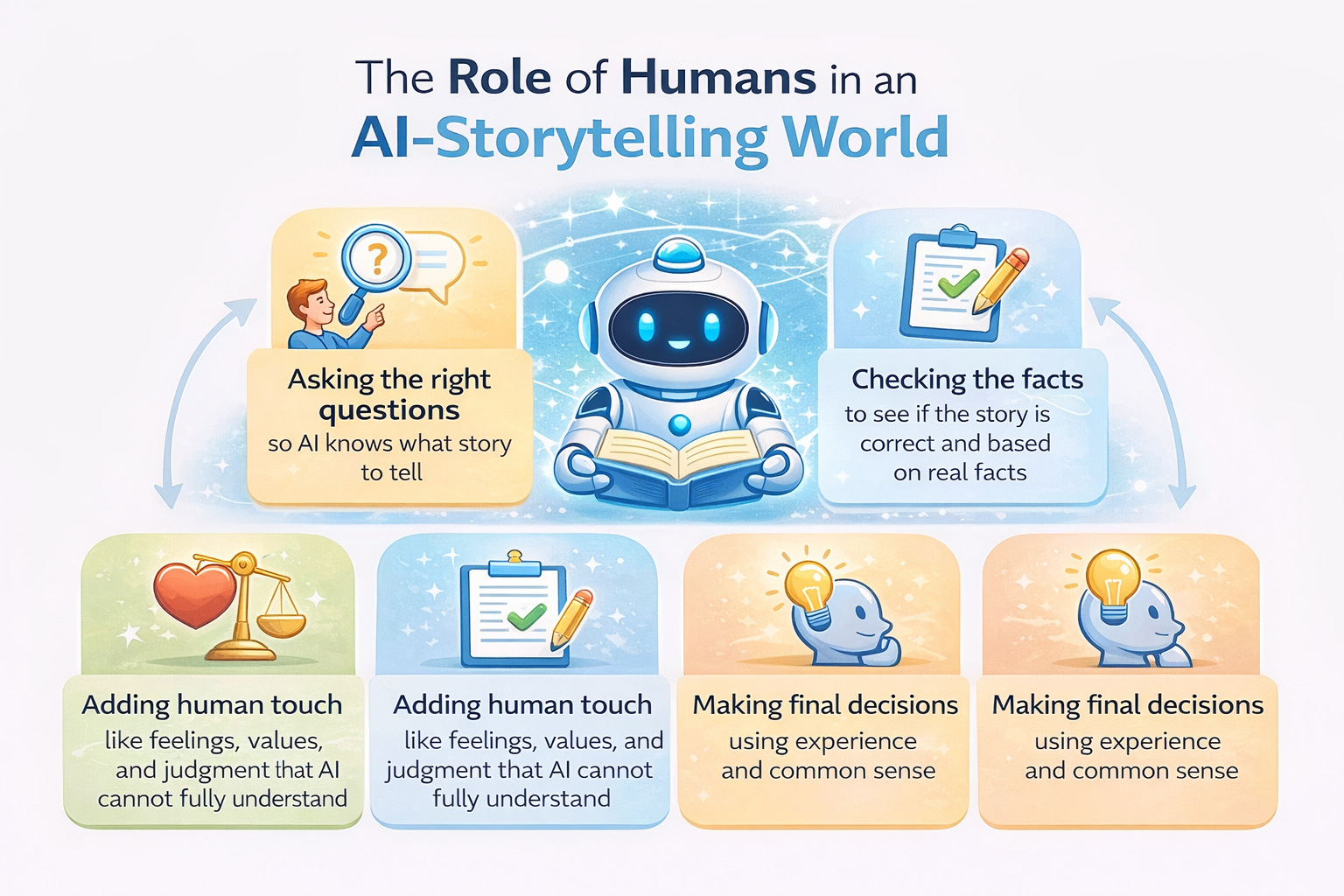
The role of humans in an AI world will help them in:
- Asking the right questions so AI knows what story to tell
- Checking if the story is correct and based on real facts
- Adding feelings, values, and judgment that AI cannot fully understand
- Making final decisions using experience and common sense
Artificial intelligence works like a smart and faster helper. It supports humans, encourages them, but it does not replace them. The strongest and most trusted data stories are created when humans and artificial intelligence work together as a team, where AI explains the data, and humans give it meaning.
The Future of Data Narratives Beyond 2026
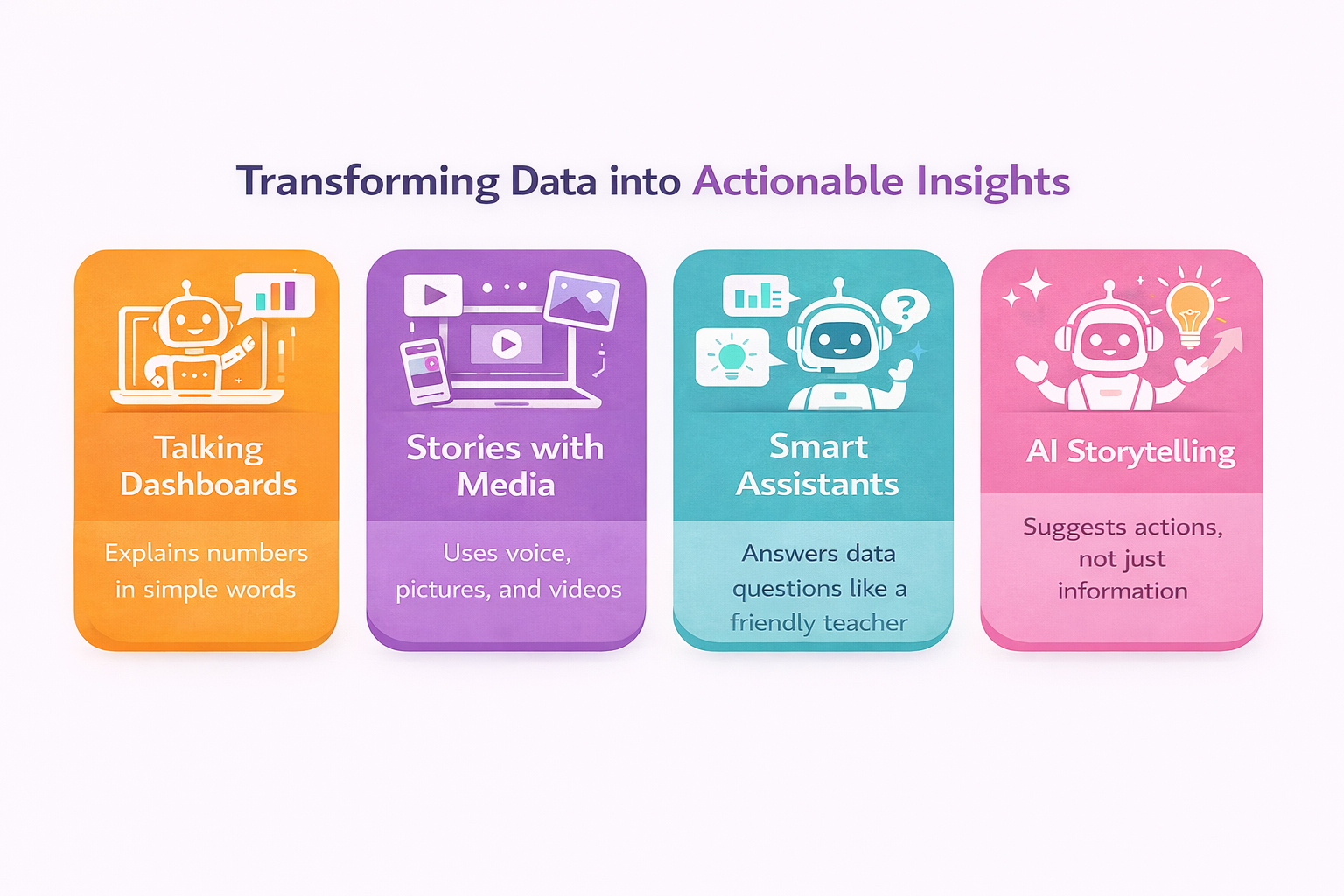
The future of data storytelling is bright, exciting, powerful, and easy to understand. Beyond 2026, artificial intelligence will make data feel more like a conversation and less like a report or just one side expressing feelings. Artificial intelligence will help people of all ages understand data without fear or confusion.
In the future, we might see:
- Talking dashboards that explain numbers in simple words
- Stories with voice, pictures, and videos instead of only text
- Smart assistants that answer data questions like a friendly teacher
- AI stories that suggest actions, not just share information
In the coming years, data will not feel scary or complicated. Modern artificial intelligence applications will make data friendly, helpful, and human, guiding people toward better choices every day.
Deepak Wadhwani has over 20 years experience in software/wireless technologies. He has worked with Fortune 500 companies including Intuit, ESRI, Qualcomm, Sprint, Verizon, Vodafone, Nortel, Microsoft and Oracle in over 60 countries. Deepak has worked on Internet marketing projects in San Diego, Los Angeles, Orange Country, Denver, Nashville, Kansas City, New York, San Francisco and Huntsville. Deepak has been a founder of technology Startups for one of the first Cityguides, yellow pages online and web based enterprise solutions. He is an internet marketing and technology expert & co-founder for a San Diego Internet marketing company.