

History of Netflix
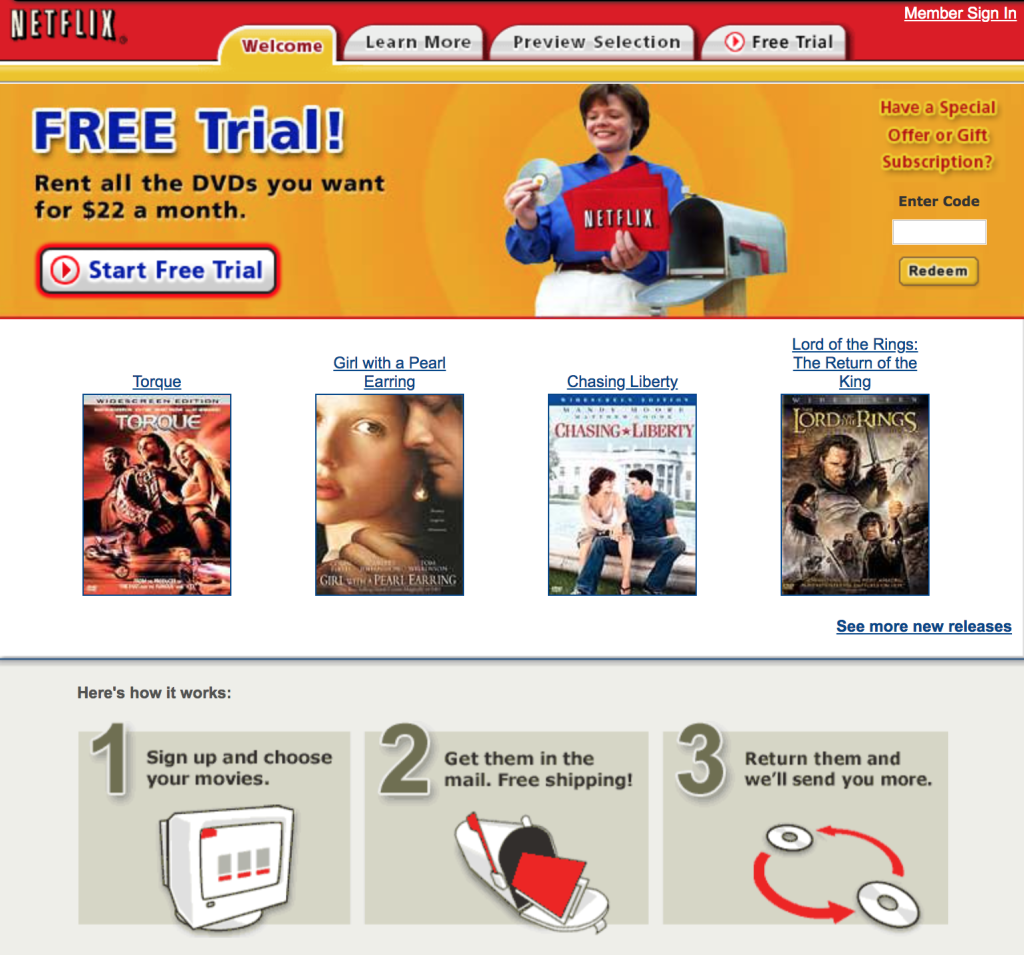
1997 – 1999
Netflix has been around for over two decades, revolutionizing the way people consume entertainment. If you’re wondering how long has Netflix been around, the company was founded in 1997 in Scotts Valley, California, by Marc Randolph and Reed Hastings. When was Netflix created? It officially launched in 1997 as an online DVD rental service with just 30 employees and a catalog of 925 DVD titles—nearly the entire collection of DVDs in print at the time.
The history of Netflix is a masterclass in disruptive innovation. What started in 1997 as a modest DVD-by-mail business has grown into a streaming giant, original content producer, and technology leader. From pioneering cloud infrastructure and personalized recommendation algorithms to expanding globally and adapting pricing models, Netflix history reveals how continual experimentation and strategic pivots build durable competitive advantage.
When was Netflix invented? The idea emerged when Hastings was frustrated by late fees on a VHS rental, inspiring him to create a more customer-friendly movie rental system. In its early days, Netflix operated on a pay-per-rent model, charging around $4 per rental plus a $2 postage fee. However, as the company grew, it transitioned to a subscription-based model in 1998.
In 1999, Netflix introduced a groundbreaking business model featuring three key innovations:
The Home Rental Library: Customers could keep up to four DVDs at home for as long as they wanted.
Personalized Movie Queue: Users could build a list of Netflix movies they wanted to watch, and as soon as they returned a DVD, the next one was automatically sent.
Subscription Plan: A fixed monthly fee of $15.99 allowed customers to have four movies at home at any time with unlimited swaps.
This new approach led to rapid growth, with 80% of customers choosing the subscription model over the traditional rental system. Today, Netflix has evolved far beyond its DVD roots into a global streaming giant. If you’re curious about how old is Netflix, the company has been shaping the entertainment industry for over 25 years since its creation in 1997.
As Netflix’s history shows, staying ahead requires not just making content, but optimizing how that content is created, discovered, and delivered. In today’s AI-driven ecosystem, businesses need AIO (Artificial Intelligence Optimization)—that is, embedding AI across workflows to generate insights, speed up production (for example Netflix using GenAI in VFX), and improve personalization. Then there’s GEO (Generative Engine Optimization)—structuring content, metadata, and creative assets so generative models can use them for summaries, trailers, or even auto-subtitling/localization with fidelity.

2000 – 2006
Are you wondering what Netflix movie should I watch next? Netflix launched a personalized movie recommendation system in 2000. A user-based rating was used in this system to accurately predict Netflix members’ choices. The number of Netflix subscribers had risen to 4.2 million by 2005.
On October 1, 2006, Netflix announced a $1 million prize for the first developer of a video-recommendation algorithm that could outperform its existing algorithm Cinematch by more than 10% in predicting customer ratings.
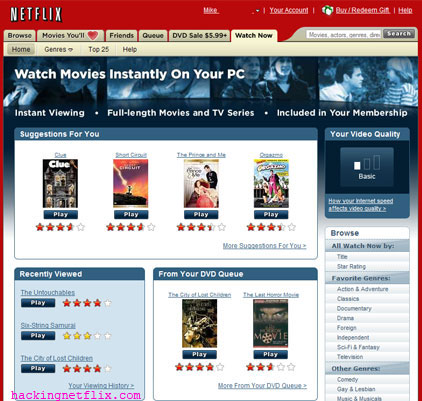
2007 – 2012
By 2007, the company had decided to abandon its original DVD-based business model in favor of video on demand via the internet. They decided to stream their content on Xbox 360, Blu-Ray disc players, and TV set-top boxes as part of their internet streaming strategy. The ventures also partnered with these businesses to stream their content online.
Netflix made its services available on a variety of Apple products, the Nintendo Wii, and other internet-connected devices when they launched in Canada in 2010. Netflix begins producing original shows in 2012. Lilyhammer premiered first, followed by House of Cards in 2013. Since then, it has produced over 1900 originals, many of which have become hugely popular and have won numerous awards, such as Squid Game and The Crown.
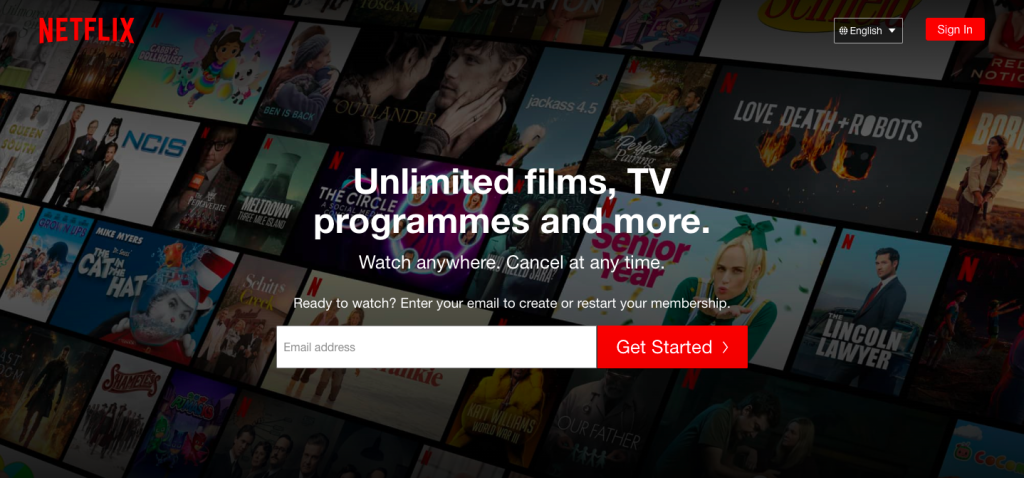
2017 to 2021
Netflix subscription e-commerce was unstoppable after that, and today has a global presence in the video-on-demand industry. Netflix reached 100 million subscribers worldwide in 2017. Netflix 2021 had 209 million subscribers in 190 countries. North Korea, Syria, China, and Iran are exceptions. It has over 15,000 titles in all of its international libraries.