



Table of Contents
Introduction
San Diego businesses can use pay-per-click advertising to connect with customers searching for their products or services. Managing PPC effectively is a must to control costs, improve visibility, and generate qualified leads in a tough local market. This means targeting precisely, writing persuasive ad copy, and ongoing optimization.
Google Ads pricing varies widely by industry, competition, keywords, audience location and campaign goals. Having standard ranges for cost-per-click and standards for performance provides a practical baseline for businesses to begin the planning process for budgets and to see if their campaigns are providing worthwhile results.
In this guide, we’ll walk through what San Diego advertisers need to know about campaign pricing, budgeting, and key performance metrics.
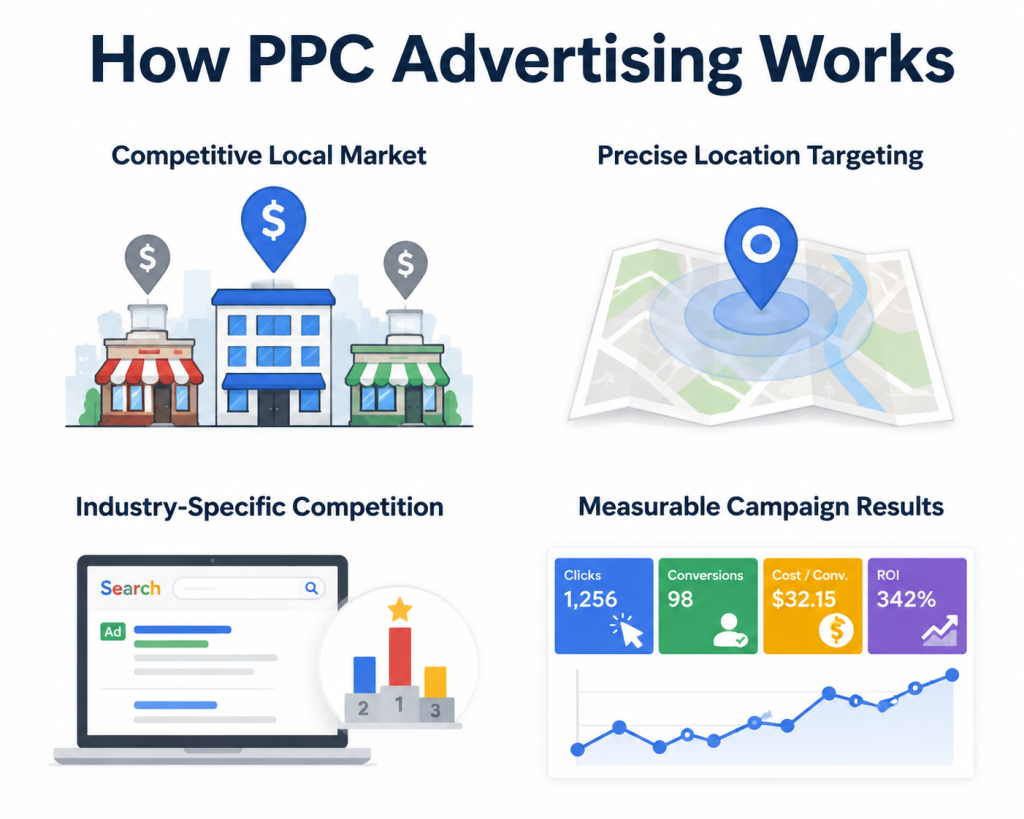
How PPC Advertising Works
San Diego’s active and diverse market creates strong opportunities for paid search advertising.
- Competitive Local Market: San Diego has a diverse business market, including technology, healthcare, tourism, legal services, real estate, and eCommerce. PPC helps companies compete for high-intent searches and reach potential customers when they are ready to take action.
- Precise Location Targeting: Location targeting allows advertisers to focus campaigns on San Diego, nearby communities, or specific service areas. This reduces wasted spend and helps businesses connect with audiences most likely to visit, call, request information, or make a purchase.
- Industry-Specific Competition: Search demand and competition affect keyword prices across San Diego industries. A structured campaign uses relevant keywords, negative keywords, strong ad messaging, and focused landing pages to improve ad quality and make better use of the available budget.
- Measurable Campaign Results: PPC platforms provide clear data on impressions, clicks, leads, conversions, and advertising costs. Businesses can use these insights to identify successful campaigns, adjust underperforming areas, and make informed decisions that steadily improve overall marketing performance.
A well-managed PPC campaign helps local businesses reach relevant audiences, compete effectively, and generate measurable results.
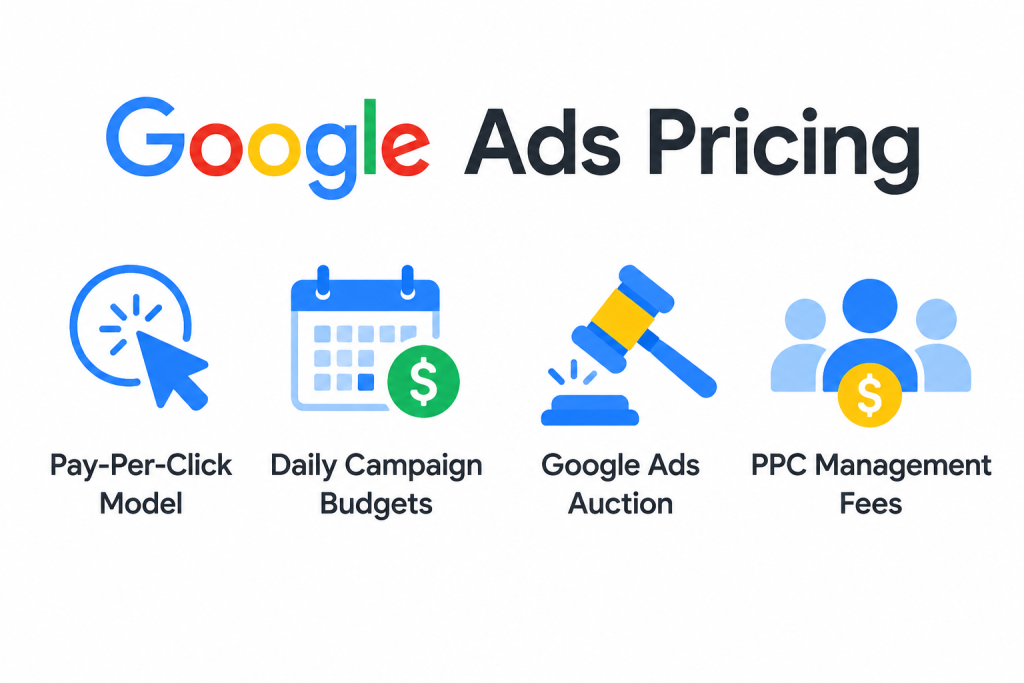
Google Ads Pricing
Google Ads pricing varies based on campaign goals, competition, and targeting.
- Pay-Per-Click Model: Google Ads primarily uses a pay-per-click model, meaning businesses pay when someone clicks their advertisement. Actual costs depend on keyword demand, competition, audience settings, ad quality, & selected campaign objectives.
- Daily Campaign Budgets: Advertisers can set daily budgets to control spending across campaigns. Google may spend more on certain days, but monthly charges generally remain within the established monthly campaign spending limit overall.
- Google Ads Auction: Each search triggers an automated auction that considers bids, ad quality, relevance, and expected user experience. A stronger Quality Score can improve positioning while helping reduce average click costs overall.
- PPC Management Fees: Management fees are usually separate from advertising spend and may follow flat-rate, percentage-based, or performance-based models. Businesses should carefully evaluate pricing alongside strategy, reporting, communication, optimization, and overall service levels.
Understanding how costs are calculated helps San Diego businesses set practical budgets and make informed advertising decisions.
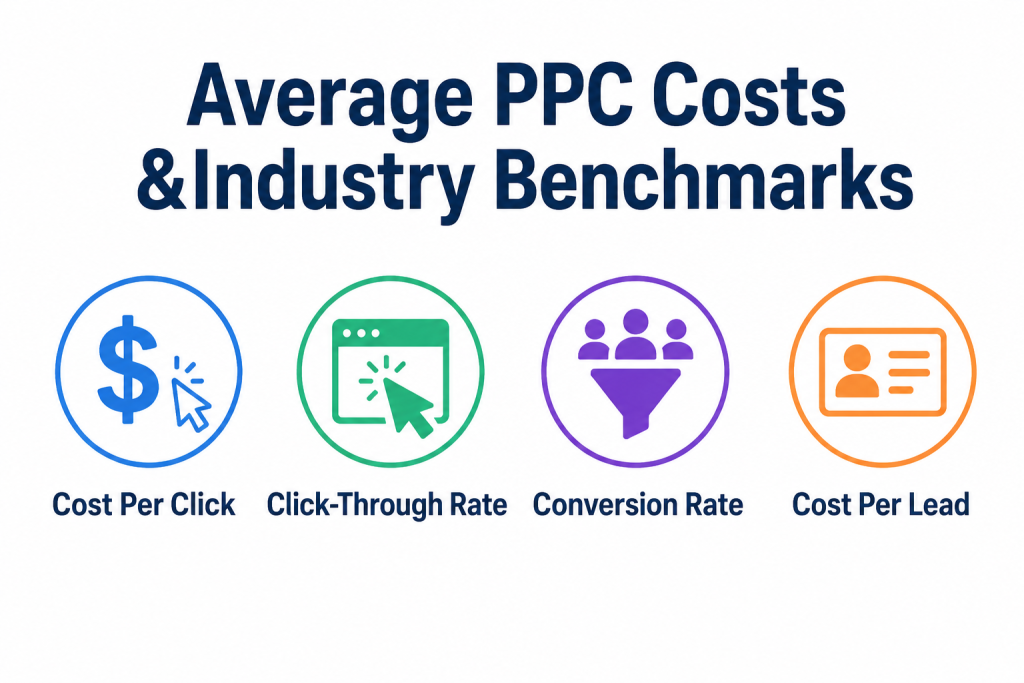
Average PPC Costs &Industry Benchmarks
PPC benchmarks provide a useful reference for evaluating campaign performance.
- Cost Per Click: Average cost per click varies by industry, keyword intent, and competition, with legal, finance, healthcare, and technology searches often costing more.
- Click-Through Rate: Click-through rate measures how often users click an ad after seeing it, helping advertisers evaluate relevance, messaging, targeting, and overall campaign appeal.
- Conversion Rate: Conversion rate shows the percentage of visitors completing a desired action, such as calling, submitting a form, booking, or purchasing online.
- Cost Per Lead: Cost per lead reveals how efficiently advertising spend produces inquiries, allowing businesses to compare performance across campaigns, services, locations, and audience segments.
Results vary by industry, competition, location, targeting, and the quality of ads and landing pages.
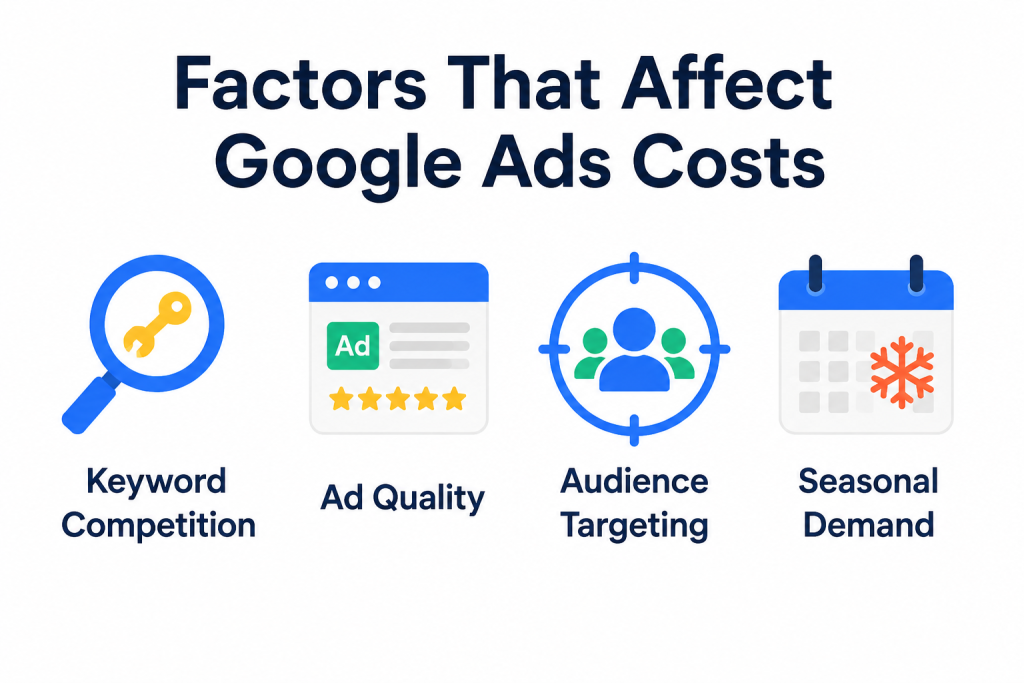
Factors That Affect Google Ads Costs
Several campaign and market conditions influence Google Ads costs. Understanding these factors helps businesses allocate budgets more effectively and avoid unnecessary advertising expenses.
- Keyword Competition: Popular keywords with strong commercial intent attract more advertisers, increasing bid pressure. Highly competitive San Diego industries may therefore experience higher click costs for valuable search terms.
- Ad Quality: Google evaluates ad relevance, expected click-through rate, and landing page experience. Stronger quality signals can improve ad placement and lower the amount paid per click.
- Audience Targeting: Broad geographic, demographic, or audience targeting can increase unnecessary clicks. Focused targeting helps businesses reach relevant San Diego prospects and use their advertising budgets more efficiently.
- Seasonal Demand: Search demand often changes during holidays, peak business periods, and seasonal events. Increased competition during these periods can raise bids and affect overall PPC campaign costs.
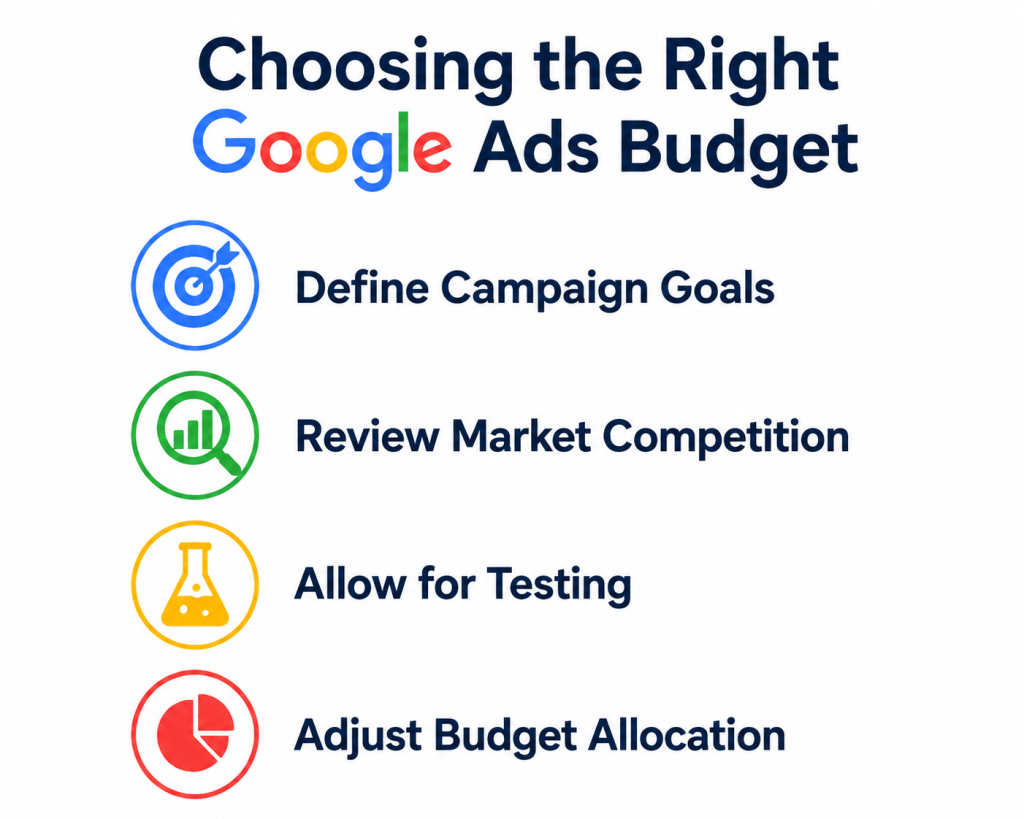
Choosing the Right Google Ads Budget
A practical PPC budget should support business goals while providing enough data for informed optimization. Regular monitoring helps ensure spending remains focused on valuable opportunities.
- Define Campaign Goals: A PPC budget should begin with clearly defined objectives, such as lead generation, online sales, appointment bookings, brand visibility, or increased traffic to important service pages.
- Review Market Competition: Businesses should review keyword costs, competitor activity, and local search demand before deciding how much to spend. Competitive industries often require larger budgets to collect meaningful performance data.
- Allow for Testing: New campaigns need enough budget and time to test keywords, ads, audiences, and landing pages. Limited testing may produce incomplete data and lead to unreliable conclusions.
- Adjust Budget Allocation: Budget allocation should change as performance data develops. Increasing spend on profitable campaigns and reducing waste from weaker areas helps improve overall return on advertising investment.
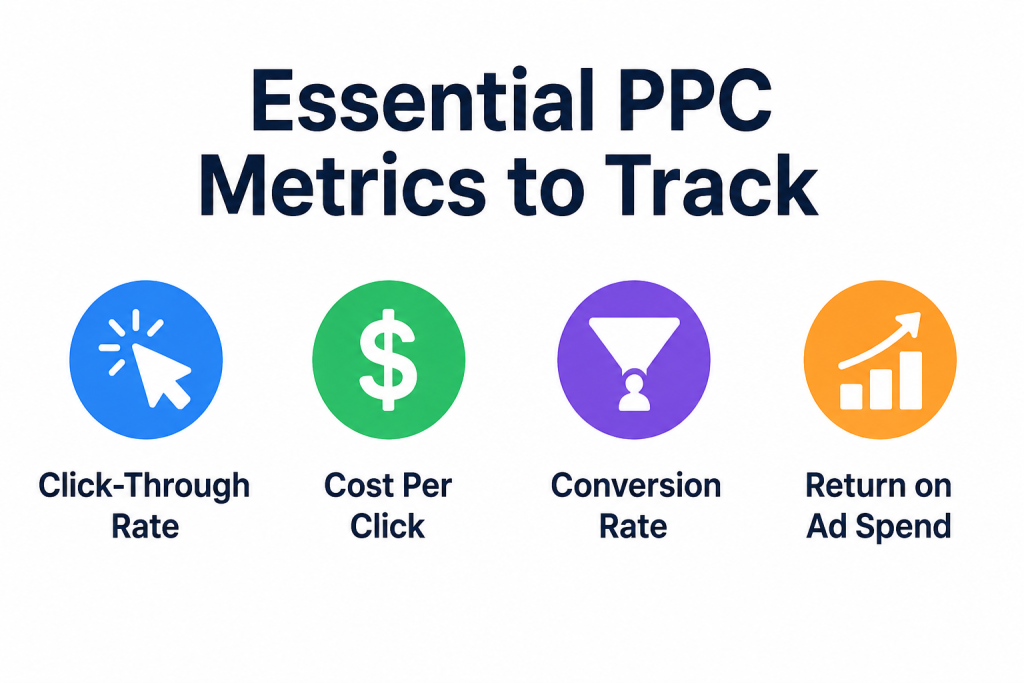
Essential PPC Metrics to Track
Tracking the right PPC metrics helps businesses understand campaign effectiveness, control costs, and identify opportunities for improvement.
- Click-Through Rate: Click-through rate compares ad clicks with impressions, showing how effectively headlines, descriptions, keywords, and targeting capture attention from users searching for relevant products or services.
- Cost Per Click: Cost per click shows the average amount paid for each visit generated by an advertisement. Monitoring CPC helps advertisers manage bids and evaluate traffic costs.
- Conversion Rate: Conversion rate measures the percentage of visitors who complete a valuable action. It helps determine whether ads, offers, targeting, and landing pages work effectively together.
- Return on Ad Spend: Return on ad spend compares revenue generated with advertising costs. This metric helps businesses understand profitability and prioritize campaigns that contribute greater overall financial value.
Each metric provides a different view of advertising performance.
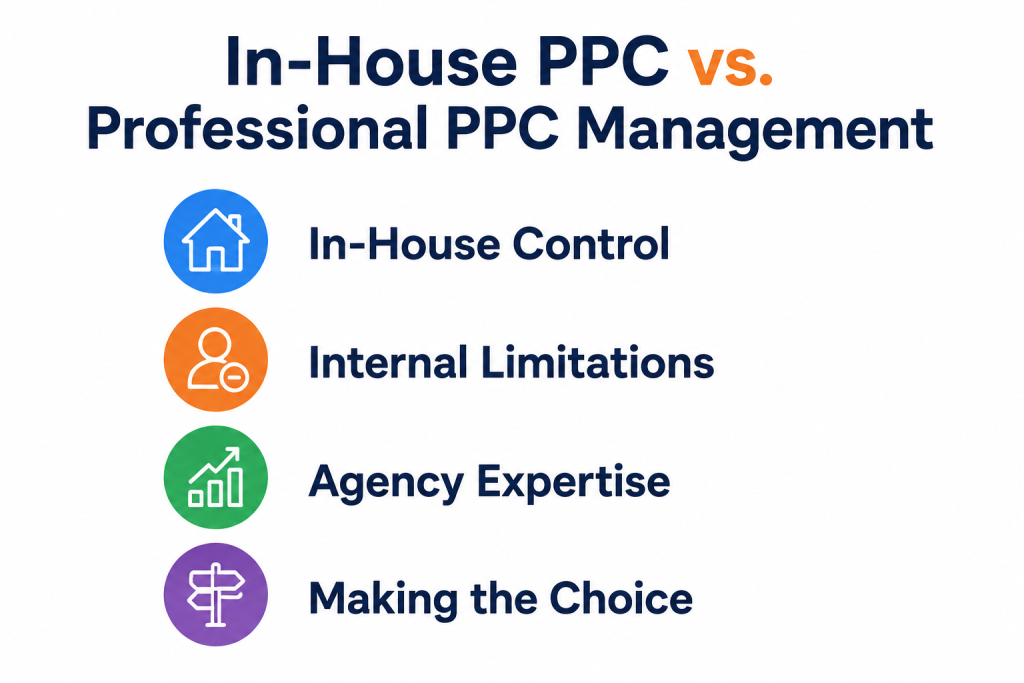
In-House PPC vs. Professional PPC Management
Choosing between internal PPC management and an experienced agency depends on available resources, expertise, budget, and campaign complexity. Each approach offers different benefits and responsibilities.
- In-House Control: Managing PPC internally gives businesses direct control over daily decisions, campaign priorities, and communication. It may suit companies with experienced staff and sufficient time resources.
- Internal Limitations: In-house teams may face limitations in platform expertise, advanced tools, reporting capacity, and ongoing optimization, particularly when employees already manage several other marketing responsibilities simultaneously.
- Agency Expertise: A PPC agency provides specialized knowledge, professional tools, structured testing, and experience across multiple industries. This support can improve efficiency and accelerate campaign learning cycles.
- Making the Choice: The right option depends on budget, campaign complexity, internal capabilities, growth goals, and desired involvement. Businesses should compare total value rather than management fees alone.
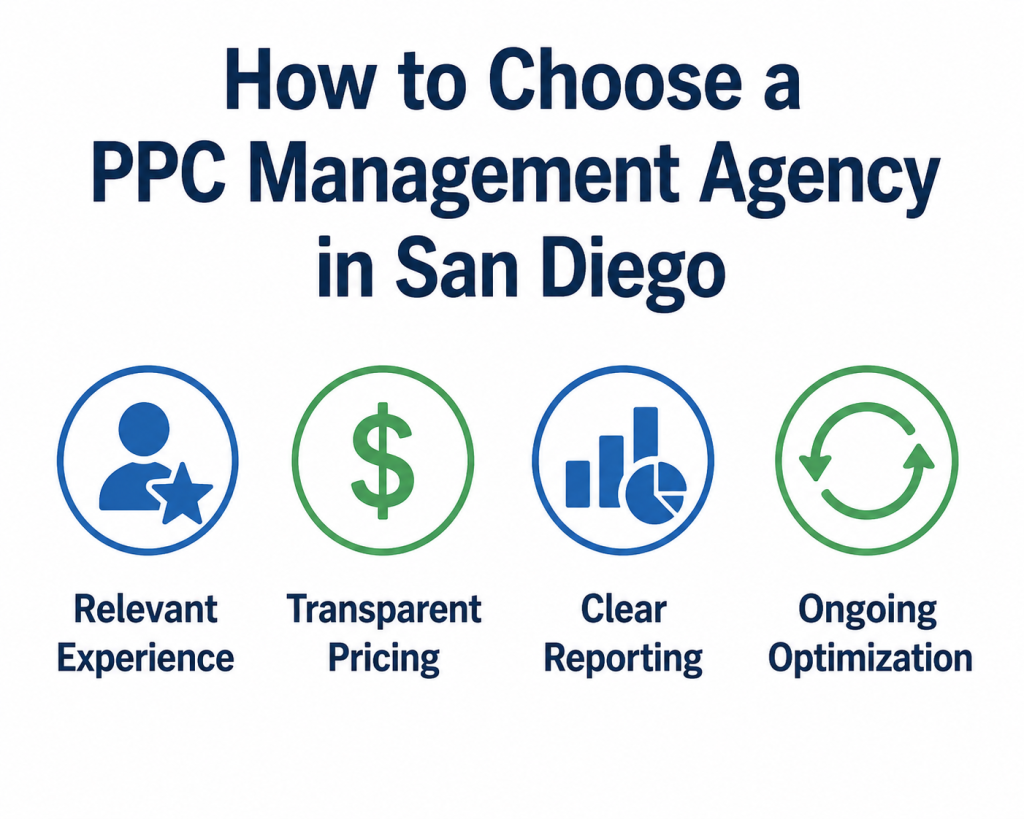
How to Choose a PPC Management Agency in San Diego
The right PPC agency should understand your goals, communicate clearly, and make decisions based on reliable campaign data.
- Relevant Experience: Look for an agency with proven Google Ads experience and knowledge of your industry. Relevant expertise can support faster planning, stronger targeting, and better campaign decisions.
- Transparent Pricing: A reliable agency should clearly explain campaign strategy, advertising spend, management fees, performance results, and planned changes without hiding important information behind complicated reporting dashboards.
- Clear Reporting: Regular reports should connect PPC metrics with meaningful business outcomes, including qualified leads, sales, appointments, and revenue. Clear communication keeps campaign priorities aligned with goals.
- Ongoing Optimization: Choose an agency that continuously tests keywords, ads, audiences, bids, and landing pages. Consistent optimization is essential for reducing waste and improving long-term PPC performance.
Consider expertise, transparency, reporting, and optimization capabilities.
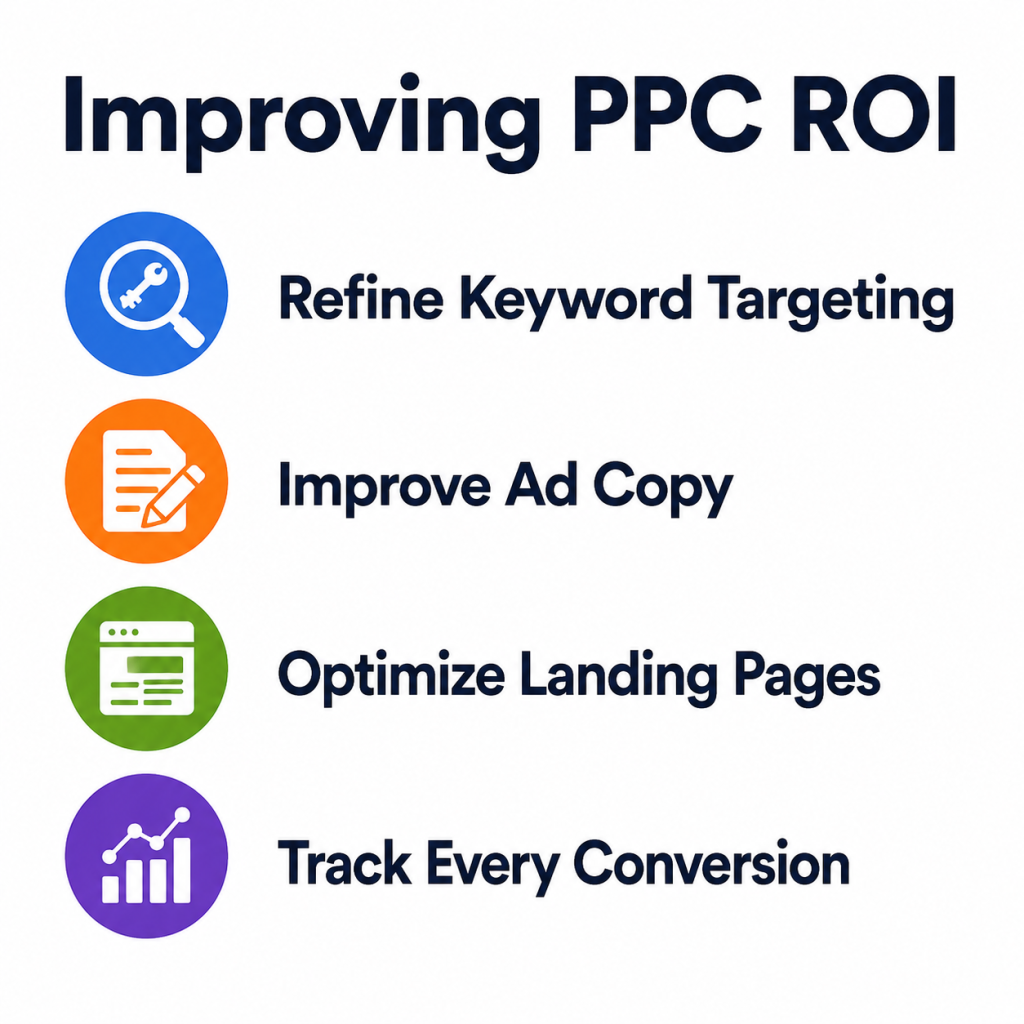
Improving PPC ROI
Improving PPC return requires continuous testing, accurate tracking, and focused budget allocation.
- Refine Keyword Targeting: Focus spending on keywords that reflect strong purchase or service intent. Review search terms regularly and add negative keywords to prevent irrelevant clicks and wasted budget.
- Improve Ad Copy: Write clear ads that match user intent, highlight meaningful benefits, and include direct calls to action. Testing multiple versions helps identify messaging that generates stronger engagement.
- Optimize Landing Pages: Send visitors to focused landing pages that match the advertisement and make conversion steps simple. Fast loading, mobile usability, and clear offers can improve results.
- Track Every Conversion: Accurate conversion tracking connects clicks with leads, sales, calls, or bookings. Reliable data helps advertisers refine bids, redistribute budgets, and prioritize campaigns producing measurable value.
Small improvements across keywords, ads, landing pages, and measurement can produce stronger campaign results.
Deepak Wadhwani has over 20 years experience in software/wireless technologies. He has worked with Fortune 500 companies including Intuit, ESRI, Qualcomm, Sprint, Verizon, Vodafone, Nortel, Microsoft and Oracle in over 60 countries. Deepak has worked on Internet marketing projects in San Diego, Los Angeles, Orange Country, Denver, Nashville, Kansas City, New York, San Francisco and Huntsville. Deepak has been a founder of technology Startups for one of the first Cityguides, yellow pages online and web based enterprise solutions. He is an internet marketing and technology expert & co-founder for a San Diego Internet marketing company.