


Shopify Spring '26 Edition

Ultimate Guide to Shopify Spring ’26 Edition

Table of Contents

Introduction

Shopify’s Spring ’26 Edition, released on June 17, 2026, introduces more than 150 updates under the theme “sell, shop, and build everywhere.” Rather than a routine feature release, it reflects a broader shift in how online commerce works, with updates across AI, retail, commerce, and developer tools.

The biggest change is the move toward agentic commerce, where shoppers can discover and purchase products directly through AI assistants like ChatGPT, Copilot, and Google’s AI Mode without ever visiting a traditional online store. This marks a fundamental shift in how customers interact with brands.

As a result, success is no longer driven solely by SEO or a polished storefront. Merchants now need clean, structured product data and modern storefront architecture so AI agents can understand, recommend, and sell their products. The rest of this guide explores the key updates, what they mean for merchants, and the actions worth prioritizing.

The Core Theme: Agentic Commerce Takes Center Stage

The Core Theme: Agentic Commerce Takes Center Stage

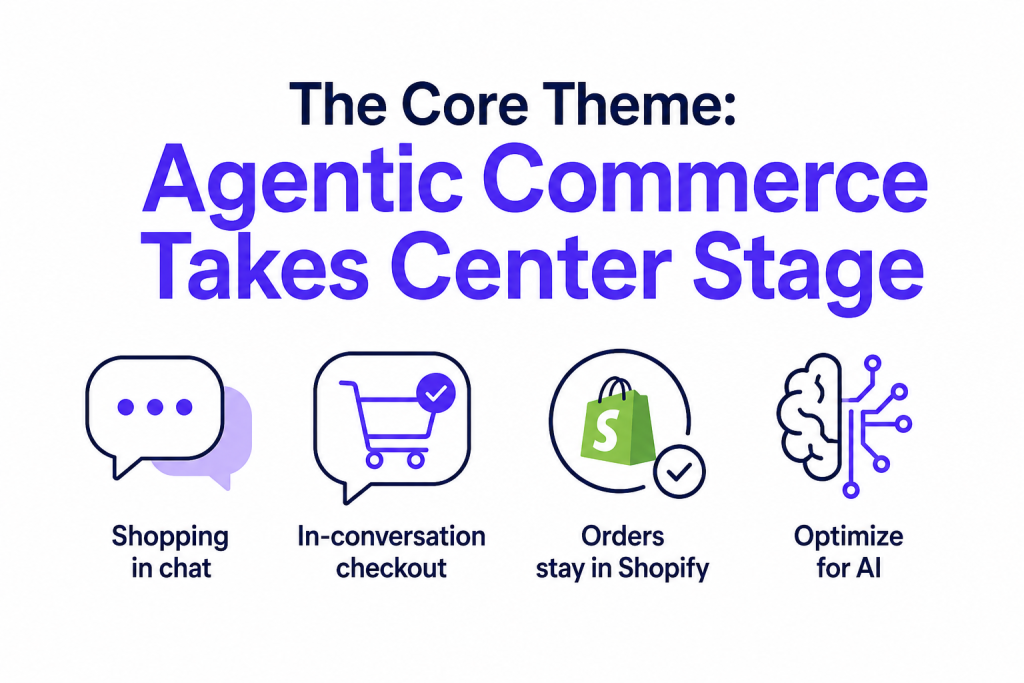
Agentic commerce is a major update of Spring ’26. With Shopify’s new AI commerce updates, products can now be discovered, recommended, and, in supported cases, purchased through AI shopping experiences like ChatGPT, Microsoft Copilot, Google AI Mode, Gemini, and Shop.

  • Shopping in chat: Instead of only getting a list of links, shoppers may see actual products from Shopify merchants inside that conversation. They can find, compare, and pick a product right where they’re already asking — no separate search page needed.
  • In-conversation checkout: Customers can now check out inside Microsoft Copilot and pay with Shop Pay, with Meta ads identified as a coming surface. The purchase can now be completed within the same interface as discovery, so there’s no jump to a website.
  • Orders stay in Shopify: A sale made through an AI assistant doesn’t drift into another system. For merchants, the important part is that the order still connects back to Shopify — so inventory, fulfillment, and customer data stay in one place.
  • Optimize for AI: The job isn’t just ranking on Google anymore. Merchants need to prepare their product data so AI agents can understand, recommend, and display their products correctly.

Universal Commerce Protocol (UCP)

Universal Commerce Protocol (UCP)

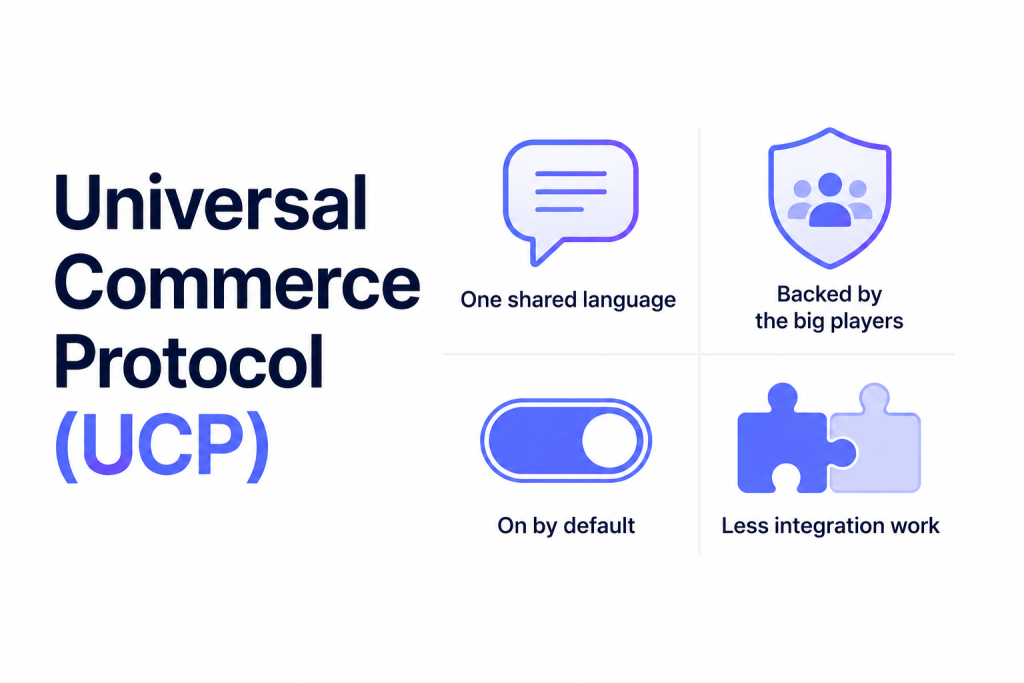
UCP is the groundwork that makes everything else possible. The Universal Commerce Protocol was co-developed with Google as the open standard for agentic commerce from discovery to checkout.

  • One shared language: UCP gives AI agents one shared language to understand commerce. Rather than every AI assistant building a custom connection to every store, agents get one standard way to read products, build carts, and check out with any compatible merchant.
  • Backed by the big players: This isn’t a Shopify-only bet. The Universal Commerce Protocol was co-developed with Google and endorsed by a long list of rivals, including Amazon, Meta, Microsoft, Salesforce, Stripe, Etsy, Target, and Wayfair.
  • On by default: You don’t have to wire it up yourself. Shopify merchants are UCP-enabled by default, so any surface that builds with it incorporates a merchant’s specific checkout rules, discounts, and customizations.
  • Less integration work: UCP covers the whole journey, not just payment. It models the whole purchase flow rather than just the payment step — discovery, cart, and checkout — which means far less custom integration work for merchants and platforms alike.

Shopify Catalog API

Shopify Catalog API
Shopify Catalog API

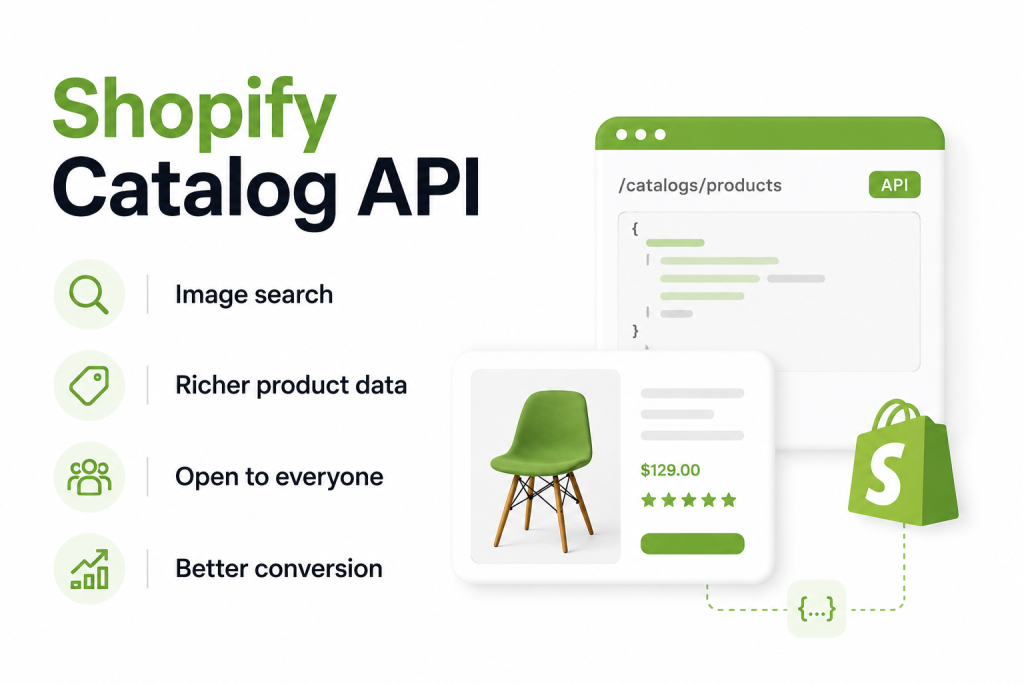
Catalog API turns Shopify’s global product catalog into structured, queryable infrastructure for AI agents — and Spring ’26 makes it smarter at finding the right product.

  • Image search: Image search returns visually similar products across Catalog. An AI agent can take a photo and pull back lookalike items in stock, opening up visual, see-it-buy-it shopping.
  • Richer product data: Richer metadata like size, color, and delivery estimates gives agents more context to present products accurately. Cleaner attributes mean fewer mismatches when an AI recommends your items.
  • Open to everyone: Access used to need approval. Catalog access takes just an API key; no approval is needed. Any developer can now build on it, creating more places your products can show up.
  • Better conversion: Structured data outperforms scraped data by a wide margin. AI searches powered by Shopify Catalog convert at 2x the rate of those using scraped data.

Checkout and Conversion Upgrades

Checkout and Conversion Upgrades

Spring ’26 works to close the gap between finding a product and buying it. The focus is fewer steps, faster flows, and a checkout that reaches more shoppers in more places.

  • Shop Pay anywhere: Now brands of all sizes not on Shopify can offer Shop Pay at checkout, gaining access to 250M+ shoppers and one-click purchasing for better conversion.
  • Checkout in chat: Customers can now check out inside Microsoft Copilot and pay with Shop Pay, with Meta ads named as a surface that’s coming. The purchase closes inside the conversation, with no jump to a website.
  • Smarter payment options: Shopify Payments now reads each shopper and adapts. It dynamically reorders the payment options at checkout to show whatever’s most likely to convert for that shopper, lifting completion rates automatically.
  • Ship and pickup together: A redesigned checkout, ship-and-pickup in one cart lets customers mix delivery and store pickup in a single order — fewer abandoned carts from rigid fulfillment choices.

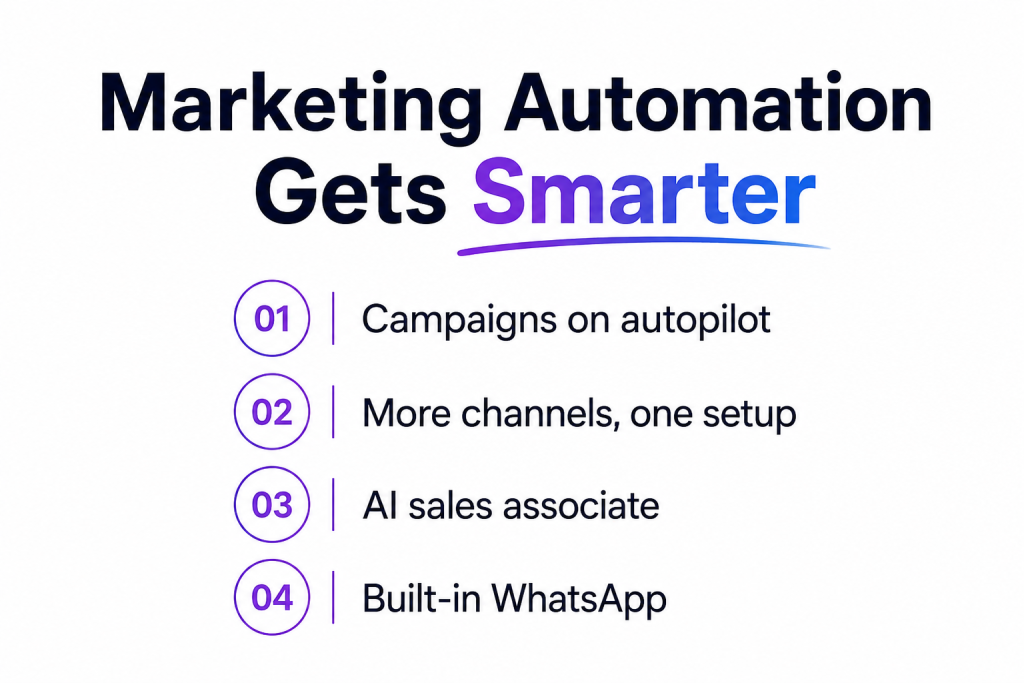
Marketing Automation Gets Smarter

Marketing Automation Gets Smarter

Marketing is the job merchants struggle with most, and Spring ’26 introduces greater AI-powered automation. These tools use Shopify’s commerce intelligence to get you in front of more customers, convert them, and keep them coming back, without the overhead.

  • Campaigns on autopilot: Campaign Autopilot runs AI-powered marketing campaigns automatically across Facebook, Instagram, Shop, and email, and uses commerce intelligence to optimize over time within guardrails you set.
  • More channels, one setup: Shop Campaigns now includes ChatGPT, Pinterest, and advertising on the open web via Microsoft Monetize. A single campaign reaches across surfaces, including AI chat, from one place instead of many.
  • AI sales associate: A new AI sales associate joins Inbox. It lives on your storefront and answers buyer questions, suggests products, and handles order inquiries using the catalog and inventory data already in your admin.
  • Built-in WhatsApp: Shopify added messaging where customers already are. Marketing gains a native WhatsApp channel, letting you run conversations and promotions alongside email and SMS, all managed from the same place.

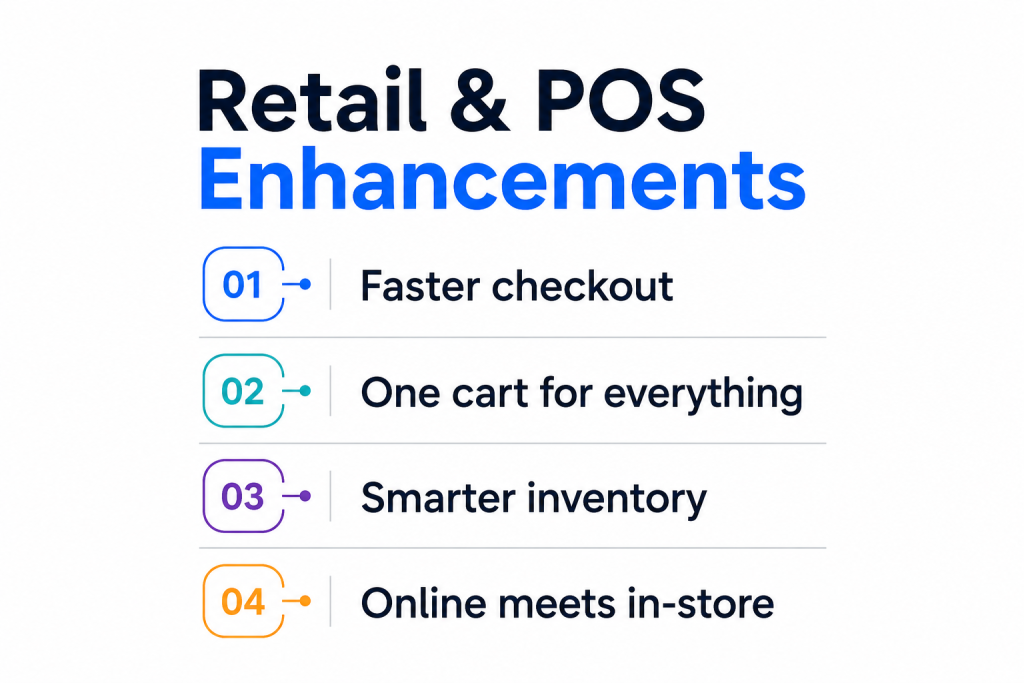
Retail & POS Enhancements

Retail & POS Enhancements

If you sell in person, this is a big one. Shopify is calling POS v11 the fastest version of Shopify POS they’ve ever shipped. The checkout was rebuilt from scratch to save time on the tasks staff repeats all day.

  • Faster checkout: They’ve rebuilt the checkout from scratch; the cart is always present, and according to Shopify, you save over a minute on common tasks like creating customers, adding products, and ringing up sales.
  • One cart for everything: Returns, exchanges, and new sales all flow through one cart now. Staff no longer juggle separate screens or flows, which speeds up the counter and cuts mistakes during busy periods.
  • Smarter inventory: Stock handling got more reliable across locations. SKU sharing across locations is now the default, with barcode scanning for receiving shipments to make stock-in faster and more accurate.
  • Online meets in-store: The line between web and shop floor is fading. Storefront, checkout, and analytics improve with ship-and-pickup in one cart, plus in-person pickup for online orders — one connected experience.

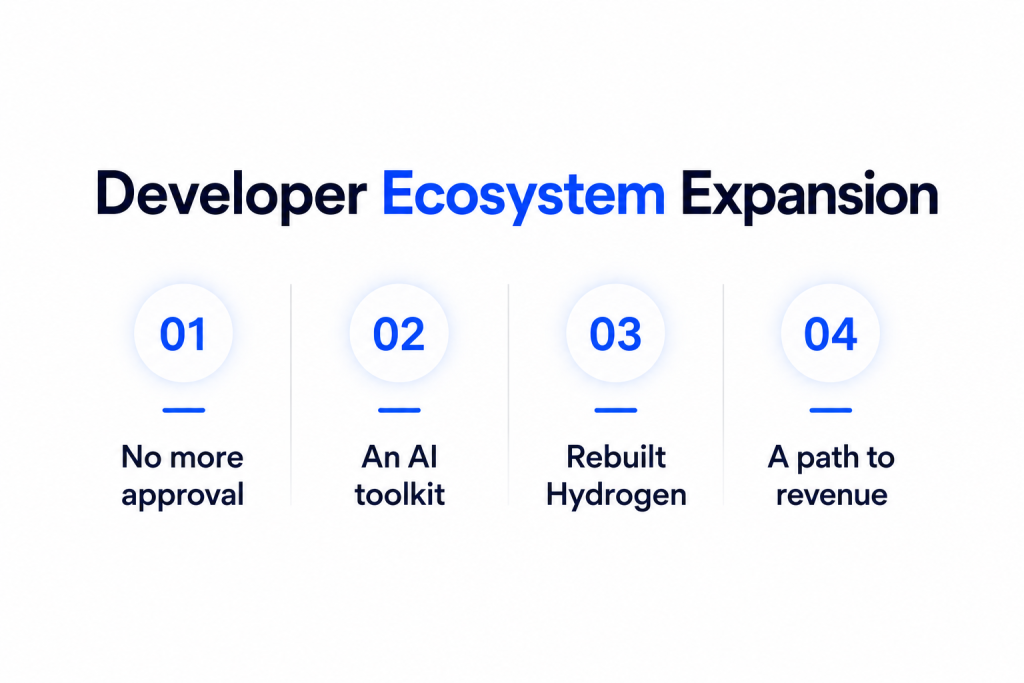
Developer Ecosystem Expansion

Developer Ecosystem Expansion

Spring ’26 is a major release for builders. In Winter ’26, Shopify went all-in on agentic commerce and rebuilt the dev platform for AI. Spring ’26 throws the doors wide open. The agentic tools are now self-serve for any developer.

  • No more approval: Building used to require sign-off. That requirement is gone. With UCP and Catalog API, we give developers the tools to build end-to-end agentic experiences all on their own.
  • An AI toolkit: The UCP Skill, part of Shopify’s open-source AI Toolkit, packages 20 years of commerce knowledge into something an agent can use out of the box. It works across Claude Code, Cursor, and more.
  • Rebuilt Hydrogen: Headless storefronts got a fresh foundation. The all-new Hydrogen is rebuilt from the ground up, agent-first, and works with any framework — including Next.js — giving developers more freedom to build custom AI-powered stores.
  • A path to revenue: Building can now pay off directly. Promoted placements will give developers and partners a future path to earn revenue when their Catalog-powered experiences drive sales.

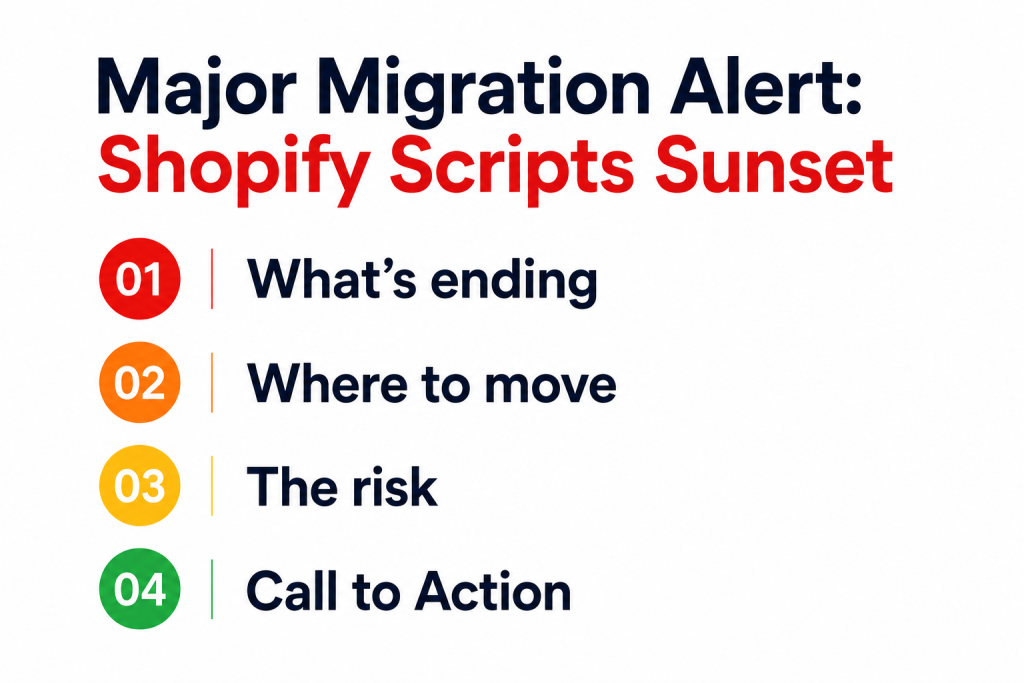
Major Migration Alert: Shopify Scripts Sunset

Major Migration Alert: Shopify Scripts Sunset

This one has a hard deadline, so don’t skim it. Shopify Scripts, the old Ruby-based way of customizing checkout, will stop running on June 30, 2026.

  • What’s ending: Scripts is the legacy tool many stores used to customize discounts, payments, and shipping at checkout. Shopify Scripts, the old Ruby-based way of customizing checkout, will stop running on June 30, 2026.
  • Where to move: There’s a clear replacement path. Anything still on Scripts has to move to Shopify Functions before that date, which is the modern, supported way to build the same checkout customizations.
  • The risk: Miss the deadline, and things quietly stop working. Those checkout customizations break — meaning discounts, payment rules, or shipping logic could fail silently and cost you sales without an obvious warning.
  • Call to Action: Audit your checkout today. List every active Script, confirm which ones still matter, and rebuild them as Shopify Functions before June 30 — or have your developer or app partner handle the move.

Conclusion

Shopify’s Spring ’26 Edition is more than a feature update. It reflects the future of commerce, where customers can discover and buy products through AI assistants, not just online stores.

For merchants, the priority is clear: keep your product data accurate, complete, and AI-ready. Clean titles, descriptions, pricing, images, and variants will help your products appear in AI-powered recommendations.

Instead of trying every new feature, focus on the essentials. Add your products to Shopify Catalog, explore the new AI tools, and migrate away from Shopify Scripts before support ends. Taking these steps now will help your store stay competitive as AI commerce continues to grow.

Scroll to Top