


Table of Contents
Introduction
Sponsored labels in Google Ads serve as visual cues that help users differentiate between paid ads and organic search results. You’ll spot these labels right next to ads on Google Search, and they’re there to make it clear that a listing is promotional.
Over the years, Google has fine-tuned the way ads are displayed to boost transparency and keep user trust intact. Sponsored labels are a key part of this evolution, allowing users to easily spot advertising content without interrupting their overall search experience.
For advertisers, grasping the importance of sponsored labels is no longer just a nice-to-have—it’s a must. These labels can sway visibility, credibility, and click behavior, making them crucial for campaign success.
What Are Sponsored Labels?
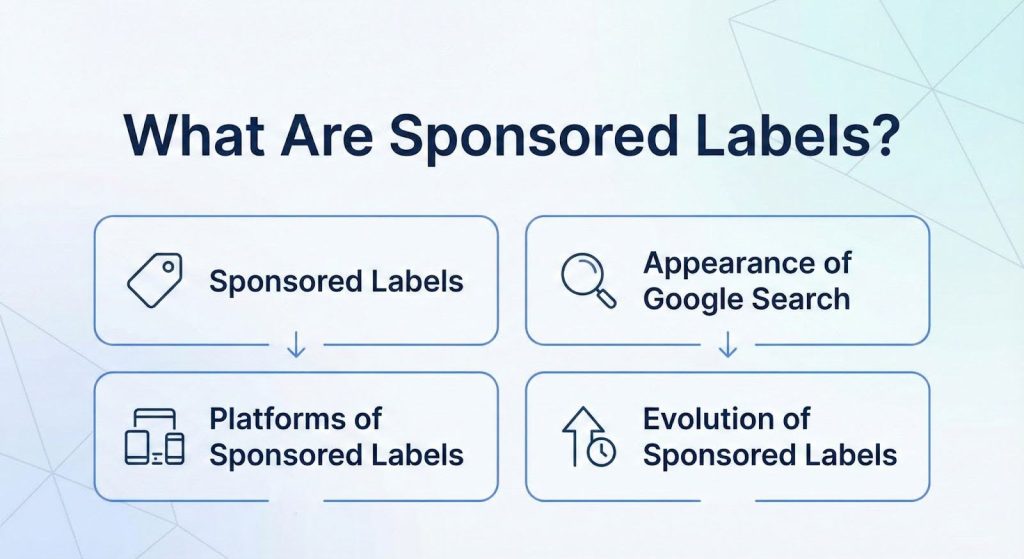
Sponsored labels in Google Ads are those clear visual cues that Google uses to mark paid ads in search results.
- Sponsored Labels: These labels are text indicators like “Sponsored” or “Ad,” which show up next to paid search results. Their main job is to let users know that the listing is commercial in nature.
- Appearance of Google Search: You’ll usually find these labels positioned above or beside the ad headline, featuring a subtle yet eye-catching design.
- Platforms of Sponsored Labels: While sponsored labels are most frequently seen on Google Search, they can also pop up on partner sites within the Google Display Network.
- Evolution of Sponsored Labels: Over time, Google has made gradual changes to sponsored labels to enhance clarity and meet advertising transparency standards.
They make it easy for users to spot the difference between organic listings and promotional content, promoting transparency in the world of paid search advertising.
Why Google Introduced Sponsored Labels
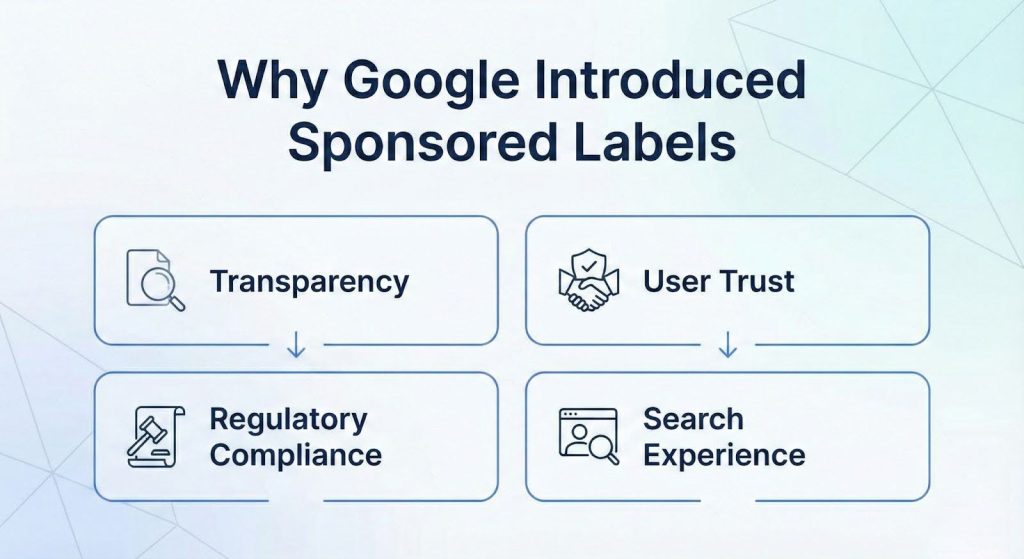
Google has rolled out sponsored labels to enhance the transparency and user-friendliness of paid advertising.
- Transparency: Sponsored labels clearly indicate to users that a result is a paid advertisement. This empowers users to make informed choices while navigating through search results.
- User Trust: By openly labeling ads, Google boosts trust in its search platform. When users feel that their experience is honest and impartial, they’re more inclined to engage.
- Regulatory Compliance: Sponsored labels also help Google adhere to advertising disclosure standards set by regulatory bodies worldwide. This promotes ethical advertising practices and minimizes the chances of misleading users.
- Search Experience: Clear labeling enhances the overall search experience by reducing confusion. Users can easily distinguish between promotional content and organic results, making their browsing smoother.
As the digital advertising landscape has become increasingly intricate, it’s crucial to clearly differentiate ads from organic search results to maintain trust and credibility.
How Sponsored Labels Affect User Behavior
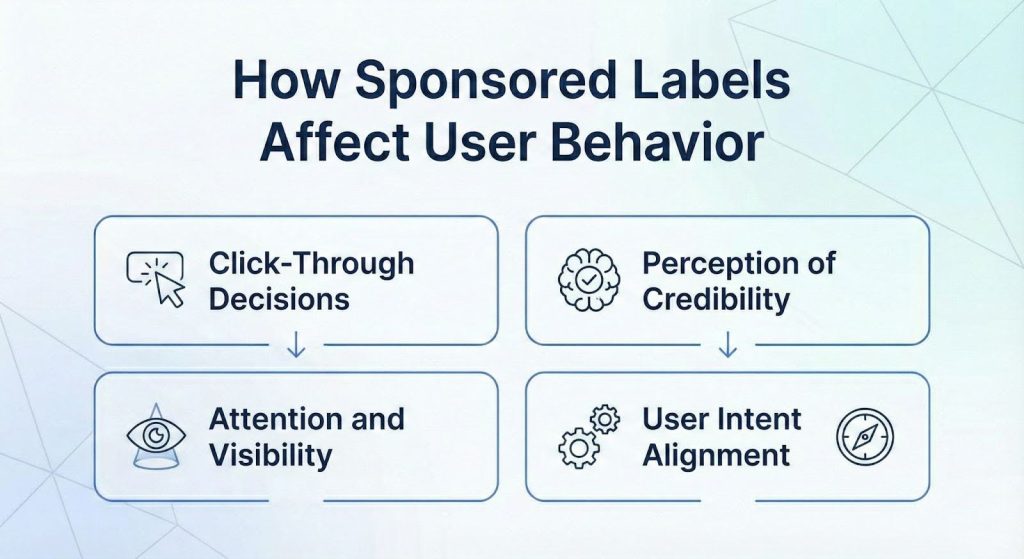
Sponsored labels play a significant role in shaping how users view and interact with paid ads.
- Click-Through Decisions: When users spot a sponsored label, they often take a moment to assess the ad. This can lead to more thoughtful clicks that are based on relevance rather than just a spur-of-the-moment choice.
- Perception of Credibility: Some users might see sponsored labels as a sign that ads are less trustworthy compared to organic results. However, if the ads are well-crafted and present strong value propositions, they can change that perception.
- Attention and Visibility: Even with the sponsored label, ads still enjoy prime real estate on search result pages. These labels don’t diminish visibility; instead, they promote more deliberate engagement from users.
- User Intent Alignment: Those who click on sponsored ads are usually more serious and ready to convert. Sponsored labels help distinguish between casual browsers and genuinely interested customers.
By clearly marking these advertisements, they help build user trust and influence how people pay attention and engage with search results.
Sponsored Labels vs Organic Results
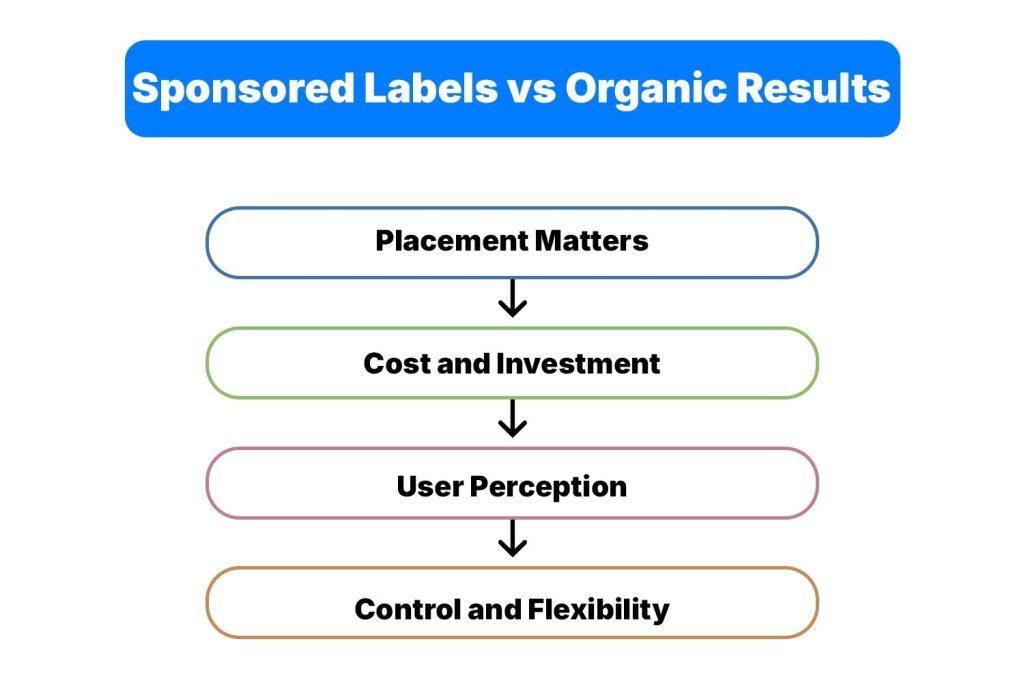
Sponsored labels help to differentiate between paid ads and organic search results clearly.
- Placement Matters: Sponsored results typically show up in prime spots at the top or bottom of search pages, while organic results earn their place through relevance and SEO efforts. These labels make it easy for users to spot the difference right away.
- Cost and Investment: Paid listings come with ongoing ad costs based on bidding strategies, while organic results depend on long-term optimization work. Sponsored labels emphasize the transactional aspect of paid visibility.
- User Perception: People often see organic results as more genuine, while sponsored ads can feel more promotional. However, if the ads are highly relevant, they can help close this perception gap.
- Control and Flexibility: Advertisers enjoy more control over their messaging, targeting, and timing with sponsored ads. On the other hand, organic listings may not offer immediate control but can build lasting credibility over time.
Advertisers must grasp this distinction if they want to strike the right balance between visibility, credibility, and user intent in search marketing.
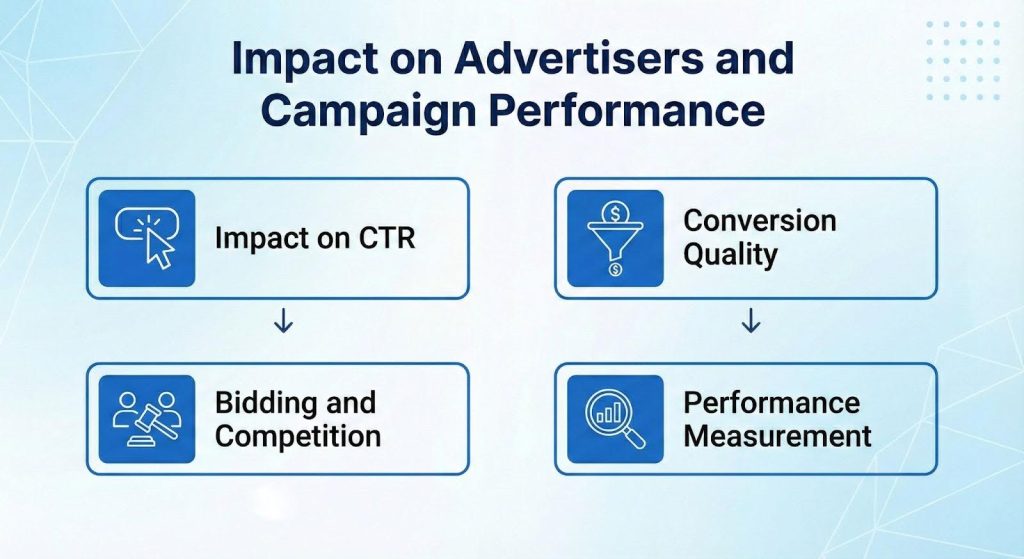
Impact on Advertisers and Campaign Performance
Sponsored labels play a significant role in how ads are perceived, but they don’t take away from their strategic importance.
- Impact on CTR: Sponsored labels might slightly lower impulsive clicks, which can lead to more qualified traffic. This often means that clicks are driven by relevance instead of mere curiosity.
- Conversion Quality: Users who interact with labeled ads usually have a clearer intent. This can boost conversion rates and help minimize wasted ad spend.
- Bidding and Competition: Clear labeling ramps up competition for prime ad spots. Advertisers need to strike a balance between their bidding strategies and ad relevance to stay visible.
- Performance Measurement: Sponsored labels push advertisers to concentrate on more in-depth metrics like conversion value and ROI. Success is gauged by the quality of outcomes rather than just the volume of traffic.
For advertisers, these labels change the way performance metrics are viewed and call for a more careful approach to optimizing campaigns.
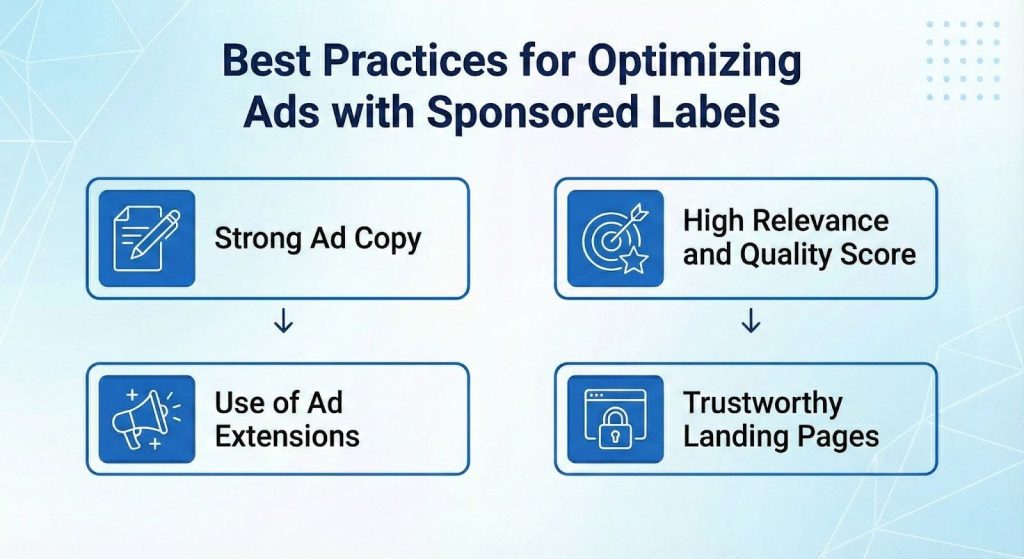
Best Practices for Optimizing Ads with Sponsored Labels
Sponsored labels clearly indicate ad intent, which means advertisers need to put in extra effort to capture user clicks.
- Strong Ad Copy: Craft clear, benefit-driven headlines that instantly convey value. Steer clear of vague statements and concentrate on addressing user pain points.
- High Relevance and Quality Score: Make sure there’s a strong connection between your keywords, ad copy, and landing pages. A higher relevance boosts visibility and lowers the cost per click.
- Use of Ad Extensions: Ad extensions boost credibility and offer extra context. Features like sitelinks, callouts, and structured snippets expand your ad’s presence.
- Trustworthy Landing Pages: Your landing pages should enhance credibility with straightforward messaging, quick load times, and transparent offers. This helps build confidence after users click on your sponsored ad.
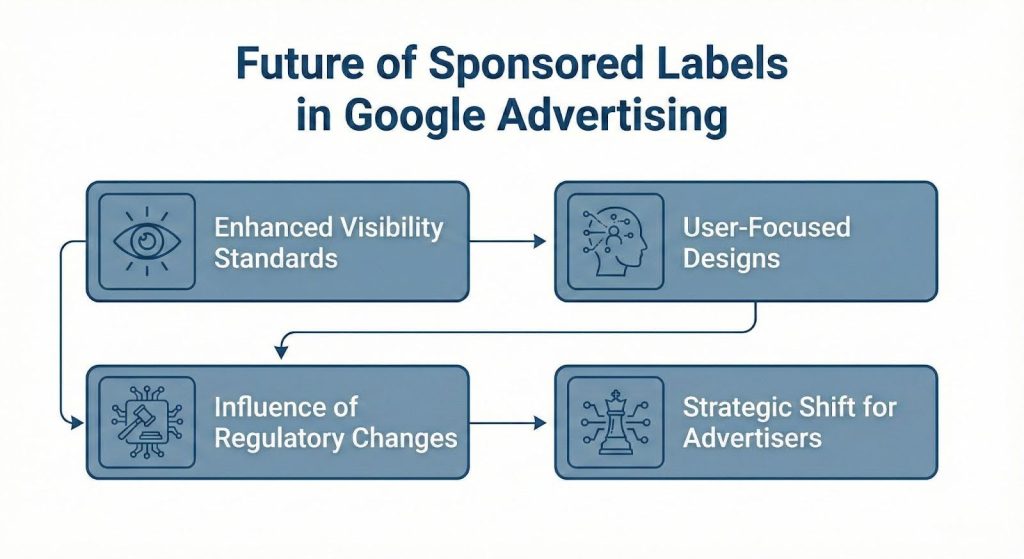
Future of Sponsored Labels in Google Advertising
Sponsored labels are set to change as digital advertising increasingly emphasizes transparency and building user trust.
- Enhanced Visibility Standards: In the future, sponsored labels might stand out more to clearly differentiate ads from organic search results. This shift would be in line with global standards for transparency and consumer protection.
- User-Focused Designs: Google is expected to tweak label designs based on how users interact with them and the results of usability tests. The aim will be to ensure clarity while keeping the search experience smooth.
- Influence of Regulatory Changes: With advertising regulations becoming stricter around the globe, sponsored labels will be crucial for compliance. Google may roll out standardized disclosures for all ad formats.
- Strategic Shift for Advertisers: Advertisers will need to prioritize relevance, value, and building trust. Achieving success will rely less on where ads are placed and more on the quality of the message and how well it aligns with user intent.
Google’s ongoing updates indicate that these labels will continue to be a fundamental part of paid search, rather than just a temporary fix.
Conclusion
Sponsored labels have become a key and influential part of Google Ads, enhancing transparency and changing the way users engage with paid search results. Instead of seeing these labels as a drawback, advertisers should view them as a reflection of shifting user expectations and the rise of ethical advertising standards.
For advertisers, achieving success now hinges on relevance, clarity, and trust. Sponsored labels promote more thoughtful user interactions, which means clicks are more purposeful and often of higher quality.
As Google continues to refine its advertising landscape, sponsored labels will stay at the heart of paid search strategies. Advertisers who adapt early—by focusing on value-driven ads and user-centered optimization—will not only sustain their performance but also gain a competitive advantage in an increasingly transparent digital world.
Deepak Wadhwani has over 20 years experience in software/wireless technologies. He has worked with Fortune 500 companies including Intuit, ESRI, Qualcomm, Sprint, Verizon, Vodafone, Nortel, Microsoft and Oracle in over 60 countries. Deepak has worked on Internet marketing projects in San Diego, Los Angeles, Orange Country, Denver, Nashville, Kansas City, New York, San Francisco and Huntsville. Deepak has been a founder of technology Startups for one of the first Cityguides, yellow pages online and web based enterprise solutions. He is an internet marketing and technology expert & co-founder for a San Diego Internet marketing company.