
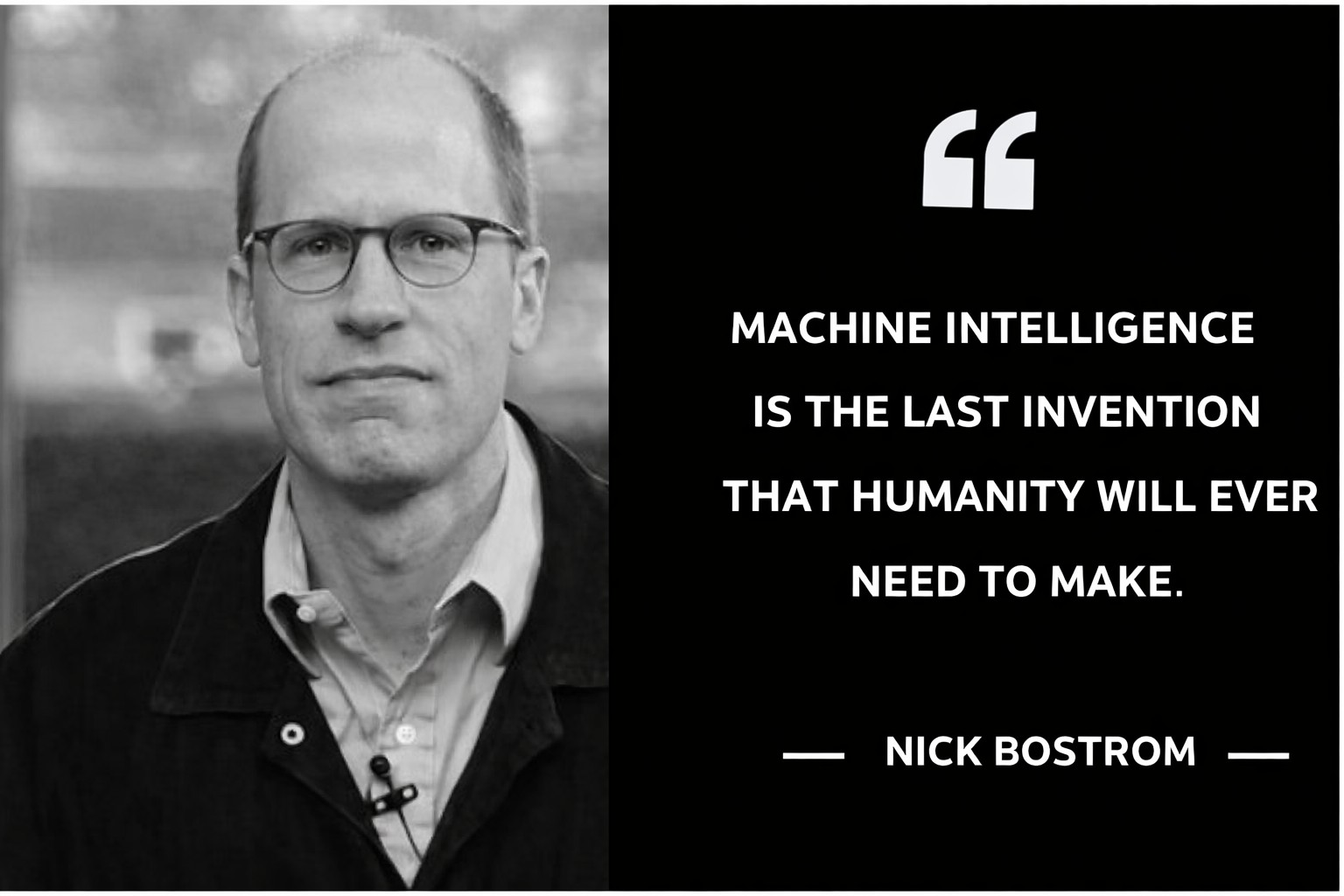

Nick Bostrom and the future of AI

Ultimate guide to AI Robots

Table of Contents

Introduction

AI-powered robots are no longer something from the future. They’re already changing the way businesses run and how industries grow. From factory floors to hospitals and even hotels, these robots are becoming an essential part of today’s infrastructure.

The global robotics market is expanding quickly, fueled by progress in AI, machine learning, and automation. With billions of dollars being invested worldwide and adoption rising across industries, AI robots are driving the next stage of digital transformation.

Key Statistics

  1. The AI robotics market is growing very fast, especially across U.S. industries.
  2. According to a 2023 report, the global AI robot market was valued at about $15.2 billion and is expected to exceed $111 billion by 2033, growing at over 22% annually.
  3. This growth is driven by increasing use in industries like manufacturing, healthcare, agriculture, and logistics. 
  4. Businesses are investing in AI-powered robots to improve efficiency, reduce costs, and handle tasks more accurately. 
  5. From automated warehouses to advanced surgical systems, companies are adopting robotics to stay competitive and scale operations.
  6. At the same time, AI and automation are changing the job market. 
  7. The World Economic Forum estimates that by 2030, AI could create 170 million new jobs while replacing 92 million, resulting in a net gain of 78 million jobs.

Expert Insights

  • AI acts as the “brain” for robots, enabling them to understand data, process it, and act accordingly. The AI robotics industry is set to grow to over $111 billion in the next decade, fueled by rising demand. 
  • The World Economic Forum predicts AI and robotics will create 78 million new jobs, emphasizing the need for skill development.

The Booming AI Robotics Market

The Booming AI Robotics Market
  • China’s robotics market was valued at around $47 billion in 2024.
  • Expected to grow at a rate of 23% annually through 2028.

Industrial Robot Installations:

  • China installed approximately 295,000 industrial robots in 2024, more than any other country combined.
  • China has become the largest adopter of industrial robots globally.

Shift to AI-Powered Robots:

  • Move from traditional industrial robots to AI-powered systems capable of handling more complex tasks.
  • Robots are becoming more intelligent, requiring less human oversight.

Government Support:

  • Robotics is a key part of China’s national technology and innovation plans.
  • The government provides strong support to drive domestic production and innovation in robotics.
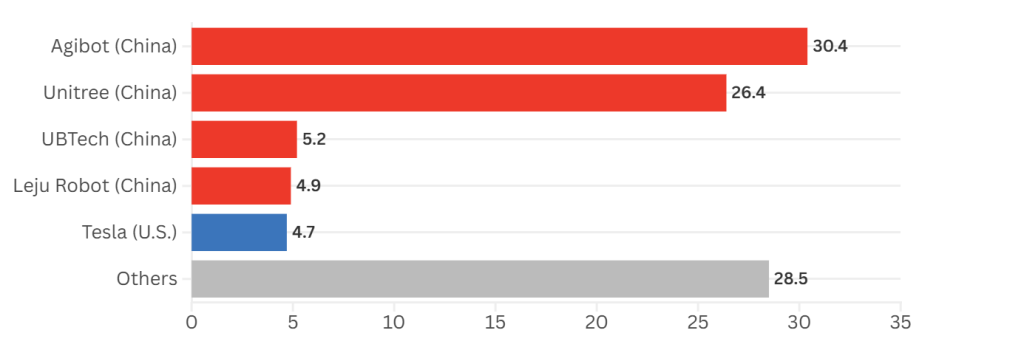
Global Market Share of Humanoid Robotics

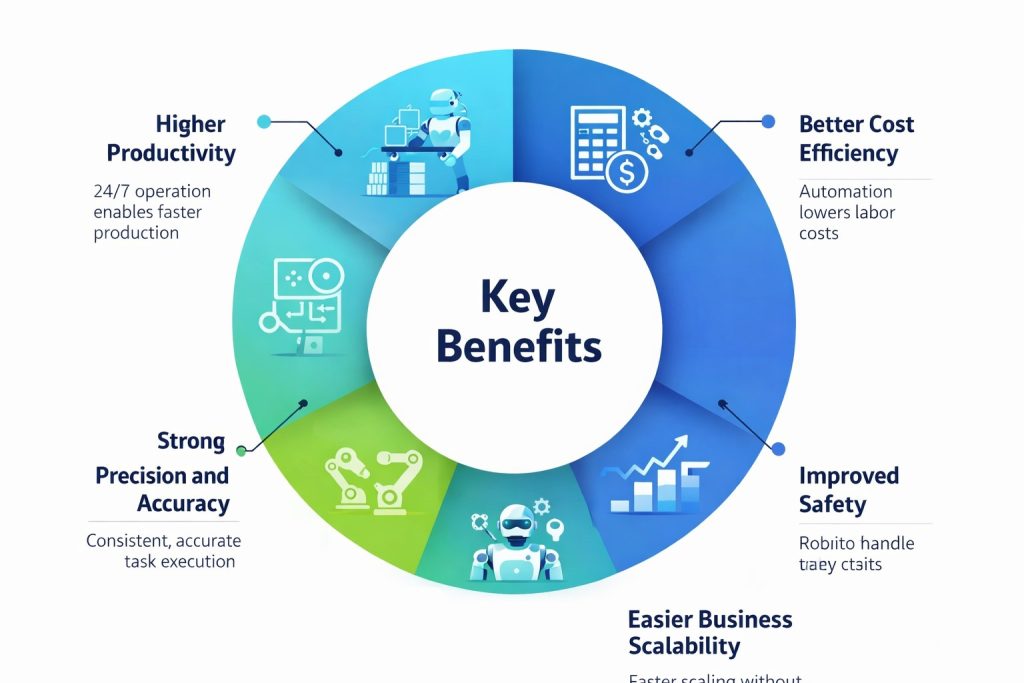
Key Benefits

Key benefits of automation in business

AI robots deliver clear, measurable benefits when it comes to operations, efficiency, and scalability:

  1. Higher Productivity
    Robots can run 24/7 without getting tired, allowing continuous production and quicker output.
  2. Better Cost Efficiency
    Automation helps cut long-term labor costs and reduces the chances of operational errors.
  3. Strong Precision and Accuracy
    AI robots handle repetitive tasks with consistent accuracy, lowering defects and improving overall quality.
  4. Improved Safety
    They take on risky tasks in industries like manufacturing and construction, helping reduce danger for human workers.
  5. Easier Business Scalability
    Companies can expand operations more quickly without needing to increase their workforce at the same rate.

Industries

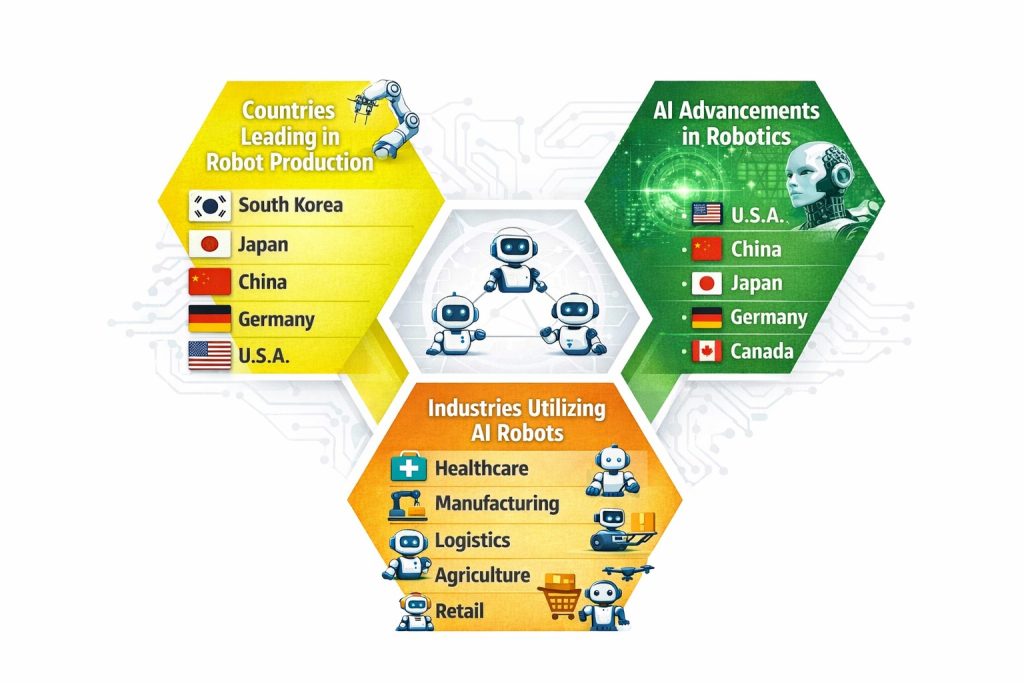
Countries Leading in Robot Production

Countries Leading in Robotics

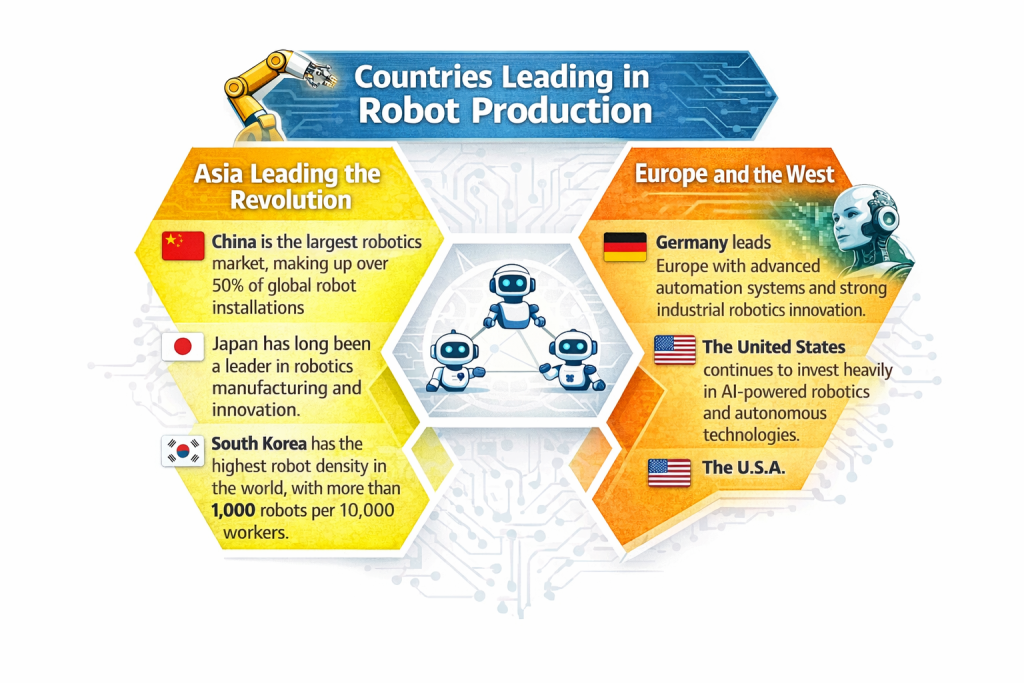
A handful of key countries dominate the global robotics landscape, driven by strong investments in AI and automation.

Asia Leading the Revolution

  • China is the largest robotics market, making up over 50% of global robot installations.
  • Japan has long been a leader in robotics manufacturing and innovation.
  • South Korea has the highest robot density in the world, with more than 1,000 robots per 10,000 workers.

Europe and the West

  • Germany leads Europe with advanced automation systems and strong industrial robotics innovation.
  • The United States continues to invest heavily in AI-powered robotics and autonomous technologies.

AI Advancements in Robotics

AI advancements in robotics

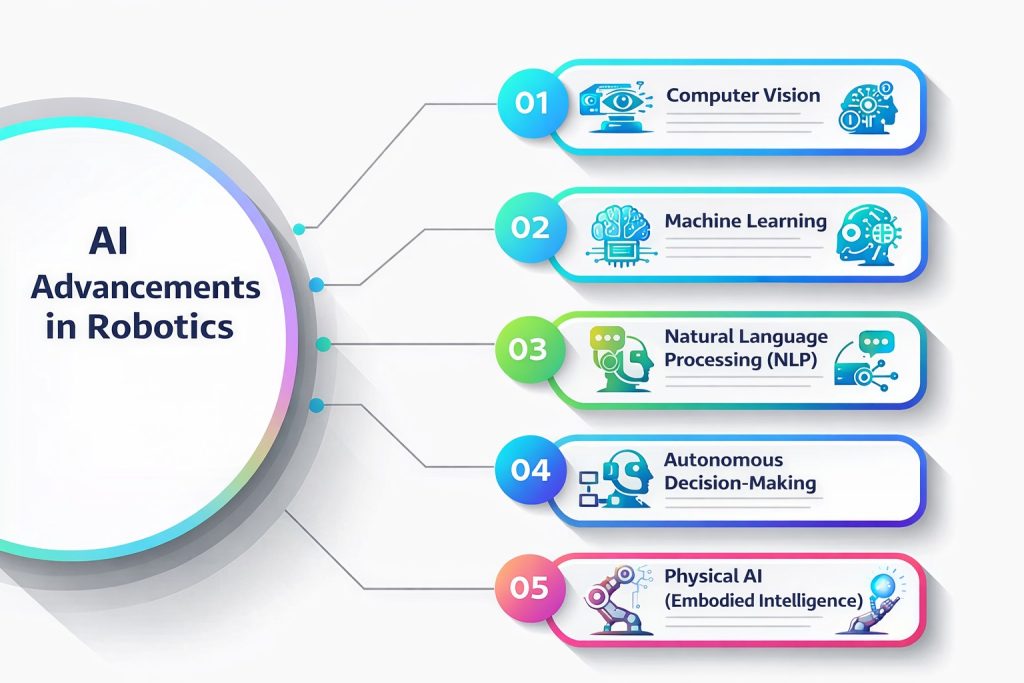
AI is the key factor that turns traditional robots into intelligent systems.

  1. Computer Vision

Robots can “see” and understand their surroundings using cameras and AI models, allowing them to perform tasks like quality checks and navigation.

  1. Machine Learning

Robots learn from data and gradually improve their performance, adapting to new situations without the need for manual programming.

  1. Natural Language Processing (NLP)

AI robots can understand and respond to human language, making them more interactive and easier to use.

  1. Autonomous Decision-Making

With advanced AI, robots can make real-time decisions based on data, reducing the need for constant human involvement.

  1. Physical AI (Embodied Intelligence)

 Modern robotics combines AI directly with physical systems, enabling real-world interaction and task execution.

Industries Utilizing AI Robots

Industries Utilizing AI Robots

AI robots are being adopted across various industries, each benefiting in different ways.

  1. Hospitality
    Hotels and restaurants are using robots for:
  •  Room service delivery
  • Cleaning and sanitization
  • Guest assistance

This helps improve efficiency while also enhancing the customer experience.

  1. Manufacturing
    Manufacturing continues to be the largest user of robotics:
  • Assembly line automation
  • Quality inspection
  • Material handling

More than 4 million robots are already operating in factories worldwide.

  1. Delivery & Logistics
    AI robots and drones are reshaping logistics:
  •  Last-mile delivery
  • Warehouse automation
  • Inventory management

Companies are relying on autonomous robots to cut down delivery time and costs.

  1. Senior Care
    With aging populations, AI robots are playing a growing role in healthcare:
  • Monitoring patients
  • Helping with daily activities
  • Providing companionship

Chinese Company Case Studies

These examples highlight how businesses are using AI to improve efficiency, reduce costs, and scale operations.

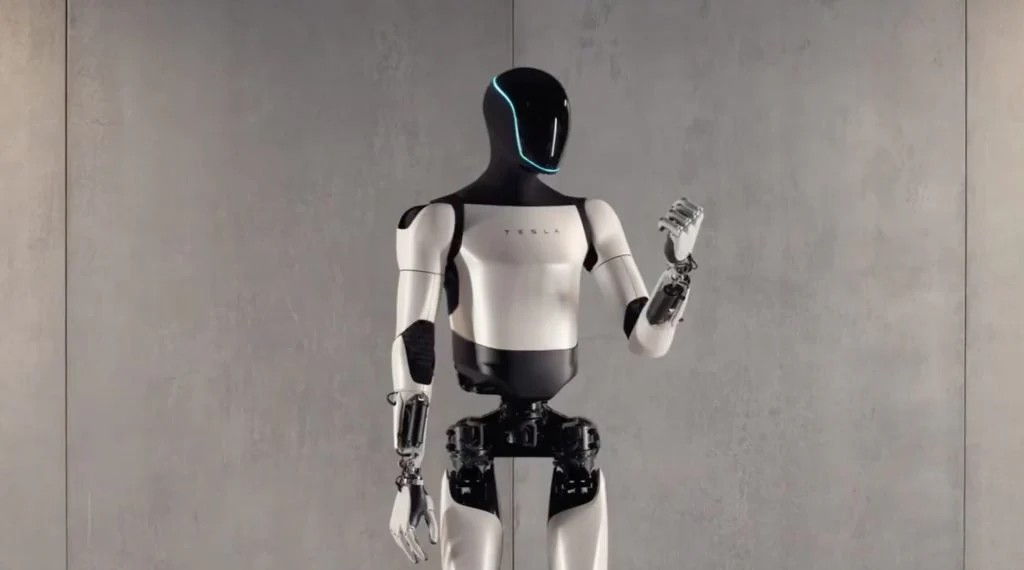
Tesla: Humanoid Robots

Chinese Tesla Humanoid Robots

Tesla is actively developing humanoid robots like Optimus, designed to perform repetitive, physically demanding, and even dangerous tasks. These robots are expected to work alongside humans in factories, warehouses, and eventually, everyday environments. 

With Tesla’s expertise in AI, computer vision, and real-world data from its autonomous systems, Optimus is being positioned as a scalable solution to labor shortages and industrial automation.

Boston Dynamics: Advanced Robotics

Boost Dynamics
Boost Dynamics

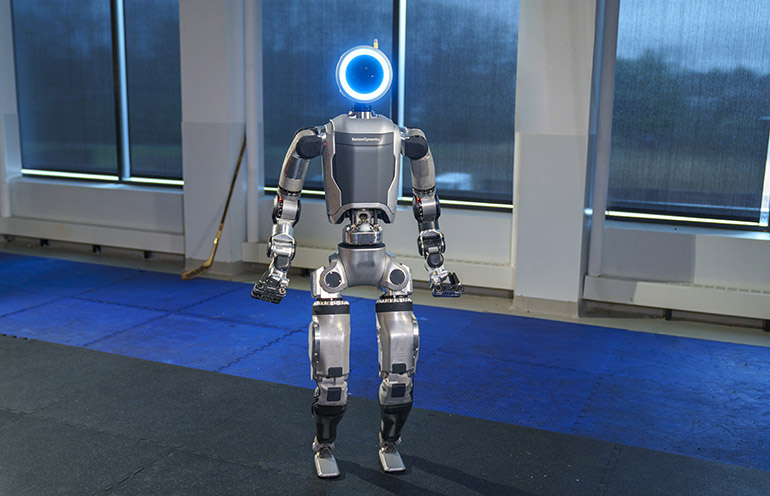
Boston Dynamics is known for creating some of the most advanced and agile robots in the world, including Atlas (a humanoid robot) and Spot (a quadruped robot). These robots are widely used for industrial inspections, construction site monitoring, and research. 

Their ability to navigate complex terrains, maintain balance, and perform dynamic movements makes them highly valuable in environments where traditional automation falls short.

ABB: Industrial Automation

ABB Industrial Automation

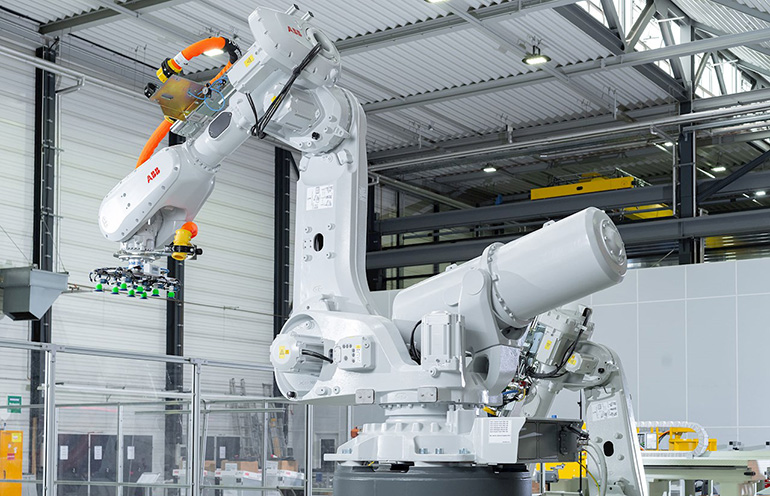
ABB is a global leader in industrial robotics and automation, providing advanced robotic solutions for manufacturing, logistics, and energy sectors. Its robots are commonly used for tasks such as welding, assembly, packaging, and material handling. 

ABB also integrates AI and digital technologies into its systems, enabling smarter, more efficient production lines and helping businesses improve productivity, precision, and operational safety.

Amazon: Warehouse Robotics

Amazon Warehouse Robotics

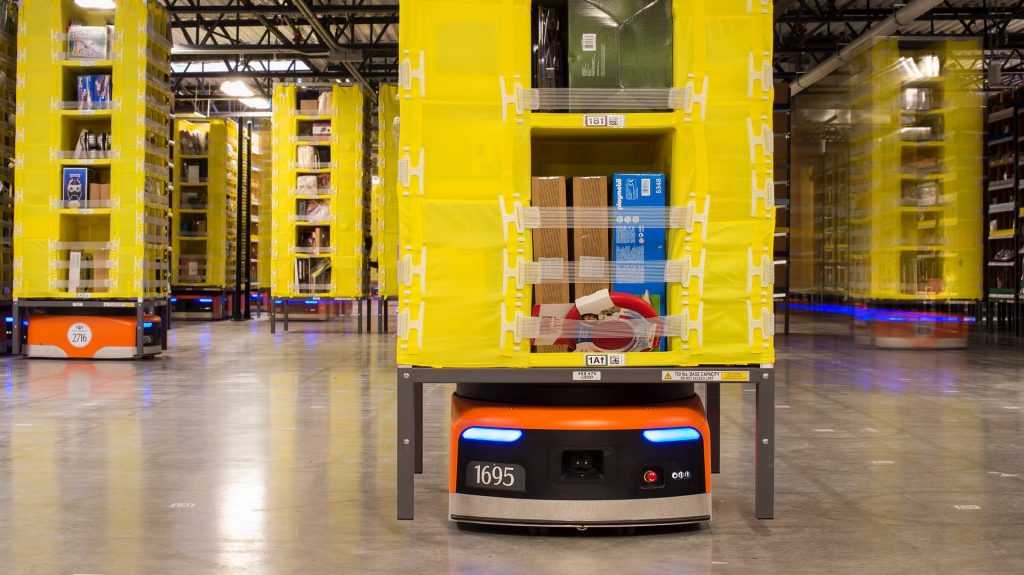
Amazon has heavily invested in AI-powered robotics to transform its warehouse and fulfillment operations. Its robots are used for tasks like sorting, picking, packing, and transporting goods across large facilities. 

By combining robotics, AI, and data analytics, Amazon has significantly improved order accuracy, reduced delivery times, and increased overall efficiency. These systems play a critical role in enabling fast, scalable, and reliable e-commerce logistics.

Future & Emerging Trends in AI Robotics

Future trends in AI robotics

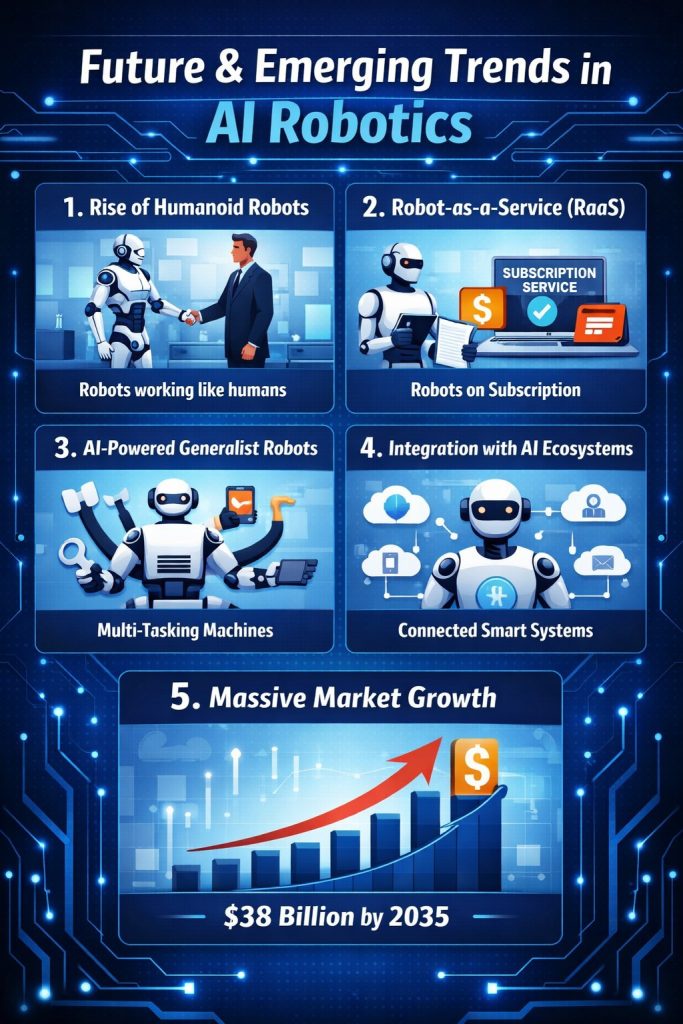
The future of AI robots goes beyond simple automation. It’s focused on transformation.

  1. Rise of Humanoid Robots
    Humanoid robots are likely to become more common in workplaces, taking on tasks that require human-like interaction.
  2. Robot-as-a-Service (RaaS)
    More businesses will adopt robots through subscription-based models, making it easier to access robotics without high upfront costs.
  3. AI-Powered Generalist Robots
    Future robots will be capable of handling multiple tasks, rather than being limited to a single function.
  4. Integration with AI Ecosystems
    Robots will be connected with cloud-based AI systems, IoT devices, and enterprise platforms to enable smarter operations.
  5. Massive Market Growth
    The humanoid robot market alone is expected to reach $38 billion by 2035.

AI robotics is evolving quickly, and several trends are shaping how U.S. businesses will use these technologies in the coming years.

Scroll to Top