


Ultimate Guide to Microsoft Bing SEO

The Complete Guide to Microsoft Bing SEO

Table of Contents

Introduction

Google is often the main focus of search engine optimization, but only focusing on one platform limits your reach. This guide to Microsoft Bing SEO will show you how to get traffic from a search engine that still brings in steady, high-intent users across a range of devices and platforms.

Bing is still important because it powers search in Windows, Microsoft Edge, and tools like Microsoft Copilot, and it also supports results on Yahoo and other sites. Bing users are valuable and often less competitive traffic for many industries, especially B2B.

Both search engines follow the same basic SEO rules, but Bing looks at signals in a different way. It gives more weight to exact keywords, domain authority, and information from tools like Bing Webmaster Tools. This means that a personalized strategy is necessary for better rankings.

What Is Microsoft Bing SEO?

What is Microsoft Bing SEO

Most companies optimize for just one search engine and think that’s it. However, search visibility extends beyond a single platform.

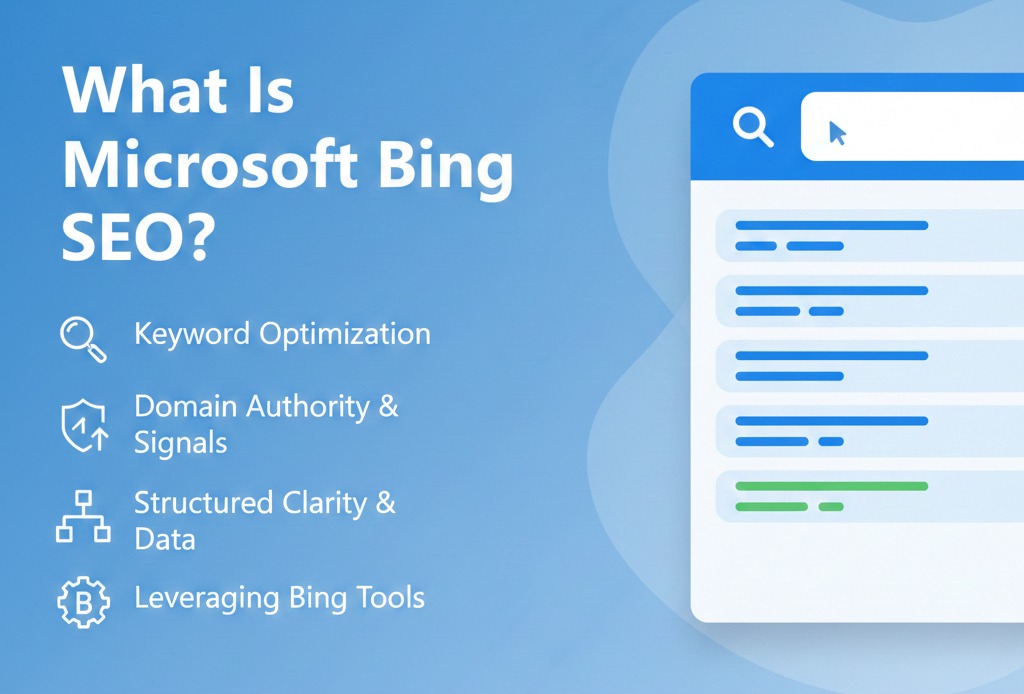
  • Keyword Optimization: Bing places strong emphasis on exact-match keywords and is clear on-page relevance. Well-structured titles, headings, and metadata matter significantly.
  • Domain Authority & Signals: Older domains, clean backlink profiles, and credible sources tend to perform well in Bing’s ranking system.
  • Structured Clarity & Data: Proper indexing, XML sitemaps, and schema markup help Bing understand and categorize your content effectively.
  • Leveraging Bing Tools: Using Bing Webmaster Tools lets you monitor performance, fix indexing issues, and refine your Bing-specific optimization strategy.

Using tactics designed especially for how Bing ranks and assesses content, Microsoft Bing SEO aims to reach a market that many competitors ignore.

Benefits of Bing SEO

Benefits of Bing SEO

Even though Google usually takes the lead, concentrating on Microsoft Bing SEO can offer special benefits that enable you to expand your digital strategy and connect with more people.

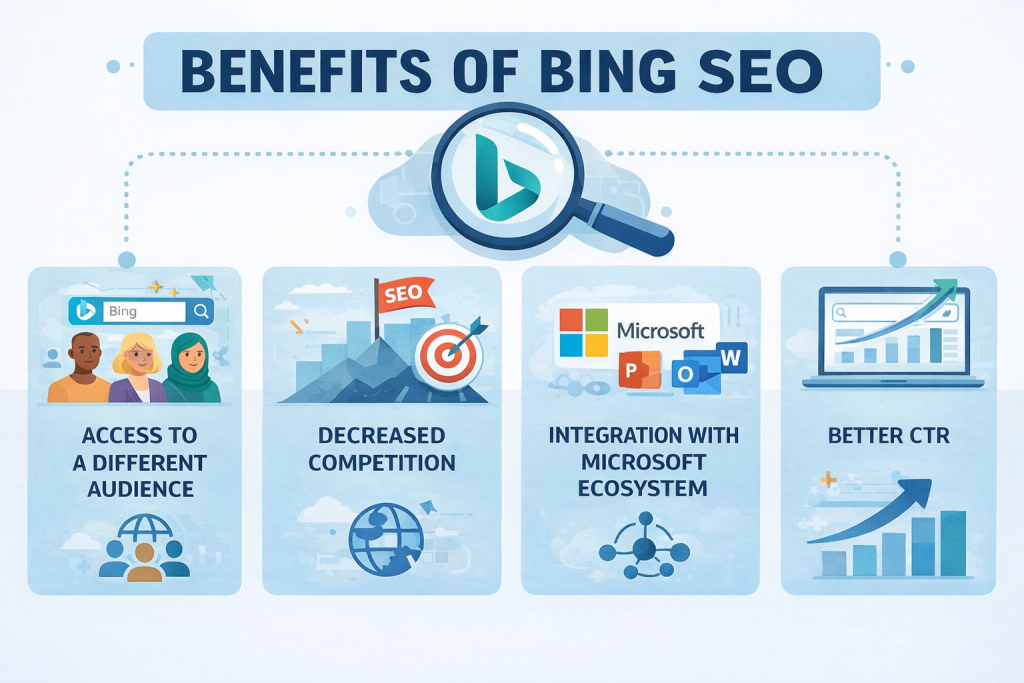
  • Access to a Different Audience: Bing draws a sizable share of B2B and older demographic users, which can result in high-converting traffic that Google-centric campaigns might miss.
  • Decreased Competition: Bing typically faces less fierce competition for specific keywords than Google, which facilitates ranking and attracting valuable traffic, particularly in specialized industries.
  • Integration with Microsoft Ecosystem: Bing powers search results on Xbox, Microsoft Edge, and Windows. By optimizing for Bing, you can reach a larger audience of Microsoft users and their product usage.
  • Better CTR: Research indicates that Bing users typically have higher click-through rates and levels of engagement. This means that, particularly for specific verticals, your content may receive more attention on Bing than on Google.

Bing can be a treasure trove for companies trying to increase visibility and generate high-quality traffic because of its unique user base and less competitive environment.

Keyword Research for Bing

Keyword research for Bing

When you’re diving into Bing, keyword research goes beyond just picking the right phrases; it’s also about understanding Bing’s ranking factors.

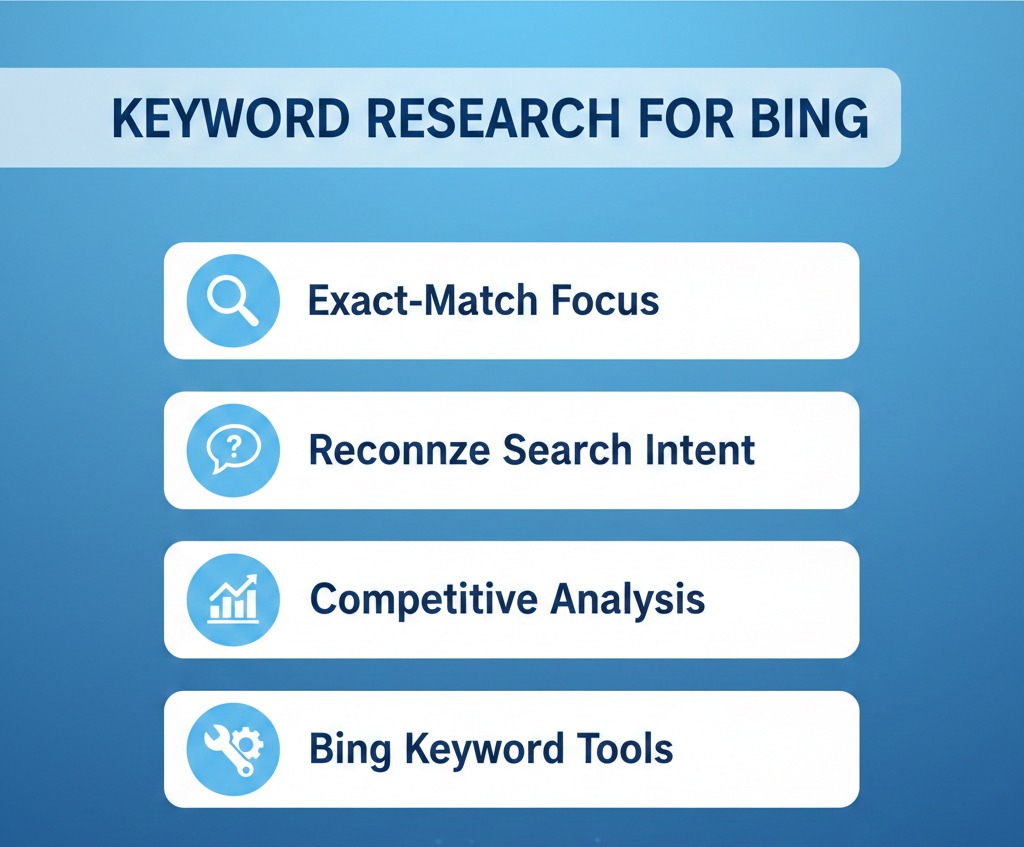
  • Exact-Match Focus: Make sure your primary keywords are prominently displayed in titles, headings, and body content because Bing gives priority to exact-match keywords.
  • Recognize Search Intent: To produce content that directly responds to user inquiries, go beyond keywords and focus on their intent.
  • Competitive Analysis: To improve your approach, examine how your top-ranked rivals use keywords on Bing.
  • Bing Keyword Tools: To investigate Bing-specific search volume and trends, use the Bing Webmaster Tools and Bing Ads Keyword Planner.

Bing tends to favor exact matches and values keyword consistency, so honing in on specific terms is crucial for boosting your organic traffic.

On-Page SEO for Bing

On Page SEO for Bing
On-Page SEO for Bing

Optimizing your website for Bing is about so much more than just sprinkling a few keywords. It’s all about really getting to know what Bing likes when it comes to content structure, metadata, and technical details.

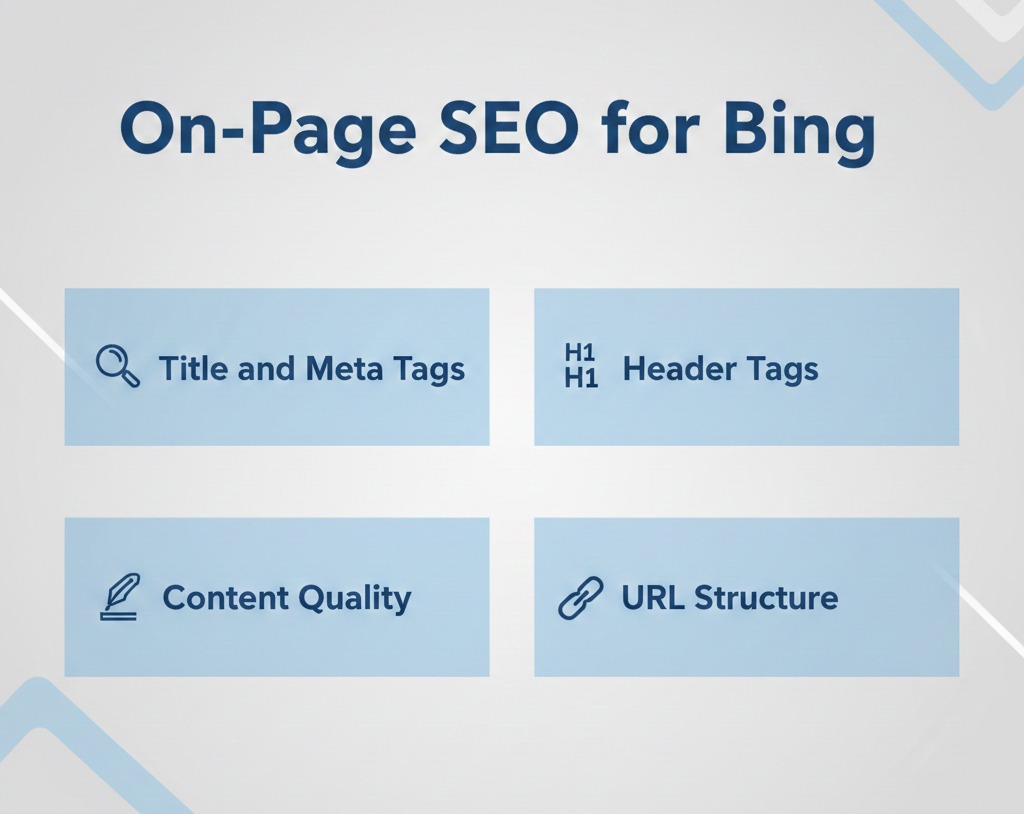
  • Title and Meta Tags: Always ensure the titles and meta descriptions are clear and packed with keywords. When summarizing your content, be clear and succinct because Bing gives these elements more weight.
  • Header Tags: Use primary and related keywords in header tags (H1, H2, etc.) to arrange your content. Easy-to-scan, structured content is valued by Bing.
  • Content Quality: Put your best effort into offering pertinent, high-quality content that speaks to the searcher’s intent. Content that is thorough and authoritative is valued by Bing.
  • URL Structure: Make sure your URLs are brief, informative, and packed with keywords. For improved indexation and user interaction, Bing favors clear, simple URLs.

Bing really values on-page elements like having clear navigation, relevant content, and HTML that’s easy to read. When you make sure these aspects are spot on, you can boost your rankings and create a better experience for your users.

Technical SEO for Bing

Technical SEO for Bing

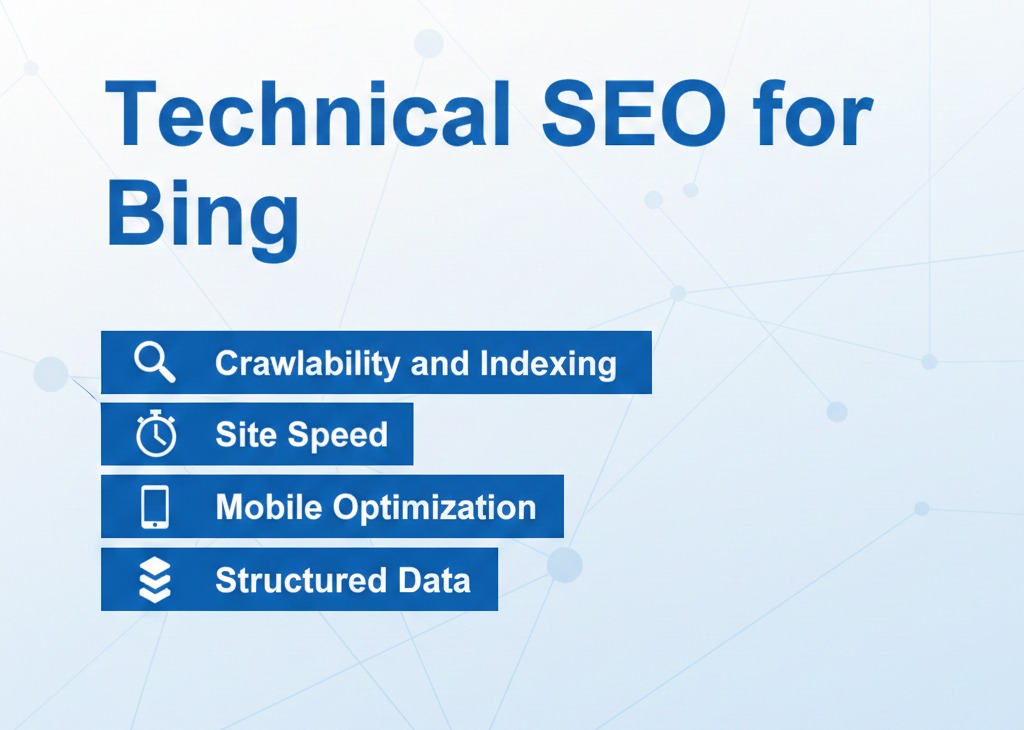
Technical SEO plays a vital role in making sure that Bing can easily crawl, index, and grasp the content of your website.

  • Crawlability and Indexing: Use Bing Webmaster Tools to find any indexing problems and submit an XML sitemap to make sure Bing can crawl your website.
  • Site Speed: Optimizing page speed through image compression and caching is essential to enhancing performance because Bing favors websites that load more quickly.
  • Mobile Optimization: Make sure your website is responsive and optimized for mobile devices because Bing favors websites that are mobile-friendly.
  • Structured Data: To help Bing better understand your content and enhance how it appears in search results, use schema markup and other structured data formats.

Bing tends to favor websites that are well-structured, load quickly, and are optimized for both user experience and search engine needs. By focusing on these technical elements, you can gain a significant edge in your rankings.

Off-Page SEO for Bing

Off-Page SEO for Bing

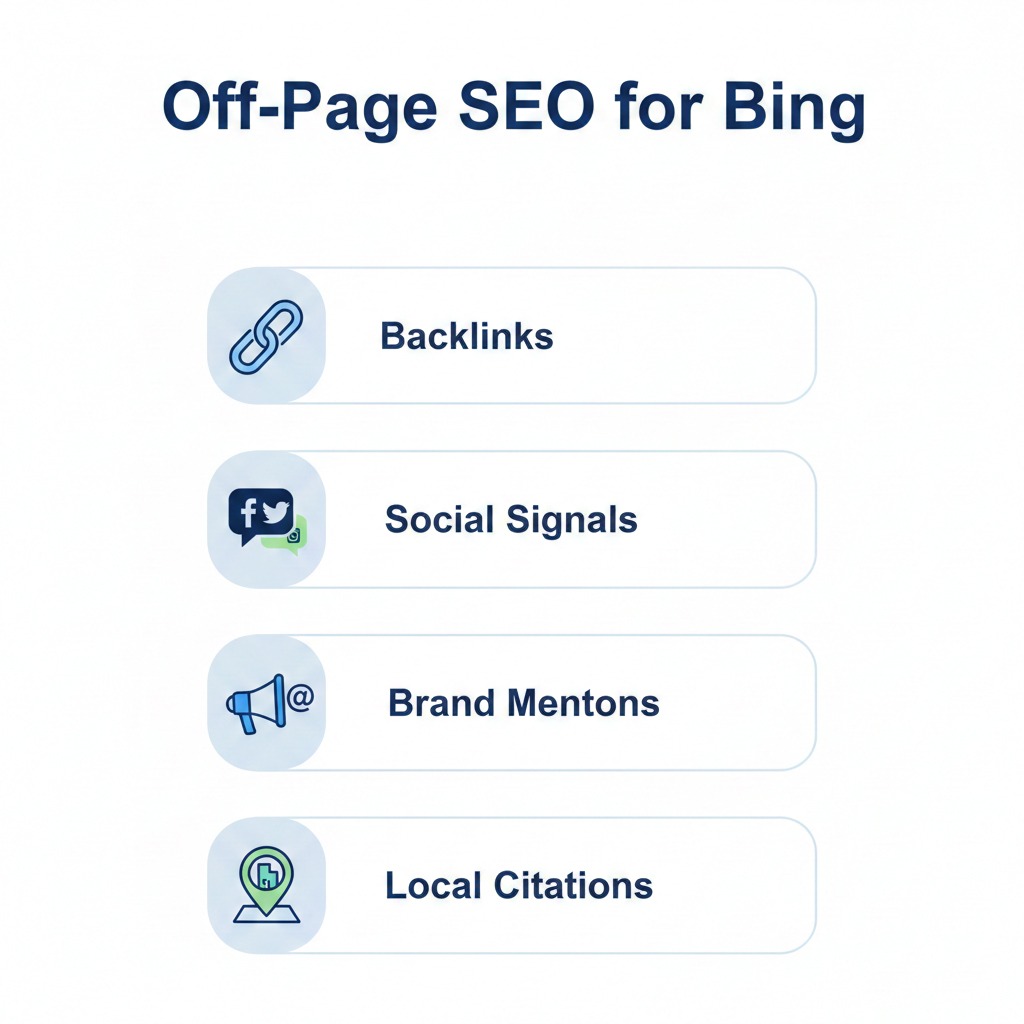
Building your website’s authority and credibility in Bing’s eyes is largely dependent on off-page SEO.

  • Backlinks: Get high-quality backlinks from sites that are well-known and trusted. Bing looks for links that are both relevant and trustworthy to raise your domain authority and overall ranking.
  • Social Signals: Bing looks at what people do on social media. Getting more shares, likes, and mentions on different platforms can make your site seem more trustworthy.
  • Brand Mentions: Even if there are no links, mentions of your brand on the web can help your rankings. Use public relations, reviews, and mentions in your area to help your brand grow.
  • Local Citations: To improve your local search visibility, make sure your business is listed in all of the online directories, like Bing Places.

Although backlinks are not as important to Bing’s algorithm as they are to Google’s, high-quality external signals like backlinks, social media activity, and brand mentions are still valued.

Local SEO on Bing

Local SEO on Bing
Local SEO on Bing

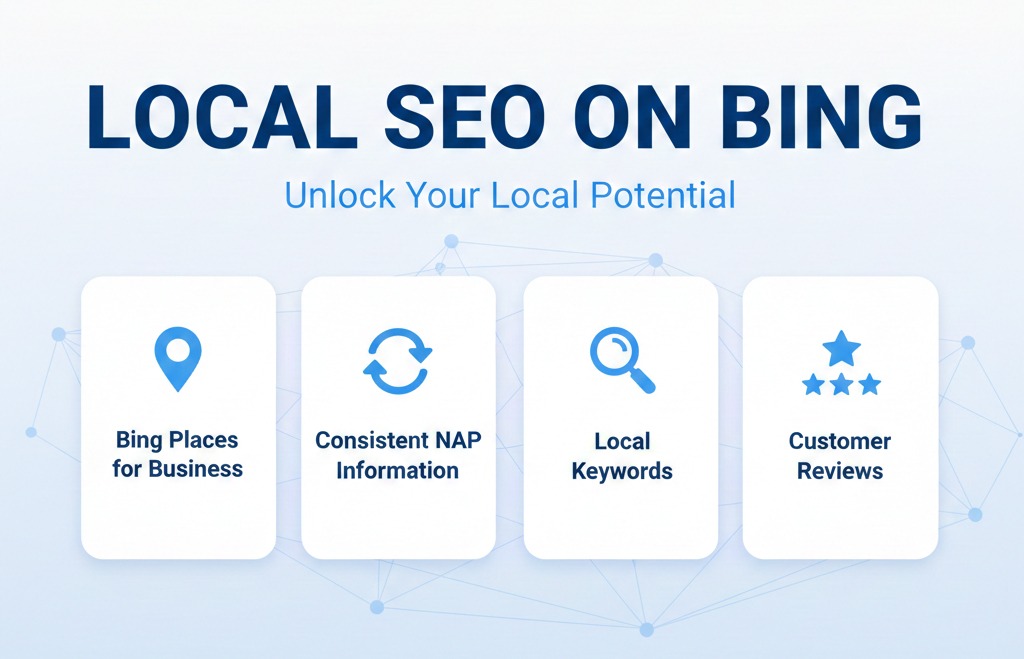
Local SEO on Bing is important for enterprises that want to be located by nearby customers.

  • Bing Places for Business: You can make or claim your business listing on Bing Places. This makes it easier for people in your area to find your business online and on maps.
  • Consistent NAP Information: To improve your local rankings, make sure that your business’s Name, Address, and Phone number (NAP) are the same on your website and in online directories.
  • Local Keywords: Include keywords that are specific to your area in your content, titles, and meta tags. Use city names or regional terms to better reach people who are searching locally.
  • Customer Reviews: Ask your customers to write reviews on your Bing Places page. Good reviews can help you move up in the rankings and make your business stand out in local search results.

By optimizing your website for Bing’s local search algorithms, you can increase visibility in your geographic area, especially when people search for location-specific services or products.

Conclusion

In a nutshell, making your website better for Microsoft Bing SEO can give you new chances. Bing may not be as popular as Google, but it still has a lot of active users, especially in certain fields.

Bing is less competitive than Google, which makes it easier to rank for some terms, especially in niche areas. You can make a strategy that really works for you by using Bing’s unique ranking factors, like its focus on social signals and domain authority. You can do this through on-page SEO, local optimization, or building backlinks.

Adding Bing to your SEO mix is the best way to make sure you don’t miss out on any traffic. Bing is becoming more and more important in the Microsoft ecosystem. By paying attention to its ranking signals, you can get an edge over your competitors and help your business do well on all search engines.

Scroll to Top