

Table of Contents
Introduction
Email remains the unsung hero of digital marketing, standing strong even as new trends come and go. Brands that really get it can forge deeper, more meaningful connections with their customers.
This year, customers are looking for relevance, personalization, and timing that feels almost uncanny. Hitting those marks isn’t just luck — it’s a well-thought-out approach. A strategic email marketing plan can transform casual subscribers into devoted fans.
As competition heats up, businesses that fine-tune their email strategies now will find themselves with a significant advantage. Let’s dive into the nine essential steps to create an email marketing plan that truly thrives in 2025.
1# Understanding the Role of Email
Email in 2025 isn’t just hanging in there — it’s really stepping up its game. It’s now one of the most dependable ways to connect with, nurture, and convert customers.
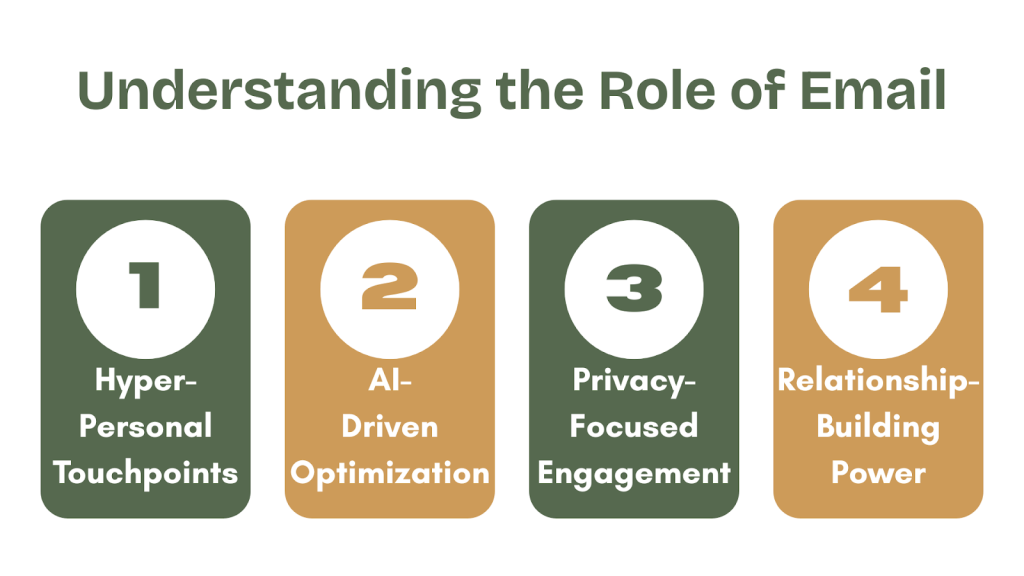
- Hyper-Personal Touchpoints: Email has evolved from generic blasts to finely tuned conversations that are tailored to user behavior and intent.
- AI-Driven Optimization: Thanks to automation and AI, we can now anticipate user actions, pinpoint the best times to send messages, and tailor content preferences.
- Privacy-Focused Engagement: With tighter data regulations and more privacy-conscious users, building trust is now a fundamental aspect of email strategy.
Relationship-Building Power: Email remains one of the few channels that allow brands to foster deeper connections over time.
By understanding how its role is changing, you can craft campaigns that feel timely, personal, and truly impactful.
2# Defining Clear Marketing Goals
When you have specific objectives in mind, your messaging stays sharp, your campaigns remain cohesive, and you can easily measure your success.
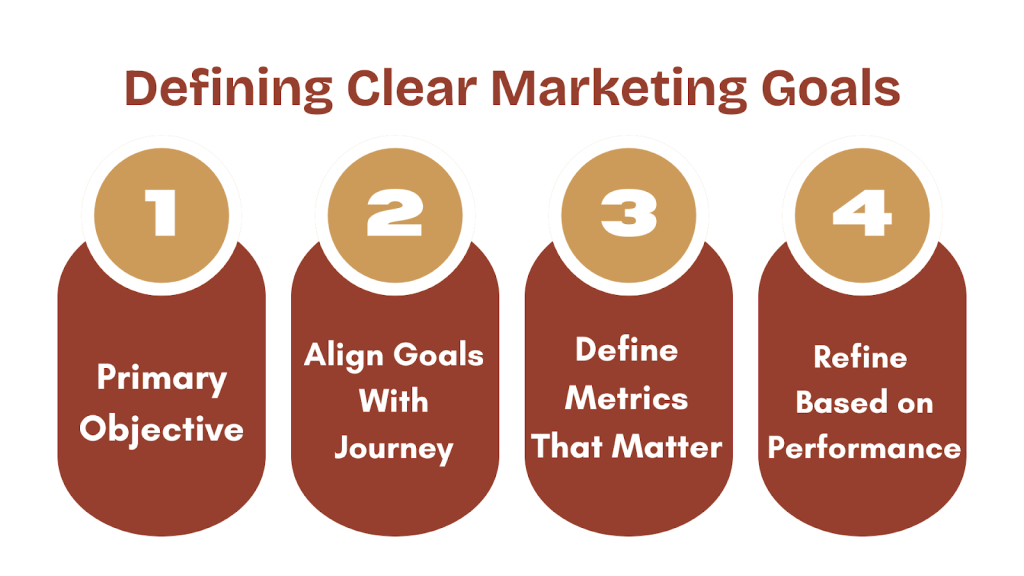
- Primary Objective: First things first, define your main goal—whether it’s boosting sales, increasing engagement, improving retention, or raising awareness.
- Align Goals With Journey: Remember, your subscribers are at different points in their journey—from curious onlookers to loyal customers.
- Define Metrics That Matter: Pick key performance indicators (KPIs) that really count, like open rates, click-through rates, conversions, or average revenue per email.
- Refine Based on Performance: Keep in mind that your goals can change—they’re not set in stone. As you gather more data, use those insights to fine-tune your strategy and keep making improvements.
Without these clear targets, even the most well-crafted emails can drift aimlessly.
3# Segmenting Your Audience Effectively
Segmentation is where your email strategy transforms from being just another generic approach to something truly impactful. It’s the magic ingredient that turns ordinary emails into meaningful conversations.
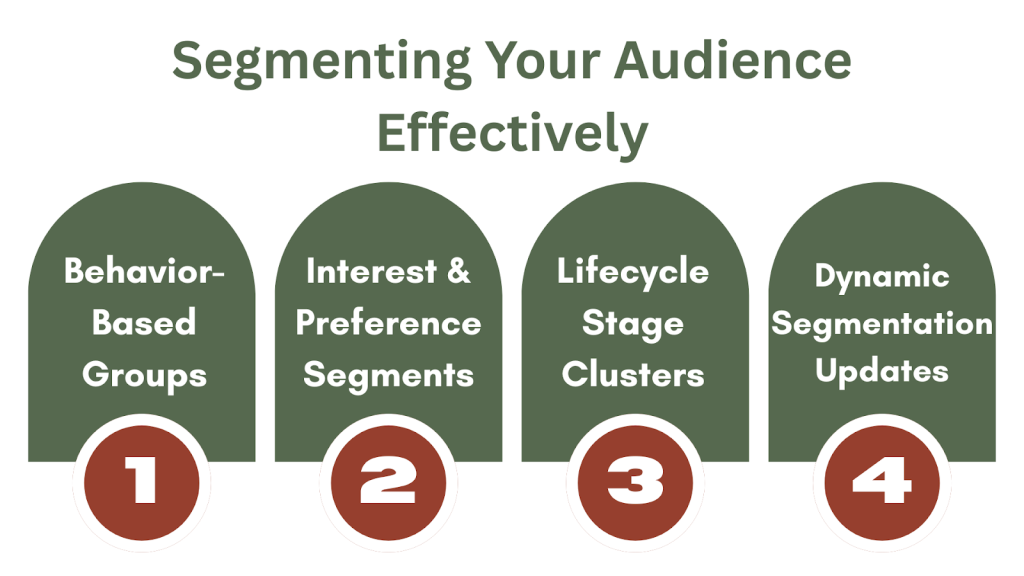
- Behavior-Based Groups: Organize your subscribers based on their browsing habits, purchase history, and how engaged they are. This way, you can send emails that truly resonate with their actions and intentions.
- Interest & Preference Segments: Leverage what your customers like, their choices, and how they interact with your content to send them messages that hit home. People are more likely to engage when the content aligns with their interests.
- Lifecycle Stage Clusters: Different stages, like new leads, active buyers, and inactive users, require distinct communication strategies. By customizing your approach for each stage, you help guide them smoothly through your sales funnel.
- Dynamic Segmentation Updates: Keep your lists up-to-date automatically as user behaviors evolve. This ensures that every email you send is timely and relevant.
By categorizing your subscribers based on their identities and behaviors, your messages resonate on a deeper level.
4# Choosing the Right Email Tools & Platforms
Your email platform is truly the heart of your entire strategy. Making a smart choice here paves the way for smoother workflows and better results.
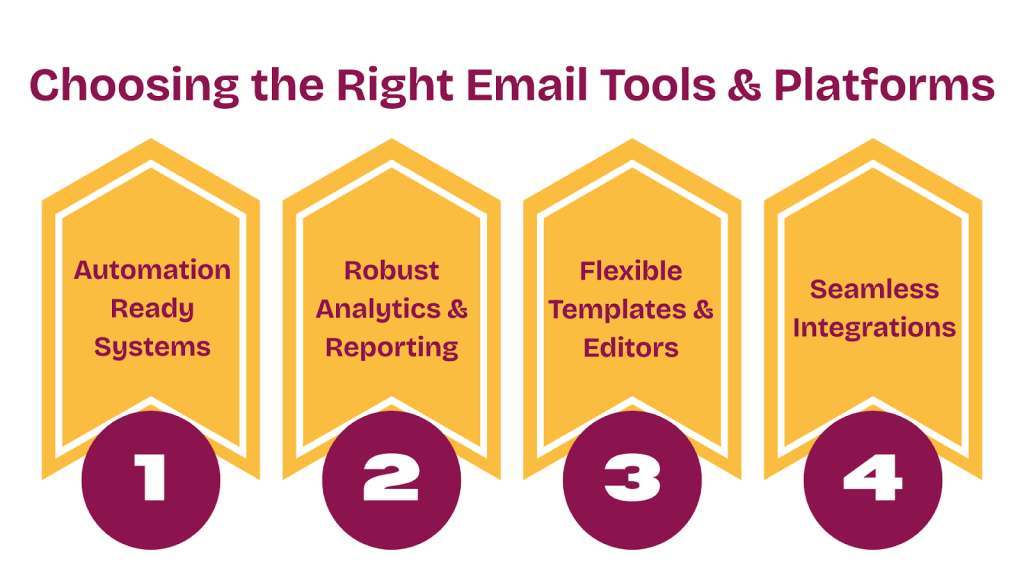
- Automation-Ready Systems: Choose a platform that offers triggers, autoresponders, and drip sequences. With automation, you can maintain consistent communication without having to put in constant manual effort.
- Robust Analytics & Reporting: Seek out tools that provide detailed breakdowns of opens, clicks, conversions, and user journeys. Having clear insights allows you to make smarter, data-driven decisions.
- Flexible Templates & Editors: Drag-and-drop builders and responsive templates can speed up your email creation process. A solid editor enables you to craft polished campaigns without needing extra tools.
- Seamless Integrations: Your platform should easily connect with your CRM, website, and e-commerce applications. Smooth syncing ensures your data stays accurate and your workflows remain cohesive.
Picking the right tool can save you time, enhance your efficiency, and empower you to personalize your outreach on a larger scale.
5# Crafting High-Impact Email Content
Your content is where strategy and emotion come together. By 2025, subscribers will seek clarity, value, and a hint of personality.
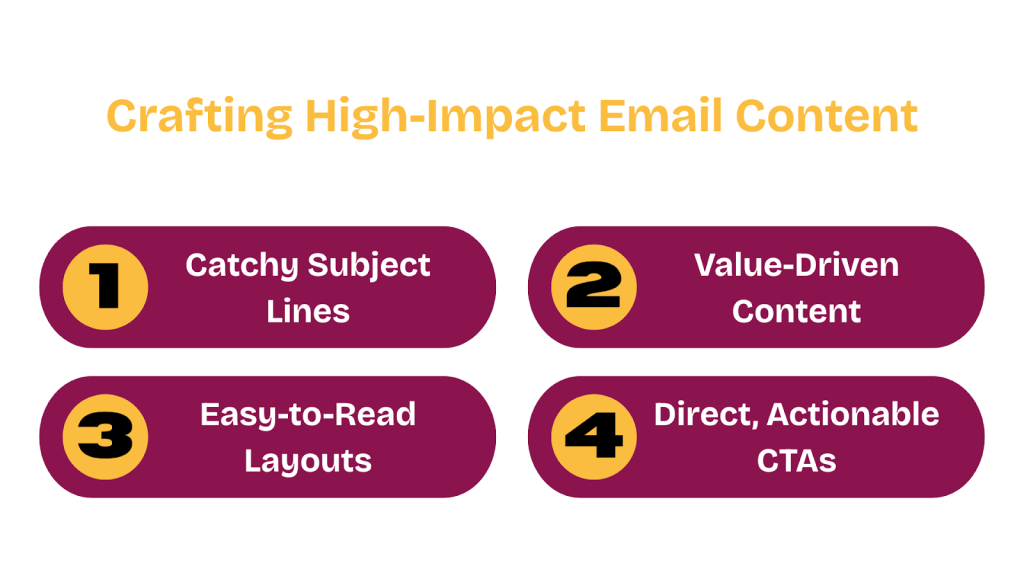
- Catchy Subject Lines: Keep them short, intriguing, and packed with emotion to boost your open rates. They set the vibe even before the email is opened.
- Value-Driven Content: Start with the benefits, solutions, and helpful tips rather than pushing a hard sell. People are more likely to engage with content that feels genuinely valuable.
- Easy-to-Read Layouts: Organize your content into clear sections with plenty of spacing, bullet points, and bold text. This way, even skimmers will stay interested.
- Direct, Actionable CTAs: Clearly guide your readers on what to do next — whether it’s to click, explore, buy, or learn more. A compelling call to action can really make a difference in your conversion rates.
Great content does more than just inform; it nudges, inspires, and drives readers to take action.
6# Personalization & Dynamic Messaging
Personalization has moved beyond being just a nice touch — it’s now the standard. By 2025, dynamic messaging will elevate this concept even more, tailoring content in real time.
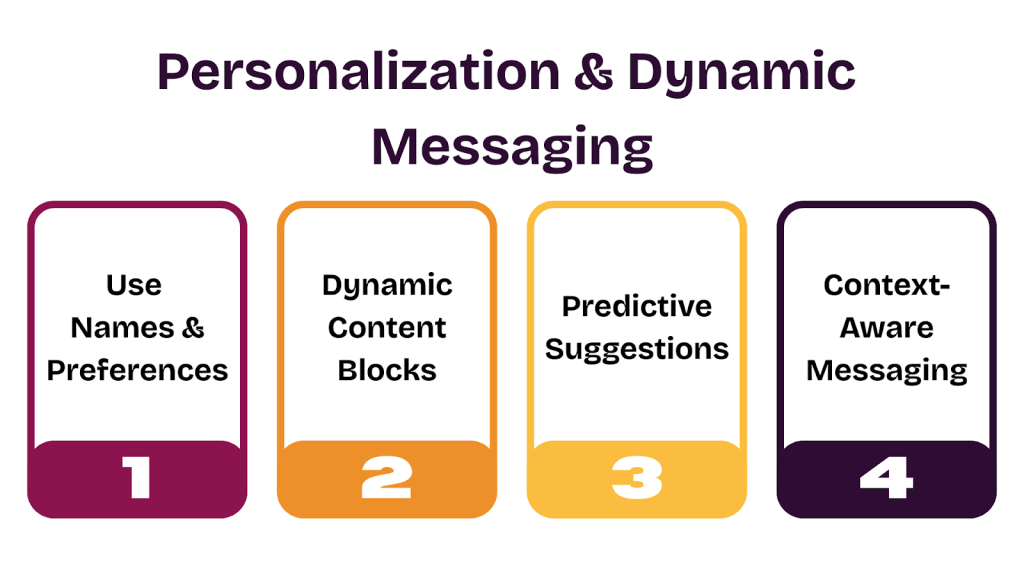
- Use Names & Preferences: Start by adding user names, interests, and past behaviors. These little details can make your emails feel so much more personal.
- Dynamic Content Blocks: Display different images, offers, or sections tailored to each user’s profile. One email can have multiple versions, all customized automatically.
- Predictive Suggestions: AI looks at patterns to suggest what users might be interested in next. This not only enhances relevance but also boosts engagement without any extra work on your part.
- Context-Aware Messaging: Modify emails based on factors like location, device, time of day, or recent activities. This way, your messaging comes across as timely, natural, and intuitive.
The goal is to ensure that every subscriber feels like the email was made just for them.
7# Setting Automation Workflows
Automation acts as your quiet partner — operating around the clock, cultivating leads, and ensuring your brand remains consistently visible.
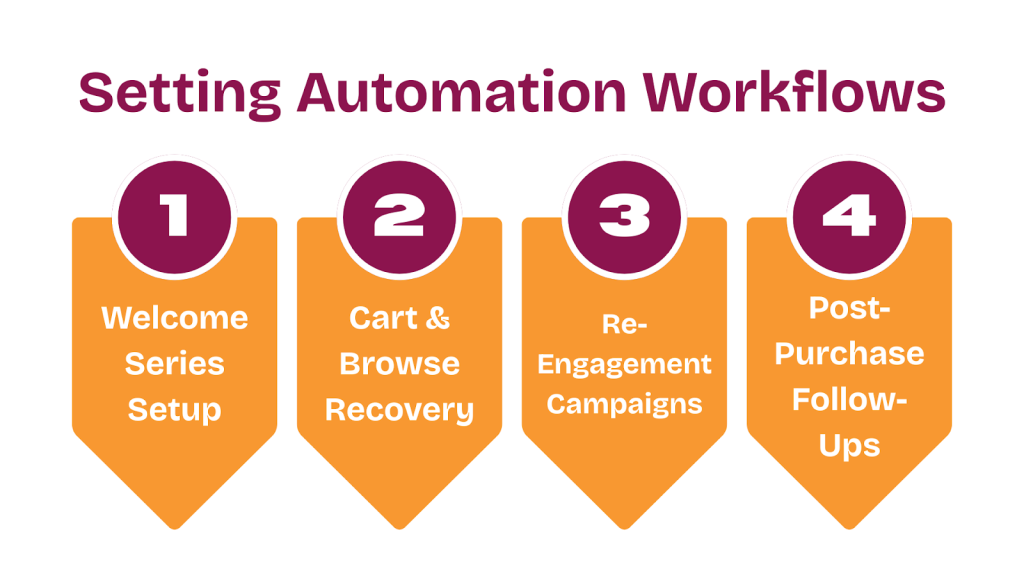
- Welcome Series Setup: Your welcome flow is crucial for making that all-important first impression. It should be warm and inviting, clearly showcasing what your brand is all about.
- Cart & Browse Recovery: Automated reminders can bring shoppers back just when their interest is still piqued. These flows help you recover revenue that might otherwise slip away.
- Re-Engagement Campaigns: Sometimes, inactive subscribers just need a little push to come back. Personalized offers or friendly check-ins can help rekindle those cold leads.
- Post-Purchase Follow-Ups: After a sale, it’s important to keep the dialogue going. Sharing product tips, expressing gratitude, and offering recommendations can foster long-term loyalty.
With appropriate workflows, you can save time while sending timely, relevant messages that read as deliberately crafted.
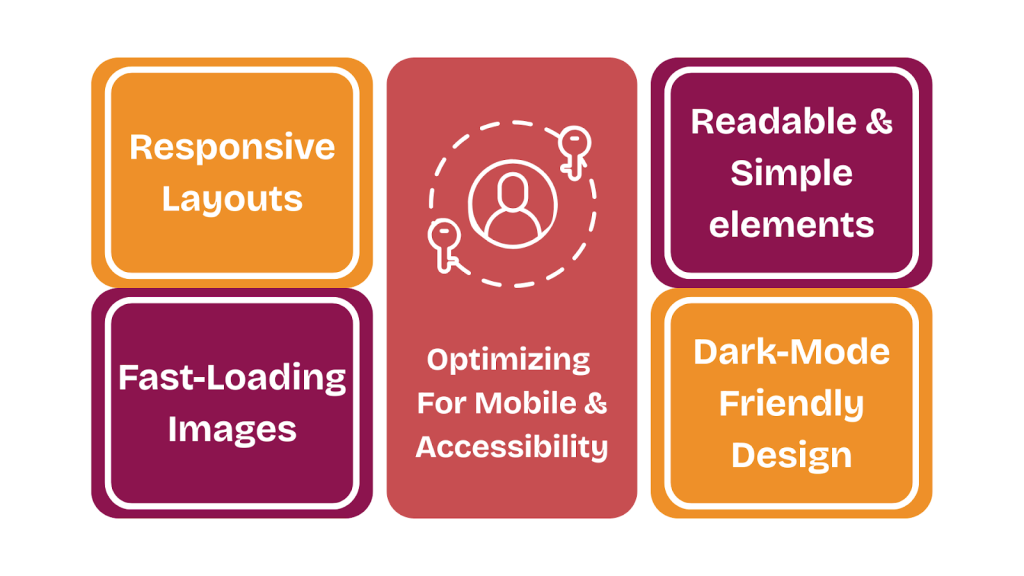
8# Optimizing For Mobile & Accessibility
The majority of subscribers access their emails via mobile devices, making mobile optimization essential for survival.
- Responsive Layouts: Create emails that seamlessly adjust to various screen sizes. A fluid mobile experience encourages readers to continue scrolling rather than squinting.
- Readable & Simple elements: Opt for legible fonts and large, touch-friendly buttons to enhance usability. Minor elements such as spacing and contrast can significantly impact the overall experience.
- Fast-Loading Images: Optimize visuals to decrease loading times while maintaining quality. Swift emails prevent impatient users from leaving.
- Dark-Mode Friendly Design: Ensure that colors, images, and text appear appealing even in dark mode. This provides a refined experience for readers at night.
When you combine this with accessibility, you craft emails that can be appreciated by all, regardless of their device or capabilities.
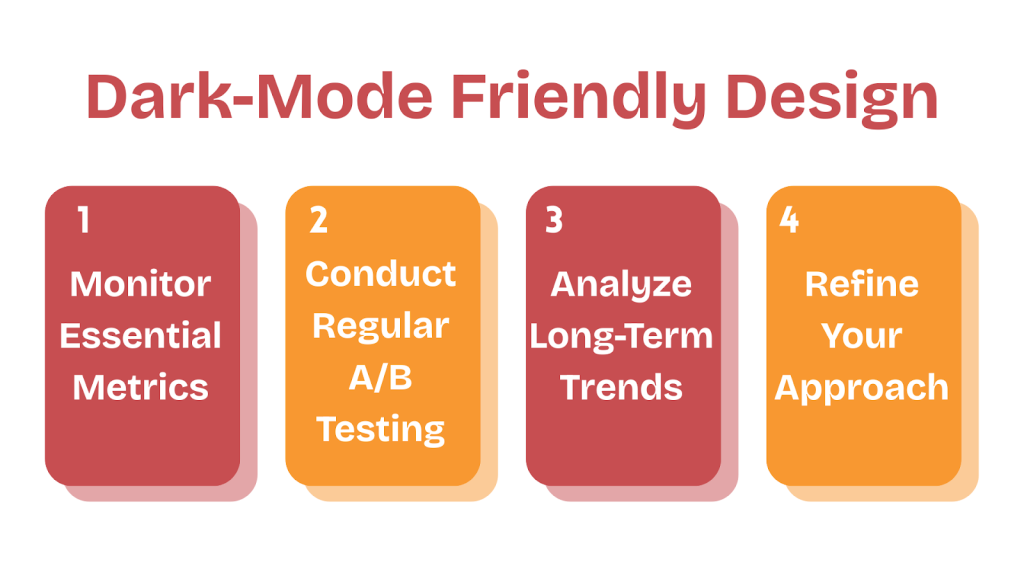
9# Measuring Performance & Refining Strategy
A strategy’s strength is determined by the data that informs it. Monitoring your outcomes allows you to grasp what connects and what requires improvement.
- Monitor Essential Metrics: Keep an eye on open rates, click-through rates, conversions, and unsubscribe patterns. These figures provide insight into the true effectiveness of your campaigns.
- Conduct Regular A/B Testing: Try out different subject lines, designs, calls to action, and sending times. Small experiments can lead to significant improvements.
- Analyze Long-Term Trends: Go beyond the performance of individual emails and observe broader trends. This approach allows for a deeper understanding of subscriber behavior.
- Refine Your Approach: Leverage insights to modify content, audience segments, timing, and automation strategies. Continuous refinement ensures your email marketing remains sharp and impactful.
Enhancing your strategy is an ongoing process — experiment, gain insights, and adapt.
Conclusion
Email marketing focuses on precision, personalization, and delivering consistent value.
Brands that adapt early gain a competitive edge. A well-considered, adaptable strategy combines creativity with data, enabling you to connect with customers on a more profound level.
As the digital landscape grows increasingly noisy, email continues to be a platform where brands can communicate directly with their audience. These communications — conveyed with purpose and understanding — lead to conversions, customer loyalty, and enduring trust.
By utilizing the right mix of strategy, tools, and creativity, your email marketing can flourish today and adapt to future changes. This serves as your guide — now is the moment to transform the inbox into your strategic advantage.
Deepak Wadhwani has over 20 years experience in software/wireless technologies. He has worked with Fortune 500 companies including Intuit, ESRI, Qualcomm, Sprint, Verizon, Vodafone, Nortel, Microsoft and Oracle in over 60 countries. Deepak has worked on Internet marketing projects in San Diego, Los Angeles, Orange Country, Denver, Nashville, Kansas City, New York, San Francisco and Huntsville. Deepak has been a founder of technology Startups for one of the first Cityguides, yellow pages online and web based enterprise solutions. He is an internet marketing and technology expert & co-founder for a San Diego Internet marketing company.