


Table of Contents
Introduction
Last year, a small business owner launched his website with big hopes. He had great products, fair prices, and even ran some ads. But weeks passed, and almost no one visited his site.
One day, he searched his own business on Google and realized the problem: his website was buried on page 5. That’s when he learned a simple truth:
If you’re not in the top results, most people will never find you.
Today, being on Google’s first page is not just nice to have. It can decide whether your business grows or stays invisible. Most users click on results they see in the top 10, and rarely go beyond that. So even if your content is good, it won’t help much if it’s not ranking where people can see it.
The good news is that ranking in the top 10 is not magic or luck. It comes from understanding how Google works, what people search for, and how to create content that truly helps them. In this guide, you’ll learn in simple terms what it takes to move up the rankings and get your website where it deserves to be.
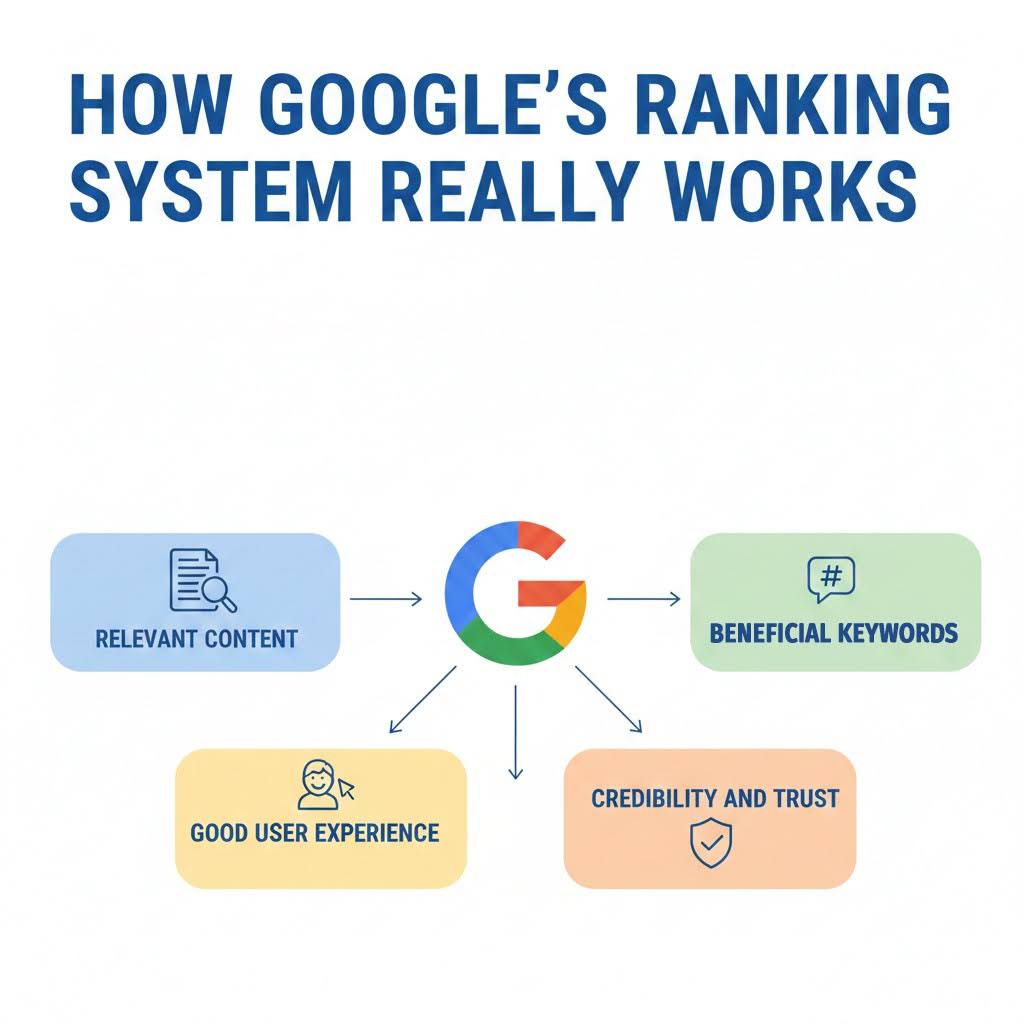
How Google’s Ranking System Really Works
Knowing what Google truly considers is helpful before attempting to rank higher. A lot of people dive into SEO without knowing the fundamentals. Knowing the key elements makes your efforts more targeted and intelligent.
- Relevant Content: Google aims to display results that correspond to user queries. The user’s query should be satisfactorily addressed in your content. You have a better chance of ranking if users can find what they need quickly.
- Beneficial Keywords: Google is informed about the topic of your page by keywords. Keep it natural while using the terms that your audience really looks for. Using too many keywords can do more harm than good.
- Good user experience: People will quickly leave your site if it is untidy, slow, or difficult to read. This is noticed by Google. Mobile-friendly pages, quick loading times, and a simple layout all make a significant impact.
- Credibility and Trust: Google favors websites it can rely on. Links from other trustworthy websites, secure websites (HTTPS), and high-quality content are the sources of this.
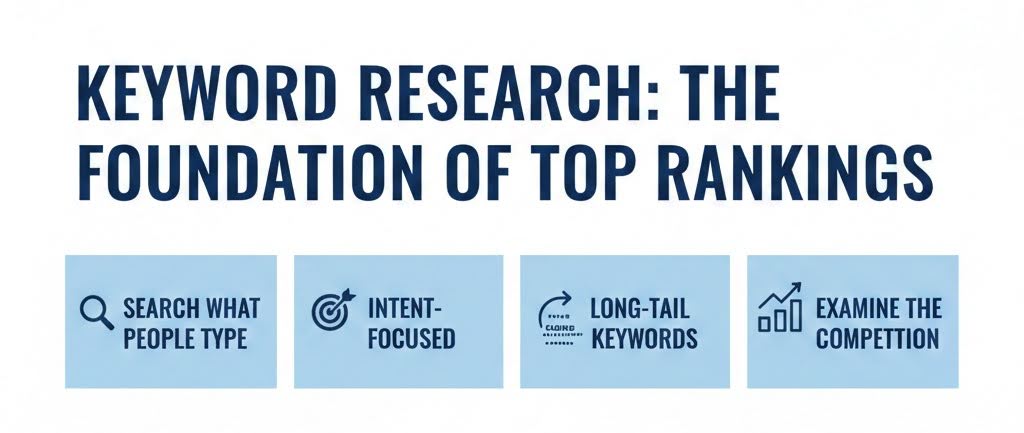
Keyword Research: The Foundation of Top Rankings
Many websites struggle to rank because they guess what people search for. Keyword research removes the guesswork. It helps you understand the exact words your audience types into Google.
- Search What People Type: Avoid making assumptions. Make use of actual Google search terms that people use. You can see the typical search terms used by your audience with tools and Google suggestions.
- Intent-focused: It’s not always the best idea to use a keyword with a lot of searches. Why people search for it is important. The right visitors may arrive if the keyword is relevant to what you have to offer.
- Long-Tail Keywords: Longer, more focused terms like “best running shoes for beginners” are known as target long-tail keywords. They frequently attract more serious readers or buyers and face less competition.
- Examine the Competition: Take a look at the current rankings. Try more specialized versions if large brands are the most popular. Your chances of ranking in the top 10 are increased when you select realistic keywords.
When you choose the right keywords, your content has a real chance to appear in the top results.
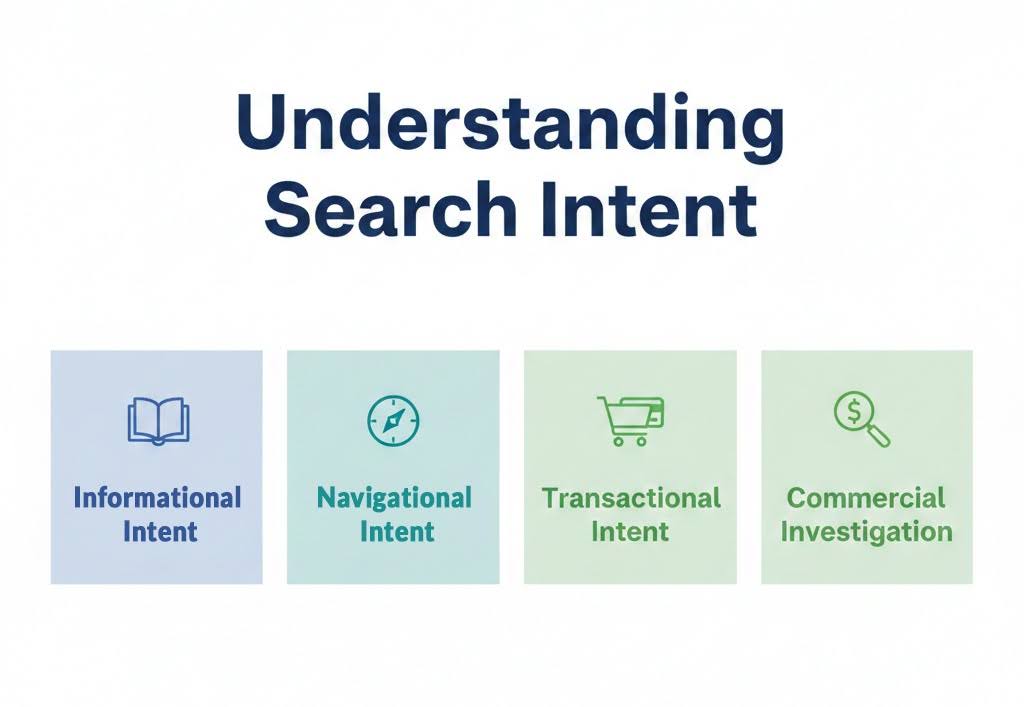
Understanding Search Intent
A lot of websites churn out content without really considering what people are actually looking for. But Google has a straightforward mission: to deliver results that align with what the searcher needs. This concept is known as search intent.
- Informational Intent: This is when someone is eager to learn something new. Think of searches like “how to rank on Google” or “what is SEO.” Your content should aim to educate clearly and provide answers to their questions.
- Navigational Intent: Here, the user is on a mission to find a specific website or brand. For instance, they might search for a company name. In these cases, they already know exactly where they want to go.
- Transactional Intent: This is when the user is primed to make a purchase or take some action. Searches like “buy running shoes online” indicate strong intent.
- Commercial Investigation: Users in this category are weighing their options before making a purchase. Searches like “best laptops for work” fall into this group.
Google is more likely to give your content a higher ranking when it aligns with its intent.
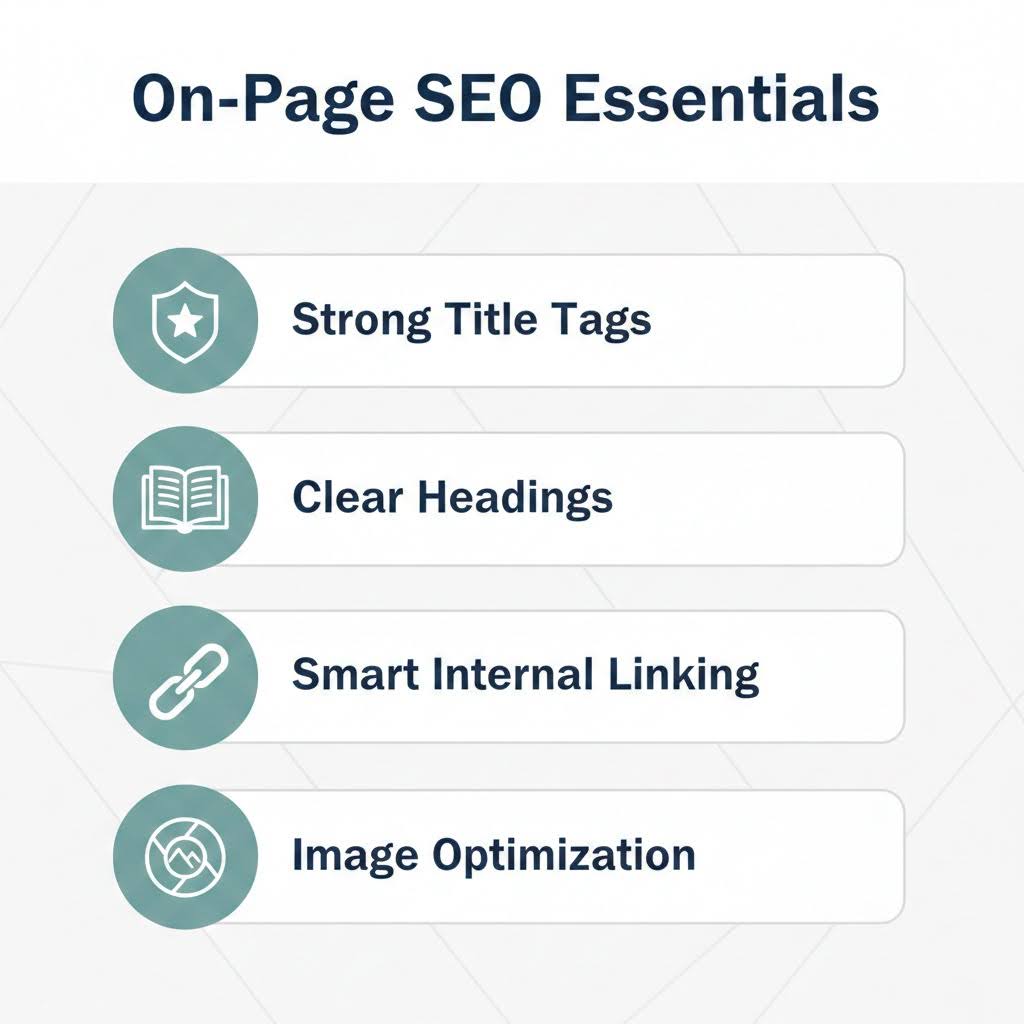
On-Page SEO Essentials
On-page SEO refers to the strategies you implement directly on your website to help Google grasp what your content is all about. It might sound a bit technical, but the fundamentals are quite straightforward.
- Strong Title Tags: Your title tag is the first thing people see on Google. It should include your main keyword and clearly say what the page is about. Keep it natural and compelling so people want to click.
- Clear Headings: Headings organize your content and make it easy to read. Your H1 should reflect the main topic, and subheadings should break the content into sections. This helps Google understand your page structure.
- Smart Internal Linking: Link to other relevant pages on your site. This helps users find more information and helps Google crawl your site better. It also spreads SEO value across your pages.
- Image Optimization: Large images can slow down your site. Compress images and add alt text that describes them. This improves speed and helps Google understand your visuals.
Both users and search engines gain when your pages are well-structured and easy to navigate.
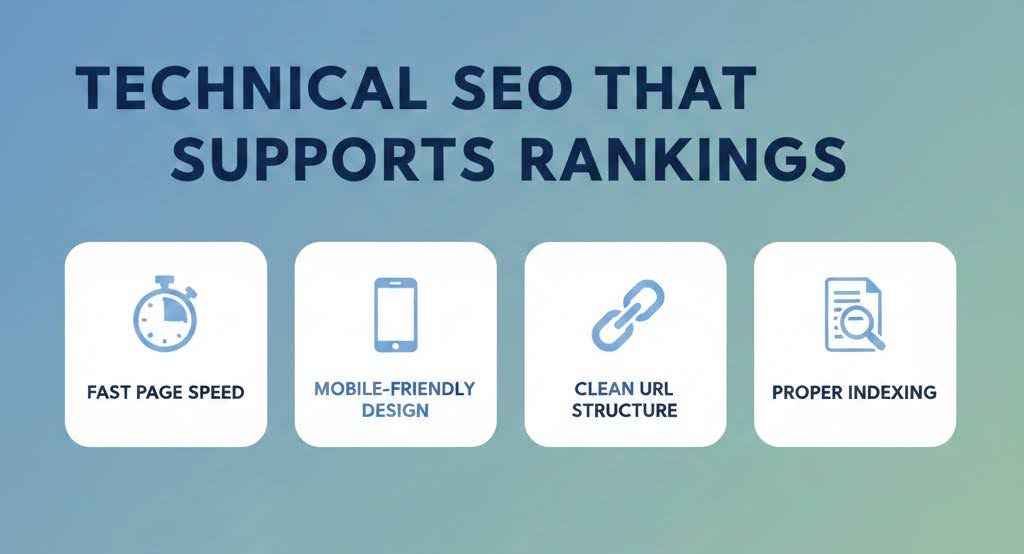
Technical SEO That Supports Rankings
Technical SEO might be the unsung hero of your website, quietly working behind the scenes, yet it has a significant impact on your rankings.
- Fast Page Speed: People don’t like waiting for slow websites. If your pages load slowly, visitors leave, and rankings can drop. Compress images, reduce heavy scripts, and use good hosting to improve speed.
- Mobile-Friendly Design: Most searches now happen on phones. Google also uses mobile-first indexing. Your site should look and work well on all screen sizes.
- Clean URL Structure: Simple URLs help both users and search engines. Short, readable links with keywords are better than long, confusing ones. Clean URLs also look more trustworthy.
- Proper Indexing: Google must be able to find and index your pages. Fix broken links, use sitemaps, and check that important pages aren’t blocked. If a page isn’t indexed, it can’t rank.
Even if you have fantastic content, it can still struggle to shine if your site is facing technical issues.
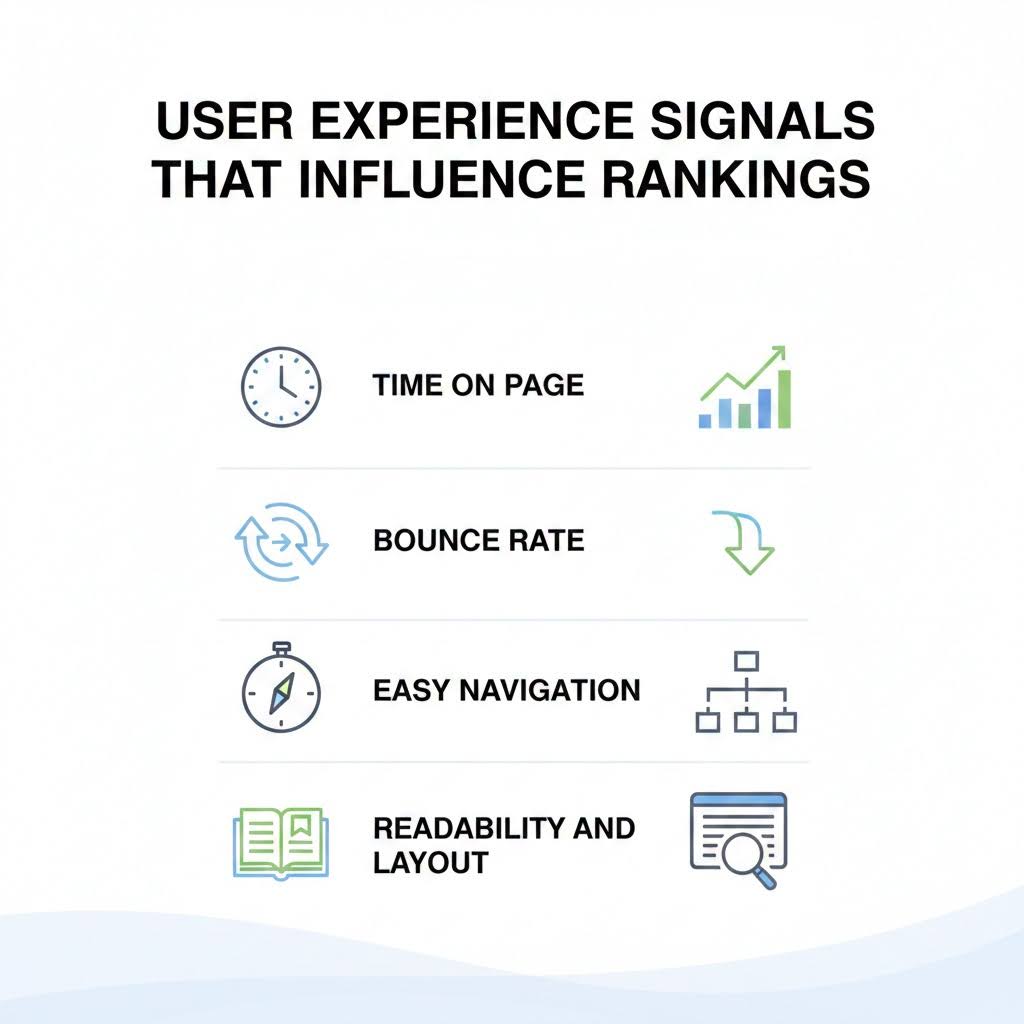
User Experience Signals That Influence Rankings
Google really pays attention to how users engage with your website. If visitors find your site enjoyable and easy to use, it sends out great signals. But if they bounce away quickly or have a hard time getting around, your rankings could take a hit.
- Time on Page: When visitors stay longer, it shows your content is helpful. Clear writing and useful information keep people engaged. The longer they read, the better the signal.
- Bounce Rate: This is when someone leaves without exploring more pages. A high bounce rate can mean your page didn’t meet their needs. Relevant content and good layout can reduce this.
- Easy Navigation: People should find what they need without confusion. Simple menus and clear buttons help users move around your site. Good navigation keeps visitors longer.
- Readability and Layout: Big text blocks can scare readers away. Use short paragraphs, headings, and spacing. Clean layouts make content easier and more enjoyable to read.
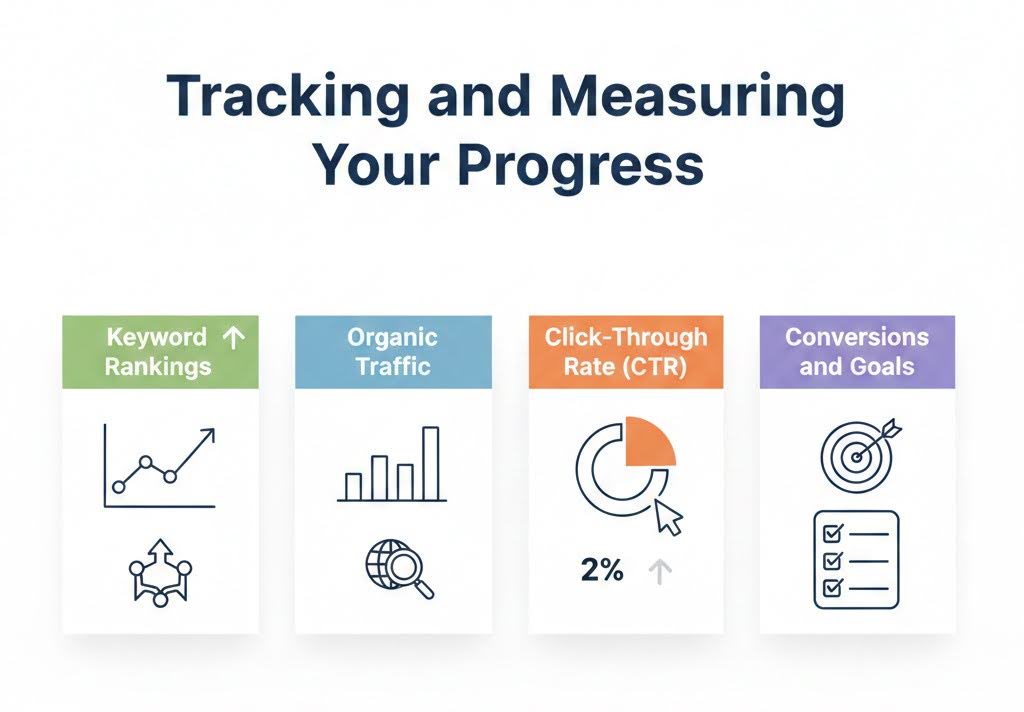
Tracking and Measuring Your Progress
SEO isn’t just a one-and-done deal. It’s essential to keep an eye on what’s working and what isn’t. By measuring your progress, you can fine-tune your strategy and make sure you’re not wasting any time.
- Keyword Rankings: It’s important to check where your pages land on Google for your target keywords. If you see an improvement in rankings, that’s a good sign your SEO efforts are paying off.
- Organic Traffic: This metric reveals how many visitors are coming from search engines. A consistent rise in traffic typically indicates better visibility. Using tools like analytics platforms can really help you keep an eye on this.
- Click-Through Rate (CTR): CTR tells you how many people click on your link after seeing it in search results. Crafting compelling titles and meta descriptions can really boost this number.
- Conversions and Goals: While traffic is great, what really counts are the results. Keep track of actions like sign-ups, phone calls, or purchases. This will help you understand if your SEO efforts are delivering real value.
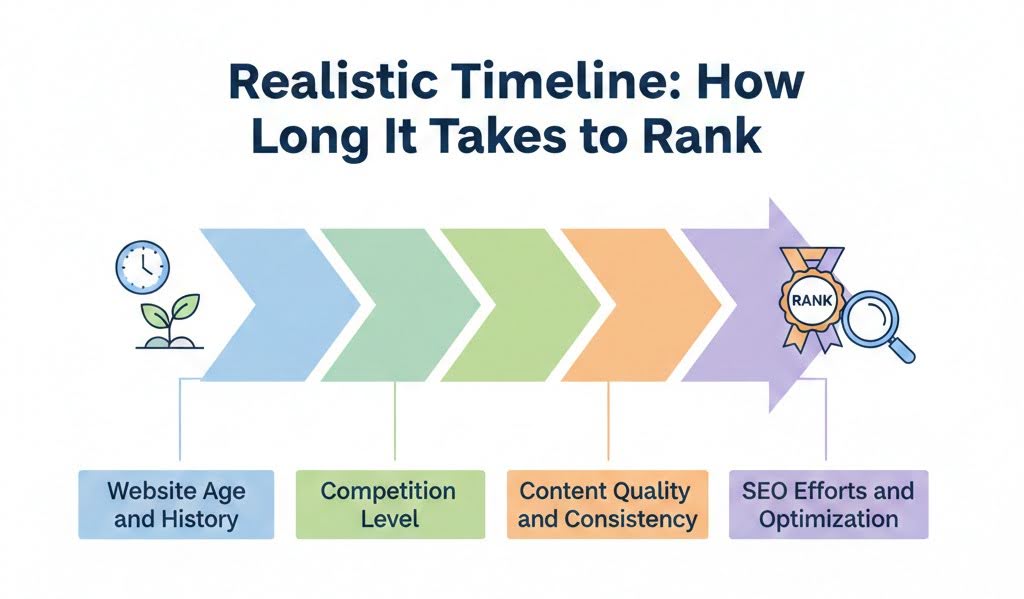
Realistic Timeline: How Long It Takes to Rank
A lot of folks think they can see SEO results in just a few weeks, but the truth is a bit different. Climbing the ranks on Google requires time, patience, and a steady commitment to your efforts.
- Website Age and History: Generally, older websites with a solid track record tend to rank more quickly. Newer sites have to earn Google’s trust over time. Keeping up with consistent quality can help speed up that process.
- Competition Level: When there are a lot of strong websites vying for the same keyword, it can take longer to rank. On the other hand, low-competition keywords are much easier to climb the ranks for.
- Content Quality and Consistency: Just one great article won’t cut it. You need to regularly produce valuable content to establish your authority. The more useful information you share, the better your chances of success.
- SEO Efforts and Optimization: Websites that are proactive about improving their SEO tend to see faster rankings. This includes making updates, building links, and fixing technical issues.
Conclusion
Getting your website into Google’s top 10 is definitely achievable, but it won’t happen in a flash. It requires nailing the basics and being consistent. Those little improvements? They really do add up over time.
Focus on creating helpful content, using the right keywords, and ensuring a great user experience. When your site genuinely assists visitors, Google is more inclined to give it a boost. Always prioritize what your audience truly needs.
Keep on learning, experimenting, and refreshing your pages. SEO is a marathon, not a sprint, but the payoff is absolutely worth it. With a bit of patience and consistent effort, your site can not only break into the top 10 but also stay there.
Deepak Wadhwani has over 20 years experience in software/wireless technologies. He has worked with Fortune 500 companies including Intuit, ESRI, Qualcomm, Sprint, Verizon, Vodafone, Nortel, Microsoft and Oracle in over 60 countries. Deepak has worked on Internet marketing projects in San Diego, Los Angeles, Orange Country, Denver, Nashville, Kansas City, New York, San Francisco and Huntsville. Deepak has been a founder of technology Startups for one of the first Cityguides, yellow pages online and web based enterprise solutions. He is an internet marketing and technology expert & co-founder for a San Diego Internet marketing company.