


Table of Contents
Introduction
Human space exploration is entering a new era, and at its center stands the Artemis II mission, a journey that feels less like a return and more like a reawakening.
Artemis II is not simply another launch on the calendar; it is a powerful signal that humanity is ready to push forward again, this time with greater ambition, deeper knowledge, and a clearer vision of what lies ahead.
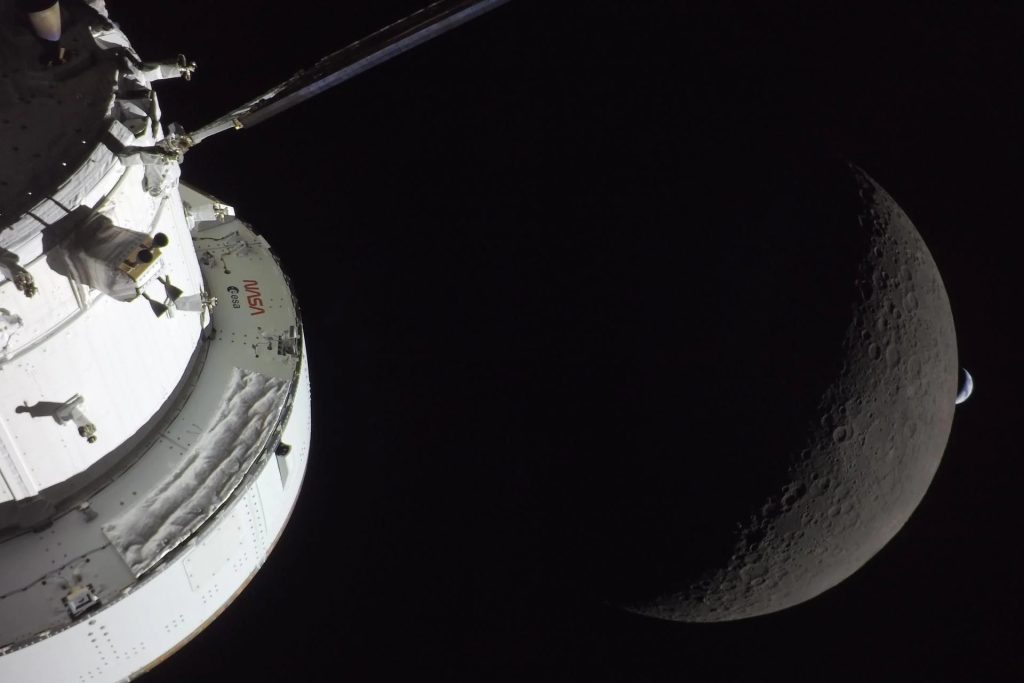
Led by NASA, this mission carries more than astronauts. It carries the weight of innovation, years of engineering, and the hopes of a generation that has only seen the Moon through history books and screens.
Artemis II is designed to test the systems that will take humans farther than they have gone in over half a century. Every component, every maneuver, every moment in space is part of something bigger.
But this mission is not just about proving technology. It is about building a future. A future where missions to the Moon become sustainable, where lunar exploration becomes routine, and where the path to Mars is no longer theoretical.
Mission Objectives: What Artemis II Aims to Achieve
Artemis II is a crewed mission that will travel around the Moon and return safely to Earth. Unlike Artemis I, which flew without astronauts, this mission will evaluate how systems perform with humans on board in deep space conditions.
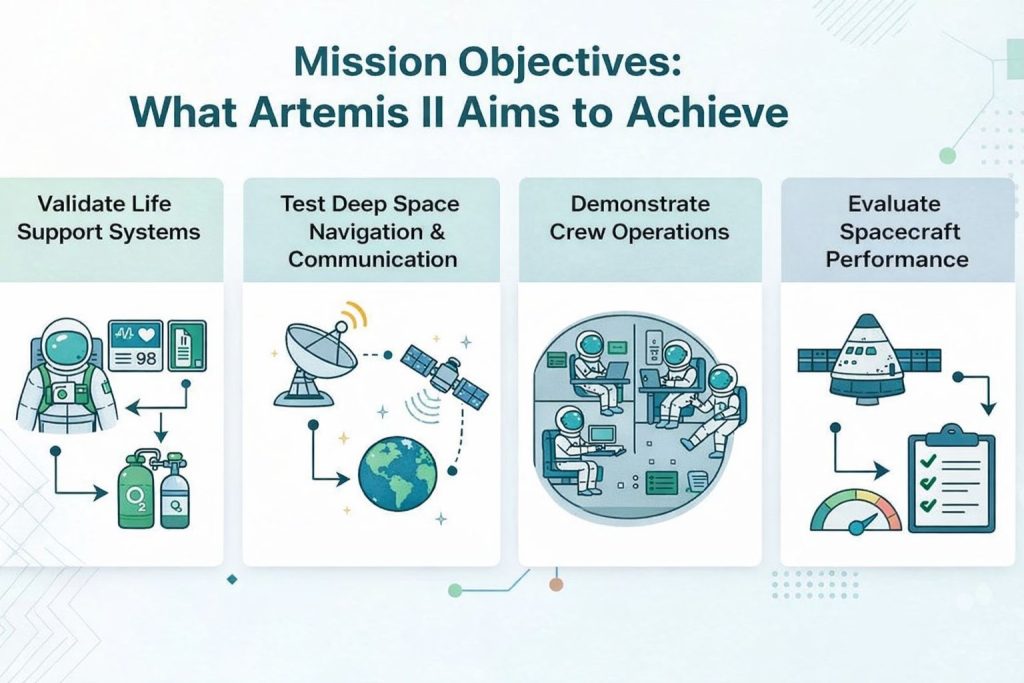
The key objectives of Artemis II are designed to test critical systems and prepare for future deep space exploration:
- Validate Life Support Systems: Ensuring that astronauts can sustain life and maintain health during long-duration missions in space. This includes testing air and waste management systems, critical for crew survival during extended stays in space.
- Test Deep Space Navigation & Communication: Confirming that NASA’s advanced communication systems can function effectively over vast distances, and communication between astronauts and mission control, even when far from Earth.
- Demonstrate Crew Operations: Evaluating how astronauts operate and control the spacecraft, including managing onboard systems, responding to emergencies, and making real-time decisions in the unique environment of deep space.
- Evaluate Spacecraft Performance: Testing the spacecraft’s ability to withstand the stresses of space travel, from propulsion systems to heat management, ensuring it performs as expected under real-world conditions and with a full crew onboard.
Meet the Astronauts: The Team Onboard
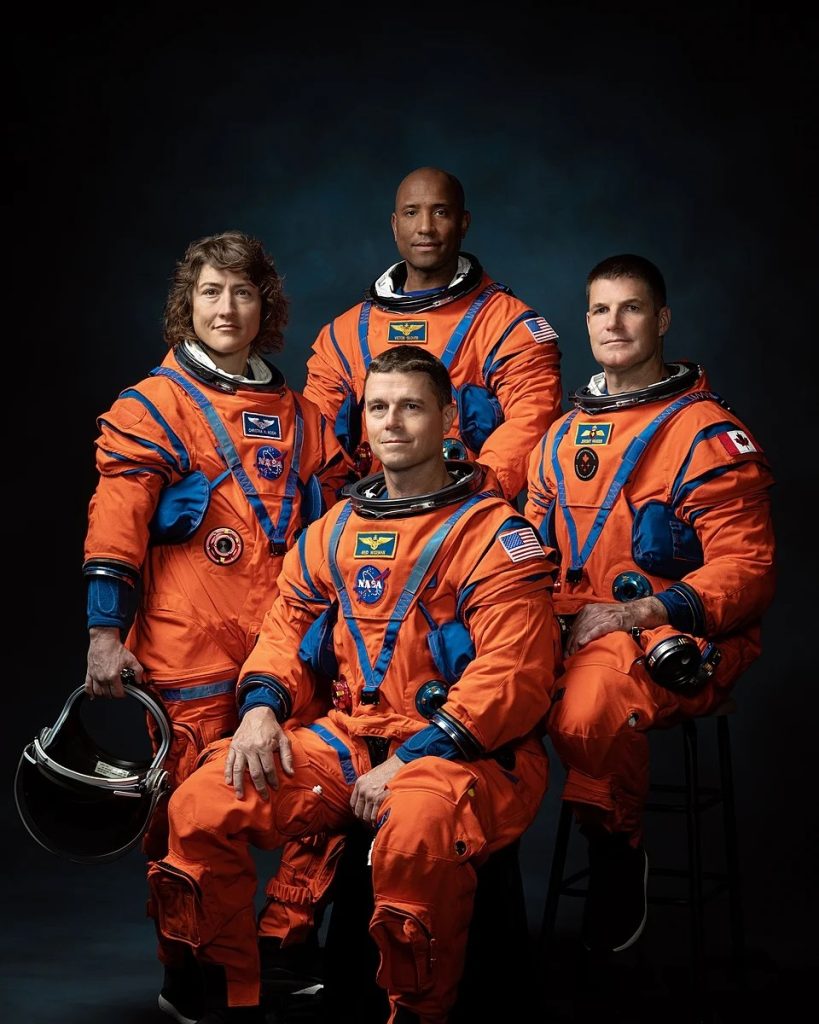
The Artemis II crew is a diverse group of highly skilled astronauts, chosen for their experience, leadership, and ability to operate in complex space environments. The Artemis II crew embodies a blend of experience and global collaboration:
1. Reid Wiseman (Commander)
Reid Wiseman, the Commander of Artemis II, brings with him a wealth of spaceflight experience. He is a U.S. Navy officer and a seasoned NASA astronaut with a proven track record in high-stakes space missions.
- Wiseman has previously served as a flight engineer aboard the International Space Station (ISS) during Expedition 40/41.
- Over the course of his mission, he contributed to a range of scientific experiments and technological advancements.
- His leadership was pivotal in managing complex systems aboard the ISS, and his prior spaceflight experience has equipped him to command the Artemis II crew on its journey around the Moon.
- Wiseman’s deep technical expertise and calm under pressure make him an ideal leader for this groundbreaking mission.
2. Victor Glover (Pilot)
Victor Glover, the Pilot of Artemis II, is a U.S. Navy aviator and a NASA astronaut who has proven his mettle both in the cockpit and in space.
- Before his selection for the Artemis II mission, Glover served as a pilot for the Crew-1 mission aboard the SpaceX Crew Dragon, where he made history as the first African American astronaut to stay aboard the ISS for an extended period.
- His mission helped facilitate a wide array of scientific experiments and technological innovations.
- A highly experienced naval aviator with thousands of hours of flight experience, Glover is well-versed in the high-pressure scenarios that can arise during spaceflight.
- His ability to handle complex spacecraft systems, coupled with his military discipline and leadership skills, will be invaluable as he assists Wiseman in piloting the spacecraft on this pioneering mission.
3. Christina Koch (Mission Specialist)
Christina Koch is an accomplished NASA astronaut and mission specialist on the Artemis II mission, known for her historic contributions to space exploration.
- She holds the record for the longest single spaceflight by a woman, having spent nearly 11 months aboard the ISS as part of Expedition 59/60/61.
- During her time in space, Koch conducted a variety of scientific research and engineering experiments, with a focus on understanding the effects of long-duration space travel on the human body.
- In addition to her scientific contributions, Koch was also a key participant in the first all-female spacewalks.
- Her extensive spaceflight experience, particularly in systems operations, research, and extravehicular activity (EVA), positions her as an indispensable member of the Artemis II team as the mission advances human space exploration.
4. Jeremy Hansen (Mission Specialist)
Jeremy Hansen, the second mission specialist aboard Artemis II, represents the Canadian Space Agency (CSA), further highlighting the mission’s international collaboration.
- Hansen is Canada’s first astronaut selected for long-duration spaceflight. He has undergone rigorous training and brings a wealth of expertise in robotics, scientific research, and space operations.
- While Hansen has not yet flown in space, his extensive background includes training for missions aboard the ISS and working on several Canadian projects that enhance spaceflight capabilities.
- His knowledge of Canadian technology, such as the Canadarm2 robotic arm aboard the ISS, will be a significant asset to the Artemis mission.
This team highlights the evolution of space exploration leadership and the power of global teamwork.
Behind the Scenes: The Teams Powering Artemis II
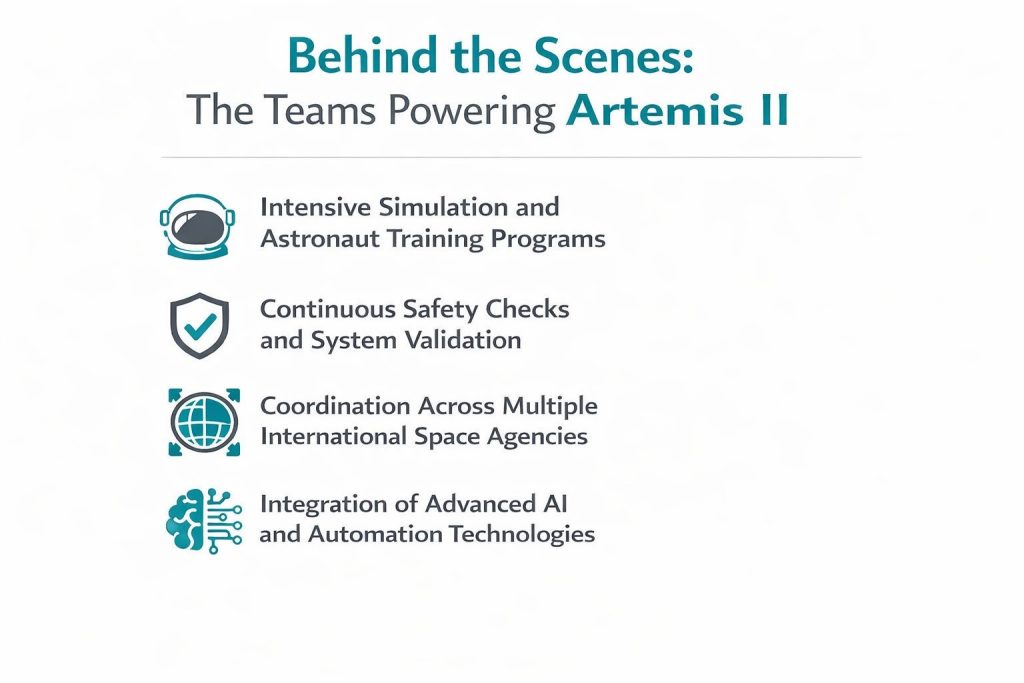
While astronauts are at the forefront, the mission is supported by thousands of engineers, scientists, and planners working behind the scenes.
Major organizations such as Lockheed Martin, Boeing, and Northrop Grumman play key roles in developing and testing critical components.
What Happens Behind the Scenes
- Intensive Simulation and Astronaut Training Programs: Astronauts undergo rigorous simulations to mimic the challenges of deep space missions. These programs focus on problem-solving skills and emergency preparedness during actual space missions.
- Continuous Safety Checks and System Validation: Every component of the spacecraft is subjected to repeated testing, ensuring all systems meet safety standards before launch. Ongoing safety protocols are reinforced to minimize risks to astronauts and mission success.
- Coordination Across Multiple International Space Agencies: The Artemis mission is a collaboration between NASA, ESA, and other international partners. This cooperative effort includes sharing resources to ensure mission success.
- Integration of Advanced AI and Automation Technologies: The use of AI and automation technologies enhances mission efficiency by supporting real-time data analysis, autonomous navigation, and predictive maintenance.
Rocket Technology: The Power Behind the Mission
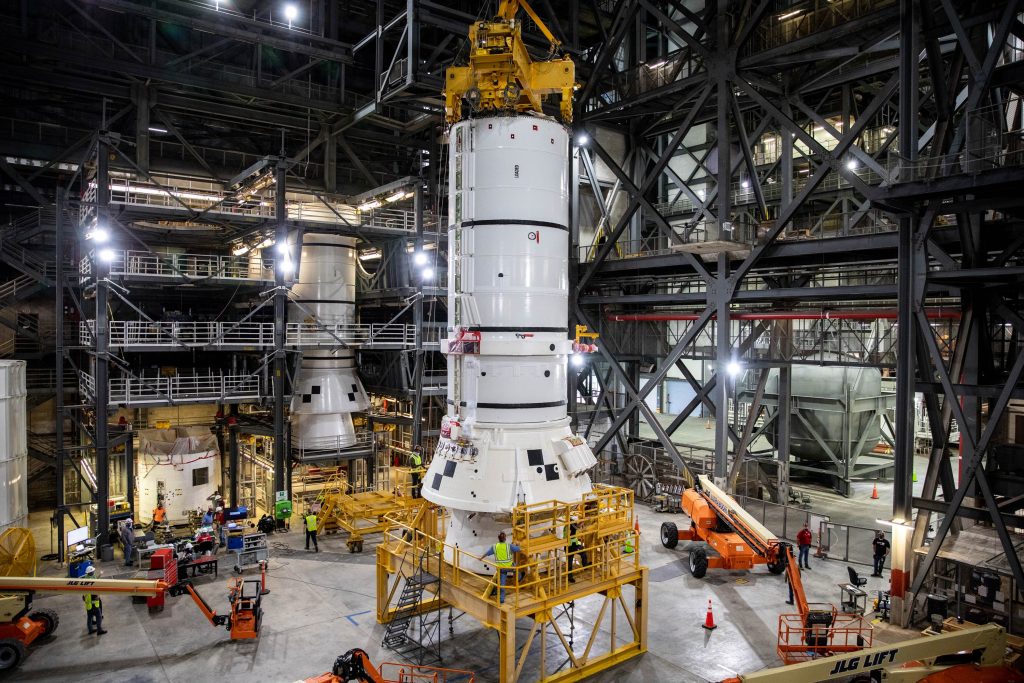
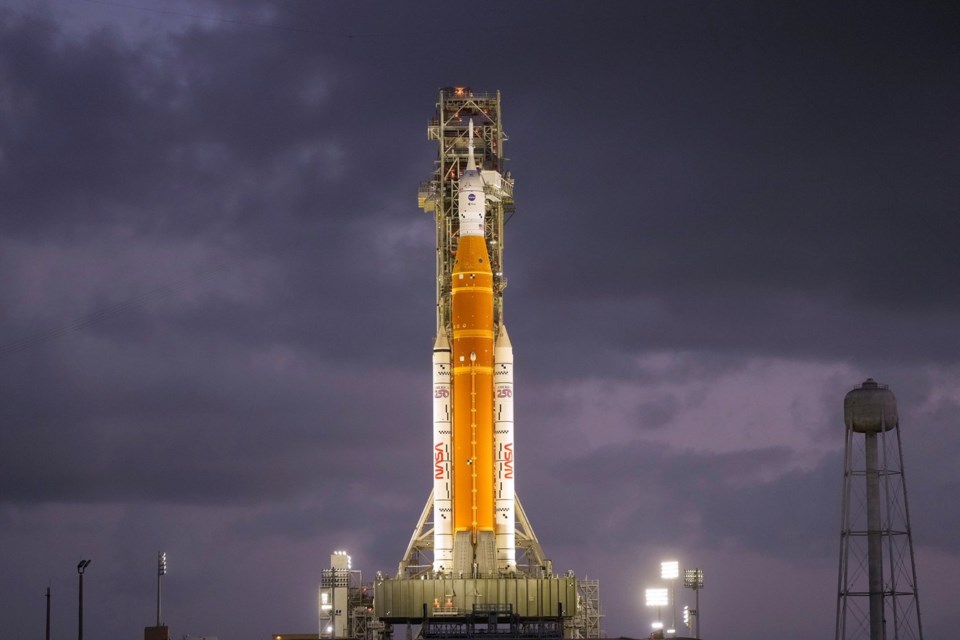
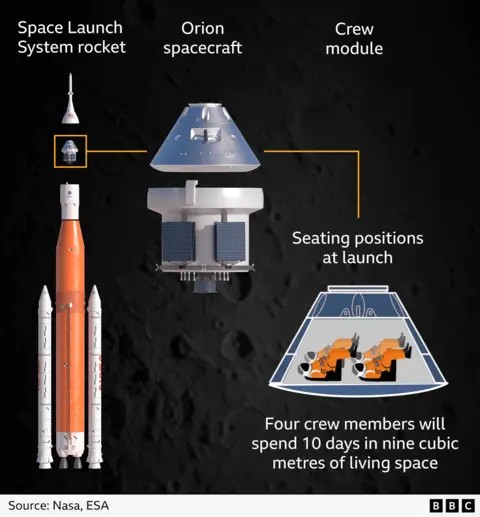
At the heart of Artemis II lies the Space Launch System (SLS), one of the most advanced rockets ever developed, designed to propel humanity beyond low Earth orbit. Paired with the Orion spacecraft, this mission will push the boundaries of human space exploration.
Key Technologies:
- Space Launch System (SLS): The SLS is a next-generation heavy-lift rocket designed to carry astronauts on missions to the Moon, Mars, and beyond. With a thrust capability exceeding 8.8 million pounds.
- Orion Spacecraft: Orion is engineered for deep-space exploration and built to withstand the harsh conditions of space travel. It is equipped with state-of-the-art life support systems to ensure crew safety and survival on extended missions.
- European Service Module (ESM): Provided by the European Space Agency (ESA), the ESM plays a critical role in powering the Orion spacecraft. It is equipped with propulsion and thermal control systems, as well as life-support functions.
They combine to form a robust and flexible architecture that supports sustained human exploration of deep space, building on the lessons learned from the Apollo program but introducing innovations necessary for longer, more complex missions.
The Bigger Picture: Future Missions & Mars Ambitions
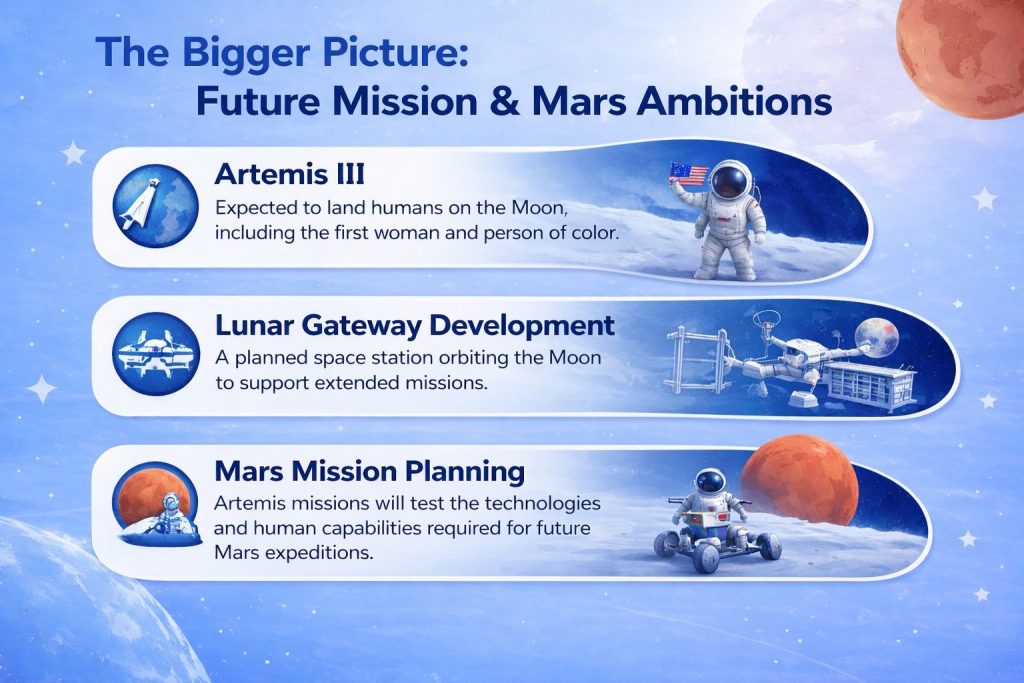
Artemis II is part of a broader strategy aimed at establishing a lasting human presence beyond Earth. The Artemis program is designed to support sustainable lunar exploration and prepare for future missions to Mars.
What Comes Next:
- Artemis III: Expected to land humans on the Moon, including the first woman and person of color.
- Lunar Gateway Development: A planned space station orbiting the Moon to support extended missions.
- Mars Mission Planning: Artemis missions will test the technologies and human capabilities required for future Mars expeditions.
The long-term vision is clear: create a continuous human presence in space and eventually send astronauts to Mars.
Why Artemis II Matters for the Future
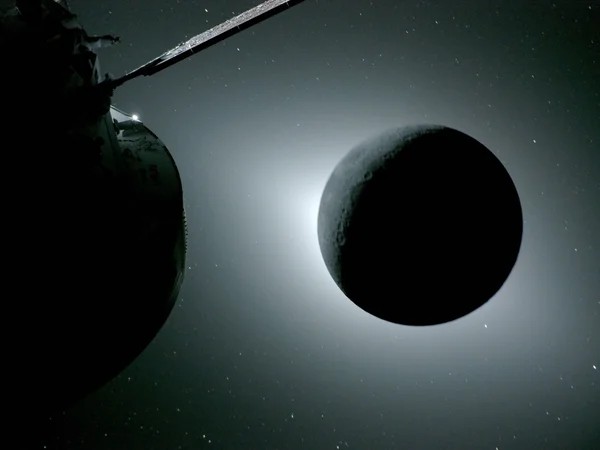
Artemis II is more than a crewed mission around the Moon; it is a critical step in rebuilding human deep-space capability since the era of the Apollo program.
By testing life-support systems, navigation, and crew operations beyond low Earth orbit, it lays the groundwork for sustainable lunar exploration under the Artemis program.
- The mission reflects a broader vision of long-term human presence in space rather than short-term exploration.
- The mission is also expected to accelerate advancements in artificial intelligence, robotics, materials science, and next-generation communication systems.
- Technologies developed for deep-space missions, such as autonomous navigation, radiation-resistant materials, and high-reliability systems, often find applications on Earth in industries like healthcare, transportation, and defense.
- This cross-sector innovation strengthens both space exploration and everyday technological progress.
- For industries such as technology and engineering, Artemis II signals the rise of a new space economy driven by collaboration between public agencies like NASA and private companies such as SpaceX.
Conclusion
The Artemis II mission marks a major milestone in modern space exploration. With a capable crew, advanced technology, and global collaboration, it sets the foundation for humanity’s return to deep space.
What makes this mission significant is not just its journey around the Moon, but what it represents for the future. From building lunar bases to preparing for Mars missions, Artemis II brings us closer to living and working beyond Earth.

Deepak Wadhwani has over 20 years experience in software/wireless technologies. He has worked with Fortune 500 companies including Intuit, ESRI, Qualcomm, Sprint, Verizon, Vodafone, Nortel, Microsoft and Oracle in over 60 countries. Deepak has worked on Internet marketing projects in San Diego, Los Angeles, Orange Country, Denver, Nashville, Kansas City, New York, San Francisco and Huntsville. Deepak has been a founder of technology Startups for one of the first Cityguides, yellow pages online and web based enterprise solutions. He is an internet marketing and technology expert & co-founder for a San Diego Internet marketing company.