


Introduction
In a world where deadly diseases continue to rise every day, early intervention can mean survival. AI is no longer a futuristic concept; it is a necessity redefining medical care.
- Heart Disease: Approximately 680,000 to 695,000 deaths annually. It is the #1 cause of death in the U.S.
- Cancer: Approximately 613,000 to 620,000 deaths annually. It is the #2 cause of death
- Strokes: Approximately 160,000 to 165,000 deaths annually. Stroke is currently ranked as the 4th cause of death
- Total Cardiovascular Impact: When looking at all cardiovascular diseases (CVD), which include heart disease, stroke, heart failure, and hypertension, the total death toll rises to over 915,000 people per year
- Frequency: On average, someone dies from a cardiovascular disease in the U.S. every 34 seconds
- Heart Attacks and Deaths: While about 805,000 people have a heart attack each year, coronary heart disease (the primary cause of heart attacks) is specifically responsible for roughly 350,000 of the total heart disease deaths
This growing healthcare crisis is exactly why artificial intelligence in healthcare is becoming one of the most powerful forces in medicine.
Importance of AI in Healthcare
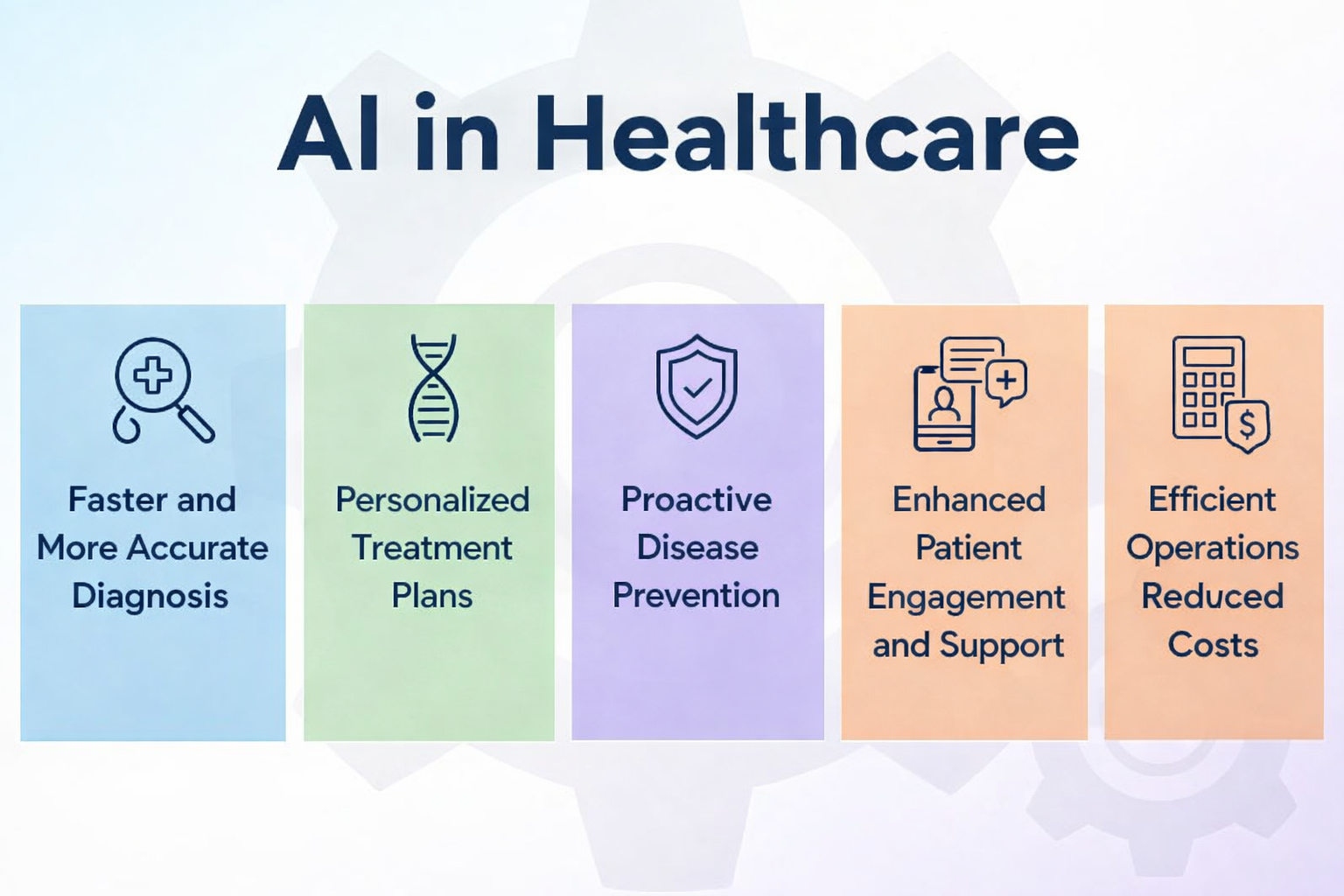 Artificial intelligence in healthcare is rapidly transforming, making it more accurate, efficient, and personalized than ever before. Artificial intelligence in healthcare is not just a technological advancement; it’s becoming a crucial tool for improving patient outcomes:
1. Faster and More Accurate Diagnosis
Using AI in healthcare systems helps analyze images like X-rays, MRIs, and CT scans much faster and often more accurately than traditional methods. These AI applications help doctors spot early signs of disease, such as cancer or cardiovascular issues.
2. Personalized Treatment Plans
AI goes beyond generalized care by using vast amounts of health data at once, including medical history, genetics, and lifestyle factors. This personalized treatment approach helps patients receive treatments tailored to their unique biology and needs.
3. Proactive Disease Prevention
One important purpose of Artificial intelligence in healthcare is its ability to predict health risks before symptoms develop. Predictive analytics identify patients at high risk for conditions like diabetes or heart disease and prevent complications.
4. Enhanced Patient Engagement and Support
AI-powered virtual assistants, chatbots, and apps will help patients across the world by offering guidance on care. This conversational AI in healthcare provides continuous support to improve patients’ understanding and involvement in their own health journey.
5. Efficient Operations and Reduced Costs
Using AI in healthcare helps facilities automate repetitive tasks like scheduling, billing, and documentation. This not only reduces administrative burden and human error but also lowers overall healthcare costs, allowing providers to focus more on direct patient care.
AI in Drug Discovery and Development
Making a new medicine takes a very long time. It can take 10 to 15 years and a lot of money before doctors can give it to sick people. But today, Artificial intelligence in healthcare is rewriting drug discovery.
Imagine a system that can scan millions of data points in seconds, genetic codes, disease pathways, and molecular structures, and uncover patterns invisible to the human eye.
- AI is enhancing diagnostic accuracy
- In oncology, it helps doctors design personalized treatment plans
- And in pharmaceutical research, it is accelerating the race to discover life-saving medicines
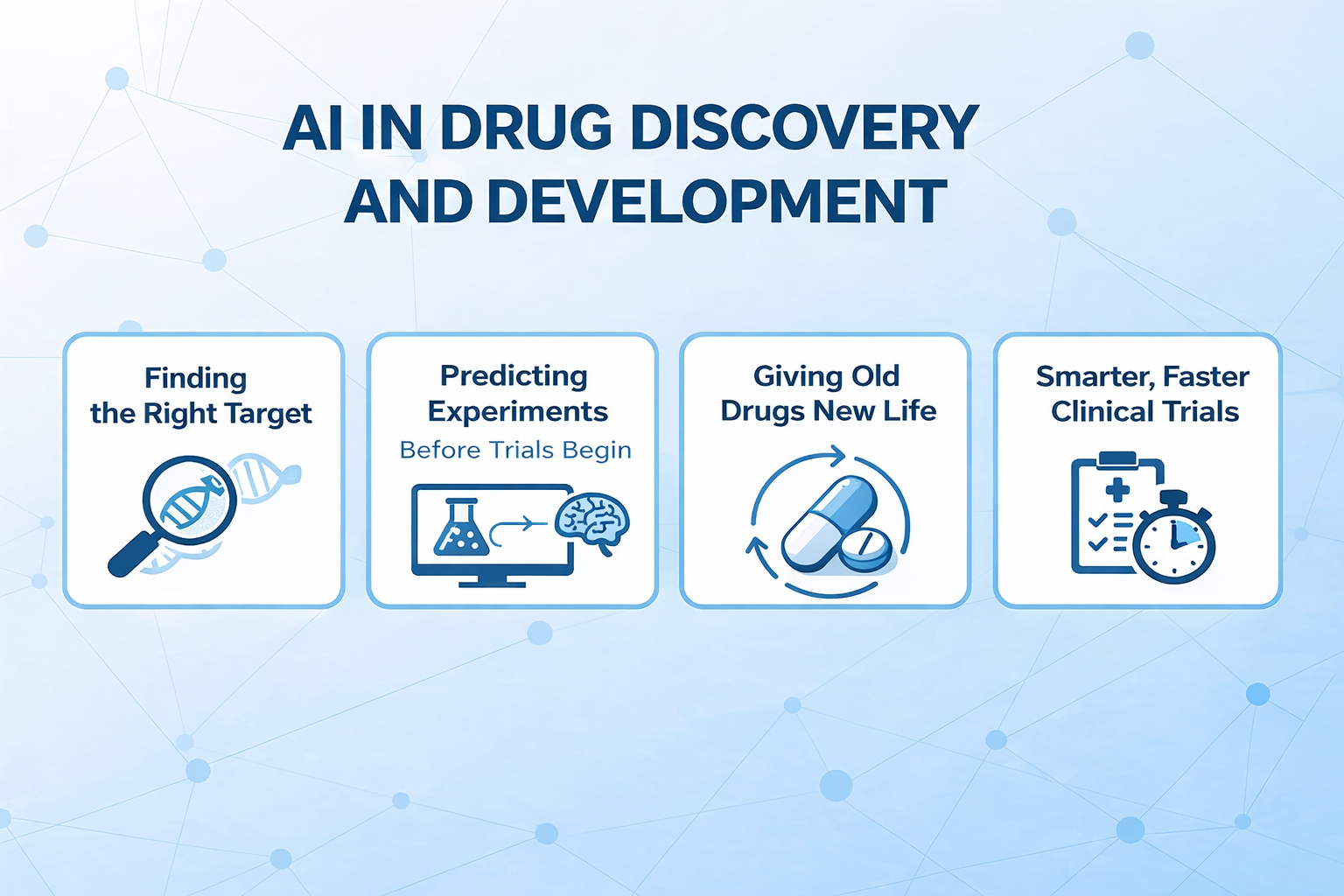
AI in Drug Discovery helps various ways:
1. Finding the Right Target
Before a drug can be created, scientists must identify the exact biological target causing a disease. AI algorithms analyze massive biological datasets to pinpoint these targets with remarkable speed. This helps reduce time spent in early-stage research.
2. Predicting Experiments Before Trials Begin
Traditionally, researchers relied heavily on laboratory experiments and animal testing to evaluate safety and effectiveness. This not only saves time but also reduces development expenses and improves safety outcomes.
3. Giving Old Drugs New Life
AI can identify approved drugs that may work for entirely new diseases. This process, known as drug repurposing, gained global attention during COVID-19, where AI helped researchers quickly evaluate potential treatments.
4. Smarter, Faster Clinical Trials
Artificial intelligence in healthcare improves patient recruitment by analyzing real-world data and refining eligibility criteria. By matching the right patients to the right trials, AI increases success rates and shortens the path from laboratory to bedside.
AI in Augmented Healthcare Systems
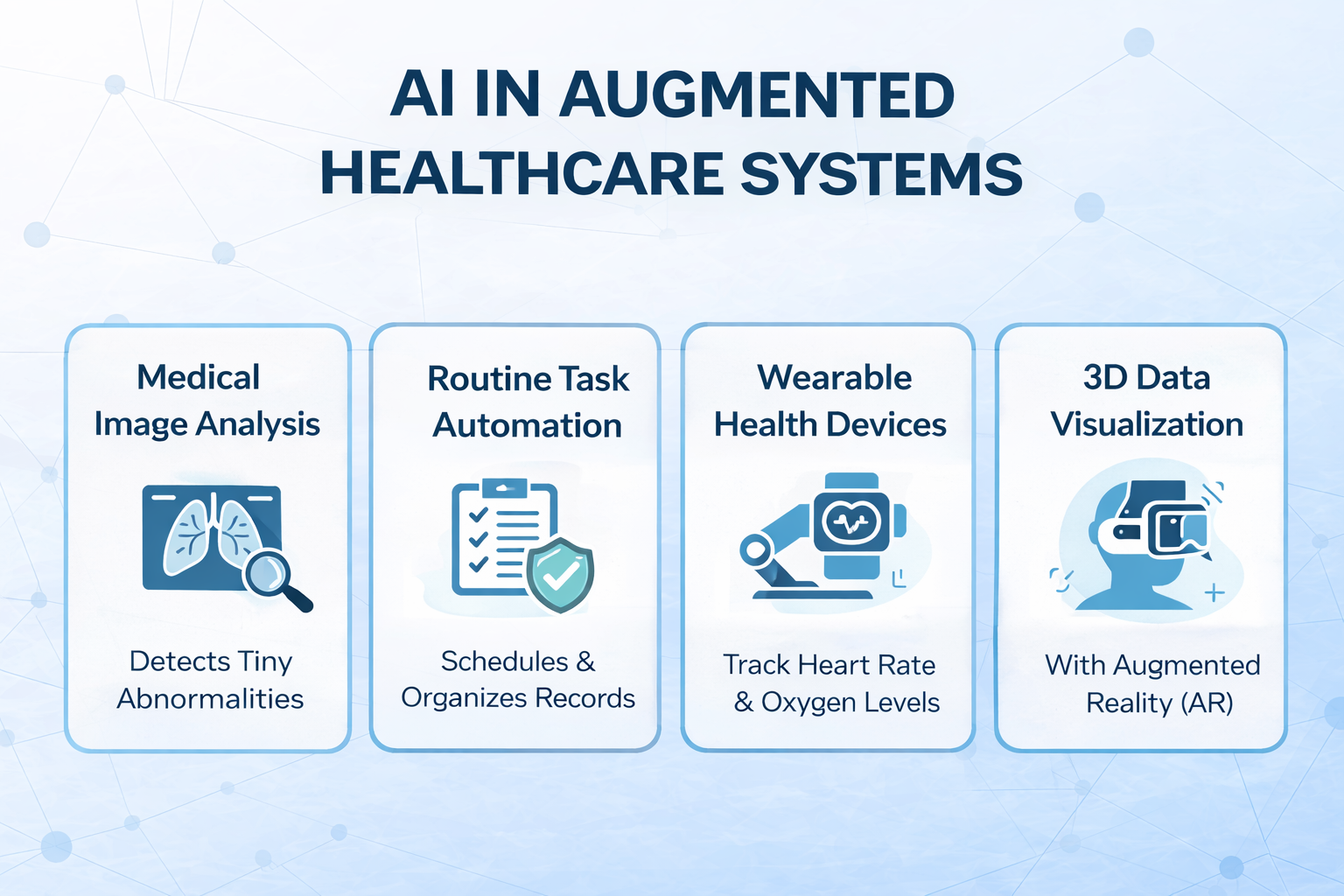
Imagine doctors having a technological assistant that can read millions of medical records in seconds, study X-rays instantly, and even warn them before a patient’s condition gets worse. That’s what Artificial intelligence in healthcare is doing today.
- AI in augmented healthcare systems doesn’t replace doctors; it supports them
- AI can carefully examine medical images to detect tiny abnormalities
- It can automate routine tasks like scheduling appointments and organizing patient records
- Wearable devices, such as smartwatches and health monitors, collect real-time data like heart rate and oxygen levels
- AI works with augmented reality (AR) to create 3D visualizations of patient data
- Artificial intelligence in healthcare helps surgeons use these tools to plan complex procedures more safely and effectively. Even administrative work is becoming easier
- Conversational AI in healthcare, like generative AI tools, can convert a doctor’s spoken words into written clinical notes, saving time and improving the overall patient experience.
Role of Virtual Health Assistants in Improving Patient Care
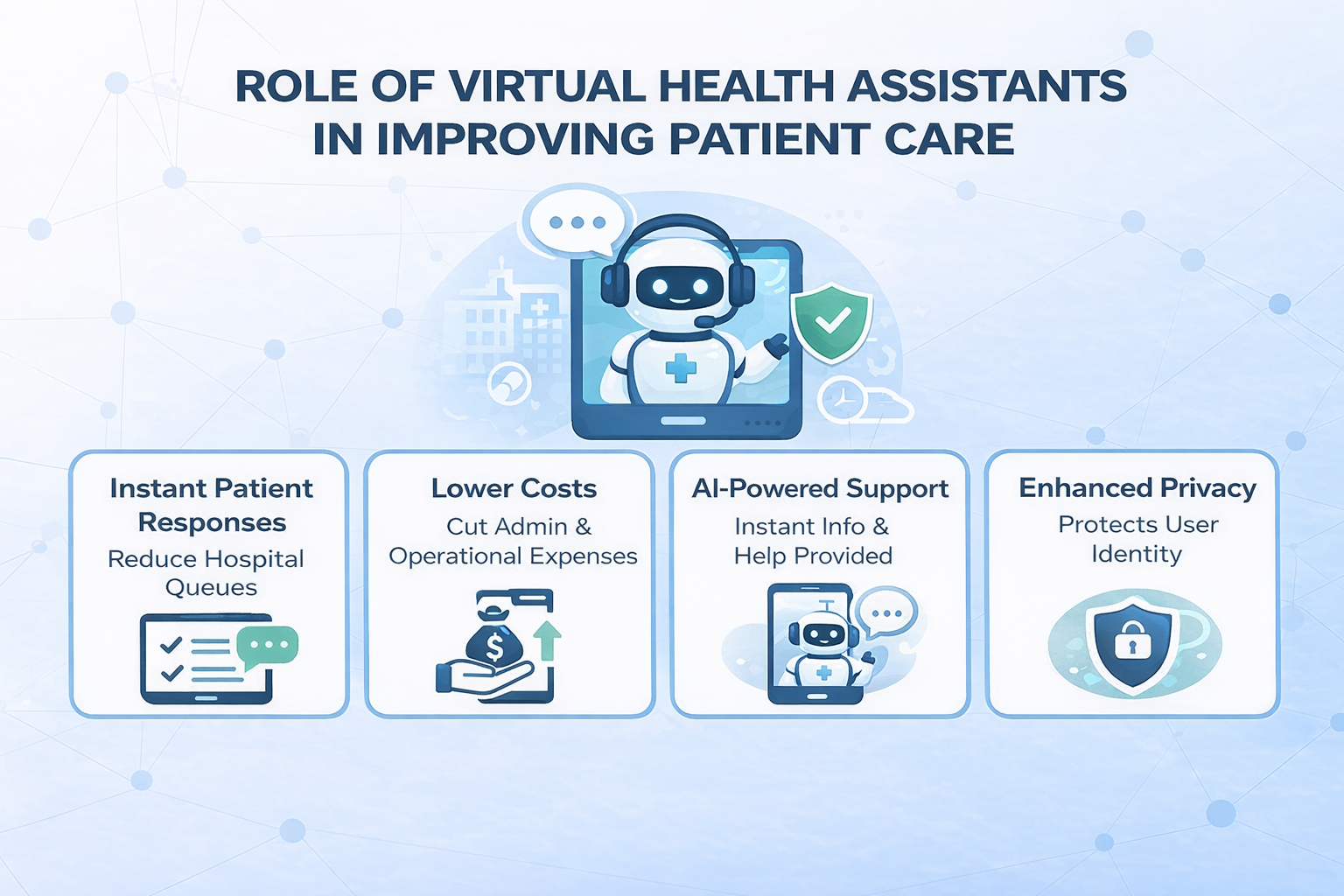
AI-powered healthcare virtual assistants are evolving patient engagement by handling routine inquiries, allowing medical professionals to focus on more complex and specialized care.
Medical virtual assistants help in analyzing questions like:
- Are you experiencing symptoms like fever, a cold, or body aches?
- Do you have shortness of breath?
- How long have these symptoms lasted?
Although virtual assistants in healthcare are still in the early stages of adoption, market projections indicate rapid growth.
- According to the Global Virtual Assistants in Healthcare Market– Analysis and Forecast (2019–2029), the market is expected to grow at a compound annual growth rate (CAGR) of 26.29% between 2019 and 2029, highlighting the expanding role of artificial intelligence in healthcare systems.
Virtual Health Assistants help in improving patient care in various ways:
- Provide instant responses to patient queries, helping reduce long hospital queues
- Virtual assistants significantly cut administrative and operational expenses, lowering overall healthcare delivery costs
- AI-powered care assistants deliver immediate information and support
- AI-driven medical chat systems are designed to protect user identity for individuals seeking help with sensitive or confidential health concerns
AI Case Studies in Healthcare
Artificial intelligence in healthcare has significantly reshaped both clinical and administrative operations. From improving decision-making to enhancing workflow efficiency, healthcare professionals increasingly rely on AI-driven tools across multiple settings.
Below are case studies of how healthcare has successfully implemented AI to drive health improvements.
1. AI-Powered Clinical Decision Support
At TidalHealth Peninsula Regional in Maryland, clinicians were spending excessive time searching for critical medical information during patient care. To address this, the hospital partnered with IBM to implement an AI-driven clinical decision support system, IBM Micromedex with Watson, now known as DynaMedex.
- Combined artificial intelligence and Natural Language Processing (NLP) with electronic medical records (EHRs)
- The System streamlined clinical searches and delivered faster access to relevant medical insights
- Time spent on clinical searches decreased from 3 to 4 minutes to less than 1 minute per search
This reduction translated into significantly more time for patient interaction and care, demonstrating how artificial intelligence in healthcare optimizes both efficiency and patient outcomes.
2. Mayo Clinic and Google Cloud Collaboration
The Healthcare Information and Management Systems Society (HIMSS) highlights a major collaboration between the Mayo Clinic and Google Cloud to build an advanced AI and machine learning (ML) platform.
- Complex medical calculations, such as monitoring disease progression in polycystic kidney disease, can now be automated
- Additionally, AI algorithms analyze existing EHR data to help assess breast cancer risk more accurately
- By effectively leveraging healthcare data, artificial intelligence in healthcare enhances both research capabilities and personalized patient care
3. AI in Patient Status Review

Research examining AI tools such as Xsolis’ Care Level Score (CLS) and predictive models at Baylor Scott & White, Yale New Haven Health, and Mayo Clinic Health System revealed effective improvements in patient status decision-making.
- AI-driven systems provided effective solutions in determining medical necessity
- Supported utilization review teams in making timely, evidence-based decisions
- Healthcare staff reported improved coordination between clinical teams
- Review departments, as well as enhanced workflow efficiency
4. Sharp HealthCare

As AI rapidly becomes more relevant, Sharp is well-positioned, having launched its own internal AI assistant, SharpAI.
- The custom AI system can speed up document review by summarizing text and analyzing data
- Sharp Ventures has partnered with Apple, Dandelion Health, and Abundant Venture Partners, among other organizations, in bringing the latest innovations to Sharp
- Soon, Ko and his group will launch the Sharp Advanced Analytics and Artificial Intelligence (A3) Institute to explore how AI can improve care across the industry.
5. Medtronic
Medtronic is a global leader in medical technology, providing innovative solutions for managing chronic diseases, including cardiac devices, neurological therapies, and surgical tools. With a focus on improving patient outcomes, Medtronic operates in over 150 countries.
- The Micra, the world’s smallest leadless pacemaker, and the Evolut™ R, a transcatheter aortic valve replacement (TAVR) system
- It is designed for precise placement in patients with severe aortic stenosis, and both are both developed by Medtronic to enhance patient care
Future of Artificial Intelligence in Healthcare
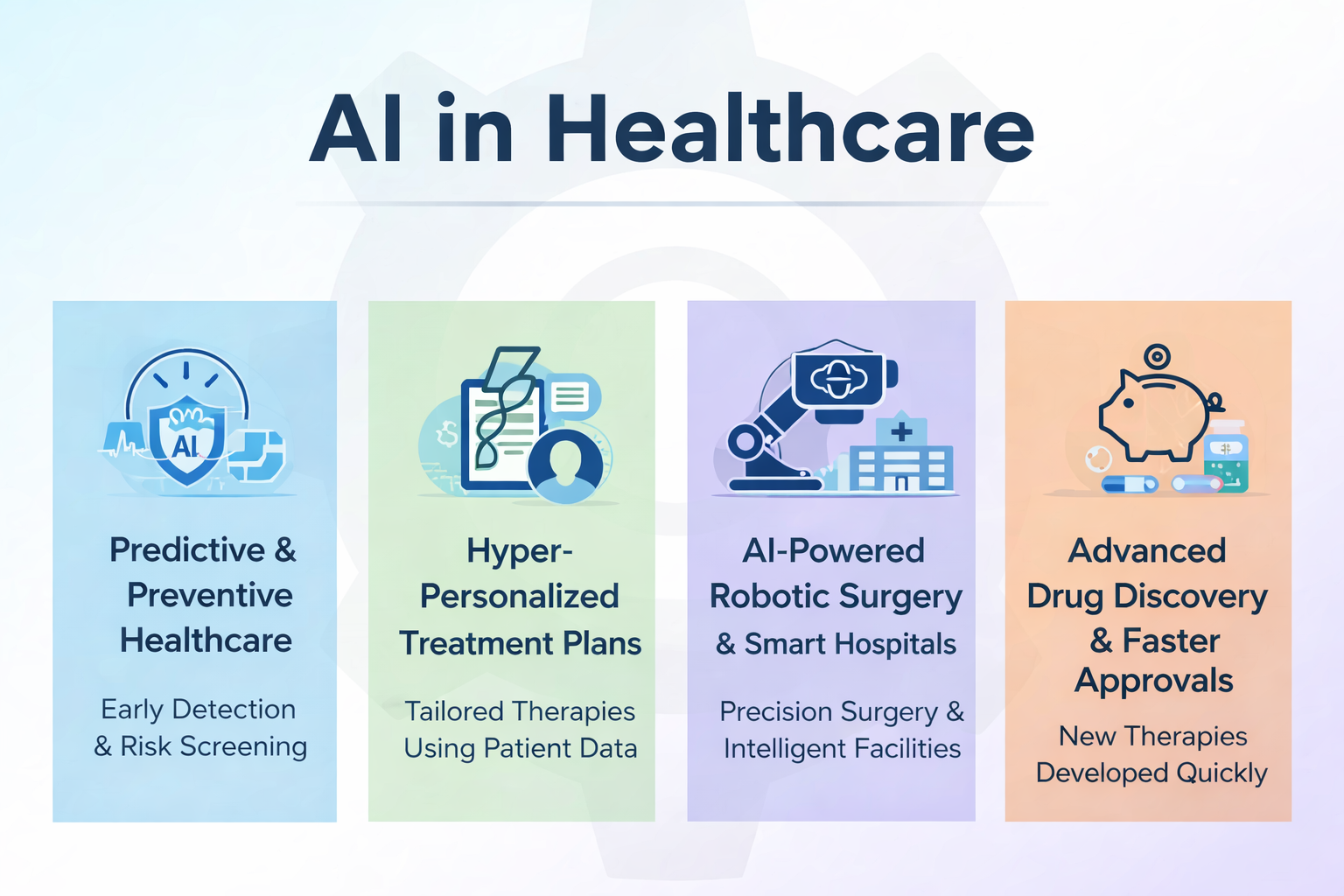
The future of artificial intelligence in healthcare is not just promising; it is transformative. As technology advances, artificial intelligence will continue to reshape how diseases are diagnosed, treated, and prevented.
Healthcare systems worldwide are moving toward smarter, data-driven care. AI will play a central role in that shift.
1. Predictive and Preventive Healthcare
In the future, artificial intelligence in healthcare will move from reactive treatment to proactive prevention.
- AI systems will analyze medical history, genetics, lifestyle data, and wearable device information to predict diseases before symptoms appear.
- Early detection of conditions such as heart disease, cancer, and diabetes could significantly reduce mortality rates and healthcare costs.
- Predictive analytics will help doctors intervene sooner and save more lives.
2. Hyper-Personalized Treatment Plans
The future of artificial intelligence in healthcare includes highly personalized medicine.
- AI will analyze genetic profiles, biomarkers, and patient-specific data to design customized therapies.
- Instead of a “one-size-fits-all” approach, treatments will be provided to individual patients, improving outcomes and reducing side effects.
- Precision oncology is already showing how powerful this approach can be.
3. AI-Powered Robotic Surgery and Smart Hospitals
Artificial intelligence will further enhance robotic-assisted surgeries by improving precision and reducing complications.
Hospitals will use AI to:
- Optimize patient flow
- Predict ICU bed demand
- Automate administrative tasks
- Monitor patients in real time
4. Advanced Drug Discovery and Faster Approvals
AI will continue to accelerate drug discovery by analyzing molecular structures, predicting drug interactions, and identifying repurposing opportunities.
What once took 10-15 years may take significantly less time as artificial intelligence shortens research cycles and increases clinical trial success rates. This means faster access to life-saving medications.

Deepak Wadhwani has over 20 years experience in software/wireless technologies. He has worked with Fortune 500 companies including Intuit, ESRI, Qualcomm, Sprint, Verizon, Vodafone, Nortel, Microsoft and Oracle in over 60 countries. Deepak has worked on Internet marketing projects in San Diego, Los Angeles, Orange Country, Denver, Nashville, Kansas City, New York, San Francisco and Huntsville. Deepak has been a founder of technology Startups for one of the first Cityguides, yellow pages online and web based enterprise solutions. He is an internet marketing and technology expert & co-founder for a San Diego Internet marketing company.