



Table of Contents
Introduction
A few years ago, it was hard to figure out how to get traffic from Google. You’d write a blog post, add some keywords that you thought people were looking for, and hope it got a good ranking. It worked sometimes, but not most of the time. It wasn’t luck that made the difference. It was research on keywords.
Keyword Research is all about figuring out what people are really searching for on search engines. It helps you turn your assumptions into facts, so you know exactly what each piece of content you make is for. You stop trying to get more traffic and start getting the right people at the right time.
Today, SEO is more competitive than ever, and guessing is no longer an option. Keyword Research gives you direction, clarity, and a real advantage. When done right, it not only improves rankings but also brings in traffic that converts into leads, sales, or loyal readers.
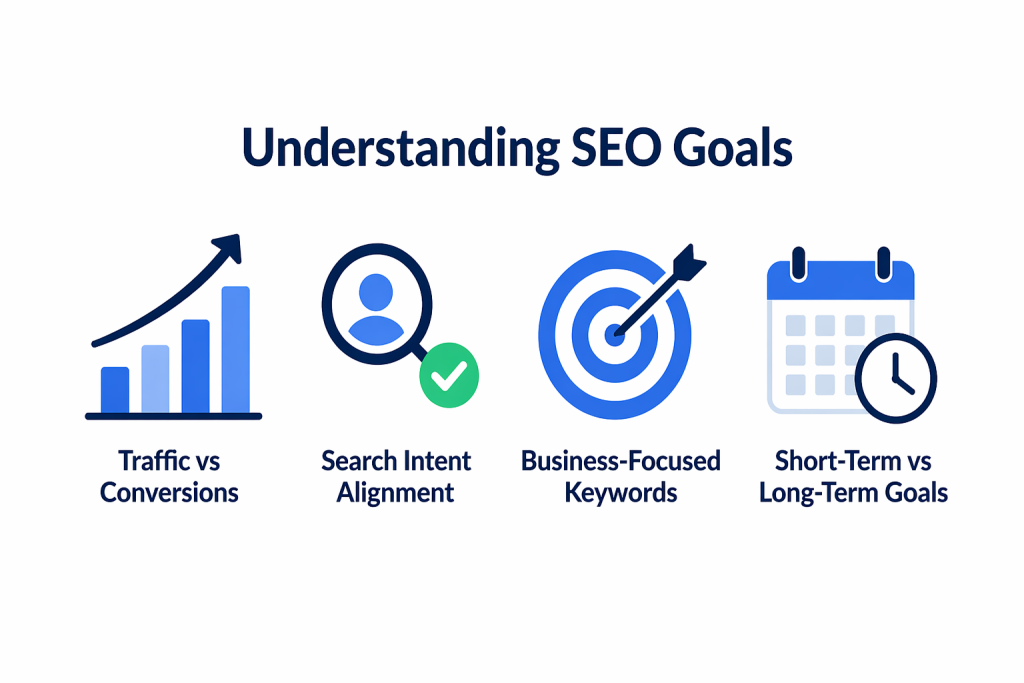
Understanding SEO Goals
You need to know what you want to get out of Keyword Research before you start. Not all keywords are worth going after, and going after the wrong ones can waste time and energy.
- Traffic vs Conversions: Some keywords bring high traffic but low intent, while others bring fewer visitors who are ready to take action. The goal is to balance both, depending on whether you want visibility or actual results.
- Search Intent Alignment: Keywords reflect what users are looking for, not just what they type. Understanding whether someone wants information, comparison, or to buy helps you create content that actually matches their need.
- Business-Focused Keywords: Not all traffic is valuable. Prioritize keywords that relate directly to your product, service, or niche so the visitors you attract are more likely to convert.
- Short-Term vs Long-Term Goals: Some keywords are easier to rank for and bring quick wins, while others take time but build authority. A strong strategy includes creating steady growth over time.
The best way to do this is to make sure that your keywords match your real business or content goals.
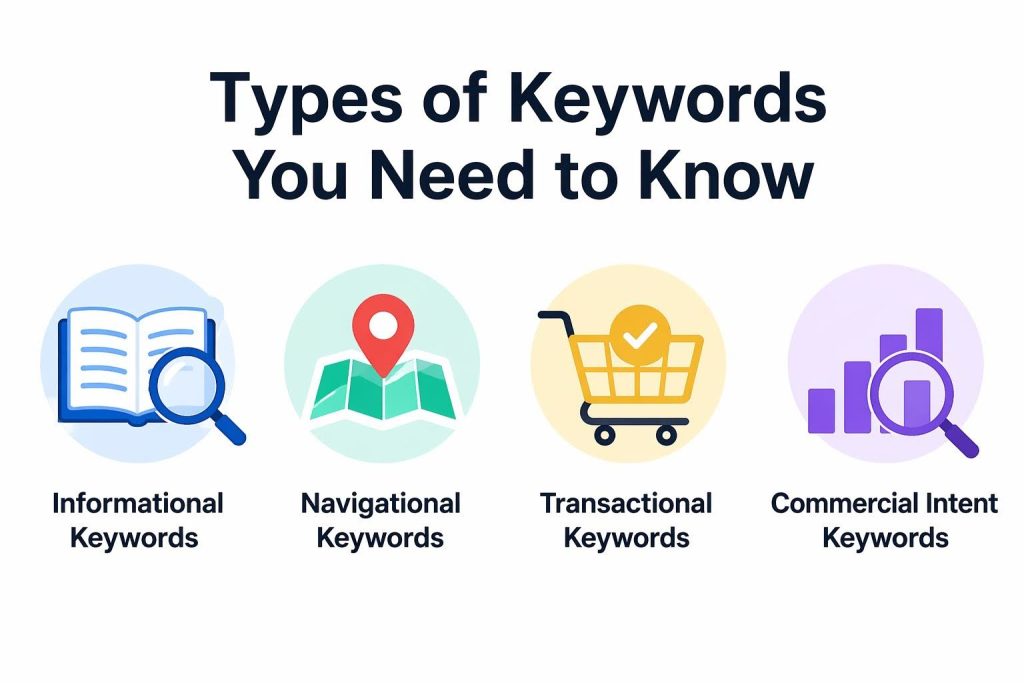
Types of Keywords You Need to Know
Not all keywords are used for the same thing. Some people just want to know more, while others are ready to do something. Knowing these differences will help you reach the right people with the right content.
- Informational Keywords: These are the terms people use when they want to learn something, like guides or how-to questions. They typically attract a lot of searches and are fantastic for driving traffic and establishing authority.
- Navigational Keywords: These are for users who already know what they want and are trying to find a specific website or brand. These keywords play a crucial role in enhancing brand visibility and tapping into existing demand.
- Transactional Keywords: These keywords show a strong intent to buy, indicating that users are ready to take action, whether it’s making a purchase or signing up for something.
- Commercial Intent Keywords: These sit in the middle of research and buying. Users are weighing their options, checking out reviews, or searching for the best solution before making a choice, which makes them incredibly valuable for content aimed at conversions.
Finding Seed Keywords
Not all keywords are used for the same thing. Some people just want to know more, while others are ready to do something. Knowing these differences will help you reach the right people with the right content.
- Informational Keywords: These are the terms people use when they want to learn something, like guides or how-to questions. They typically attract a lot of searches and are fantastic for driving traffic and establishing authority.
- Navigational Keywords: These are for users who already know what they want and are trying to find a specific website or brand. These keywords play a crucial role in enhancing brand visibility and tapping into existing demand.
- Transactional Keywords: These keywords show a strong intent to buy, indicating that users are ready to take action, whether it’s making a purchase or signing up for something.
- Commercial Intent Keywords: These sit in the middle of research and buying. Users are weighing their options, checking out reviews, or searching for the best solution before making a choice, which makes them incredibly valuable for content aimed at conversions.
Finding Seed Keywords
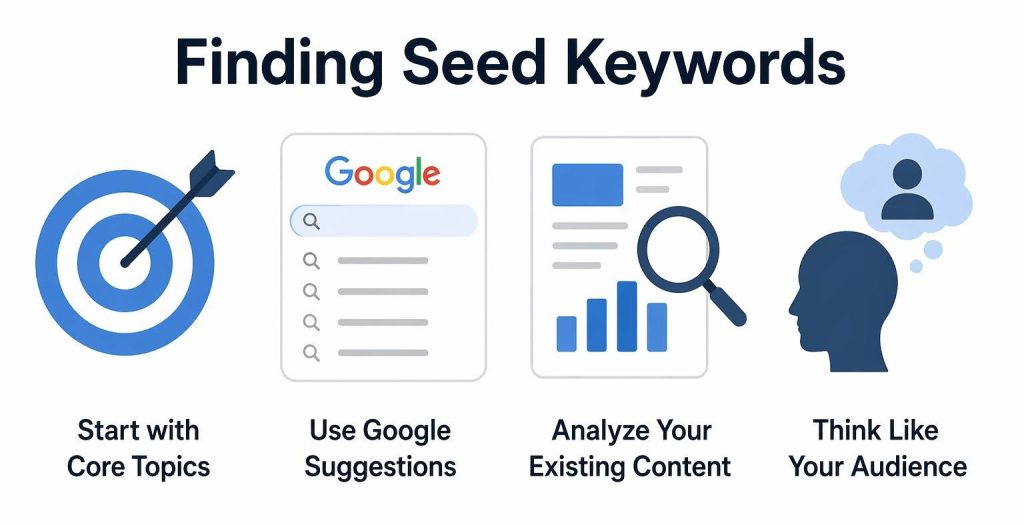
Seed keywords are the first set of basic ideas that every keyword strategy starts with. These are easy words that are related to your niche and can help you find more keyword opportunities.
- Start with Core Topics: Consider the main themes that your business or content centers around. These overarching ideas will serve as your foundation and guide the course of your keyword research.
- Use Google Suggestions: When you enter a query into Google, it provides autocomplete suggestions and related searches. These reflect actual queries that people are making, making them a trustworthy source for seed keywords.
- Analyze Your Existing Content: Take a look at the pages or blogs that are already doing well. They often highlight keyword trends and topics that you can delve into further.
- Think Like Your Audience: Rather than just sticking to industry jargon, think about how your audience searches. Simple, everyday phrases can often lead to better keyword opportunities than technical terms.
If you do this step right, the rest of Keyword Research will be much easier.
Expanding Keyword Ideas
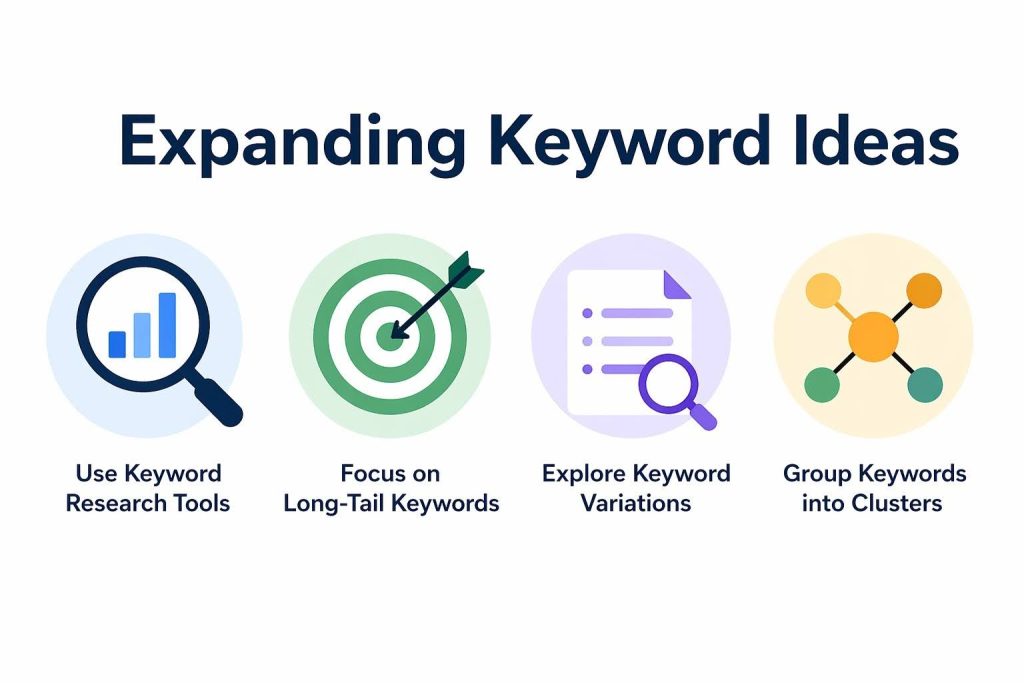
The next step is to take your seed keywords and make a bigger list of chances. This is where Keyword Research starts to get bigger, helping you find variations, long-tail queries, and content ideas that you might not have found otherwise.
- Use Keyword Research Tools: Tools can quickly generate hundreds of related keywords based on your seed terms. They also provide useful data like search volume, competition, and trends to guide your decisions.
- Focus on Long-Tail Keywords: Longer, more specific phrases usually have lower competition and clearer intent. They may bring less traffic individually, but often convert better and are easier to rank for.
- Explore Keyword Variations: Small changes in wording can reveal new opportunities. Plurals, synonyms, and question-based queries help you cover a wider range of search behavior.
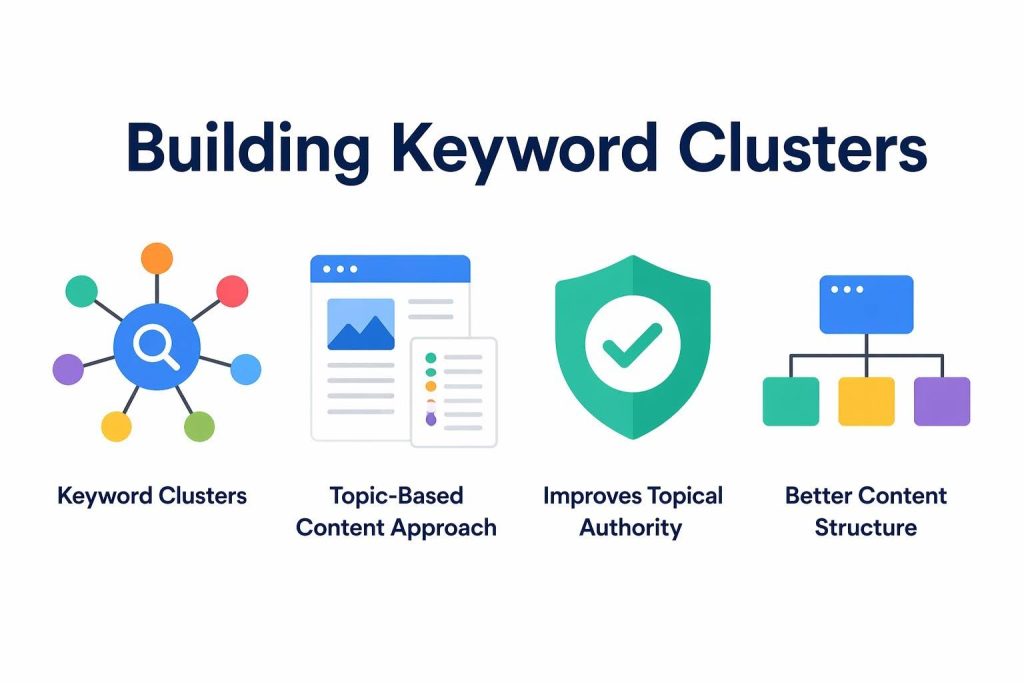
- Group Keywords into Clusters: Instead of treating each keyword separately, group similar ones together. This helps you create stronger, more comprehensive content that ranks for multiple terms at once.
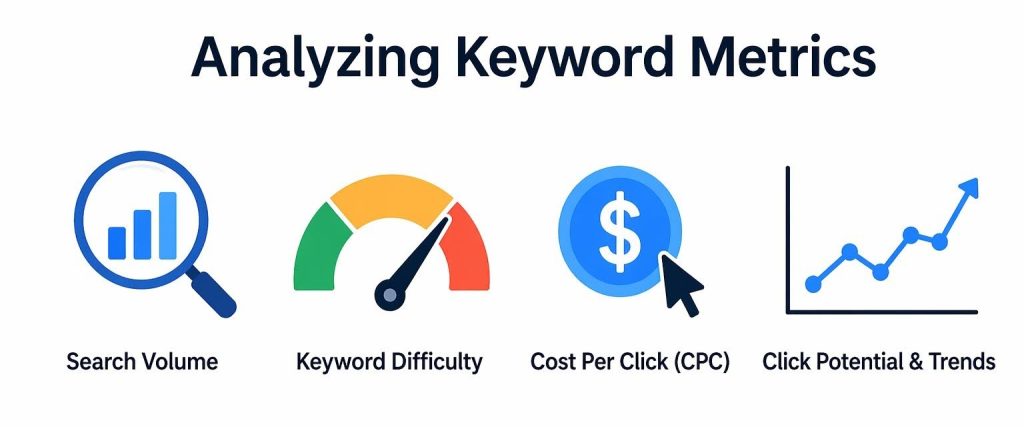
Analyzing Keyword Metrics
The next step is to figure out which of the keywords on your list are worth going after. Not all keywords are equally useful, and picking the right ones depends on knowing the key metrics that help you make decisions.
- Search Volume: This tells you how many people are searching for a specific keyword each month. A higher search volume can indicate more potential traffic, but it often means you’ll face stiffer competition.
- Keyword Difficulty: This figure gives you an idea of how challenging it is to rank for a keyword. Competitive keywords typically demand stronger content, quality backlinks, and a solid domain authority to succeed.
- Cost Per Click (CPC): CPC shows how much advertisers are willing to spend on a keyword. A higher CPC usually suggests a strong commercial intent and a greater likelihood of conversion.
- Click Potential & Trends: Not every search results in a click, especially with featured snippets and AI-generated results. By examining trends and actual click behavior, you can focus on keywords that are more likely to bring in genuine traffic.
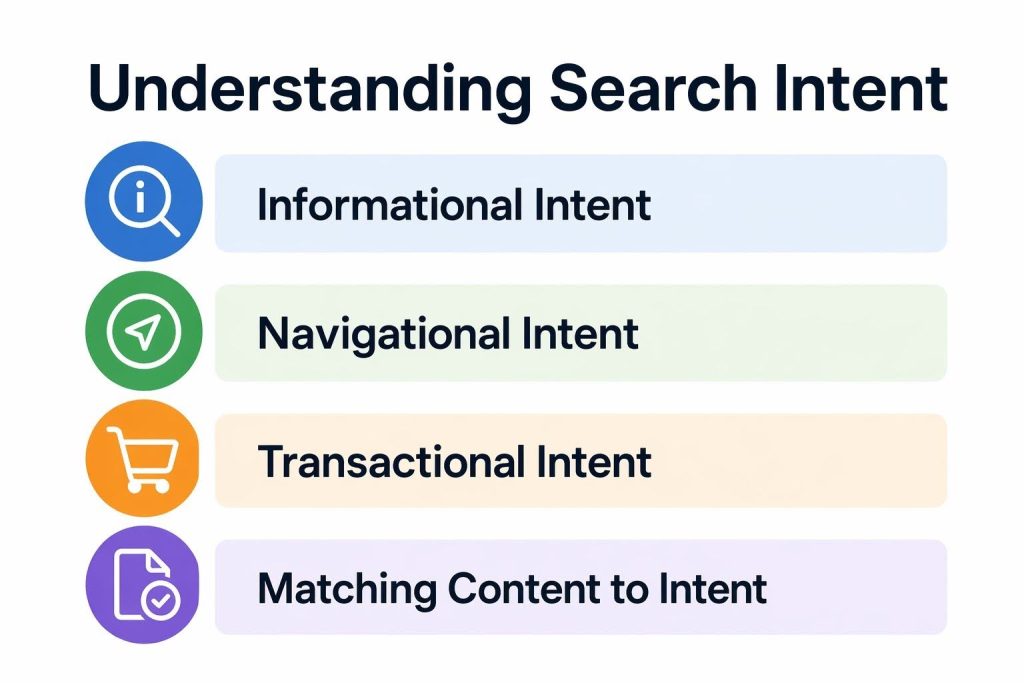
Understanding Search Intent
Keyword Research isn’t about finding popular terms. It’s knowing why someone is searching in the first place. Even if the keyword is great, if your content doesn’t match that intent, then it’s not going to rank well or convert.
- Informational Intent: This is when users are eager to learn something new, often seeking out guides, tips, or detailed explanations. Your content should be straightforward, helpful, and aimed at directly answering their questions.
- Navigational Intent: Here, users already have a specific brand or website in mind. Your mission is to make sure your pages are optimized so that they can easily find and reach their desired destination.
- Transactional Intent: These users are primed to take action, whether that means making a purchase or signing up for a service. Your content should be clear, persuasive, and designed to simplify their decision-making process.
- Matching Content to Intent: The true value lies in aligning your content with the intent behind the keywords. When your content resonates with the user’s intent, you’ll see improved rankings and a natural boost in conversions.
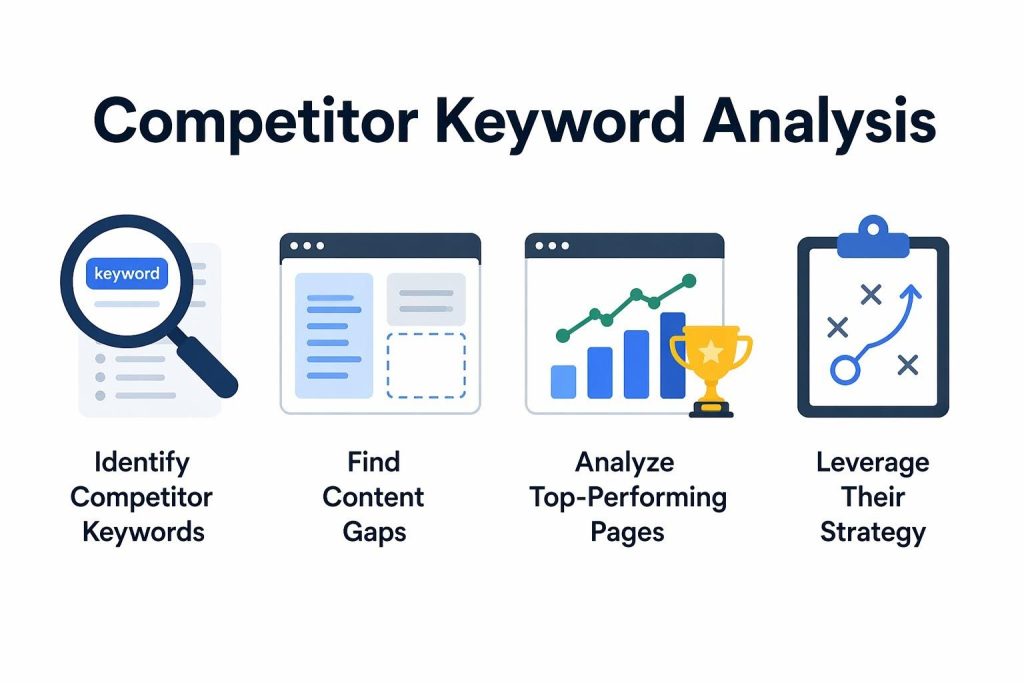
Competitor Keyword Analysis
You don’t have to start from scratch with Keyword Research. Much of the work has been done by your competitors already. You can learn from what they’re doing, find opportunities, avoid mistakes, and build a smarter strategy.
- Identify Competitor Keywords: Take a look at the keywords your competitors are ranking for. This will give you a solid understanding of what’s attracting traffic in your niche and where you can step in.
- Find Content Gaps: No one covers everything, and your competitors are no exception. You can identify topics they’ve missed or areas where their content falls short, allowing you to create more comprehensive and valuable resources to fill those voids.
- Analyze Top-Performing Pages: Dive into which pages are driving the most traffic for them. This insight will help you grasp what type of content resonates best, whether it’s blog posts, landing pages, or product descriptions.
- Leverage Their Strategy: Remember, the aim isn’t to mimic but to improve. Focus on crafting more detailed, up-to-date, and user-centric content that can outshine what’s currently out there.
Building Keyword Clusters
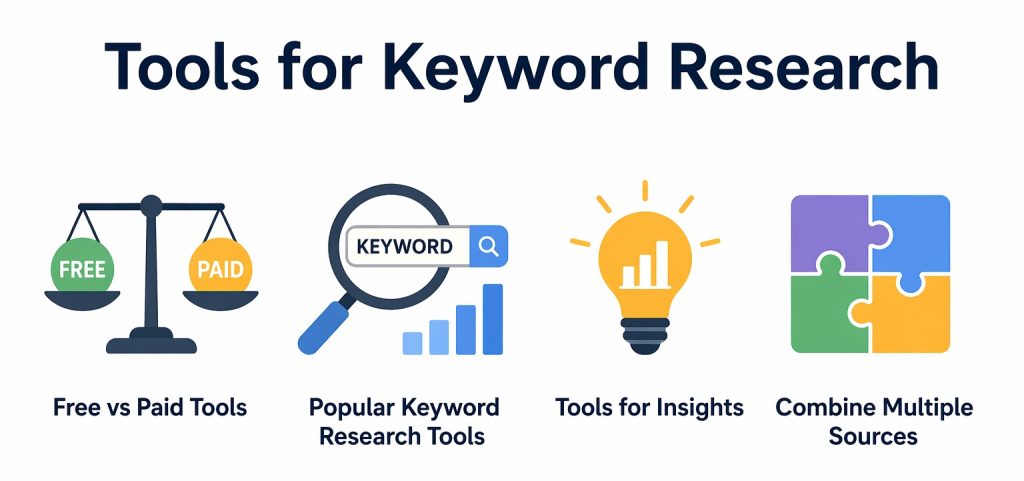
Keyword Research is much easier with the right tools. Manual methods can help generate ideas, but tools can help with data, insight, and scale. The trick is not so much in the use of tools, but in the effective use of them.
- Free vs Paid Tools: Free tools are great for beginners and basic research, while paid tools offer deeper insights like competitor data and advanced metrics. Choose based on your needs and budget.
- Popular Keyword Research Tools: Tools like Google Keyword Planner, Ubersuggest, and Ahrefs help you find keywords, analyze competition, and track performance.
- Tools for Insights: Don’t just collect keywords. Focus on understanding trends, intent, and opportunities behind the numbers to make smarter decisions.
- Combine Multiple Sources: No single tool is perfect. Using a mix of tools and manual research gives you a more complete and accurate keyword strategy.
Conclusion
Keyword Research isn’t only an SEO step. It’s the foundation for everything you build. When you know what people are looking for, and why, your content is more focused, relevant, & effective.
The real benefit is consistency. It’s not about finding a few keywords and then stopping. Markets change, search behavior changes, and competitors change. Keep updating your keyword strategy to stay ahead of the game and make sure your content keeps performing over time.
With the right mindset for Keyword Research, this is a long-term asset, not a one-time task. Focus on intent, set your priorities right, and build content around actual user needs. Do that well, and rankings, traffic, and conversions tend to follow naturally.
Deepak Wadhwani has over 20 years experience in software/wireless technologies. He has worked with Fortune 500 companies including Intuit, ESRI, Qualcomm, Sprint, Verizon, Vodafone, Nortel, Microsoft and Oracle in over 60 countries. Deepak has worked on Internet marketing projects in San Diego, Los Angeles, Orange Country, Denver, Nashville, Kansas City, New York, San Francisco and Huntsville. Deepak has been a founder of technology Startups for one of the first Cityguides, yellow pages online and web based enterprise solutions. He is an internet marketing and technology expert & co-founder for a San Diego Internet marketing company.