



Table of Contents
Introduction
A small business owner noticed something odd a few years ago. His competition was expanding more quickly despite having a smaller workforce and budget. It wasn’t luck that made the difference. It was the way they guided their decisions with data and AI.
AI isn’t just for tech giants anymore. It subtly aids companies in understanding their clients, forecasting demand, and reducing daily tasks. Real numbers that demonstrate what works and what doesn’t lie behind all of this.
Eight compelling AI statistics for 2026 are presented in this blog, highlighting the true drivers of business growth. You can utilize these straightforward insights to create more effective plans and expand more quickly.
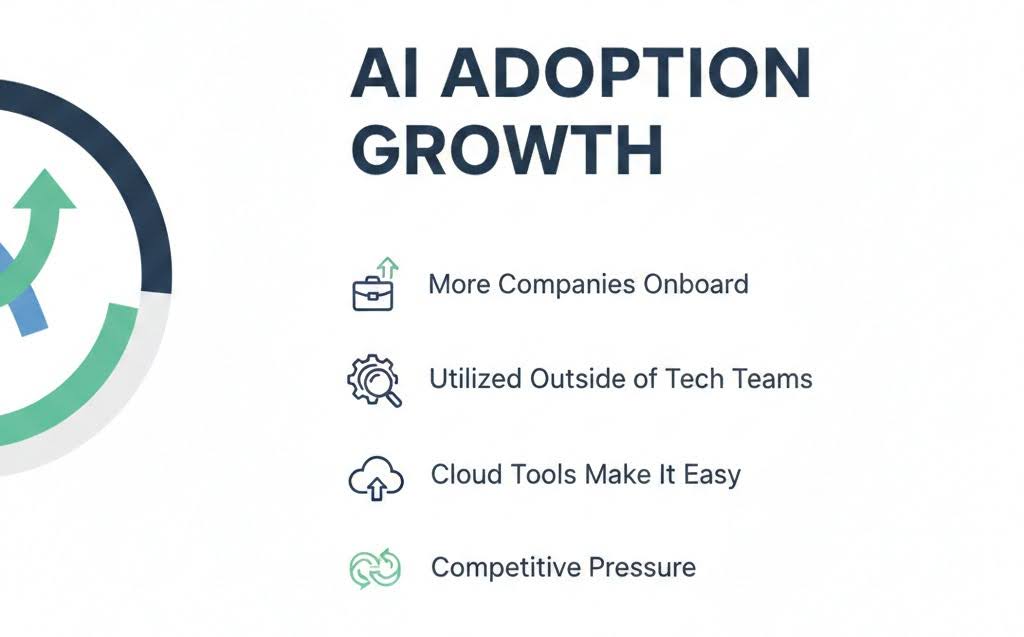
#1 AI Adoption Growth
AI is not just used by large tech companies; it is becoming a standard component of business. More teams use it every year in an effort to save time and make better choices.
- More Companies Onboard: AI is now being used by an increasing number of companies for routine tasks like forecasting, customer insights, and reporting. “Nice to try” has given way to “important to have.”
- Utilized Outside of Tech Teams: Marketing, sales, human resources, and operations now use AI tools. Without requiring extensive technical knowledge, teams use them to save time and make better decisions.
- Cloud Tools Make It Easy: Businesses don’t need a lot of infrastructure because many AI tools operate in the cloud. For small and mid-sized businesses, this reduces costs and speeds up adoption.
- Competitive Pressure: Businesses in a market are under pressure to adopt AI when one company does so successfully. AI soon becomes a necessary component of maintaining competitiveness.
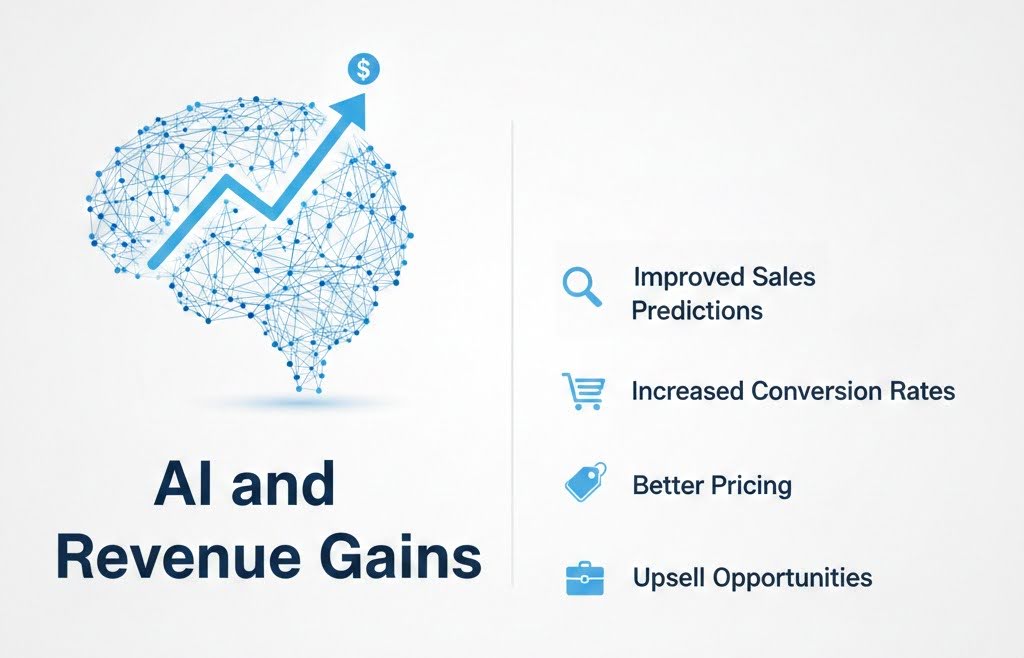
#2 AI and Revenue Gains
Companies are doing a lot more with AI than just running experiments. They’re tapping into its potential to boost their revenue and improve results.
Improved Sales Predictions: AI forecasts demand by analyzing historical sales and market trends. This aids companies in inventory planning and helps them avoid lost opportunities.
Increased Conversion Rates: AI-powered personalization displays the appropriate offer to the appropriate individual. When messages seem relevant, customers are more likely to purchase.
Better Pricing: AI is able to examine competitor pricing, demand, and seasonality. Instead of speculating, businesses can more confidently modify prices.
Upsell Opportunities: AI makes timely recommendations for accessories and related goods. This raises the order value without making the customer feel pressured.
The data clearly shows a strong link between the use of AI and income growth.
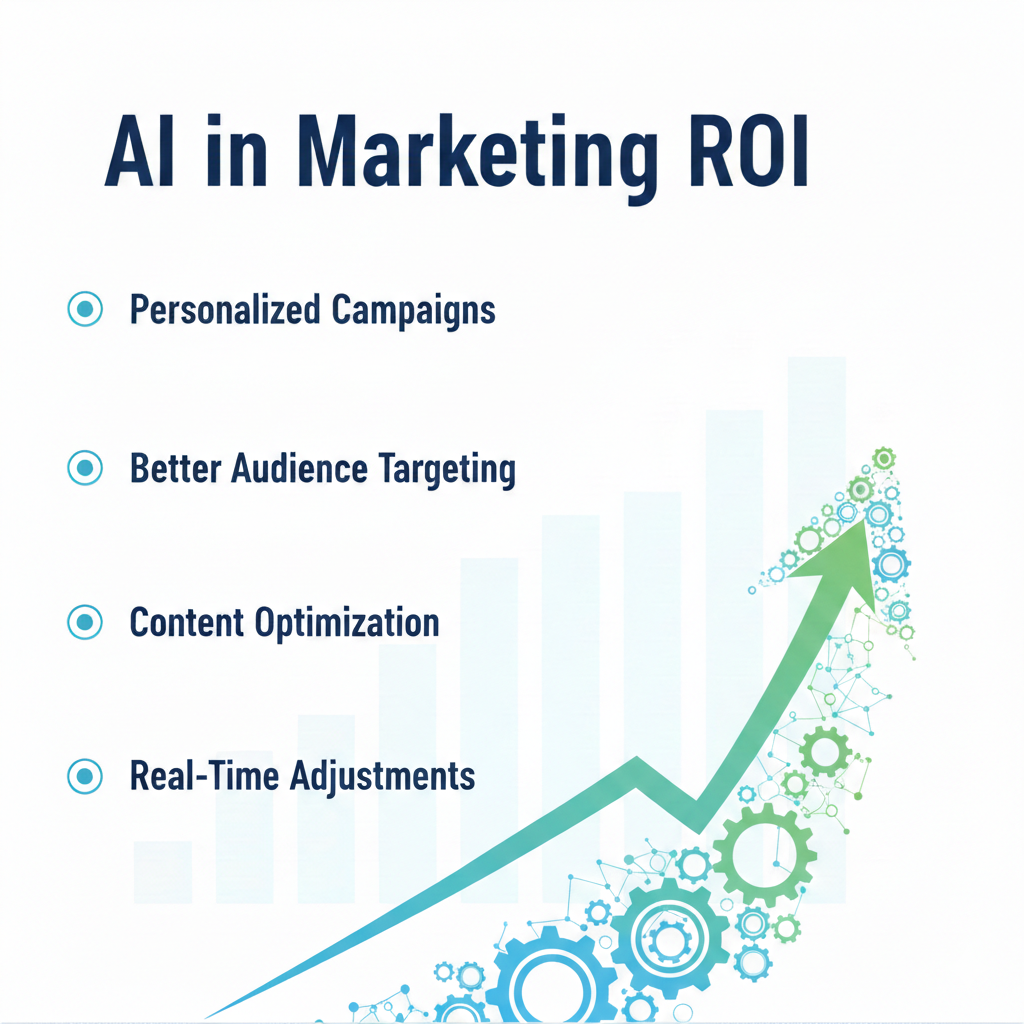
#3 AI in Marketing ROI
Marketing budgets often face tight constraints. That’s where AI comes in, helping teams make the most of their funds and zero in on what truly delivers results.
- Personalized Campaigns: AI customizes emails, ads, and website content based on user behavior. This kind of personalized marketing often results in better engagement and increased sales.
- Better Audience Targeting: AI pinpoints which audiences are most likely to make a purchase. This helps cut down on wasted spending on those who probably won’t buy.
- Content Optimization: AI tools recommend effective headlines, keywords, and formats. With data backing them up, marketers can enhance their content more quickly.
- Real-Time Adjustments: AI keeps an eye on campaign performance in real-time. It can alert you when it’s time to adjust your budget or tweak your messaging for improved results.
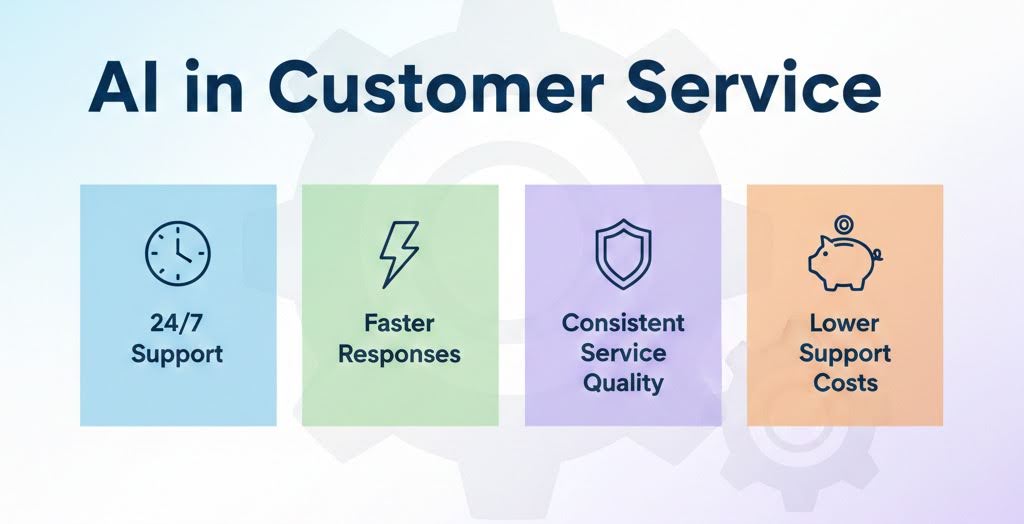
#4 AI in Customer Service
Customer expectations are soaring these days. Everyone is looking for quick and effective support.
- 24/7 Support: With AI chatbots, customers can get answers to their common questions at any time. This means they receive help quickly, without having to wait for regular office hours.
- Faster Responses: AI technology enables agents to locate answers and review past cases more efficiently. This not only speeds up response times but also boosts customer satisfaction.
- Consistent Service Quality: AI operates based on established rules and knowledge bases, ensuring that responses remain consistent for all customers.
Lower Support Costs: By managing routine inquiries, AI lightens the load for human support teams. This allows businesses to keep costs down while still providing excellent customer service.
That’s where AI comes in, helping businesses rise to the occasion without putting too much strain on their teams.
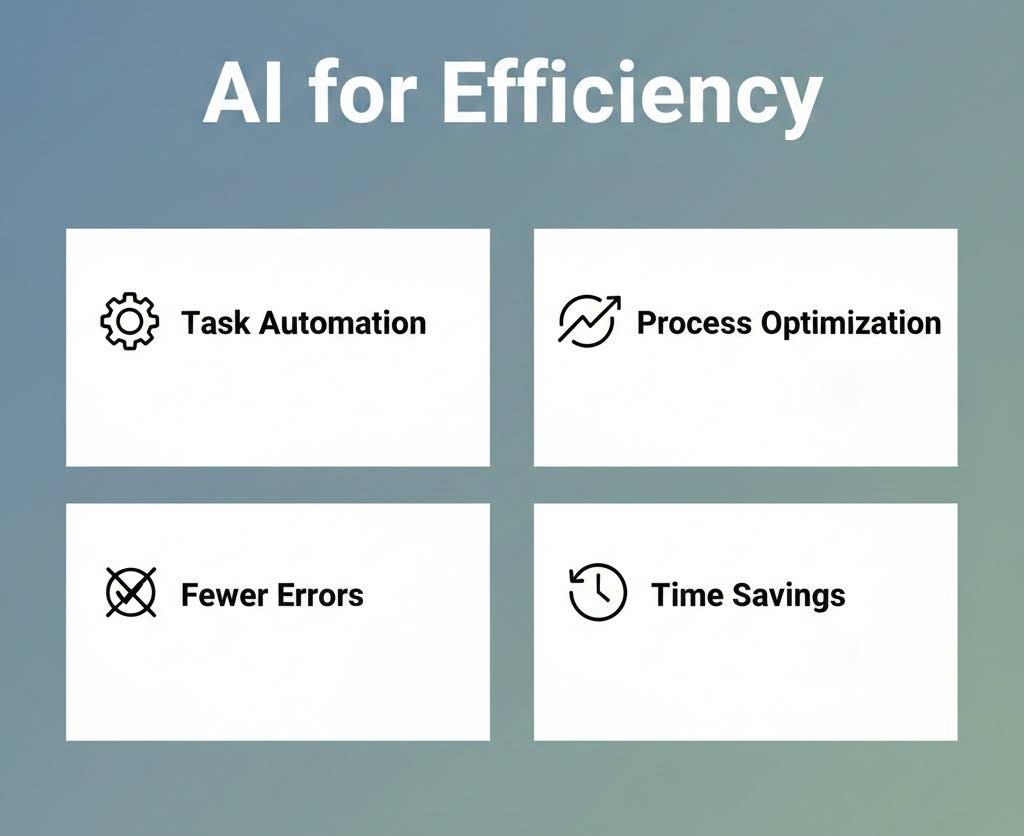
#5 AI for Efficiency
A lot of business hours slip away due to repetitive tasks. That’s where AI comes in, automating those routine jobs so teams can dedicate their time to more meaningful work.
- Task Automation: Mundane tasks like data entry and report generation can be handled by AI. This allows employees to concentrate on more valuable projects.
- Process Optimization: AI identifies bottlenecks in workflows. By addressing these delays, businesses can enhance their overall efficiency.
- Fewer Errors: Automated systems help minimize human errors in calculations and record-keeping. This boosts both accuracy and confidence in the data.
- Time Savings: Automating smaller tasks can save hours each week. Over time, these savings add up to significant productivity improvements.
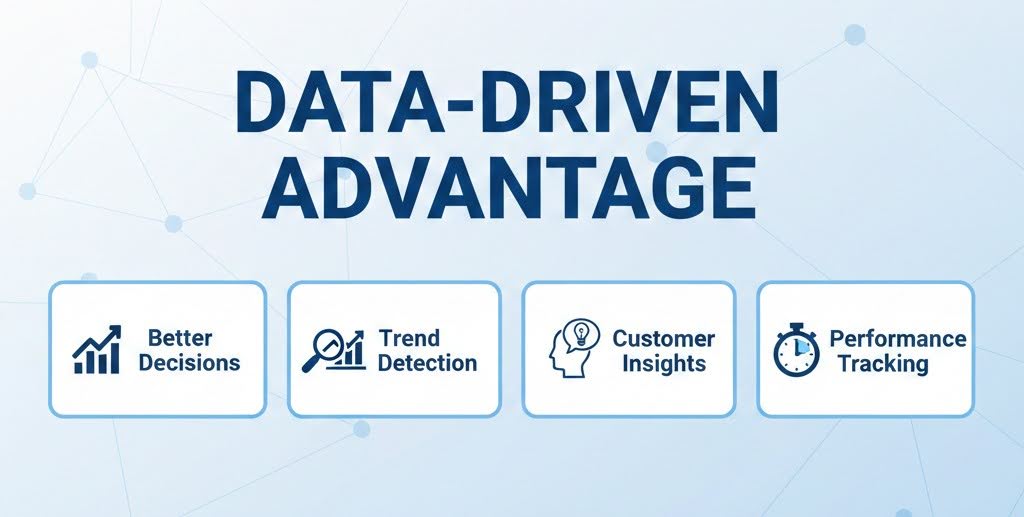
#6 Data-Driven Advantage
Data is all around us, but not everyone knows how to make the most of it. AI steps in to transform raw numbers into valuable insights, helping us make smarter decisions.
- Better Decisions: With AI, raw data is converted into straightforward insights. This allows leaders to base their choices on solid facts rather than just gut feelings.
- Trend Detection: AI has a knack for identifying patterns that might slip past human eyes. This capability enables businesses to respond swiftly to shifts in the market.
- Customer Insights: AI dives into customer behavior and preferences, giving companies a clearer picture of what their customers truly want.
- Performance Tracking: AI-powered dashboards reveal what’s working and what isn’t, allowing teams to quickly tweak their strategies as needed.
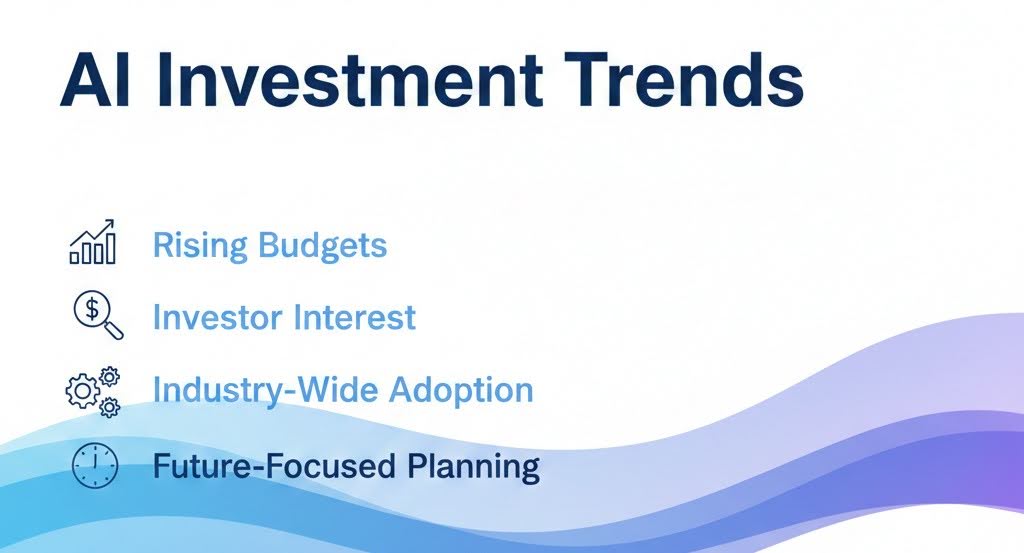
#7 AI Investment Trends
Companies are really pouring money into AI these days, and it’s clear they see it as a game-changer for the future of business.
- Rising Budgets: A lot of companies are ramping up their AI budgets year after year, viewing it as a key player in their long-term growth strategy.
- Investor Interest: Investors are backing AI-driven companies with enthusiasm, which in turn sparks even more innovation and the development of new tools.
- Industry-Wide Adoption: Industries ranging from healthcare to retail are jumping on the AI bandwagon. It’s no longer just the tech sector that’s getting in on the action.
- Future-Focused Planning: Businesses are making investments now to ensure they’re prepared for what’s ahead. AI is increasingly seen as a crucial part of their long-term plans.
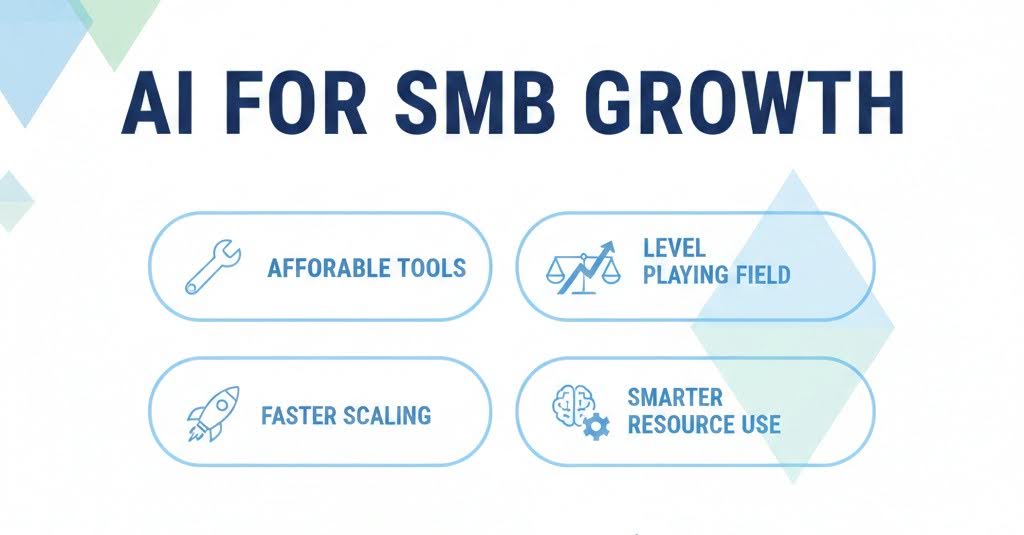
#8 AI for SMB Growth
Small and mid-sized businesses can breathe a sigh of relief—using AI no longer requires a hefty budget. With today’s innovative tools, almost any business can tap into the power of AI.
- Affordable Tools: There are plenty of AI tools out there with budget-friendly plans. This means smaller companies can dive in without taking on too much risk.
- Level Playing Field: AI levels the playing field, giving small teams access to capabilities that were once the exclusive domain of larger firms. Now, they can analyze data and automate processes just like their bigger competitors.
- Faster Scaling: Thanks to automation, SMBs can expand without the need to hire large teams, helping them keep costs manageable.
- Smarter Resource Use: AI helps businesses focus on what truly matters. This way, SMBs can invest their time and money where it will yield the best results.
Conclusion
AI isn’t just a concept for the future anymore; it’s actively influencing how businesses expand, compete, and make decisions today. The statistics you’ve encountered aren’t merely figures; they reflect genuine transformations in how companies function and thrive.
The great news is that you don’t have to be a massive corporation to reap the benefits of AI. There are plenty of tools available now that are user-friendly, budget-friendly, and designed for everyday business needs.
The trick is to kick things off with a clear objective and leverage AI in areas where it can save you time or enhance your decision-making. Companies that embrace learning and adaptation early on tend to experience the most substantial benefits. As we approach 2026, those who harness AI effectively will find themselves in a much better position to grow.
Deepak Wadhwani has over 20 years experience in software/wireless technologies. He has worked with Fortune 500 companies including Intuit, ESRI, Qualcomm, Sprint, Verizon, Vodafone, Nortel, Microsoft and Oracle in over 60 countries. Deepak has worked on Internet marketing projects in San Diego, Los Angeles, Orange Country, Denver, Nashville, Kansas City, New York, San Francisco and Huntsville. Deepak has been a founder of technology Startups for one of the first Cityguides, yellow pages online and web based enterprise solutions. He is an internet marketing and technology expert & co-founder for a San Diego Internet marketing company.