


Table of Contents
Introduction
Search optimization used to be a straightforward game: rank higher, get more clicks, and win. Keywords were the preferred weapon, and traffic was the prize. However, the modern search environment has evolved and now demands more than just visibility.
Experience-first optimization has replaced traffic-first SEO for brands as a result of this change. Pages that satisfy a query are now rewarded by search engines, not just those that match a query. Nowadays, a key factor in determining whether your content truly performs after the click is engagement, usability, and relevance.
For many businesses, that’s where the issue starts. Despite their high ranking, they don’t convert. Although they draw users, they don’t provide them with good service. Being useful is more important in today’s search than being found. And a new strategy has emerged as a result of that evolution: Optimizing the search experience.
What is Search Experience Optimization (SXO)?
The logical development of today’s search performance metrics is Search Experience Optimization (SXO).
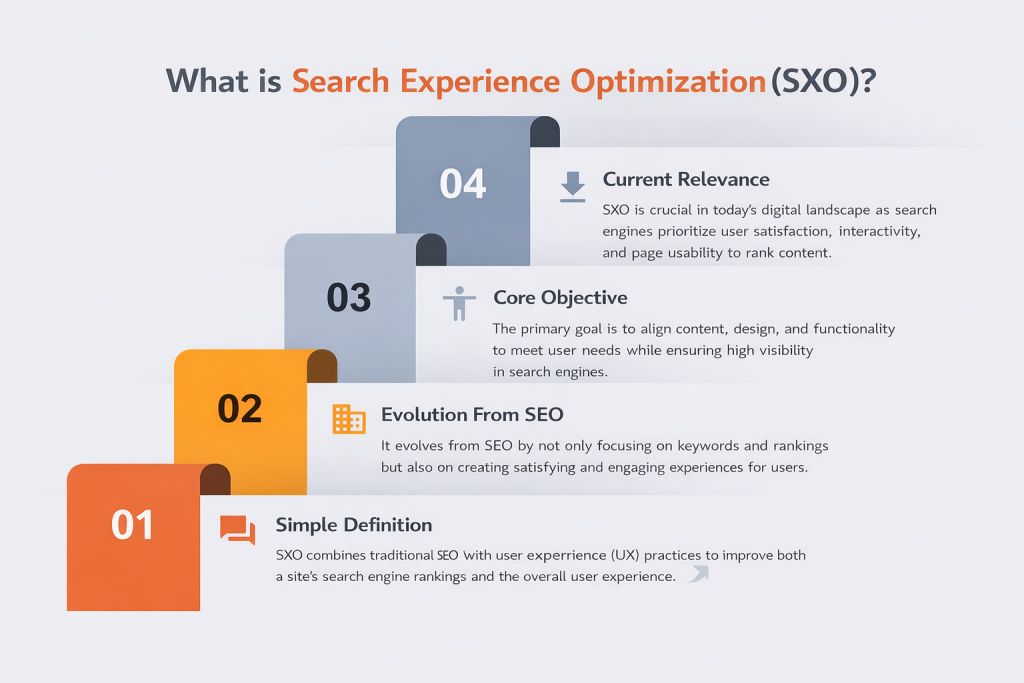
- Simple Definition: SXO is simply defined as optimizing for people, not just algorithms. To provide value after the click, it integrates SEO, user experience, and conversion optimization. The goal is to meet user needs quickly and clearly.
- Evolution From SEO: Rankings and traffic volume were given priority in traditional SEO. Search engines started assessing user behavior, such as engagement and satisfaction, as they developed.
- Core Objective: Intent fulfillment is SXO’s main objective. Every component—from layout to content—cooperates to make it easier for users to accomplish their objectives.
- Current Relevance: Pages that users genuinely find useful are now rewarded by search engines. High bounce rates and poor engagement signal failure, even with strong rankings.
SXO seeks to design user journeys that are seamless, pertinent, and meaningful rather than merely pursuing clicks.
The Three Pillars of SXO
Search, User Experience, and Conversion are the three interrelated pillars that support Search Experience Optimization. They all have different roles to play, but none of them function alone. Users stay, interact, and take action when all three are in harmony.
Search
When it comes to SXO, it’s not just about pulling in as many users as possible—it’s about bringing in the right ones.
- This journey begins with grasping search intent and ensuring that the content aligns perfectly with what users are actually seeking. In this game, relevance trumps sheer visibility every time.
- If you rank high but don’t align with user intent, you’ll end up with low engagement and traffic that doesn’t convert. SXO focuses on matching queries, understanding the context of SERPs, and aligning content so that users find themselves on pages that feel immediately helpful and spot-on.
User Experience (UX)
Once users arrive, the user experience (UX) plays a crucial role in deciding whether they stick around or bounce.
- Elements like clear layouts, easy-to-read content, intuitive navigation, and quick load times all contribute to how users perceive the value of a site.
- When it comes to mobile usability, clarity is key, especially since most users engage in brief, focused sessions.
- In search experience optimization (SXO), UX is essential for helping users find answers swiftly and without any hassle or confusion.
Conversion
Conversion is where experience turns into results. Conversion in SXO encompasses not just sales but also sign-ups, clicks, downloads, and any other significant action. Both small interactions and final goals matter.
SXO makes conversion seem like a natural next step by lowering friction and guiding users organically. Users move forward voluntarily when intent, experience, and messaging are in harmony.
How Search, UX, and Conversion Work Together
Conversion, user experience, and search are all components of the same process rather than separate strategies.
- Importance of Balance: Effective search without good user experience (UX) leads to users leaving the site, while excellent UX without visibility remains unnoticed.
- User Journey Flow: A pertinent search result directs the appropriate user to the webpage. Strategically placed Calls to Action (CTAs) then naturally lead users to the next step.
- Behavior Signals: Search engines monitor how users engage with pages after clicking. User engagement, scrolling behavior, and return visits indicate quality and relevance. Positive user behavior enhances long-term search performance.
- System Alignment: When search, UX, and conversion work in harmony, friction is eliminated. Users do not feel pressured; they feel guided. This synergy is what transforms traffic into significant outcomes.
When these components complement one another rather than vie for attention, SXO functions. They produce a smooth path from query to action when they are in alignment.
SXO vs SEO: What’s the Difference?
Although they don’t address the same issue, SEO and SXO are closely related. While SXO concentrates on what happens after users arrive at your site, SEO concentrates on getting them there.
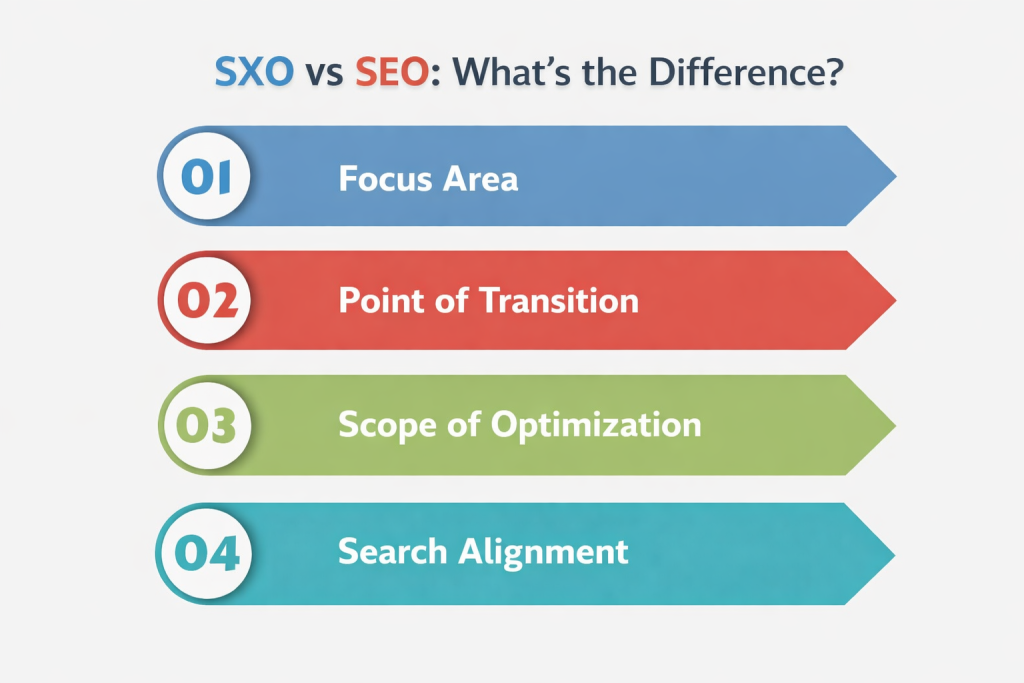
- Focus Area: SEO is all about improving rankings, targeting keywords, and boosting visibility in search results. On the other hand, SXO takes a different approach by emphasizing user satisfaction, engagement, and achieving goals.
- Point of Transition: With SEO, the work pretty much wraps up once a user arrives on the page. But that’s where SXO kicks in, shaping the experience that follows. This involves everything from layout to clarity.
- Scope of Optimization: SEO typically prioritizes search engines first and users second. In contrast, SXO focuses on optimizing for users in a way that search engines will also appreciate.
- Search Alignment: Today’s search engines are all about delivering helpful and satisfying experiences. SXO naturally aligns with these priorities by concentrating on fulfilling user intent, making it more adaptable to changes in algorithms.
Combining the two is essential to the success of contemporary searches.
Role of Search Intent in SXO
Search intent is really the cornerstone of Search Experience Optimization. SXO truly shines when web pages resonate with what users are looking for at the exact moment they hit search.
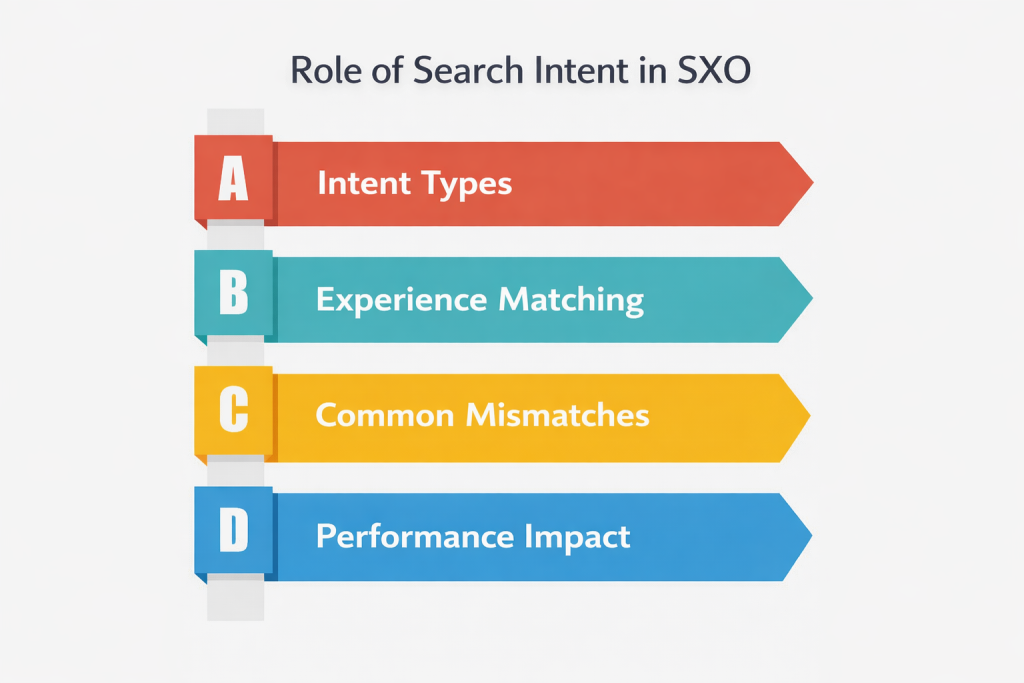
- Intent Types: Generally speaking, search intent can be classified as transactional, navigational, or informational. Different user goals and mindsets are reflected in each type.
- Experience Matching: Transactional intent requires speed and simplicity, whereas informational intent requires clarity and depth. Direct routes and low friction are necessary for navigational intent.
- Common Mismatches: Users are confused when an informational article is ranked for a transactional query. Friction arises when a buying page is overloaded with lengthy explanations.
- Performance Impact: Users spend more time and take action when intent is appropriately matched. Search performance is strengthened by improved engagement signals.
Grasping this intent is key to crafting both the content and the overall experience.
Key UX Elements That Impact SXO
User experience is super important when it comes to turning search traffic into real results.
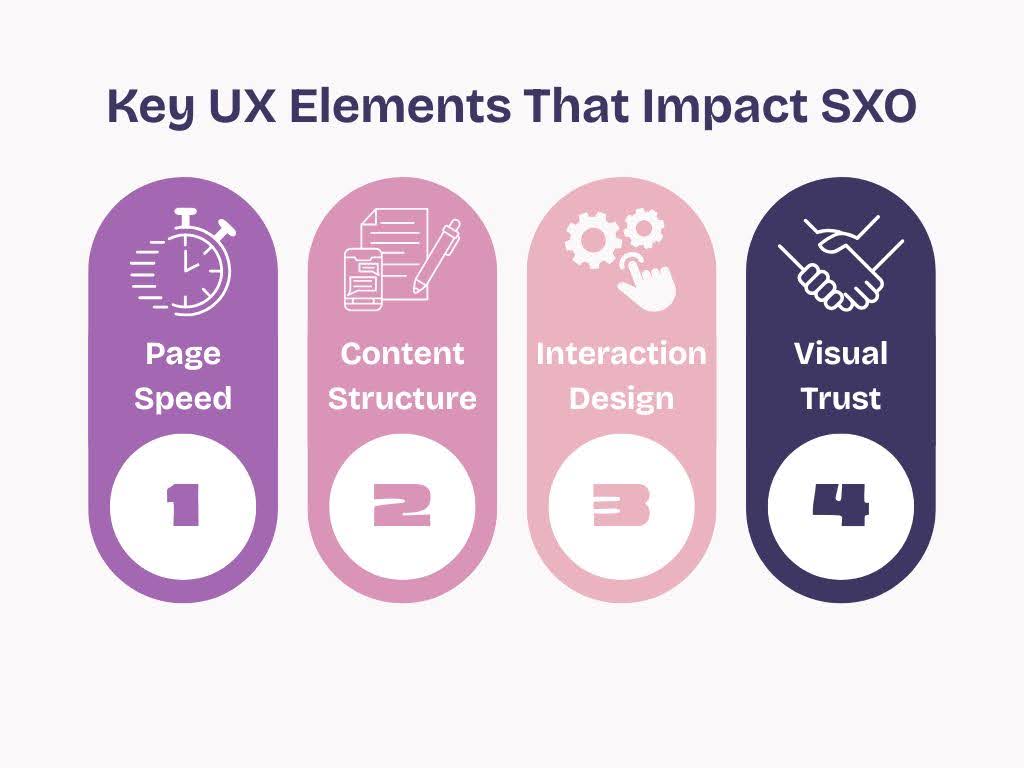
- Page Speed: When pages take too long to load, it disrupts the flow and can lead to higher bounce rates. Core Web Vitals are essential for gauging how fast and stable a page feels to users.
- Content Structure: Using clear headings, short paragraphs, and easy-to-scan layouts can significantly enhance readability. Users often prefer to skim through content before deciding to dive deeper.
- Interaction Design: Calls to action, forms, and buttons should be designed to feel intuitive and user-friendly. Reducing the number of fields and using clear labels can minimize friction.
- Visual Trust: Establishing a visual hierarchy helps direct attention to the most important elements. Trust signals, such as testimonials, a clean design, and consistent branding, help build credibility.
Even if your content is spot-on, it can fall flat if the experience is slow, confusing, or feels untrustworthy.
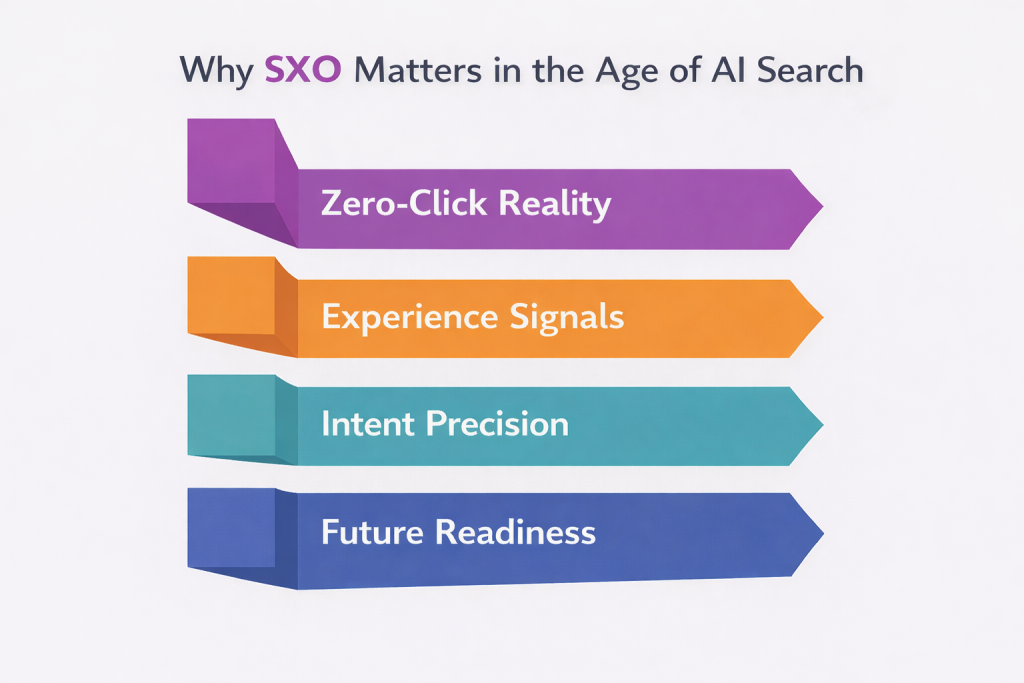
Why SXO Matters in the Age of AI Search
Search has evolved beyond just a simple list of blue links. With AI-driven search experiences, the way users find, engage with, and utilize information is transforming.
- Zero-Click Reality: AI summaries and rich results often provide answers directly on the search engine results page (SERP). As a result, users tend to click less and expect immediate value.
- Experience Signals: AI-driven search systems place a strong emphasis on user satisfaction signals. Factors like engagement, clarity, and usefulness play a bigger role in visibility than just keyword placement.
- Intent Precision: AI search has a knack for understanding user intent on a deeper level. Pages that don’t align with what users are looking for or that create confusion tend to get filtered out.
- Future Readiness: As search engine results pages become more dynamic and personalized, the quality of the user experience will set brands apart. SXO equips brands to handle algorithm changes by focusing on timeless fundamentals.
In this new landscape, focusing on Search Experience Optimization (SXO) is crucial for maintaining visibility and delivering value.
Conclusion
Search Experience Optimization is not just a new buzzword or a short-term tactic. It reflects how search actually works today. Search engines now reward pages that truly help users, not just pages that rank well. SXO moves the focus away from chasing traffic and toward creating value at every step of the user’s journey.
When businesses apply SXO, the benefits go beyond visibility. Users stay longer, trust the brand more, and are more likely to take action because the experience feels relevant and easy. By matching search intent with a clear, helpful page experience, brands create journeys that feel natural instead of forced.
What makes SXO powerful is its long-term value. Rankings and tools may change, but a good user experience never goes out of date. When growth is built around user satisfaction, it becomes more stable, scalable, and ready for the future of search.
Deepak Wadhwani has over 20 years experience in software/wireless technologies. He has worked with Fortune 500 companies including Intuit, ESRI, Qualcomm, Sprint, Verizon, Vodafone, Nortel, Microsoft and Oracle in over 60 countries. Deepak has worked on Internet marketing projects in San Diego, Los Angeles, Orange Country, Denver, Nashville, Kansas City, New York, San Francisco and Huntsville. Deepak has been a founder of technology Startups for one of the first Cityguides, yellow pages online and web based enterprise solutions. He is an internet marketing and technology expert & co-founder for a San Diego Internet marketing company.