


Table of Contents
Introduction
One of the most effective ways to interact with consumers, build relationships, and increase sales is still email marketing. But with so many options available, choosing the best email marketing tool can be a little overwhelming.
Klaviyo and Mailchimp are two of the platforms that are most frequently compared. Businesses can send emails, manage subscribers, and automate campaigns with the help of Klaviyo and Mailchimp.
However, their needs are slightly different. While Mailchimp is preferred for its user-friendly interface and extensive marketing features, Klaviyo is highly regarded for its strong data capabilities and e-commerce focus.
To help you determine which email marketing tool is best for you, we’ll compare Klaviyo and Mailchimp in this blog. We’ll examine their features, costs, usability, and best use cases so you can easily choose the platform that best suits your company’s objectives.
What is Klaviyo?
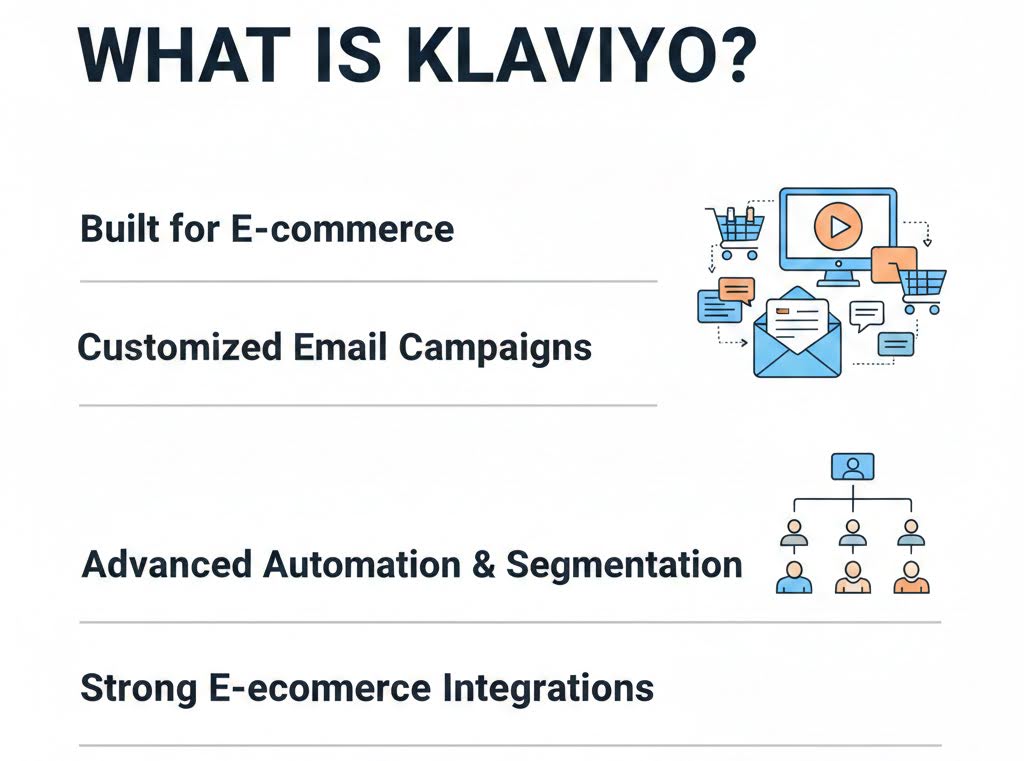
Klaviyo is an email marketing platform built to assist companies in delivering more customized and specific emails.
- Built for E-commerce: Klaviyo is primarily intended for online retailers. It focuses on using data-driven email marketing to assist brands in connecting with consumers.
- Customized Email Campaigns: The platform enables companies to send customized emails based on consumer behavior, including engagement, browsing history, and purchases.
- Advanced Automation & Segmentation: Klaviyo provides robust automation tools for product recommendations, post-purchase follow-ups, and abandoned carts. These characteristics aid in delivering an appropriate message.
- Strong E-commerce Integrations: Shopify, WooCommerce, BigCommerce, and other platforms are easily integrated with Klaviyo. This helps in monitoring customer details & improving email effectiveness for online sellers.
E-commerce companies that wish to use consumer data to increase engagement and boost sales are particularly fond of it.
What is MailChimp?
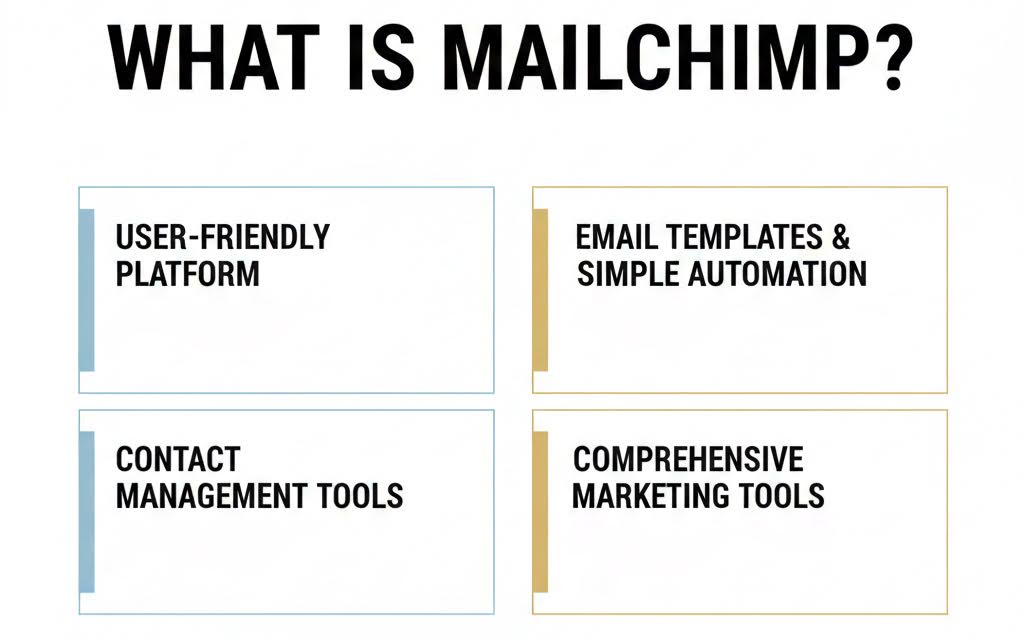
Beginners and small businesses frequently use Mailchimp, an email marketing platform.
- User-Friendly Platform: Mailchimp is recognized for its straightforward and user-friendly design. It is perfect for new email marketers and small groups.
- Email Templates & Simple Automation: The platform includes pre-designed email templates and basic automation options. This enables users to quickly create and send campaigns with little setup.
- Contact Management Tools: Mailchimp assists users in organizing and managing their contact lists with ease. It offers basic segmentation to enhance email targeting.
- Comprehensive Marketing Tools: In addition to email marketing, Mailchimp offers features like basic analytics, landing pages, and social media connections, making it a handy all-in-one solution.
Without requiring technical expertise, it assists users in managing contacts, creating email campaigns, and designing newsletters.
Klaviyo vs Mailchimp: Feature Comparison
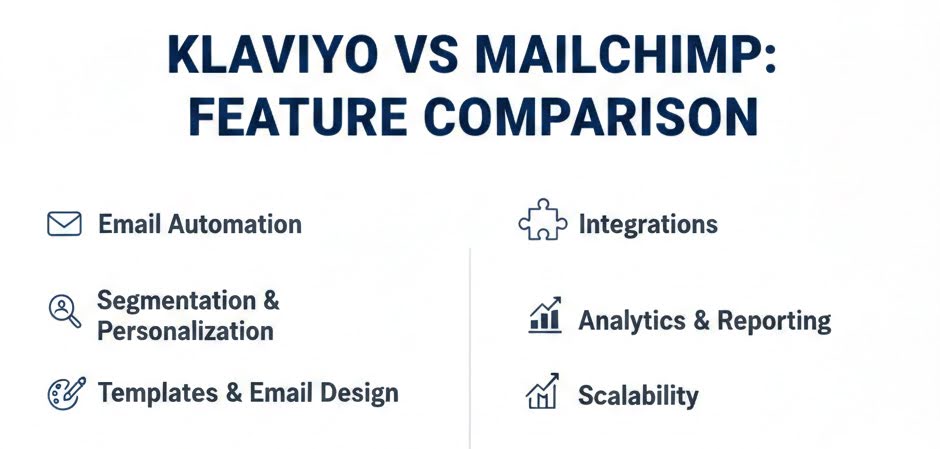
Both Klaviyo and Mailchimp provide strong email marketing tools, but they vary in the sophistication and flexibility of these tools. Below is a comparison of the essential features to consider when selecting an email marketing service.
- Email Automation: Klaviyo offers advanced automation that responds to customer actions like purchases and site activity. Mailchimp offers basic automation that works for simple campaigns, but it’s not as advanced as Klaviyo.
- Segmentation & Personalization: Klaviyo allows for detailed audience segmentation using real-time data and user behavior. Mailchimp offers some basic segmentation, making it a reasonable option for general email targeting.
- Templates & Email Design: Mailchimp stands out with its easy-to-use drag-and-drop templates and attractive designs. Klaviyo’s templates, while effective, focus more on performance than on aesthetics.
- Integrations: Klaviyo has strong connections with e-commerce platforms like Shopify and WooCommerce. Mailchimp offers several integrations, but it has limited choices tailored for e-commerce data.
- Analytics & Reporting: Klaviyo provides comprehensive analytics, including revenue tracking and insights into customer behavior. Mailchimp offers standard reports, which are easier to understand but lack depth.
- Scalability: Klaviyo serves growing, data-driven businesses that require advanced features, while Mailchimp works better for small or beginner-level email needs.
Klaviyo vs Mailchimp: Pricing Comparison
When selecting an email marketing tool, price is a crucial consideration, particularly as your contact list expands.
- Free Plans: With up to 500 contacts and restricted email sends, Mailchimp’s free plan is more generous. Klaviyo’s free plan supports fewer contacts but includes SMS credits and access to advanced features.
- Starting Paid Plans: Although Klaviyo’s paid plans are typically more expensive at first, they come with robust automation and segmentation by default. For novices and small teams, Mailchimp’s paid plans are more affordable.
- Cost as Your List Grows: Because Klaviyo’s pricing is based on active profiles, it gets more costly as your contact list grows. Mailchimp’s gradual pricing can be more affordable as your list grows.
- Value for Money: For less expensive basic email marketing, Mailchimp is superior. For e-commerce companies that require data-driven email campaigns, Klaviyo is more costly but provides better value.
Both Mailchimp and Klaviyo have paid and free plans, but their pricing schemes differ significantly.
Ease of Use: Klaviyo vs Mailchimp
The ease of use of an email marketing tool is crucial when selecting one, particularly if you’re not a tech expert.
- Getting Started: Mailchimp is beginner-friendly and easy to start with, while Klaviyo can feel overwhelming at first due to its advanced data and automation options.
- Dashboard & Navigation: Mailchimp has a clean, easy interface with drag-and-drop tools, while Klaviyo offers rich data that power users love but beginners may find overwhelming.
- Template Editing: Klaviyo emphasizes data-driven customization over straightforward visual design, while Mailchimp’s editor is simple with pre-made templates.
- Learning Curve: Most users learn Mailchimp faster, while Klaviyo takes more time to master due to its advanced automation and segmentation tools.
Klaviyo vs Mailchimp for E-commerce Businesses
Sending newsletters is only one aspect of email marketing for online retailers; other goals include increasing sales, automating important messages, and converting website visitors into loyal customers.
- E-commerce Data Tracking: While Mailchimp’s insights are more constrained for sophisticated automation, Klaviyo provides deep e-commerce tracking for behavior-based emails.
- Automated Revenue Boosters: While Mailchimp’s automation is less successful for upsells and recovery, Klaviyo makes revenue-focused automation simple, such as behavior-based product recommendations and emails about abandoned carts.
- Platform Integrations: Klaviyo pulls detailed customer and order data from platforms like Shopify, WooCommerce, and BigCommerce, while Mailchimp’s e-commerce data is less detailed.
- Expanding Your Store: Klaviyo frequently offers better results for e-commerce companies seeking data-driven campaigns and increased conversion potential.
This is how Mailchimp and Klaviyo compare in terms of e-commerce.
Deliverability & Email Performance
Getting your emails into recipients’ inboxes and encouraging them to open and interact with them is crucial when it comes to email marketing.
- Inbox Placement: Klaviyo is known for strong deliverability through close engagement tracking, while Mailchimp’s deliverability is reliable but depends more on list quality.
- Engagement Rates: Higher open and click-through rates are frequently the result of Klaviyo’s sophisticated segmentation and personalization. This is due to the fact that emails are more tailored to each subscriber.
- A/B Testing Tools: Both support A/B testing. Mailchimp makes content and subject line tests simple, while Klaviyo focuses more on testing automations and flows.
- Analytics & Insights: Klaviyo digs into detailed performance data like revenue per email, customer behavior, and segment engagement. Mailchimp provides clear basic performance reports (opens, clicks, bounces) that are easy to understand for beginners.
Conclusion
Both Klaviyo and Mailchimp are solid email marketing tools, but which one is better really comes down to what your business needs. If you want a straightforward, user-friendly platform for basic email campaigns, Mailchimp is a fantastic choice, especially for those just starting out or for small businesses.
On the flip side, if you’re running an e-commerce venture and need advanced automation, in-depth customer insights, and tailored campaigns, Klaviyo is the way to go. It might be pricier and have a steeper learning curve, but it provides greater control and performance for brands focused on growth.
Ultimately, the best email marketing app is the one that aligns with your goals, budget, and level of experience. Knowing what you need will empower you to choose confidently between Klaviyo and Mailchimp.
Deepak Wadhwani has over 20 years experience in software/wireless technologies. He has worked with Fortune 500 companies including Intuit, ESRI, Qualcomm, Sprint, Verizon, Vodafone, Nortel, Microsoft and Oracle in over 60 countries. Deepak has worked on Internet marketing projects in San Diego, Los Angeles, Orange Country, Denver, Nashville, Kansas City, New York, San Francisco and Huntsville. Deepak has been a founder of technology Startups for one of the first Cityguides, yellow pages online and web based enterprise solutions. He is an internet marketing and technology expert & co-founder for a San Diego Internet marketing company.