Table of Contents
Introduction
Imagine you have a great product, but there is no sign showing people where it is. Some people find you by searching online. Others hear about you on social media.
This is why SEO and social media work best together. SEO helps people find you when they search. Social media allows people see your brand, share it, and remember it. When they work as a team, more people notice you and trust you.
This guide shows you how to connect SEO and social media so more people can find your brand, click on it, and help your business grow.
The Synergy Between SEO and Social Media
Why they’re better together
SEO helps people find your best ideas when they search online. Social media helps share those ideas where people talk, like, and repost. When you use both, they help each other grow.
Here’s how it works:
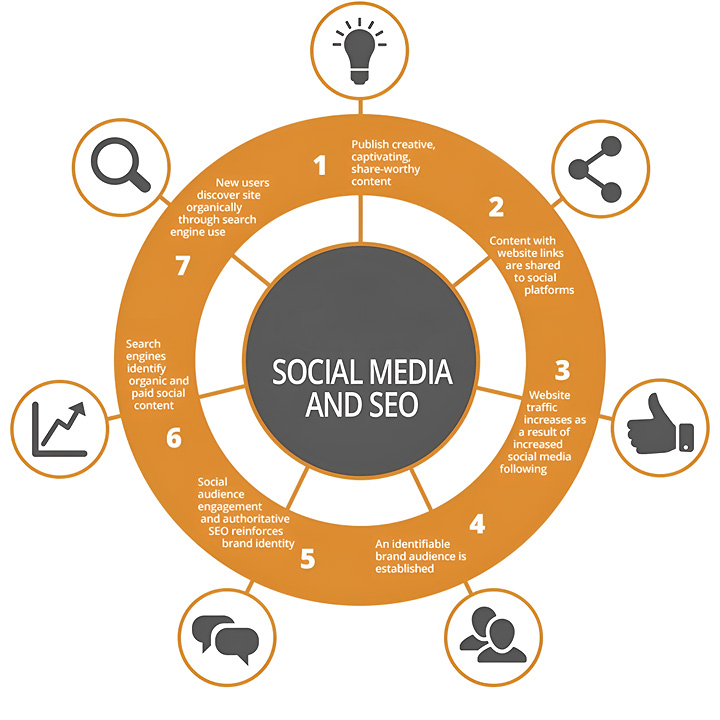
You share content on social media → more people see it → some people talk about it or link to it → search engines see this and trust your site more → your site shows up higher in search results.
Experts say social media likes and shares don’t directly change search rankings. But they do help more people notice your content, which can lead to links and brand searches that help your rankings.
How SEO and social media help each other
- SEO for social media means using the right words and topics so your content is easy to find in search.
- Social media marketing then helps spread that content to more people, start conversations, and bring visitors back to your website.
- When done well, sharing SEO-friendly content on social media helps more people see it and shows search engines that your content is helpful—often helping it rank better over time.
Increased Domain Authority
- When people share your website on social media, more people see it. This can make your website look more important and trustworthy.
- Some experts don’t fully agree on whether likes, shares, and comments directly help SEO.
- But most agree on one thing: when many people like and share your content, other websites are more likely to link to it.
- When popular social media accounts share your content, it reaches more people.
- This can lead to more websites linking back to you, which helps improve your SEO and social media strategy.
Our integrated seo and social media marketing services connect search demand with scroll-stopping creative, so your brand ranks for valuable queries while social content drives shares, saves, and the backlinks that grow authority.
Aligning Keywords
Think of keywords like special words that help people find you online.
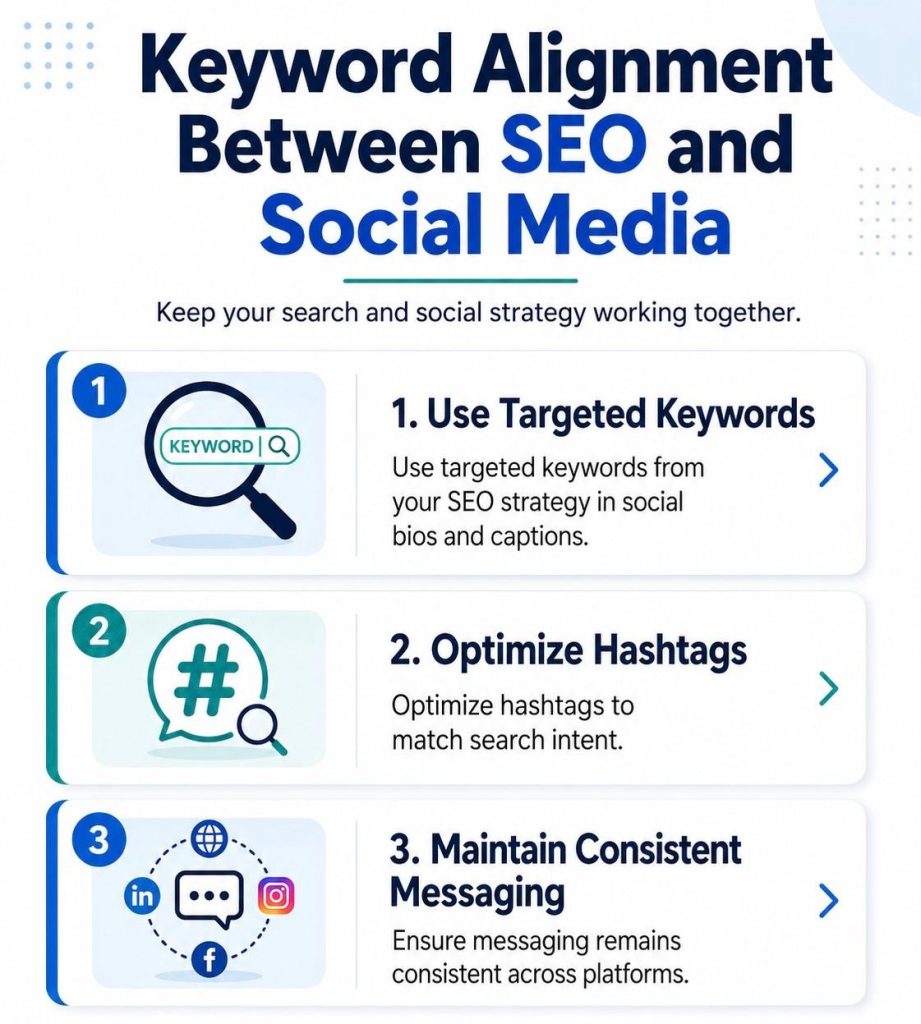
- When you use the same important words on your website and on social media, more people can find your content easily.
- Your social media posts, hashtags, and profile descriptions should use the same keywords you use for SEO.
- This helps search engines, and people understand what your brand is about.
- When everything matches, people who are interested in those topics can find your social media posts faster—and they’re more likely to follow, like, or share.
Social media SEO simply means using the right keywords and hashtags in your posts and profiles so your content shows up when people search on social media apps. This helps your content get noticed and shared naturally.
Improved Content Approach
SEO and social media help you understand what people like and how they behave online.
- When you study what posts people enjoy and share, you can create better content.
- This leads to more likes, comments, and shares—and helps your website rank higher in search results.
SEO feedback in real time
Think of social media like a big classroom where people raise their hands and ask questions. What they like, share, and comment on tells you exactly what they want to know.
- Use popular questions and comments to decide what pages, blogs, or FAQs to make next.
- Turn important topics and keywords into simple social posts like carousels, short videos, or threads.
- Create new FAQ pages based on what people ask again and again.
- Use the same clear words and ideas in your social posts and search results so everything matches.
When your topics match what people are searching for, and you share them in easy, familiar formats, more people find you, trust you, and click to learn more.
Building a Unified Strategy
Think of SEO and social media as best friends working on the same project. When they work together, your content reaches more people.
SEO helps you know what people are searching for. Social media helps you share that content in fun and simple ways. You can take one big idea and turn it into:
- One full article for your website
- Many small posts for social media, like short tips, quotes, or quick videos
All of this works best when you plan it on one content calendar. Search data helps choose the topics, social media shows what people like most, and analytics shows what brings clicks and sales.
Great seo and social media management runs on one editorial calendar: search data defines themes; social results guide angles; analytics ties it all to assisted conversions, links, and revenue.
SEO-Informed Content Creation
Keyword research is not just for websites. It also helps your social media posts get found.
Start by finding the words people search for online. Then:
- Use those words in your social posts
- Add them to captions and hashtags
- Make clear images and titles that people want to click
This helps your content show up on social media and in search engines.
To make strong content:
- Start with a helpful idea, not a company intro
- Add facts, comparisons, or simple visuals
- End with a clear next step, like reading a guide or using a tool
This keeps people interested and encourages them to share.
Social Signals and SEO
Understanding the Impact of Social Signals on SEO Rankings
When people like, share, or comment on your posts, it sends a good signal.
These actions help by:
- Bringing more people to your website
- Making your brand more visible
- Showing that your content is useful and popular
Sometimes, people who see your content will link to it from their own websites. These links help your website rank better in search engines.
In short: more engagement = more visibility = better results.
How to Amplify Social Signals for SEO Benefits
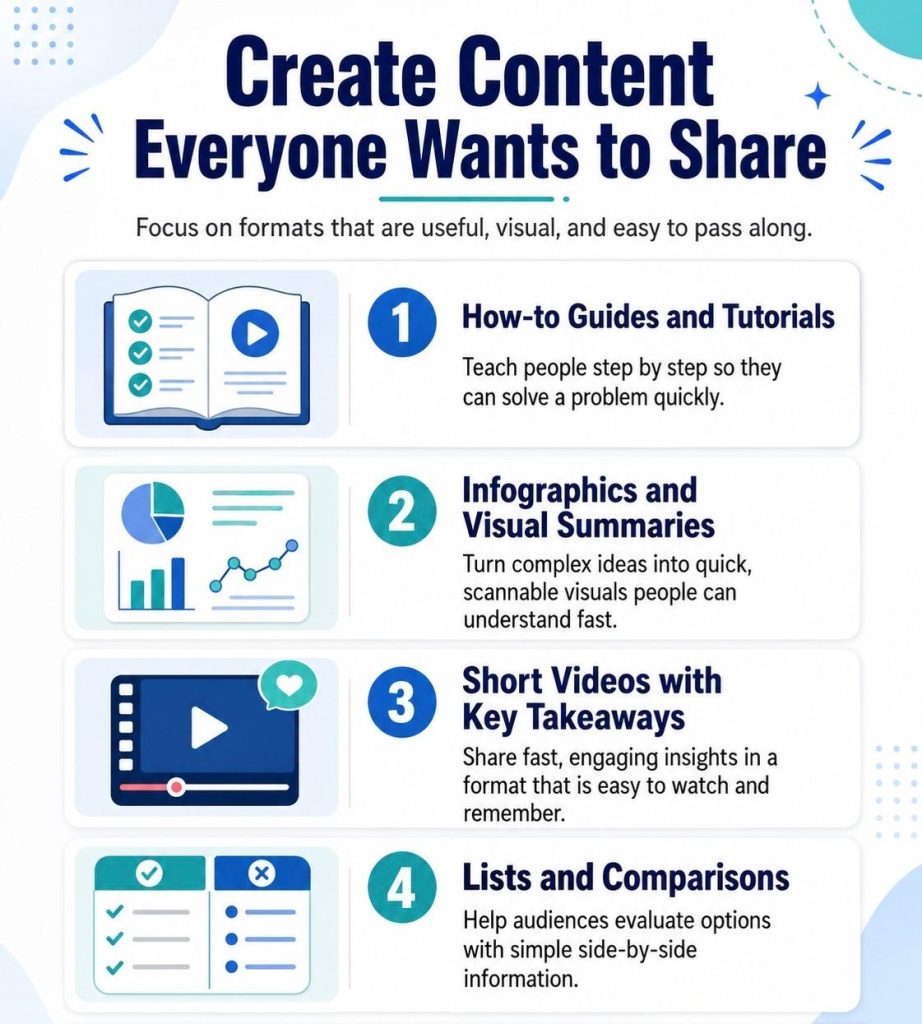
To maximize the SEO benefits of social signals, focus on creating share-worthy content that naturally encourages interaction.
- Utilize engaging formats like videos, infographics, and polls to improve engagement.
- Actively participate in social media communities related to your niche to increase content visibility and shareability.
- Encourage user-generated content to foster a sense of community and engagement around your brand.
- Make sharing easy by including social share buttons on your website content.
SEO and social media can complement each other when forming a unified strategy. Brands can create a dynamic online presence by implementing SEO-informed content creation and understanding the interplay between social signals and SEO.
Leveraging Social Media for Link Building
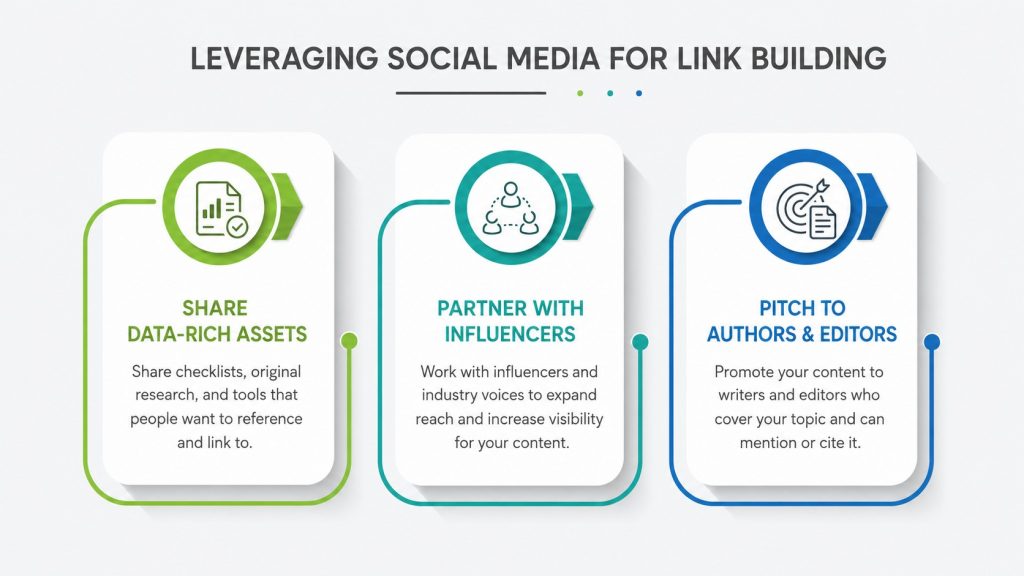
Use social to seed link-worthy assets (original data, checklists, calculators, before/after case breakdowns). Then:
- Pitch creators/journalists who cover your space.
- Quote or co-create with partners so they have a reason to link back.
- Publish “stat posts” and infographics sized for each platform to maximize pickups.
- While many social links are nofollow, the exposure they create is what earns the followed links that lift authority.
Strategies for Using Social Media to Enhance Backlink Profiles
Social media can be a valuable tool in your link-building arsenal. While links from social media sites themselves are often “nofollow” and do not directly impact search rankings, the exposure they provide can lead to “dofollow” links from other sites.
- Share highly informative, uniquely valuable, or highly engaging content on social media to attract links to your website.
- Collaborate with influencers or brands in your industry to increase the visibility of your content and improve the chances of it being linked to other websites.
- Use social media as a tool to build relationships with your audience and industry leaders to create opportunities for link-building.
Encouraging Shares and Mentions to Boost SEO
Shares and mentions on social media can significantly amplify your content’s reach.
- Encourage your followers to share your content by creating shareable snippets like quotes, stats, or infographics that highlight key points of your content.
- Engage with your community by asking questions or for their opinions to promote discussion and increase the chances of your content being shared beyond your immediate network.
- Contests or giveaways that require sharing your content can also be an effective tactic to increase visibility and, indirectly, your backlink profile.
Cross-promotion for Maximum Visibility
Promote SEO content differently per platform:
- Short-form video: show the problem and the result first; link to the full guide.
- Carousels/threads: condense key steps; end with a data card people save.
- Communities: answer with substance, then offer a resource (no spam).
Use social analytics (saves, shares, comment topics) to decide which sections to expand on your SEO pages and which new articles to create.
Tips for Promoting SEO-rich Content on Social Media Platforms
To effectively promote your SEO-rich content on social media, tailor your message to fit the platform and your audience’s preferences on that platform.
- Use engaging visuals and compelling captions that resonate with your audience and highlight the value of your content.
- Schedule your posts for optimal times when your audience is most active.
- Additionally, consider leveraging paid social media advertising to increase the reach of your most valuable or strategic content pieces.
Our seo social marketing approach turns each core article into a month of social derivatives—quotes, stats, visuals—so every share amplifies your search footprint and strengthens brand authority.
Using Social Media Insights to Refine SEO Strategies
Social media platforms offer a wealth of data that can inform and refine your SEO strategies.
- Analyze engagement metrics to understand what type of content resonates with your audience and why.
- Use these insights to identify topics that are likely to perform well in organic search and to optimize your content calendar for both social media and SEO.
- Pay attention to conversations and trending topics within your industry on social media to identify keywords and questions that your SEO content should address.
By using social media strategically to promote your SEO-rich content and improve your backlink profile, you can boost your visibility and engagement online. This integrated approach strengthens your SEO efforts and builds a dynamic digital marketing strategy.
Analytics and Measurement
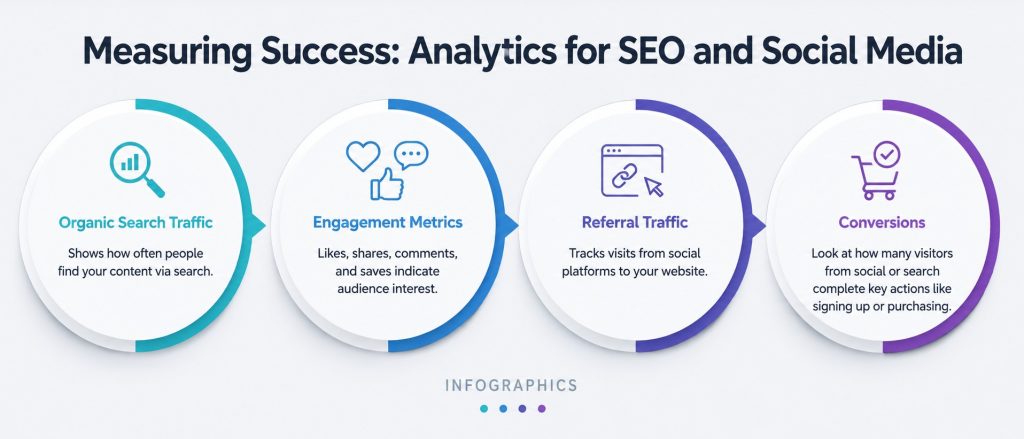
Internet marketing works best when you check what is working and what is not.
Think of analytics like a scoreboard. It tells you:
- How many people visited your website
- Where they came from (search or social media)
- What they clicked, liked, or shared
How to Check Performance
- Google Analytics (GA4): See if people come from social media first and then later visit your website from search.
- Google Search Console (GSC): Check how many people see your pages in search and how many click.
- Social Media Insights: Look at likes, shares, and saves. These show what people find useful.
If a post gets likes but no one clicks the website link, try:
- Clear buttons like “Learn More” or “Read the Guide.”
- Putting the link in a better spot
- Making the page more helpful and easier to read
If a page ranks well on Google but people don’t share it, turn the best idea, tip, or fact from that page into a simple post or graphic and share it again.
Tools and Metrics
To understand how SEO and social media work together, you need the right tools.
You can use:
- Google Analytics to see website visitors
- SEO tools to check keywords
- Social media analytics to see likes, comments, and shares
Important things to track:
- Where visitors come from
- How many people like or share your content
- How many people take action (sign up, buy, contact you)
These numbers help you understand what content people enjoy and what helps your business grow.
Adjusting Based on Results
Numbers help you make better choices.
- If social posts get attention but don’t bring website visits, improve your links or message.
- If search keywords work well but no one talks about them on social media, use those words in your posts.
- Check your results often, learn what works, and make small improvements.
When SEO and social media work together, they create a loop:
Social media brings attention → attention brings links → links help rankings → rankings bring more people.
Best Practices for Using SEO and Social Media Together
Do’s
- Use the same main keywords on your website and social posts
- Encourage comments, likes, and shares
- Check analytics regularly
Don’ts
- Don’t post the same content everywhere without changes
- Don’t ignore the data—it helps you improve
Staying Updated
Search engines and social media platforms change often.
To stay ahead:
- Follow SEO and social media news
- Learn from trusted experts
- Update your strategy when rules change
Being flexible helps your content stay visible and effective.
Monitor analytics, stay agile, and adapt to changes in the digital landscape to keep your SEO and social media strategy effective. Trends and insights should guide your efforts toward achieving your digital marketing goals.
Conclusion
SEO and social media work best when they work together, not separately. When you mix creativity with smart tracking and regular improvements, your brand becomes easier to find, easier to share, and easier to trust.
Businesses that keep learning, testing, and improving will build a strong and lasting online presence—today and in the future.
Deepak Wadhwani has over 20 years experience in software/wireless technologies. He has worked with Fortune 500 companies including Intuit, ESRI, Qualcomm, Sprint, Verizon, Vodafone, Nortel, Microsoft and Oracle in over 60 countries. Deepak has worked on Internet marketing projects in San Diego, Los Angeles, Orange Country, Denver, Nashville, Kansas City, New York, San Francisco and Huntsville. Deepak has been a founder of technology Startups for one of the first Cityguides, yellow pages online and web based enterprise solutions. He is an internet marketing and technology expert & co-founder for a San Diego Internet marketing company.