
Traffic

« Back to Glossary Index

Definition of Traffic

Traffic is refers to the number of visitors that come to a website, webpage, mobile app, or any digital platform. Each time someone checks out a website, it counts as traffic. This metric is crucial in online marketing because it indicates how many people are engaging with your online presence.

The more traffic you have, the better your chances are for generating leads, making sales, boosting engagement, and increasing brand awareness.

Understanding Traffic in Online Marketing

Traffic is the starting point of the digital marketing journey. Before anyone can dive into your content, sign up for updates, or make a purchase, they need to land on your website first. Traffic gives marketers valuable insights into how effective their strategies are and how well their brand is showing up in the online world.

But remember, traffic alone doesn’t guarantee success. What really counts is the quality of that traffic—those visitors who are truly interested in what you have to offer, whether it’s a product, service, or engaging content.

Why Traffic is Important

Traffic is crucial in online marketing for a bunch of reasons:

  • It indicates the popularity and reach of a website.
  • It helps in evaluating marketing effectiveness.
  • It boosts the likelihood of conversions.
  • It enhances brand visibility.
  • It fosters business growth.

Without traffic, even the most amazing website can go unnoticed.

Types of Traffic

Types of Traffic
Types of Traffic

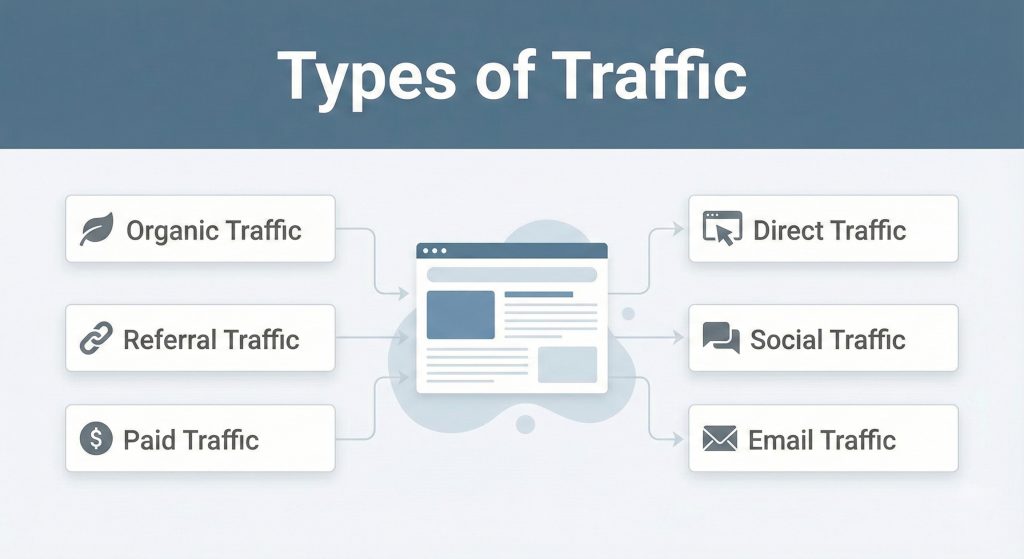
Traffic can be divided into different categories based on where visitors originate. Grasping the various types of traffic is essential for marketers looking to enhance their strategies.

  • Organic Traffic: This type of traffic is generated when users click on unpaid search results from search engines like Google, Bing, or Yahoo. Organic traffic is incredibly valuable because it’s free, sustainable over the long term, and typically comes from users with high intent.
  • Direct Traffic: Direct traffic happens when users enter a website’s URL directly into their browser or access it via bookmarks. This indicates strong brand recognition and a level of trust from users.
  • Referral Traffic: Referral traffic is generated when other websites link to yours. This type of traffic can boost your website’s credibility, enhance your SEO authority, and expand your audience reach.
  • Social Traffic: Social traffic originates from social media platforms like Instagram, Facebook, X (formerly Twitter), LinkedIn, and Pinterest. It’s great for building brand awareness, fostering community, and promoting content.
  • Paid Traffic: Paid traffic comes from advertisements, such as Google Ads, social media ads, or display ads. This type of traffic provides immediate visibility, allows for targeted audience reach, and can be scaled effectively.
  • Email Traffic: Email traffic is generated through email marketing campaigns when users click on links in newsletters or promotional emails. This traffic is particularly valuable as it targets existing audiences, has a higher potential for conversion, and aids in customer retention.

Traffic vs Impressions

Traffic refers to the number of visits a website receives.

  • Impressions indicate how frequently content is displayed.
  • While impressions reflect visibility, traffic reveals the actual actions taken by users.

How Traffic Is Measured

how is traffic measured

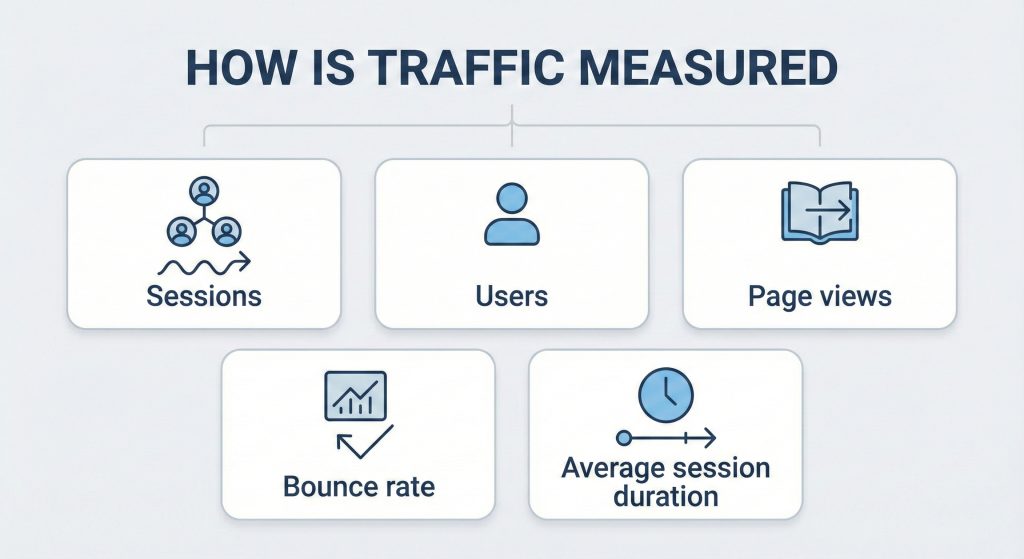
Traffic is tracked through web analytics tools like Google Analytics. Here are some common metrics for measuring traffic:

  • Sessions
  • Users
  • Page views
  • Bounce rate
  • Average session duration

These metrics are essential for understanding how visitors interact with your site

Traffic Sources in Online Marketing Strategy

Traffic plays a crucial role in shaping digital marketing strategies. Marketers rely on traffic data to:

  • Spot the channels that are performing best
  • Enhance campaigns that aren’t hitting the mark
  • Fine-tune content and SEO efforts
  • Distribute marketing budgets effectively

By analyzing traffic, businesses can make informed, data-driven decisions.

Traffic in SEO

Traffic in SEO
Traffic in SEO

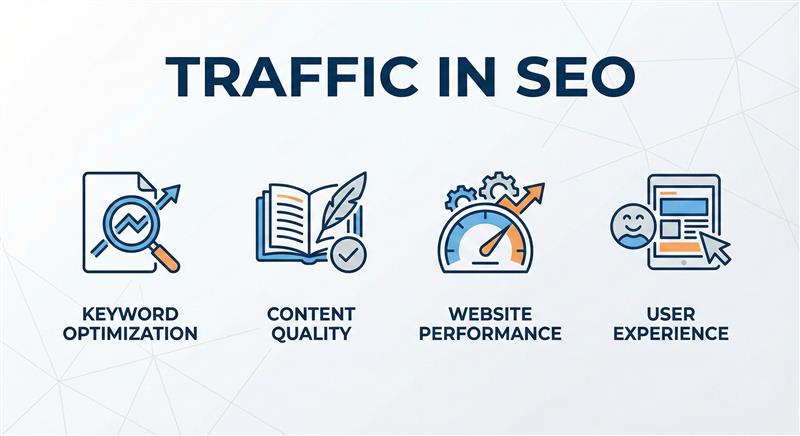
In the world of Search Engine Optimization (SEO), when we talk about traffic, we’re primarily referring to organic traffic. SEO is all about:

  • Keyword optimization
  • Content quality
  • Website performance
  • User experience

Typically, the better your rankings, the more organic traffic you’ll attract.

Traffic in Content Marketing

Traffic in Content Marketing

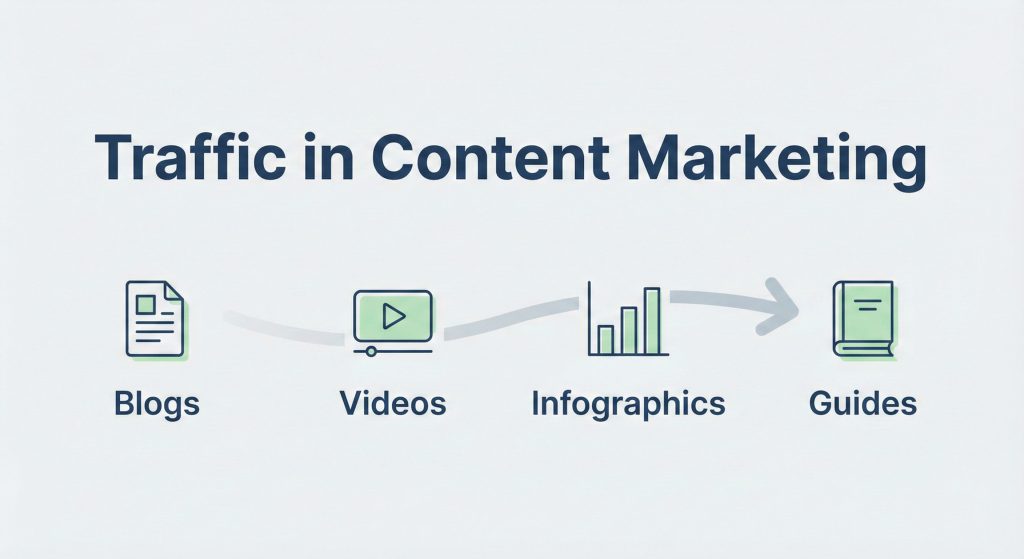
Content marketing is all about drawing in traffic by sharing valuable information through various channels like:

When done right, great content can lead to steady and long-lasting traffic.

Traffic in Ecommerce

Revenue in e-commerce is directly impacted by traffic. Increased traffic implies:

  • More views of the product
  • Additional cart additions
  • More chances for sales

To convert traffic into customers, however, conversion optimization is crucial.

Traffic in Modern Online Marketing

Traffic sources are constantly changing due to developments in AI, mobile technology, and personalization. The way people find and visit websites is being influenced by voice search, social commerce, and video platforms.

Traffic is still a crucial metric in internet marketing despite these developments.

« Back to Glossary Index
Scroll to Top