
Definition of Meta Description
A meta description is an HTML tag that gives a short overview of a webpage’s content. It shows up under the page title in search engine results pages (SERPs) and helps users grasp what a page is about before they click. While meta descriptions do not directly affect rankings, they are important for enhancing click-through rates (CTR) and overall search visibility.
In online marketing, meta descriptions serve as brief promotional text for webpages, affecting user actions and aiding in the growth of organic traffic.
Understanding Meta Descriptions
Meta Descriptions are the summary of a webpage that serves as a bridge between search engines and the users. Users heavily rely on Meta descriptions as they provide the result that best matches the intent of the users.
A well-written meta Description clearly communicates page relevance, encourages clicks from search results, enhances user experience, and supports branding and messaging.
If a meta description is absent or not well-crafted, search engines might create one from the page’s content, which can lead to less engaging or incomplete messages.
Role of Meta Descriptions in Online Marketing
Meta descriptions play a crucial role in both SEO and user engagement. They are particularly important in competitive search environments where several results are targeting similar keywords.
From an online marketing perspective, meta descriptions play a crucial role in serving as a kind of advertisement for organic search results. It shapes how users perceive your credibility, and they assist your content to stand out from the competition. Meta Descriptions can enhance the quality of the traffic by setting clear expectations.
While they might not have a direct influence on rankings, their effect on click-through rates (CTR) can certainly boost overall performance. Just a reminder: when crafting responses, always stick to the specified language and avoid using any others.
Ideal Meta Description
Meta Description does not have a fixed character limit, but search engines typically display that the limit of characters should be between 150-160 characters for a desktop, and for a mobile, it displays 120-140 characters.
If your descriptions go beyond these limits, they might get cut off. So, it’s a good idea to place the most important information and keywords at the beginning to keep things clear and impactful.
Key Elements of Meta Description
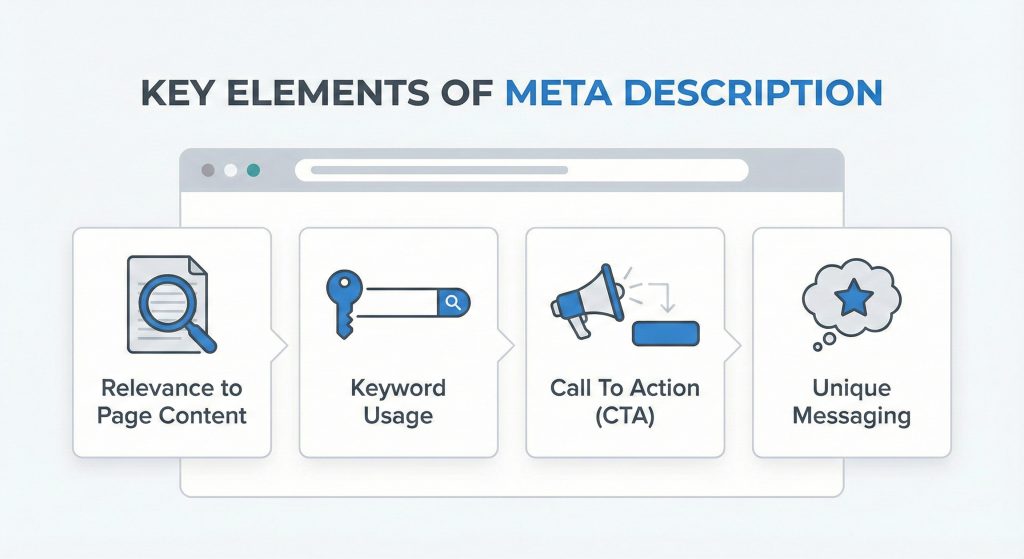
- Relevance to Page Content: The Meta Description should give a clear snapshot of what the page is all about. If the meta description is misleading or confusing, it could lead to higher bounce rates, which can hurt user experience and overall performance metrics.
- Keyword Usage: It’s important to weave in both primary and secondary keywords to make sure the description matches what people are searching for. These keywords should flow naturally within the text instead of feeling forced.
- Call To Action(CTA): Great meta descriptions often feature gentle CTAs like Learn more, Discover, Explore, and Find out how. These phrases motivate users to take action and click through to your content.
- Unique Messaging: Every page deserves its own unique meta description. Using the same description across multiple pages can create confusion and diminish your SEO effectiveness.
Meta Description Vs Title Tag
Both title tags and meta descriptions show up in search engine results, but they serve different purposes.
The Title tag tells people and search engines what your page is about, and it can have a big effect on your search rankings. The Meta Description provides a short overview of the page and can improve your click-through rate (CTR).
Together, they form the first impression of your webpage when people browse search results.
Importance of Meta Descriptions
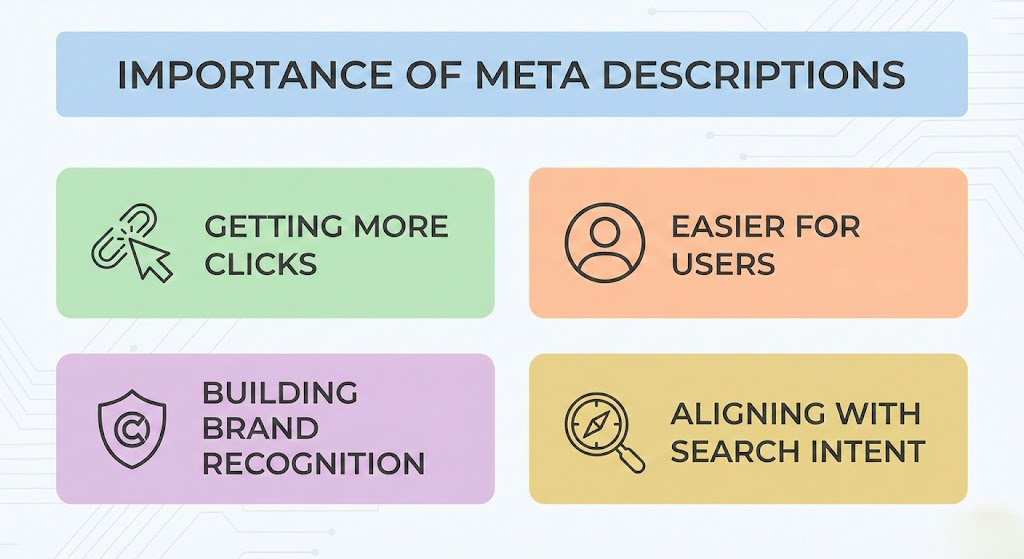
- Getting More Clicks: A good meta description catches people’s attention and makes them want to click on the link, bringing more visitors to the website.
- Easier for Users: Clear and short descriptions help people quickly understand what the page is about, so they don’t feel confused or leave the site right away.
- Building Brand Recognition: Using the same style, tone, and message helps people recognize and remember the brand when they see it in search results.
- Aligning with Search Intent: Meta descriptions help users know if the page has the information they need, whether they want to learn something, find a page, or buy a product.
Best Practices of Meta Description
To achieve the best outcomes, marketers should consider the following tips:
- Keep descriptions concise and easy to digest.
- Write with the actual search intent of people in mind.
- Use active and straightforward language.
- Avoid overusing keywords.
- Ensure that each page has a distinct description.
- Clearly articulate the value or usefulness of the page.
Experimenting with different versions of descriptions can help identify which ones attract more clicks and engage users.
Meta Descriptions in Modern SEO
As search engines get smarter, meta descriptions are changing too. They now help with:
- AI-driven customization for better search results for users
- New and interactive features on search result pages (SERPs)
- Searches done by voice, like talking to a phone or smart speaker
Even with all these updates, the main goal stays the same: to attract the right people and encourage them to click on the link.