
Indexing

« Back to Glossary Index

Definition of Indexing

Indexing is basically how search engines keep track of and organize web pages after they find them by crawling. When a search engine like Google crawls a webpage, it takes a good look at the content and then adds it to its huge database, which we call the search index.

You can think of indexing as putting a new page into a massive digital library. If a page isn’t indexed, it won’t show up in search results, no matter how well it’s optimized.

How Indexing Works

The indexing process typically involves three main steps:

Crawling

Search engines deploy bots, often referred to as spiders or crawlers, to scour the internet and find new or updated pages. These bots navigate through links, examine sitemaps, and investigate the structure of websites.

Processing

After a page is crawled, search engines take a closer look at:

  • The content of the page
  • Keywords and headings
  • Images and their alt text
  • Both internal and external links
  • Metadata, including title tags and meta descriptions
  • Mobile usability and page speed

Indexing

Once the analysis is complete, the page gets stored in the search engine’s index. When someone types in a relevant query, the search engine pulls up matching pages from this index and ranks them accordingly.

Key Benefits of Proper Indexing

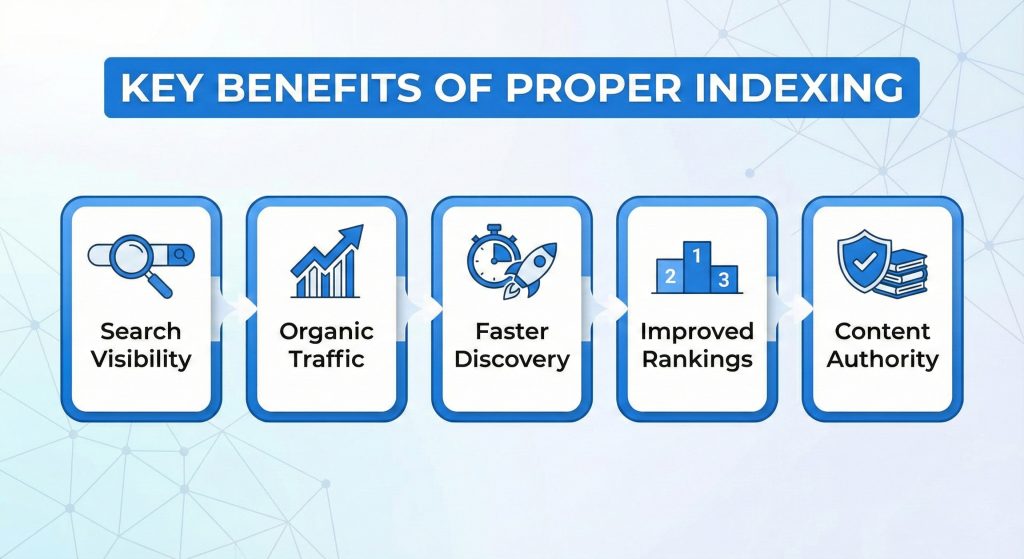
Key Benefits of Proper Indexing
  • Search Visibility: When pages are indexed, they can show up in Google search results.
  • Organic Traffic:  The more pages you have indexed, the more chances you have for traffic.
  • Faster Discovery:  Search engines can quickly find and rank your new content.
  • Improved Rankings: Well-organized indexed pages tend to rank higher.
  • Content Authority:   Indexing helps establish your relevance on specific topics over time.

If a page is not indexed, it simply does not exist in Google’s eyes.

Types of Indexing

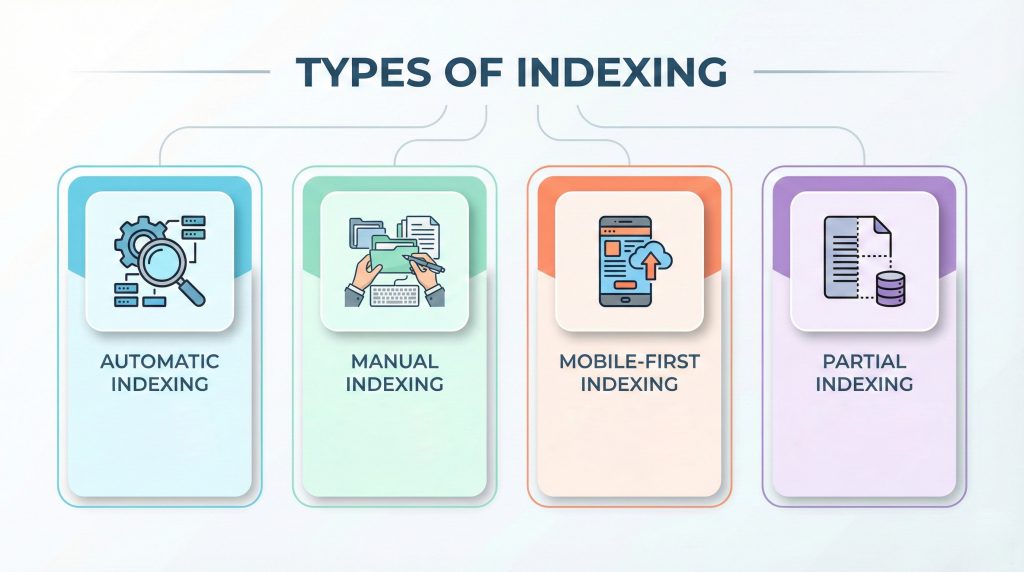
Types of Indexing
Types of Indexing
  • Automatic Indexing: Search engines find and index pages naturally by following links and crawling through the web.
  • Manual Indexing: Website owners can directly submit their URLs using tools like Google Search Console.
  • Mobile-First Indexing: Google mainly focuses on the mobile version of a website when it comes to ranking and indexing.
  • Partial Indexing: Sometimes, only certain pages of a site get indexed due to factors like crawl budget, duplication, or technical issues.

How to Improve Indexing on Your Website

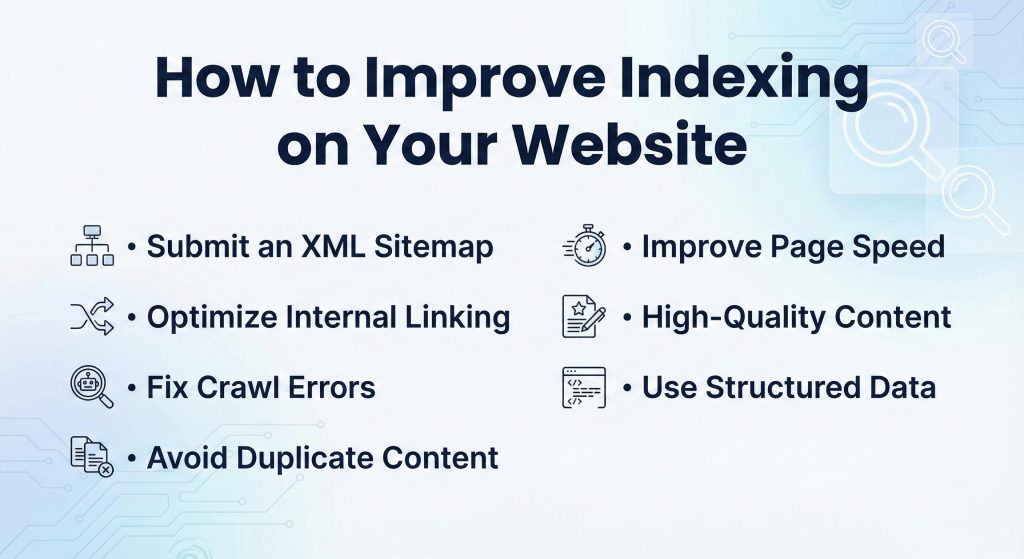
How to Improve Indexing on your Website
  • Submit an XML Sitemap: Think of a sitemap as a roadmap for search engines, helping them find your pages more quickly.
  • Optimize Internal Linking: Create a smart network of internal links to help crawlers navigate your site effortlessly.
  • Fix Crawl Errors: Keep an eye on coverage reports in Google Search Console to catch any issues.
  • Avoid Duplicate Content: Use canonical tags to show search engines which version of your content is the one to prioritize.
  • Improve Page Speed: Pages that load quickly are more likely to be crawled and indexed regularly.
  • Create High-Quality Content: Unique and valuable content is more likely to get indexed and ranked sooner.
  • Use Structured Data: Implementing schema markup can help search engines grasp your content more effectively.

Indexing in Modern SEO

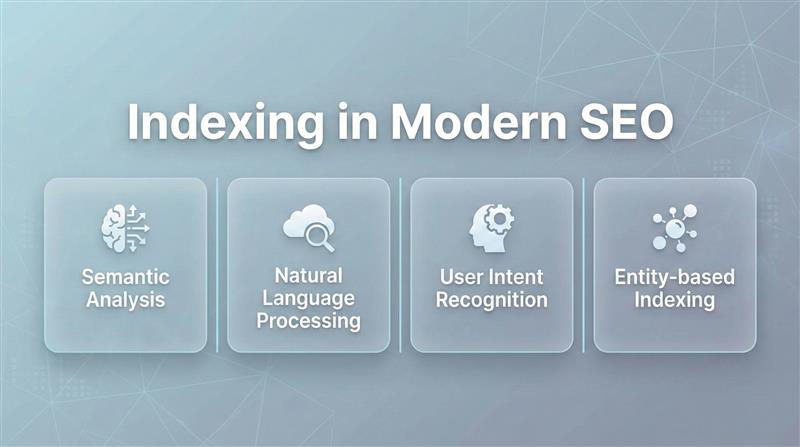
Indexing in Modern SEO

Search engines these days are leveraging some pretty advanced AI-driven indexing techniques, such as:

  • Semantic analysis
  • Natural language processing
  • User intent recognition
  • Entity-based indexing

Gone are the days when Google just focused on keywords. Now, it takes into account the context, user intent, and the overall quality of content before it decides how to index and rank pages.

Best Practices for Effective Indexing

To make your website shine, keep these tips in mind:

  • Ensure your URLs are straightforward to read.
  • Always opt for HTTPS to secure your site.
  • Make sure your site is mobile-friendly.
  • Steer clear of thin or duplicate content.
  • Keep your content fresh by updating it regularly.
  • Keep an eye on your indexing reports.
  • Use a clear heading structure (H1–H6) to organize your content effectively.
« Back to Glossary Index
Scroll to Top