
Definition of Digital Marketing
Digital marketing is all about using online platforms, digital technologies, and electronic media to promote products, services, and brands. Unlike traditional marketing, which depends on print, TV, or radio, digital marketing taps into the internet and digital devices like computers, smartphones, and tablets to engage with consumers.
The main goal of digital marketing is to reach the right audience at the right moment on the right platform—while providing personalized and measurable experiences.
Key Components of Digital Marketing
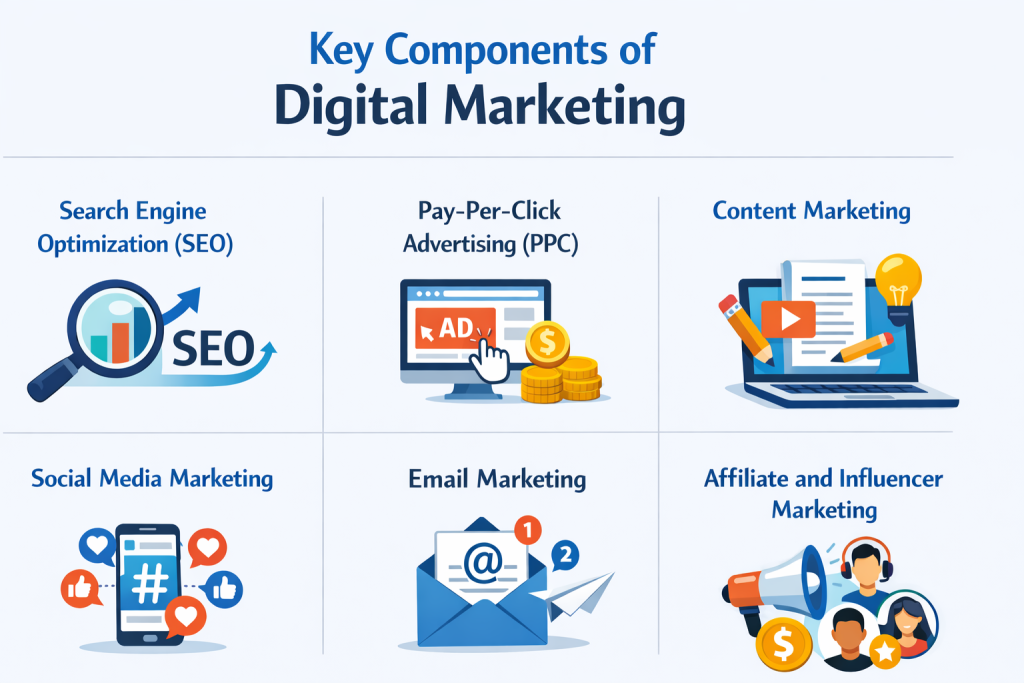
- Search Engine Optimization (SEO): SEO is all about boosting a website’s visibility on search engines like Google and Bing. By fine-tuning content, keywords, technical aspects, and backlinks, businesses can climb higher in organic search results, which means more website traffic and enhanced credibility.
- Pay-Per-Click Advertising (PPC): PPC advertising is where you place paid ads on search engines, social media, or websites. Advertisers only pay when someone clicks on their ad.
- Content Marketing: Content marketing focuses on creating and sharing valuable, relevant, and informative content to attract and retain a target audience.
- Social Media Marketing: Social media marketing leverages platforms like Facebook, Instagram, LinkedIn, X (formerly Twitter), and YouTube to connect with audiences, promote content, and enhance brand awareness.
- Email Marketing: Email marketing remains one of the most effective digital marketing channels for nurturing leads and keeping customers engaged. Through personalized email campaigns, businesses can share updates, promotions, product launches, and educational content.
- Affiliate and Influencer Marketing: Affiliate marketing is about teaming up with third-party publishers or creators who promote products in exchange for commissions. Influencer marketing taps into individuals with established audiences to build trust and influence purchasing decisions.
Benefits of Digital Marketing
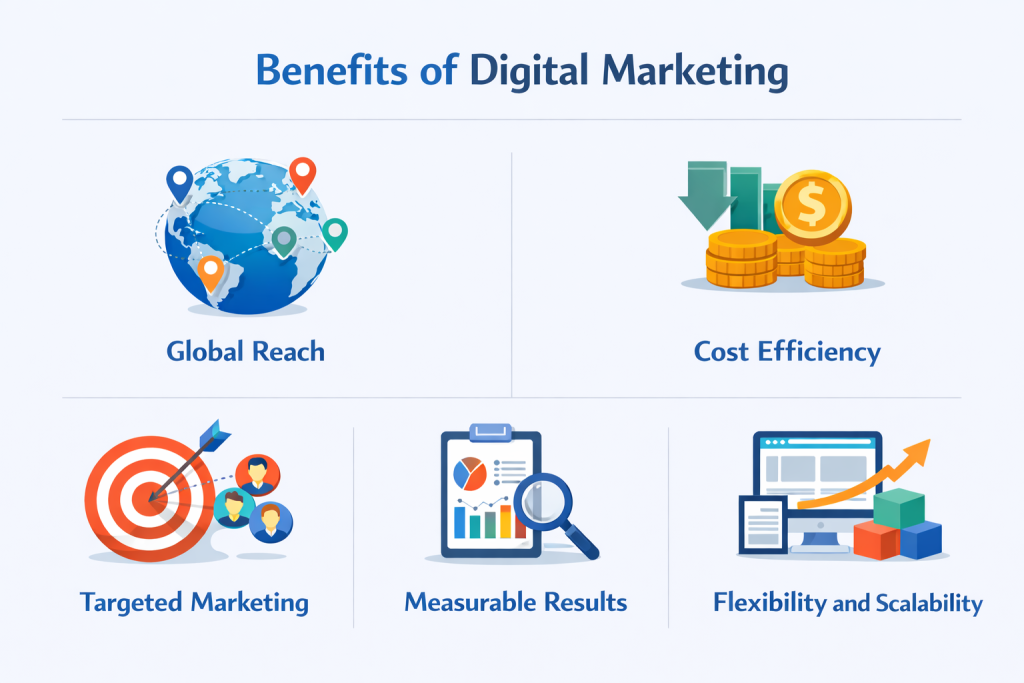
Digital marketing comes with a bunch of perks that traditional marketing just can’t match:
- Global Reach: It allows businesses to connect with audiences all over the world, breaking down geographical barriers.
- Cost Efficiency: Running digital campaigns usually costs less than going for print or TV ads.
- Targeted Marketing: With advanced targeting options, you can make sure your messages hit the right audience segments.
- Measurable Results: Thanks to analytics tools, you can get real-time insights into how your campaigns are performing.
- Flexibility and Scalability: You can quickly tweak your campaigns based on the data you gather.
Role of Data and Analytics
Data is essential in today’s digital marketing landscape. With tools like Google Analytics, CRM systems, and marketing dashboards, businesses can keep a close eye on user behavior, track conversions, and spot areas for improvement.
Embracing data-driven marketing allows for smarter decision-making, making sure that campaigns resonate with both business goals and customer needs.
Digital Marketing Strategy and Planning
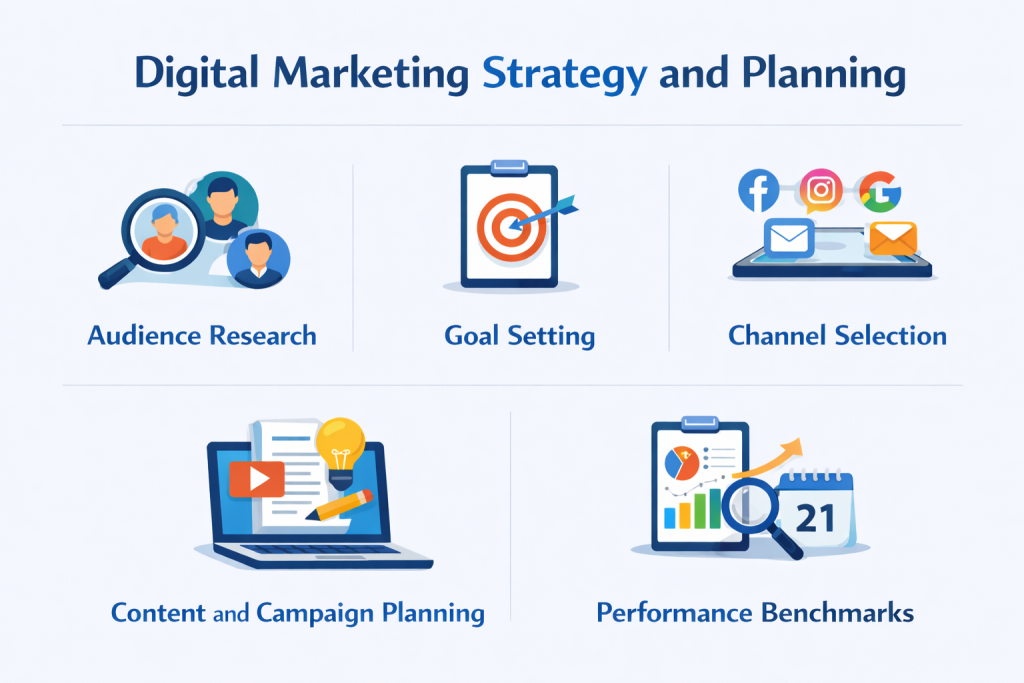
A successful digital marketing campaign kicks off with a solid and well-thought-out strategy. Without a clear plan in place, even the most advanced tools and platforms might not achieve the results you’re hoping for. Crafting a digital marketing strategy means setting measurable goals, pinpointing your target audience, choosing the right channels, and effectively managing your budget.
Here are some key components of strategic planning:
- Audience Research: Getting to know your customers—understanding their demographics, behaviors, pain points, and online habits.
- Goal Setting: Outlining objectives like boosting brand awareness, generating leads, increasing conversions, or enhancing customer retention.
- Channel Selection: Picking the right combination of SEO, paid advertising, social media, email, and content that aligns with your business goals.
- Content and Campaign Planning: Developing a content calendar that syncs with customer journeys and seasonal trends.
- Performance Benchmarks: Setting KPIs to track success and inform your optimization efforts.
Strategic planning is crucial for maintaining consistency across all digital touchpoints, helping businesses use their resources wisely while maximizing their return on investment
Importance of Customer Experience in Digital Marketing
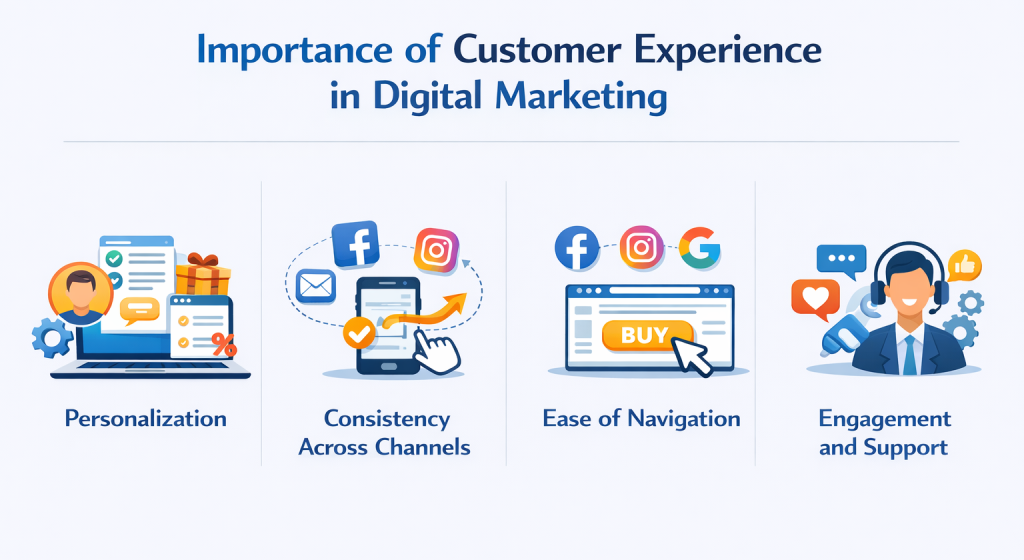
Customer experience (CX) has emerged as a key factor that sets brands apart in the world of digital marketing. Nowadays, consumers are looking for smooth, personalized, and engaging interactions on every digital platform they use.
Digital marketing plays a vital role in improving customer experience through:
- Personalization: Customizing content, offers, and recommendations based on individual user behavior and preferences.
- Consistency Across Channels: Ensuring a cohesive brand experience across websites, social media, email, and mobile apps.
- Ease of Navigation: Streamlining websites and landing pages for speed, usability, and mobile-friendliness.
- Engagement and Support: Utilizing chatbots, social messaging, and email to offer prompt assistance and communication.
A positive digital experience not only boosts conversions but also promotes repeat business and brand advocacy.